SIPRI co-hosts 2026 Armament and Disarmament Summer School

SIPRI and its partners hosted the 2026 Armament and Disarmament Summer School in Stockholm and Uppsala

SIPRI and its partners hosted the 2026 Armament and Disarmament Summer School in Stockholm and Uppsala

On 13 May SIPRI co-organized a conference in Belgrade, Serbia on the implications of increasing militarization in the Western Balkans.

The volume of major arms transferred between states increased by 9.2 per cent between 2016–20 and 2021–25. States in Europe more than trebled their arms imports, making it the biggest recipient region.

SIPRI hosted two workshops as part of the project ‘Empowering Journalism Transparency in Defence Spending and Arms Procurement in the Western Balkans’, funded by the Swedish Institute.

SIPRI and its partners hosted the Armament and Disarmament Summer School, an annual initiative that provides an important learning and networking space for early career professionals working in disarmament, non-proliferation and arms control.

Ukraine became the world’s largest importer of major arms in the period 2020–24, with its imports increasing nearly 100 times over compared with 2015–19.

On 12 March, SIPRI and the Stimson Center hosted a virtual discussion to mark the launch of SIPRI's new data on global arms transfers.

On 8–9 September, SIPRI and the Middle East Council on Global Affairs (ME Council) co-hosted a workshop on the theme ‘Asia and the Middle East Beyond Energy: Towards Security and Defense Cooperation’.
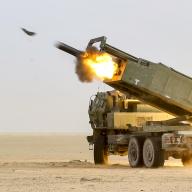
(Stockholm, 11 March 2024) States in Europe almost doubled their imports of major arms (+94 per cent) between 2014–18 and 2019–23. Far larger volumes of arms flowed to Asia and Oceania and the Middle East in 2019–23, where nine of the 10 largest arms importers are. The United States increased its arms exports by 17 per cent between 2014–18 and 2019–23, while Russia’s arms exports halved. Russia was for the first time the third largest arms exporter, falling just behind France.
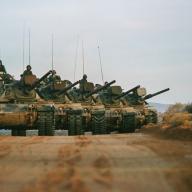
SIPRI and the Stimson Center hosted a virtual event to discuss recent trends in international arms transfers and their implications.
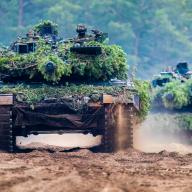
(Stockholm, 13 March 2023) Imports of major arms by European states increased by 47 per cent between 2013–17 and 2018–22, while the global level of international arms transfers decreased by 5.1 per cent. Arms imports fell overall in Africa (–40 per cent), the Americas (–21 per cent), Asia and Oceania (–7.5 per cent) and the Middle East (–8.8 per cent)—but imports to East Asia and certain states in other areas of high geopolitical tension rose sharply.
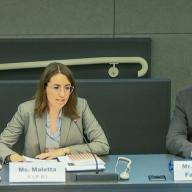
On 15 February, Giovanna Maletta, Acting Director of the Dual-Use and Arms Trade Control Programme, participated in a meeting of the Arms Trade Treaty’s Working Group on Effective Treaty Implementation.

On 29 November, Giovanna Maletta, Senior Researcher with the Dual-Use and Arms Trade Control Programme, and Dr Lucie Béraud-Sudreau, Director and Senior Researcher with the Military Expenditure and Arms Production Programme, participated in a public hearing of the European Parliament’s Subcommittee on Security and Defence. The hearing was entitled ‘The War in Ukraine: Implications for Arms Export Policies at the EU Level’.

On 28 August–2 September, SIPRI and the Alva Myrdal Centre for Nuclear Disarmament at Uppsala University, in cooperation with the Odessa Center for Nonproliferation (ODCNP), hosted the 2022 Armament and Disarmament Summer School.
SIPRI and the Stimson Center will host a virtual event discussing the latest trends in international arms transfers.
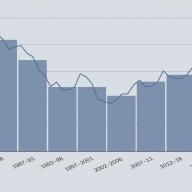
(Stockholm, 14 March 2022) International transfers of major arms saw a slight drop between 2012–16 and 2017–21 (–4.6 per cent). Nevertheless, exports by the United States and France increased substantially, as did imports to states in Europe (+19 per cent), East Asia (+20 per cent) and Oceania (+59 per cent), according to new data on global arms transfers published today by SIPRI.

On 3 September 2021, SIPRI will host a virtual side event in the framework of the Arms Trade Treaty (ATT) Seventh Conference of States Parties (CSP7) and in connection with the launch of a series of SIPRI papers taking stock of the ATT.
SIPRI and the Stimson Center will host a virtual event presenting and analysing the latest trends in global arms transfers and military expenditure.
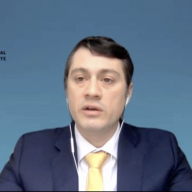
On 16 March, SIPRI experts gave evidence to the British Parliament Committees on Arms Export Controls as part of the committee’s inquiry into UK arms exports in 2019. The oral evidence session was held virtually.
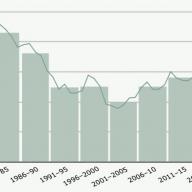
International transfers of major arms stayed at the same level between 2011–15 and 2016–20, according to new data on global arms transfers published today by the Stockholm International Peace Research Institute (SIPRI).

Sales of arms and military services by the sector’s largest 25 companies totalled US$361 billion in 2019, 8.5 per cent more than in 2018. The largest companies have a geographically diverse international presence. This is according to new data released today by SIPRI.

On 28 April, in partnership with the Stimson Center, SIPRI held a webinar presenting and analysing the latest trends in global arms transfers and military expenditure.
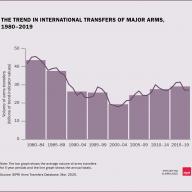
International transfers of major arms during the five-year period 2015–19 increased by 5.5 per cent compared with 2010–14. According to new data from the Stockholm International Peace Research Institute (SIPRI), the largest exporters of arms during the past five years were the United States, Russia, France, Germany and China.
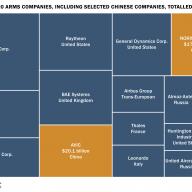
New research from the Stockholm International Peace Research Institute (SIPRI) suggests that China is the second-largest arms producer in the world, behind the United States but ahead of Russia.
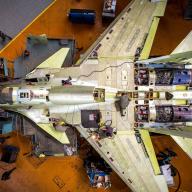
Sales of arms and military services by the sector’s largest 100 companies (excluding those in China) totalled $420 billion in 2018, marking an increase of 4.6 per cent compared with the previous year. This is according to new data released today by SIPRI in the SIPRI Top 100 ranking.
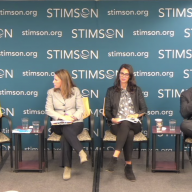
On 6 May, in partnership with the Stimson Center, SIPRI held an event presenting and analysing the latest trends in global arms transfers and military expenditure.
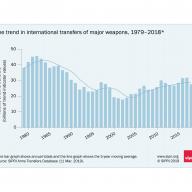
(Stockholm, 11 March 2019) The volume of international transfers of major arms in 2014–18 was 7.8 per cent higher than in 2009–13 and 23 per cent higher than in 2004–2008, according to new data on arms transfers published today by SIPRI.
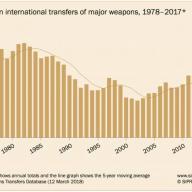
Continuing the upward trend that began in the early 2000s, the volume of international transfers of major weapons in 2013-17 was 10 per cent higher than in 2008-12, according to new data on arms transfers published by SIPRI today.
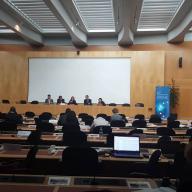
SIPRI hosted an event on the global arms trade and the role that transparency instruments can play in stopping illegal and irresponsible arms transfers.
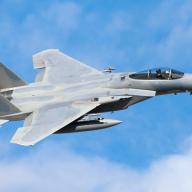
SIPRI to co-host an event in Washington, DC, on February 28 based on the recent SIPRI data launch on trends in international arms transfers.
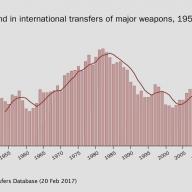
The volume of international transfers of major weapons has grown continuously since 2004 and increased by 8.4 per cent between 2007–11 and 2012–16, according to new data on arms transfers published today by SIPRI.
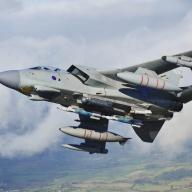
A new report by SIPRI for the Campaign Against Arms Trade (CAAT) highlights the 'huge overall level of government support, protection and direct and indirect subsidy that the arms industry as a whole receives.'
The volume of international transfers of major weapons has grown continuously since 2004 and rose by 14 per cent between 2006–10 and 2011–15, according to new data on international arms transfers published today by the Stockholm International Peace Research Institute (SIPRI).
The United States has taken a firm lead as the major arms exporter globally, according to new data on international arms transfers published today by Stockholm International Peace Research Institute (SIPRI). Overall, the volume of international transfers of major conventional weapons grew by 16 per cent between 2005–2009 and 2010–14.
India’s arms imports are now almost 3 times as high as those of the second and third largest arms importers—China and Pakistan—according to new data on international arms transfers published today by Stockholm International Peace Research Institute (SIPRI). Overall, the volume of international transfers of major conventional weapons grew by 14 per cent between 2004–08 and 2009–13.