The independent resource on global security

Trends in World Military Expenditure, 2025

April 2026
Stockholm
SIPRI
summary
World military expenditure rose by 2.9 per cent in real terms to reach $2887 billion in 2025, which was the 11th consecutive year of growth. Global spending has gone up by 41 per cent over the past decade (2016–25). The year-on-year increase in 2025 was considerably smaller than the 9.7 per cent rise recorded in 2024 and marked the lowest annual rate of growth since 2021. The world’s military burden—the share of global gross domestic product (GDP) devoted to military expenditure—went up from 2.4 per cent in 2024 to 2.5 per cent in 2025. The global average military expenditure as a share of government expenditure was 6.9 per cent in 2025, compared with 7.0 per cent in 2024, and world spending per person stood at $352 in 2025.
Global military expenditure rose in 2025 despite a drop in spending by the United States, the world’s biggest spender. A sharp increase in European spending and continued growth in Asia and Oceania were more than enough to offset the decrease in US spending during the year. World military expenditure excluding the USA grew by 9.2 per cent in 2025.
This SIPRI Fact Sheet examines the regional and national military expenditure data for 2025 and trends over the decade 2016–25. The data, which replaces all military spending data previously published by SIPRI, comes from the updated SIPRI Military Expenditure Database.
Key facts
- World military expenditure rose by 2.9 per cent in real terms to $2887 billion in 2025, marking the 11th consecutive year of growth and the highest spending level ever recorded by SIPRI.
- Total military expenditure accounted for 2.5 per cent of the global gross domestic product (GDP) in 2025.
- The five biggest spenders in 2025 were the United States, China, Russia, Germany and India, which together accounted for 58 per cent of world military spending.
- The USA’s military spending fell by 7.5 per cent to $954 billion in 2025, while China’s spending rose by 7.4 per cent to an estimated $336 billion.
- Russia increased its military spending by 5.9 per cent in 2025 to an estimated $190 billion, or 7.5 per cent of its GDP. Ukraine, the seventh largest spender in 2025, increased its spending by 20 per cent to an estimated $84.1 billion, or 40 per cent of its GDP.
- In 2025 military expenditure grew in all world regions except the Americas. Total military spending in Europe rose by 14 per cent to $864 billion in 2025, while spending in Asia and Oceania went up by 8.1 per cent to $681 billion.
- The military expenditure of the 32 NATO members amounted to $1581 billion in 2025, or 55 per cent of spending globally. The European NATO members spent $559 billion in total. Of the 32 NATO members, 23 spent at least 2.0 per cent of GDP on their militaries in 2025, according to SIPRI’s methodology.
World military expenditure rose by 2.9 per cent in real terms to reach $2887 billion in 2025, which was the 11th consecutive year of growth (see figure 1). Global spending has gone up by 41 per cent over the past decade (2016–25). The year-on-year increase in 2025 was considerably smaller than the 9.7 per cent rise recorded in 2024 and marked the lowest annual rate of growth since 2021.
Figure 1. World military expenditure, by region, 1988–2025
Note: The absence of data for the Soviet Union in 1991 means that no total can be
calculated for that year.
Source: SIPRI Military Expenditure Database, Apr. 2026.
The world’s military burden—the share of global gross domestic product (GDP) devoted to military expenditure—went up from 2.4 per cent in 2024 to 2.5 per cent in 2025. The global average military expenditure as a share of government expenditure was 6.9 per cent in 2025, compared with 7.0 per cent in 2024, and world spending per person stood at $352 in 2025.
Global military expenditure rose in 2025 despite a drop in spending by the United States, the world’s biggest spender. A sharp increase in European spending and continued growth in Asia and Oceania were more than enough to offset the decrease in US spending during the year. World military expenditure excluding the USA grew by 9.2 per cent in 2025.
This SIPRI Fact Sheet examines the regional and national military expenditure data for 2025 and trends over the decade 2016–25. The data, which replaces all military spending data previously published by SIPRI, comes from the updated SIPRI Military Expenditure Database.
The World’s Largest Military Spenders In 2025
Global military expenditure is highly concentrated among a relatively small group of states: the top 15 spenders accounted for $2304 billion or 80 per cent of world military spending in 2025 (see table 1). Taken together, spending by the top five—the USA, China, Russia, Germany and India—reached $1686 billion, equivalent to 58 per cent of the global total (see figure 2).
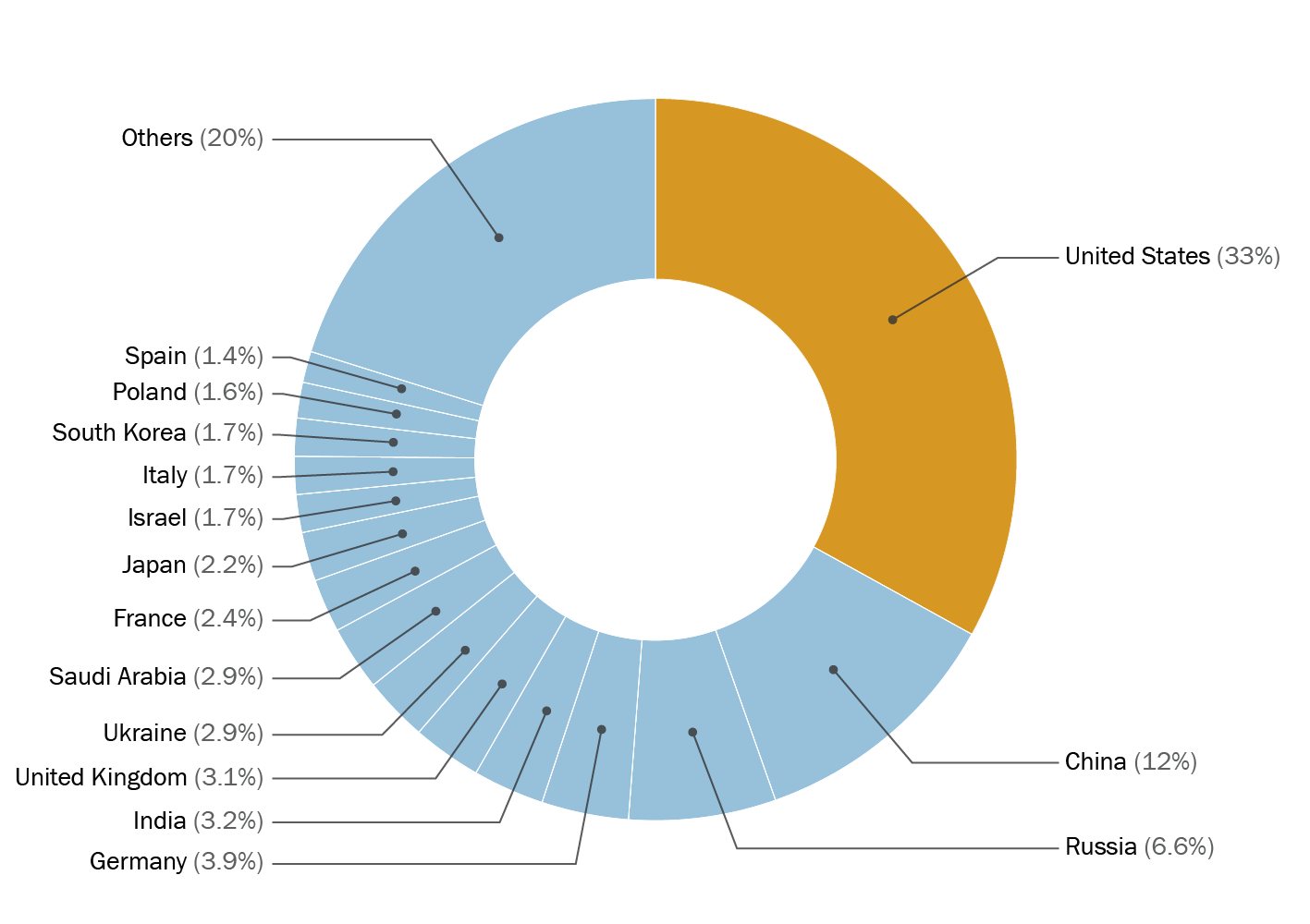
Figure 2. The share of world military expenditure of the 15 countries with the highest spending in 2025
Source: SIPRI Military Expenditure Database, Apr. 2026.
The USA remained the biggest spender, accounting for a third of all military spending in 2025, but the gap to the next largest spenders is shrinking. The USA’s share has declined steadily since 2020 and fell by 4.3 percentage points between 2024 and 2025, reflecting both a year-on-year reduction in US spending and widespread increases elsewhere. In 2025 the USA
spent 2.8 times as much on the military as China—the next largest spender—down from 3.2 times in 2024, as China maintained its 12 per cent share of global spending.
Twelve of the top 15 spenders increased their military expenditure in 2025, with only the USA, the United Kingdom and Israel showing decreases. States ranked towards the lower end of the top 15 made some of the largest year-on-year percentage increases among this group, with Spain (ranked 15th) recording the biggest rise (up by 50 per cent). Spending by Poland (ranked 14th) grew by 23 per cent, while Italy (ranked 12th) and Ukraine (ranked 7th) each increased their military expenditure by 20 per cent.
At $954 billion, US military expenditure in 2025 was 7.5 per cent lower than in 2024 but was still 11 per cent higher than in 2016. The year-on-year decrease was mainly due to a sharp reduction in financial military assistance overseas that in previous years had come from supplemental funding (appropriations) beyond the initial budget of the US Department of Defense (DOD). SIPRI counts financial military assistance as part of the military expenditure of the donor country.
Supplemental appropriations for
the DOD in support of Ukraine were introduced in 2022 following Russia’s full-scale invasion of the country. Between 2022 and 2025, a total of $127 billion was allocated to the DOD through supplemental appropriations for Ukraine-related support, of which only $65.1 billion had been disbursed by the end of 2025. In 2024 supplemental appropriations for Israel-related support were also allocated to the DOD (totalling $13.0 billion). However, no DOD supplemental appropriations were allocated for financial military assistance to either Ukraine or Israel in 2025. Israel did, nevertheless, continue to receive financial military assistance from the USA during the year—amounting to $3.8 billion in 2025—under a separate mechanism that is mostly funded through the US Department of State’s budget and covers the period 2019–28.
In 2025 the USA continued to prioritize investment in its nuclear modernization and advanced conventional weapon programmes in order to maintain US military dominance in the Western Hemisphere and deter China in the Indo-Pacific, which are key goals set out in the latest US national security strategy published in late 2025. For example, in 2025 the USA allocated $9.9 billion to the programme for the nuclear-armed Columbia-class submarine and $13.9 billion to the programme for the conventionally armed Virginia-class submarine.
China, the world’s second largest military spender, allocated an estimated $336 billion to its military in 2025. This accounted for 1.7 per cent of China’s GDP in 2025, which was the same level as its average military burden between 2016 and 2024. China’s military expenditure has increased each year for 31 consecutive years—the longest streak of any country in the SIPRI Military Expenditure Database. It rose by 7.4 per cent in 2025 (the largest year-on-year increase in the past decade) and by 62 per cent between 2016 and 2025. The increase in 2025 came amid a renewed campaign against corruption in military procurement within the People’s Liberation Army (PLA), which led to the dismissal of several senior military and arms industry officials. However, the anti-corruption campaign did not appear to result in any new constraints on Chinese military spending in 2025.
China’s spending supports the PLA’s goal of completing a comprehensive modernization of its forces across all military domains by 2035. Developments in 2025 included the testing of prototype J-36 and J-50 sixth-generation combat aircraft, and the H-20 strategic bomber achieving initial operational capability.
In 2025 Russia’s military expenditure reached an estimated $190 billion, following a year-on-year increase of 5.9 per cent. This marked the slowest annual rate of growth in Russian military spending since the full-scale invasion of Ukraine in 2022. Nevertheless, Russia’s military burden remained high, at 7.5 per cent of GDP in 2025. In addition, its military spending as a share of government spending hit 20 per cent—the highest level SIPRI has ever recorded for Russia. The trend of reduced budgetary transparency also continued in 2025. For example, the ‘Classified residual’ spending category increased from an estimated 73 per cent of Russia’s National Defence budget in 2024 to around 79 per cent in 2025. Reflecting the mounting social cost of the war in Ukraine, a new spending category, ‘Classified social policy’, was added to the National Defence budget in 2025. At the same time, the military-related category of Russia’s unclassified social policy budget increased during the year, as it has done every year since 2022, while the civilian ‘Social policy’ category has steadily decreased over that period.
Despite ongoing economic pressures and sanctions, Russia has so far managed to increase its military expenditure year-on-year since 2022, albeit with shifting procurement and operational strategies. As its invasion of Ukraine has gradually become a war of attrition, Russia has moved towards procuring high volumes of cheaper weapon systems in an attempt to limit operational costs. In particular, Russia’s use of uncrewed aerial vehicles (UAVs, or drones) has expanded rapidly, partly compensating for earlier losses of more expensive equipment such as aircraft and armoured vehicles. Western sanctions have also compelled Russia to find new ways of importing dual-use and advanced technology components by sourcing them from or via non-sanctioning countries. However, restructuring certain arms industry supply chains has raised procurement costs overall, partly due to the higher prices charged by the new suppliers.
In 2025 Germany was the fourth biggest spender globally as its military expenditure reached $114 billion. The 24 per cent year-on-year increase in 2025 marked the third consecutive year of double-digit percentage growth in German military spending. At 2.3 per cent of GDP in 2025, Germany’s military burden exceeded 2.0 per cent for the first time since 1990. Germany has pledged to reach 3.5 per cent of GDP by 2029 (see box 1 below). To fund military spending, the German government has expanded the use of off-budget mechanisms to work around the limits on government debt and deficit under its long-standing policy of financial austerity. Among the reforms to Germany’s fiscal framework implemented in 2025, perhaps the most significant is that military spending above 1.0 per cent of GDP is now excluded from Germany’s so-called debt brake, which limits the government’s budget deficit to 0.35 per cent of GDP. This allows the German government to finance military spending through borrowing.
Box 1. The new NATO spending targets and their implications
The combined military expenditure of members of the North Atlantic Treaty Organization (NATO) reached $1581 billion in 2025 and accounted for 55 per cent of world military spending. In June 2025 the NATO member states agreed to raise the alliance’s military spending target to 5.0 per cent of gross domestic product (GDP) by 2035, a substantial increase from the previous target of reaching 2.0 per cent of GDP by 2024, agreed in 2014. Of the 5.0 per cent of GDP, a minimum of 3.5 per cent should be allocated to core military spending, while the remaining 1.5 per cent can be allocated to what NATO terms ‘defence- and security-related spending’. According to NATO, this could include spending to protect critical infrastructure, to ensure civil preparedness and resilience or to strengthen the arms industrial base. However, NATO has so far provided little guidance on the boundaries of the non-core military-related spending category, creating challenges with regard to the definition and reporting of military spending, which in turn raise concerns at the strategic level.
Blurring the lines between the core military and military-related spending categories brings with it the risk of inconsistent reporting and reduced transparency, limiting effective public scrutiny. It may also incentivize NATO members to reclassify non-military activities as military to meet politicized targets, generating scope for ‘creative accounting’ and the militarization of civilian projects, such as Italy’s reported attempt in 2025 to include the costs of building a bridge to Sicily in its military-related expenditure.
This issue is highlighted by the fact that in 2025 there were substantial divergences between SIPRI and NATO military spending figures. However, because NATO does not publish disaggregated data or technical details on its own calculations, independently verifying its numbers is becoming harder. For example, NATO estimated Canada’s 2025 military expenditure at US$5.0 billion higher than SIPRI’s figure, but did not publicly disclose the scope of the additional spending.
At the strategic level, inflated or inconsistently defined military spending figures may misrepresent NATO members’ actual military capability and distort assessments of the balance of forces, potentially shaping threat perceptions and capability development based on spending levels that do not accurately reflect operational capacity.
India, the fifth biggest spender in the world in 2025, increased its military spending by 8.9 per cent to $92.1 billion. India’s conflict with Pakistan in May 2025—which involved the use of combat aircraft, drones and missiles—pushed up military spending during the year. Revised capital outlays for military aircraft systems were 50 per cent higher than originally budgeted, while operations and personnel costs for the Indian Air Force were revised upwards by 18 per cent from the original budget.
Regional Trends
Countries in the Americas accounted for 37 per cent of the world’s military spending in 2025 (see table 2), followed by countries in Europe (30 per cent), Asia and Oceania (24 per cent), the Middle East (7.6 per cent) and Africa (2.0 per cent). The regional distribution has shifted notably over the past decade: the Americas’ share fell by 5.5 percentage points between 2016 and 2025, while Europe’s share increased by 11 percentage points.
Africa
Military expenditure in Africa grew for the third consecutive year in 2025 to reach $58.2 billion. Spending was 8.5 per cent higher than in 2024 and 45 per cent higher than in 2016.
Military spending by North African countries totalled $35.0 billion in 2025, which was 9.3 per cent more than in 2024 and 67 per cent more than in 2016. Algeria’s military spending rose by 11 per cent to reach $25.4 billion in 2025, making it by far the biggest spender in both North Africa and Africa as a whole. At 25 per cent, Algeria’s military expenditure as a share of government spending was the second largest globally after Ukraine. With military spending of $6.3 billion in 2025, Morocco was the second largest spender in Africa. Its spending rose by 6.6 per cent in 2025. Spending by both Morocco and Algeria is largely driven by long-standing tensions between the two—especially over the contested territory of Western Sahara—which continued to escalate in 2025.
Military expenditure in sub-Saharan Africa totalled $23.3 billion in 2025, up by 7.4 per cent compared with 2024 and 21 per cent more than in 2016. The year-on-year increase was largely driven by higher spending in Nigeria, the second largest spender in the subregion. Nigeria’s military expenditure rose by 55 per cent to $2.1 billion in 2025 against the backdrop of the worsening security situation in the country linked to insurgencies and extremist violence.
South Africa, the largest military spender in sub-Saharan Africa, allocated $3.2 billion to the military in 2025, a 1.2 per cent decrease from 2024 and 19 per cent lower than in 2016. Amid the persistent cuts in spending, the South African Auditor General is investigating historical irregular expenditures of roughly $900 million by the South African Department of Defence.
Military expenditure in the Democratic Republic of the Congo increased by 20 per cent to $1.2 billion in 2025 as the conflict with a Rwandan-backed non-state armed group escalated during the first half of the year. The two sides agreed a ceasefire in July 2025.
Data that became available in 2025 allows the consistent calculation of Somalia’s military spending in real terms for the first time. Somalia allocated $199 million to the military in 2025, which was 4.6 per cent less than in 2024 but 173 per cent more than in 2016. The sharp increase over the past decade reflects Somalia’s ongoing efforts to combat al-Shabab, an Islamist non-state armed group that has gradually increased territorial control over parts of the country.
The Americas
Military spending in the Americas fell by 6.6 per cent to $1065 billion in 2025 but this was still 13 per cent higher than in 2016. Trends in the Americas are dominated by developments in North America, with the USA alone accounting for 90 per cent of the region’s military spending in 2025. Canada’s military expenditure was $37.5 billion or 1.6 per cent of GDP in 2025. Its spending increased by 23 per cent compared with 2024 and was 77 per cent higher than in 2016.
Military expenditure in Central America and the Caribbean fell by 27 per cent in 2025 to $17.1 billion. Spending in the subregion grew by 64 per cent over the decade 2016–25. Trends in the subregion are heavily influenced by Mexico’s military spending, which dropped by a third in 2025 to $13.6 billion. This followed a 71 per cent increase in 2024.
South American military expenditure totalled $56.3 billion in 2025, up by 3.4 per cent from 2024 and by 5.7 per cent from 2016. Brazil, the biggest spender in the subregion, increased its military expenditure by 13 per cent in 2025 to $23.9 billion. The rise was mainly due to increased investment in naval technological development and higher military personnel costs.
Guyana’s military expenditure increased by 16 per cent to $248 million in 2025, fuelled by escalating tensions with Venezuela over the oil-rich Essequibo region. The effect of the escalation on Venezuela’s military spending is unknown as it has not publicly reported on its expenditure figures for several years.
Asia and Oceania
The combined military expenditure of states in Asia and Oceania in 2025 was $681 billion, an increase of 8.1 per cent from 2024 and of 48 per cent from 2016. This continued an uninterrupted trend dating back to at least 1989. The increase in 2025 represented the biggest year-on-year rise since 2009. All five subregions recorded higher spending, reflecting the accelerating military build-up across the region.
Japan’s military expenditure reached $62.2 billion in 2025, a 9.7 per cent increase from 2024 and a 61 per cent rise from 2016. The growth supported the ongoing implementation of the military build-up plan Japan launched in 2022, driven by perceived security concerns related to China and North Korea. Japanese procurement spending in 2025 was largely focused on long-range strike and counterstrike capabilities, including cruise missiles and intelligence, surveillance and reconnaissance (ISR) systems. The military budget for 2025 represented 1.4 per cent of GDP, giving Japan its highest military burden since 1958.
South Korea allocated $47.8 billion to the military in 2025. This was 2.6 per cent more than in 2024. The increase was driven largely by continued investment in the three-axis deterrence system—missile defence, pre-emptive strike and retaliatory capabilities—against perceived nuclear and missile threats from North Korea.
In 2025 Taiwan’s military expenditure rose by 14 per cent to $18.2 billion (equivalent to 2.1 per cent of GDP)—the largest year-on-year increase since at least 1988. The sharp growth in spending reflected rising tensions in the Taiwan Strait amid an intensification in the operational complexity and scope of PLA military drills around the island in 2025. The government pledged in 2025 to raise military spending towards a goal of 5.0 per cent of GDP by 2030 after US President Donald J. Trump called on Taiwan to increase its military spending to 10 per cent of GDP.
Pakistan’s military spending grew by 11 per cent to $11.9 billion in 2025. The increase was largely due to new orders for aircraft and missiles placed with China in 2025 following the armed conflict with India in May, as well as payments for earlier procurement contracts nearing completion.
Europe
Total military expenditure in Europe reached $864 billion in 2025, an increase of 14 per cent compared with 2024 and the highest level of European spending ever recorded by SIPRI. Over the decade 2016–25, military spending in the region doubled (+102 per cent). The increase reflects the growing geopolitical instability in the region, mainly related to the Russia–Ukraine War and the uncertainty over the US security guarantees for European members of the North Atlantic Treaty Organization (NATO). Military spending by the 29 European NATO member states totalled $559 billion in 2025. According to SIPRI’s methodology, 22 of these member states allocated 2.0 per cent or more of their GDP to military expenditure in 2025 (the NATO spending target agreed in 2014), with 2 allocating more than 3.5 per cent (see box 1). Poland had the highest military burden among all NATO members, allocating 4.5 per cent of its GDP to the military in 2025. Latvia had the next highest, at 3.6 per cent.
The UK’s military spending amounted to $89.0 billion in 2025, which was 2.0 per cent less than in 2024 but 32 per cent more than in 2016. The UK allocated 2.4 per cent of its GDP to the military in 2025—still slightly short of the objective of 2.5 per cent that the government plans to reach by 2027. To increase military spending and fulfil this objective, the UK continued to make cuts to its official development assistance (ODA) budget in 2025. Since further borrowing is not deemed sustainable, future tax increases or cuts in other areas of the government budget are likely to be necessary to fund the UK’s ambition of reaching a military burden of 3.0 per cent of GDP in the early 2030s.
In 2025 France’s military spending rose by 1.5 per cent to $68.0 billion. Notably, spending on equipment for the armed forces, most of which will be produced by the French arms industry, increased by 11 per cent to $21.1 billion. France’s National Strategic Review released in 2025 aims to strengthen the arms industry to meet the needs of the armed forces and build an ‘economy prepared for war’ by 2030.
Spain’s military spending increased by 50 per cent to $40.2 billion in 2025. Its military spending as a share of GDP was 2.1 per cent. This put Spain’s military burden above 2.0 per cent of GDP for the first time since the NATO spending target was agreed in 2014. In April 2025 the Spanish government launched the Industrial and Technological Plan for Security and Defence to support military procurement, to which $11.8 billion was to be allocated during 2025.
Ukraine’s military expenditure grew by 20 per cent in 2025 and by 1501 per cent over the decade 2016–25. At $84.1 billion, Ukraine’s estimated military spending was at its highest ever level and represented 40 per cent of its GDP and 63 per cent of government spending. Both shares increased in 2025, remaining the highest in the world for the fourth year in a row. The initial 2025 budget was revised twice during the year to allocate an additional $17.7 billion to the military to help fund rising ammunition, arms production and personnel costs. Despite the lack of new aid commitments from the USA, in 2025 Ukraine received $52.2 billion from its partners to support its state budget, the highest amount since the start of the war and 11 per cent more than in 2024. At $37.9 billion, the Extraordinary Revenue Acceleration (ERA) loans from the Group of Seven (G7) wealthy industrialized states were the single largest source of external assistance to Ukraine during 2025. Since the ERA loans are planned to be repaid by the interest generated by frozen Russian assets, Ukraine will not need to service them.
The Middle East
Military expenditure in the Middle East was an estimated $218 billion in 2025. It went up only marginally in 2025 (+0.1 per cent) but increased by 36 per cent over the decade 2016–25 in the context of recurring regional conflicts and crises. The region’s largest spender in 2025 was Saudi Arabia, with estimated expenditure of $83.2 billion. Its spending was 1.4 per cent higher than in 2024 and 12 per cent higher than in 2016.
Israel’s military expenditure decreased by 4.9 per cent in 2025 to reach $48.3 billion. The relatively modest year-on-year decrease in Israel’s spending reflected the reduction in the intensity of the war in Gaza, following the ceasefire with Hamas in January 2025. However, with the 12-day war with Iran in June 2025 and ongoing military operations in Lebanon and Syria, Israel’s expenditure in 2025 was still 120 per cent higher than in 2016 and 97 per cent higher than in 2022 (the year before the war in Gaza started).
Türkiye’s military expenditure reached $30.0 billion in 2025, an increase of 7.2 per cent from 2024 and of 94 per cent from 2016. The overall increase was driven by Türkiye’s continuing military operations in Iraq, Somalia and Syria, but most of all by investments in its domestic arms industry. Allocations to the special fund to support the Turkish arms industry rose by 25 per cent year-on-year and accounted for 22 per cent of Türkiye’s total military expenditure in 2025.
Iran’s military expenditure decreased for the second consecutive year, to $7.4 billion in 2025, which was 5.6 per cent lower than in 2024 and 0.9 per cent lower than in 2016. The year-on-year drop in expenditure in real terms can mostly be attributed to the effect of Iran’s annual inflation rate of 42 per cent, as military spending rose in nominal terms. Funding for key domestic arms producers increased sharply in Iran’s military budget for 2025. For example, allocations to the Iran Aircraft Manufacturing Industrial Company (HESA), which produces military aircraft and drones, increased by 50 per cent, while allocations to the Aerospace Industries Organization (AIO), which produces ballistic missiles, grew by 44 per cent. However, these budgeted allocations probably represent only a relatively small proportion of Iran’s procurement spending in 2025 as parts of Iran’s drone and missile programmes are funded through off-budget mechanisms—often using oil revenues—which are not covered by its official military budget.
Military Spending as a Share of GDP
A country’s military expenditure as a share of GDP—also known as the military burden—is the simplest measure of the relative economic cost of the military on the country (see figure 3). The global military burden is estimated to have risen from 2.4 per cent of GDP in 2024 to 2.5 per cent in 2025, to reach its highest level since 2009.
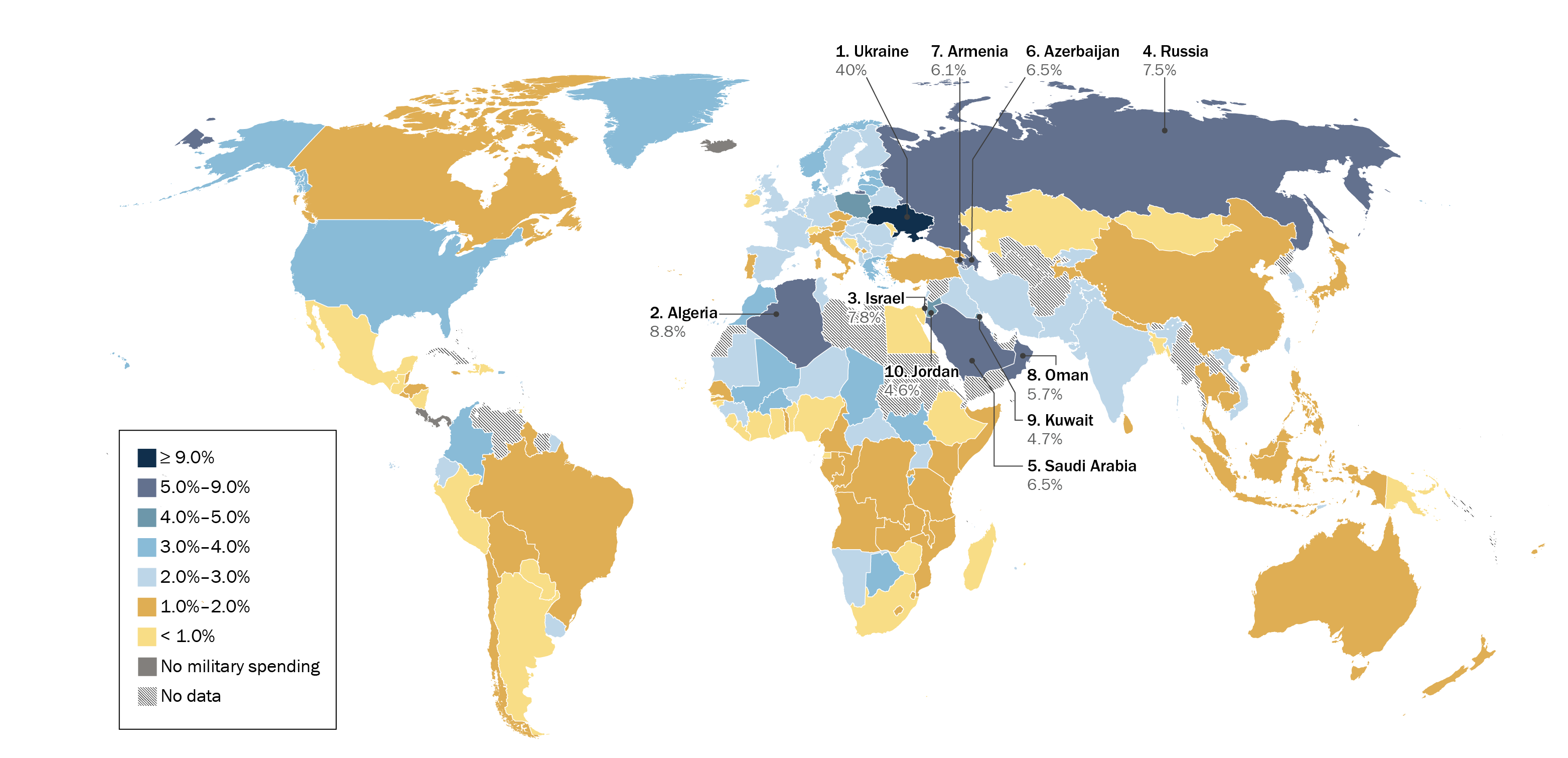
Figure 3. Military spending as a share of gross domestic product, by country, 2025
Note: The 10 countries with the highest military spending as a share of gross domestic product are labelled.
The boundaries used in this map do not imply any endorsement or acceptance by SIPRI.
Source: SIPRI Military Expenditure Database, Apr. 2026.
On average, states in the Middle East had the highest military burden in 2025, at 3.8 per cent of GDP, followed by states in Europe (3.2 per cent), Africa (1.8 per cent), Asia and Oceania (1.6 per cent) and the Americas (1.2 per cent). In 2025 the three countries with the highest military burden were Ukraine (40 per cent), Algeria (8.8 per cent) and Israel (7.8 per cent). The largest increase in burden was in Ukraine (+5.6 percentage points), followed by Azerbaijan (+1.4), and then Norway and Denmark (both +1.0). South Sudan and Burkina Faso reported the largest decreases, of 3.1 and 1.1 percentage points respectively. In all other countries, the military burden changed by less than one percentage point.
ABOUT THE AUTHOR(S)/EDITORS

Xiao Liang is a Researcher in the SIPRI Military Expenditure and Arms Production Programme.

Dr Nan Tian is a Senior Researcher and Programme Director of the SIPRI Military Expenditure and Arms Production Programme.

Dr Diego Lopes da Silva is a Senior Researcher in the SIPRI Military Expenditure and Arms Production Programme.

Lorenzo Scarazzato was a Researcher in the SIPRI Military Expenditure and Arms Production Programme.

Zubaida A. Karim is a Research Assistant in the SIPRI Military Expenditure and Arms Production Programme.

Jade Guiberteau Ricard is a Research Assistant in the SIPRI Military Expenditure and Arms Production Programme.
When peace is under threat, accurate information is more important than ever.
Invest in the facts