Military spending in Russia’s draft federal budget for 2027 to 2029

An examination of what Russia’s draft budget for 2027–29 reveals about its military spending intentions.

An examination of what Russia’s draft budget for 2027–29 reveals about its military spending intentions.

On 26 January 2018 China’s State Council Information Office published a white paper clarifying China’s vision of the Arctic, its intentions, goals and objectives in the region.
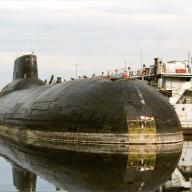
The announcement that Russia had completed the destruction of its chemical weapons stockpile was rightly applauded as a milestone in multilateral arms control. However, it was also a reminder of the significant part that international non-proliferation and disarmament assistance played in facilitating the implementation of the 1993 Chemical Weapons Convention (CWC).
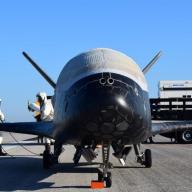
Lora Saalman provides the context for how threat perceptions are manifested in China's hypersonic glide capabilities.
Jiayi Zhou discusses the penetration of Chinese labour migrants of Russia’s Far East Federal District (RFE), juxtaposing their commercial interests with local fears of land grabbing.
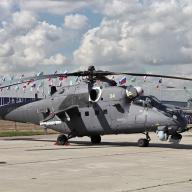
When it comes to the arms trade, China has not only learned from Russia, but succeeded in challenging it.
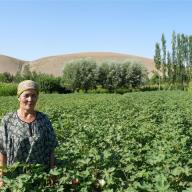
Kyrgyzstan’s experience as a member of Eurasian Economic Union (EAEU) from mid-2015 to late 2016 has been largely frustrating, alhtough any analysis is complicated by the regional economic and political shocks during this time.

The EU has so far reacted hesitantly to China's Belt and Road Initiative amid concerns over transparency, feasability and sustainability. However, it risks being left behind as China takes a stronger lead in shaping the Eurasian landscape.
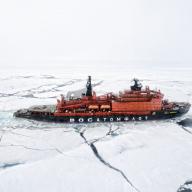
On the day of the 10th Arctic Council Ministerial meeting, this backgrounder looks at the status of Chinese–Russian cooperation in the Arctic.
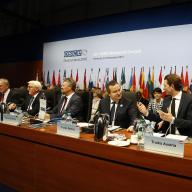
Dr Lars-Erik Lundin looks back at the role of dialogue in resolving previous European security challenges and argues that a simliar approach is needed today.
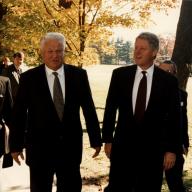
SIPRI’s Ian Anthony reflects on the 1997 Helsinki Summit

Violence in the North Caucasus has decreased dramatically in the last few years, largely due to a growing number of fighters leaving the North Caucasus for Syria.
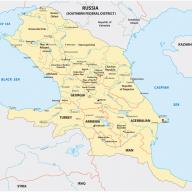
The Nagorno-Karabakh conflict is becoming an arena for wider security issues between major players in the region, including Russia, Turkey, Iran, the EU and the USA.

The Minsk II agreement has not provided a framework for ending the conflict in eastern Ukraine.
The South Caucasus have a long history of violence and militarization, which coule be made worse by the conflict in Syria.
The current pattern of Russian behaviour has been labelled inconsistent with the norms, values and laws that make up the European security order—to the point where EU leaders stress that relations with Russia cannot be ‘business as usual’.
While the threat of nuclear war during the cold war era was all too real, in one sense the world is worse off now: even the notion of rebuilding trust on the basis of international commitments is seen as idealistic and unrealistic.
Arms production was the backbone of the Soviet-type command economy systems in East Central Europe (ECE), but with the collapse of the Eastern bloc, arms makers faced a drastic disruption in their economic, political and social environment.
The crisis in Ukraine poses the most serious challenge to European security since the end of the cold war, and highlights the urgent need to refashion European security so that it is capable of managing the new environment that has developed in the region. The Organisation for Security and Cooperation in Europe (OSCE) is the only actor capable of bringing the current crisis to an end and of building long-term peace and stability in Ukraine and the wider region.
The 22nd Olympic Winter Games in Sochi have already attracted a deluge of international press coverage. The January attacks in Volgograd and reports of possible 'black widow' suicide bombers have brought the issue of terrorism and the security of the Games into focus. The Russian security authorities have established an unprecedented security and surveillance operation, with over 40 000 police and armed forces personnel involved in securing the Games. While every step is being taken to isolate participants from violence, the Games themselves have already become part of the region’s conflicts, writes SIPRI’s Neil Melvin.
Perceptions of threats to security are both individual and shared. Currently, many share concerns about recent developments in Iran and North Korea, while many also see in the new approach of the United States a glimpse of hope. SIPRI—with its mandate to ‘contribute to an understanding of the conditions for peaceful solution of international conflicts’—aims through its annual SIPRI Yearbook to provide a basis on which threats can be assessed and to deliver the most relevant facts for the debate.