Related commentary: EU Non-Proliferation and Disarmament Consortium
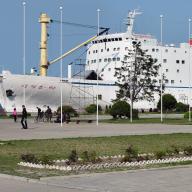
The international sanctions regime against the Democratic People’s Republic of Korea (North Korea, DPRK) is the strongest and most comprehensive set of sanctions currently in effect against any one country.
The 2009 EU Dual-use Regulation (Council Regulation 428/2009) creates a common legal basis for European Union (EU) member states’ controls on the trade in ‘dual-use items’ (i.e. goods, materials and technologies that may be used for both civilian and military purposes) and is a crucial component of global non-proliferation efforts.
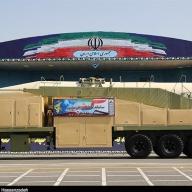
Given the transatlantic disagreement over the JCPOA, European countries might feel increasing pressure to focus on Iran’s ballistic missile activities in order to find common ground with the USA. But is the Western perspective on Iran’s missile programme based on an objective threat assessment, and is a punitive approach helpful in addressing it?
The Iran nuclear deal has demonstrated that diplomacy can triumph in nuclear non-proliferation: dialogue, rather than military action, can convince states to forgo pursuing nuclear weapons. The European Union has long played an instrumental role in the multilateral diplomacy that produced the historic deal, formally known as the Joint Comprehensive Plan of Action (JCPOA).
A UN conference to negotiate a ‘legally binding instrument to prohibit nuclear weapons, leading towards their total elimination’ will begin next week. Tariq Rauf looks at who wants what.
Controlling the export of items that have military applications is a key tool in preventing the spread of weapons of mass destruction (WMD). Every day, customs officers have to determine whether shipments of goods with a potential military application could lead to the proliferation of WMD technology.