|
| |
|
News | Events | Commentaries | Publications | Vacancies
|
News
|
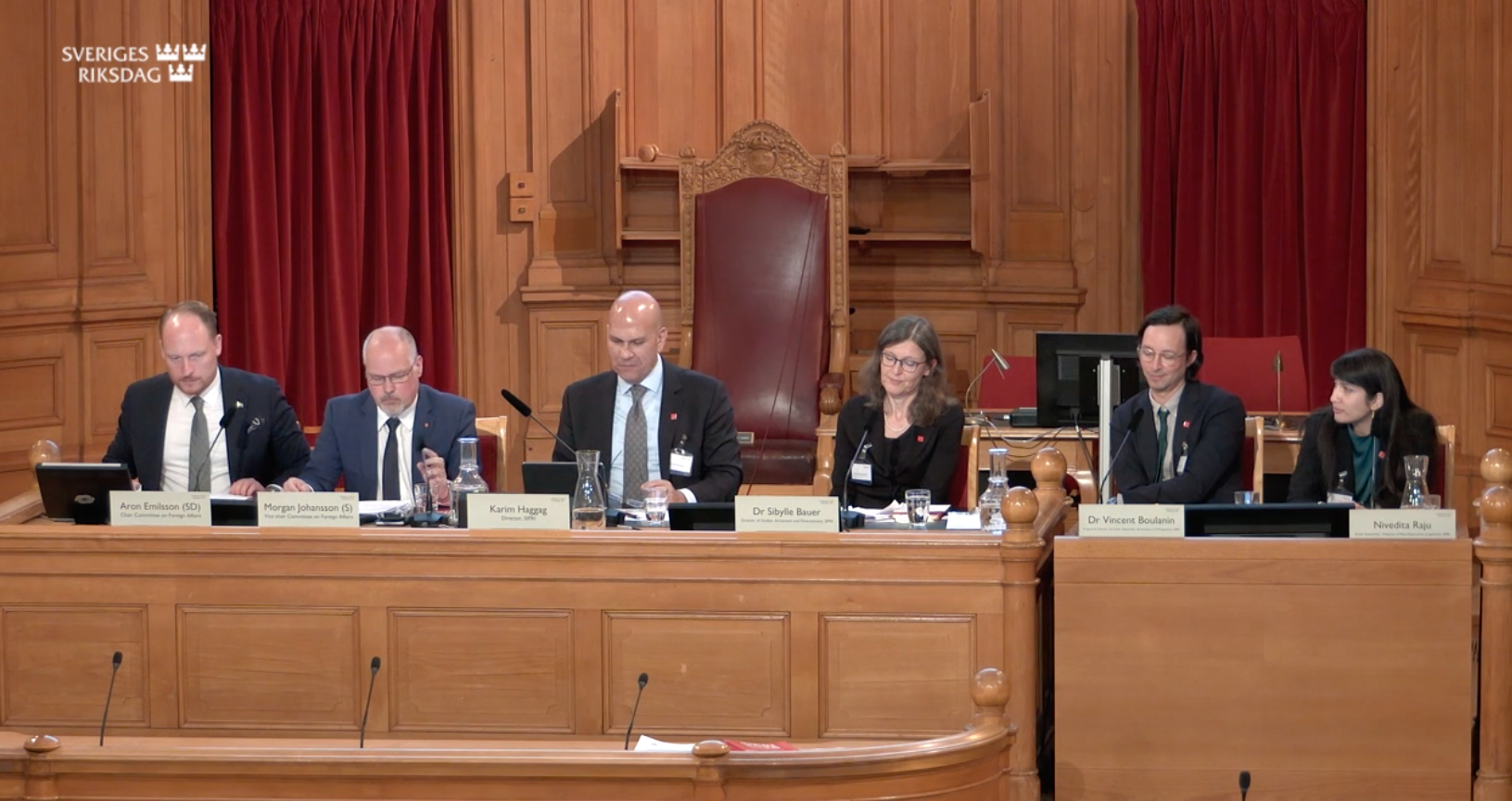 |
SIPRI celebrates 60th anniversary at the Swedish Parliament
On 9 June, SIPRI was honoured to launch SIPRI Yearbook 2026 at the Swedish Parliament to celebrate SIPRI’s 60th anniversary. During an open meeting of the Parliament’s Committee on Foreign Affairs, SIPRI experts Dr Sibylle Bauer, Dr Vincent Boulanin and Nivedita Raju joined SIPRI Director Karim Haggag to discuss nuclear arms control, military uses of artificial intelligence and the centrality of the space domain to contemporary warfare.
Read more | Watch the recording of the event | Watch the recording in Swedish | Explore the SIPRI Yearbook
|
|
|
|
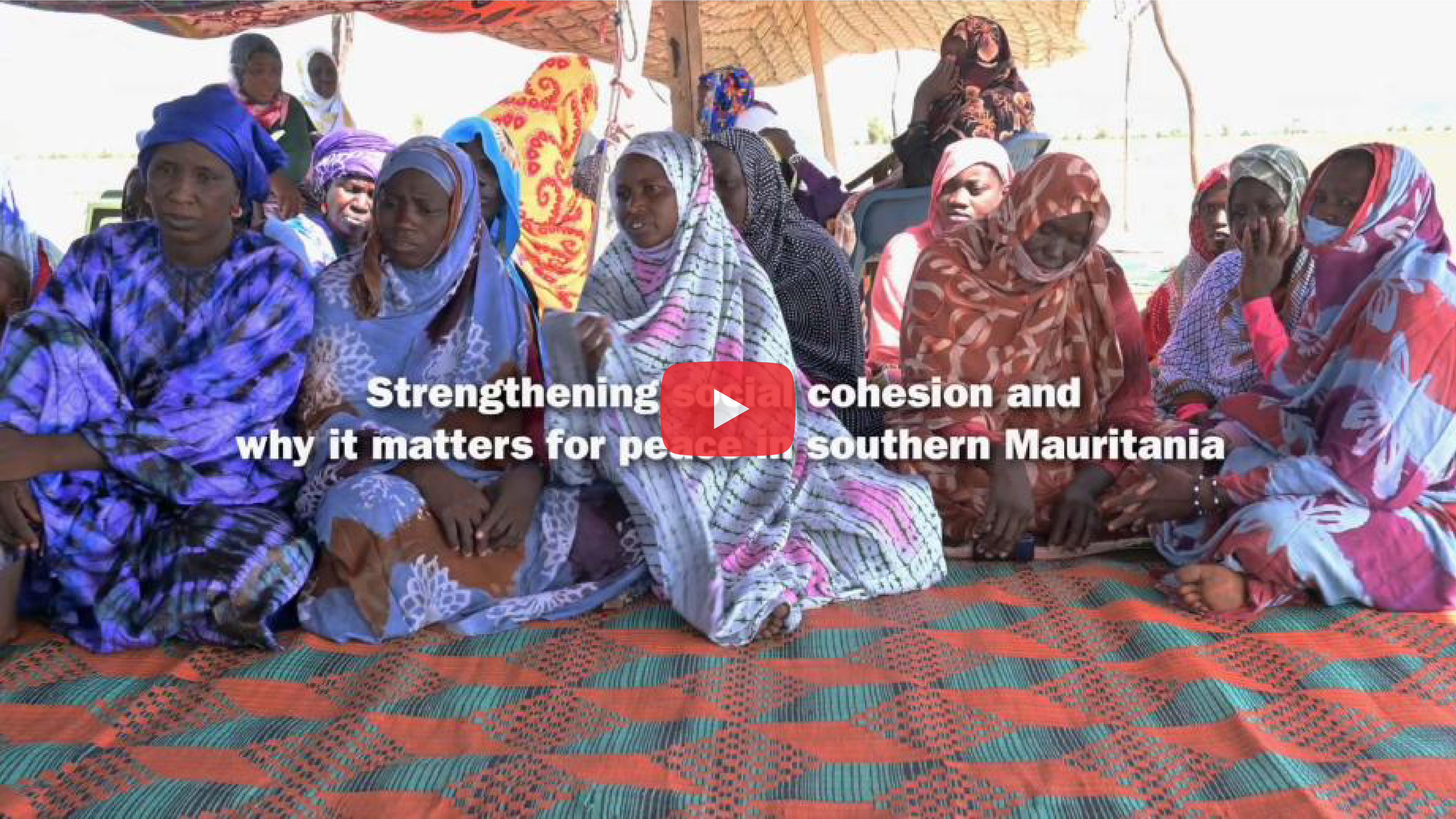 |
New SIPRI film highlights social cohesion and resilience in Mauritania
On 12 June, SIPRI launched a new film exploring the interconnected challenges affecting communities in Mauritania and the importance of strengthening social cohesion and resilience in the face of growing pressures in the Sahel region. The film presents insights from fieldwork conducted in the Guidimaka region of Mauritania, highlighting how communities experience interconnected challenges in their daily lives. Drawing on interviews with local residents and stakeholders, the film illustrates how environmental stress, livelihood challenges and social vulnerability shape relationships within and between communities.
Read more | Watch the film
|
|
 |
New SIPRI Spotlight video: The legacy of the Chornobyl disaster and today’s nuclear security challenges
This month, SIPRI released a new Spotlight video featuring Dr Mariana Budjeryn, Senior Researcher at the Center for Nuclear Security Policy, MIT, reflecting on the legacy of the Chornobyl disaster and the nuclear security challenges facing the international community today. Dr Budjeryn reflects on the international response to Chornobyl and the lasting impact the disaster had on global nuclear governance. She also examines the growing risks posed by military activity around nuclear facilities in Ukraine, highlighting the contrast between the swift institutional action that followed Chornobyl and the limited international response to current threats against nuclear infrastructure.
Read more | Watch the SIPRI Spotlight video
|
|
|
Recent events
|
SIPRI hosts third workshop on nuclear disarmament education
8 June 2026
SIPRI hosted the third iteration of a workshop on nuclear disarmament education ahead of the Alva Myrdal Centre for Nuclear Disarmament annual conference. The workshop brought together leading educators, experts and researchers to reflect on how issues related to nuclear policy, including nuclear disarmament, are taught in different countries.
Read more
|
|
SIPRI hosts workshop on space–nuclear nexus and European security
4–5 June 2026
The SIPRI Weapons of Mass Destruction Programme hosted a workshop on ‘Strategic Shifts and the Space–Nuclear Nexus’. The workshop analysed key developments and strategic shifts to assess how uncertainties may shape escalation pathways at the space–nuclear nexus and related implications for European security.
Read more
|
|
SIPRI co-hosts roundtable on US foreign policy and multilateralism
26 May 2026
SIPRI, in collaboration with the Swedish Ministry for Foreign Affairs, hosted a roundtable on ‘US Foreign Policy and Multilateralism under the Trump Administration’. Dr Bruce Jones, Senior Fellow at the Brookings Institution and Professor at the Freeman Spogli Institute, Stanford University, gave a presentation, which was followed by an open discussion, moderated by SIPRI Director Karim Haggag, on US actions across the world under President Donald J. Trump.
Read more
|
|
|
|
|
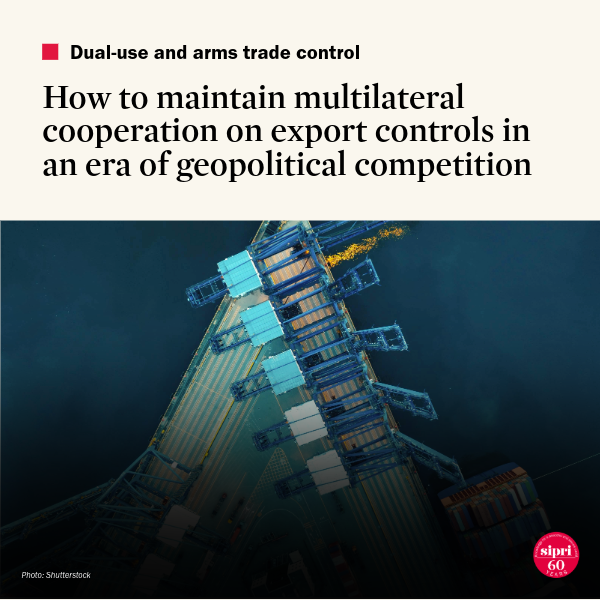 |
How to maintain multilateral cooperation on export controls in an era of geopolitical competition
The tension between the use of export controls to achieve multilaterally agreed objectives and unilaterally defined interests has always been present. However, it has approached a breaking point in recent years. The increasing use of export controls as ‘offensive economic tools’ risks diverting resources and political attention from non-proliferation and international security objectives. This backgrounder examines the role of the multilateral export control regimes in preventing the proliferation and misuse of military and dual-use items.
Read the SIPRI Topical Backgrounder
|
|
 |
SIPRI experts were recently featured in these external outlets:
|
|
|
Publications
|
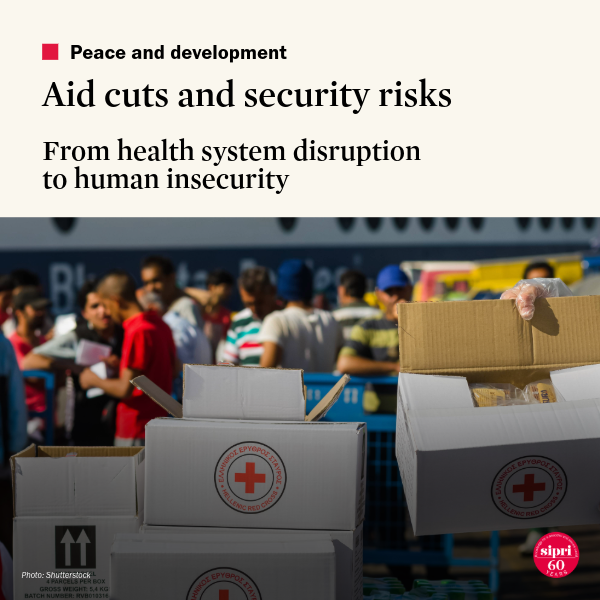 |
Aid Cuts and Security Risks: From Health System Disruption to Human Insecurity
At a time when the impacts of conflict, forced displacement and humanitarian needs are increasingly global, foreign aid to fragile and conflict-affected contexts is declining. In this paper, case studies from Somalia and Mali, with the cross-border dynamics in Mauritania, alongside interviews with government officials, policymakers, practitioners and donors, reveal how aid cuts in highly aid-dependent fragile contexts affect healthcare services, disease surveillance, and institutional trust. The paper highlights the need for a human-centred approach in security strategies that can bridge the divide between development and security policies.
Read the SIPRI Research Policy Paper
|
|
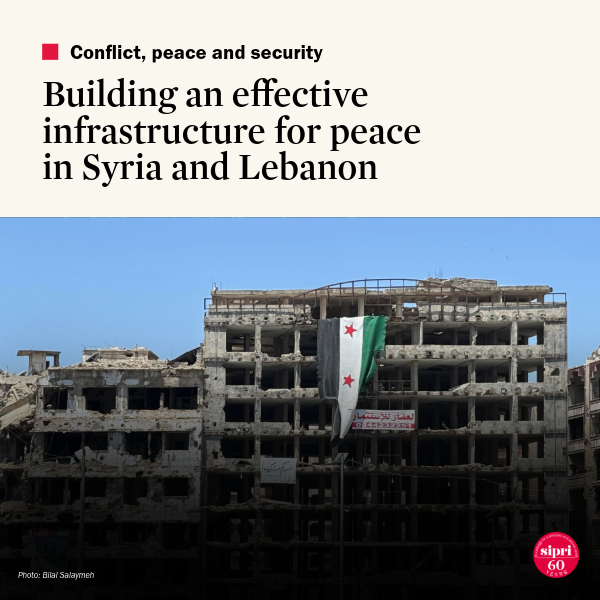 |
Building an Effective Infrastructure for Peace in Syria and Lebanon
Infrastructure for peace (I4P) is an institutionalized approach to peacebuilding and an interconnected framework that links actors, regulations and mechanisms across local and national levels to support conflict prevention and sustainable peace. In Syria and Lebanon, building an effective I4P entails embedding and adapting its core components to local political, social and institutional realities. Based on an in-depth analysis, this paper provides targeted policy recommendations for central governments, civil society organizations and international organizations in Syria and Lebanon.
Read the SIPRI report
|
|
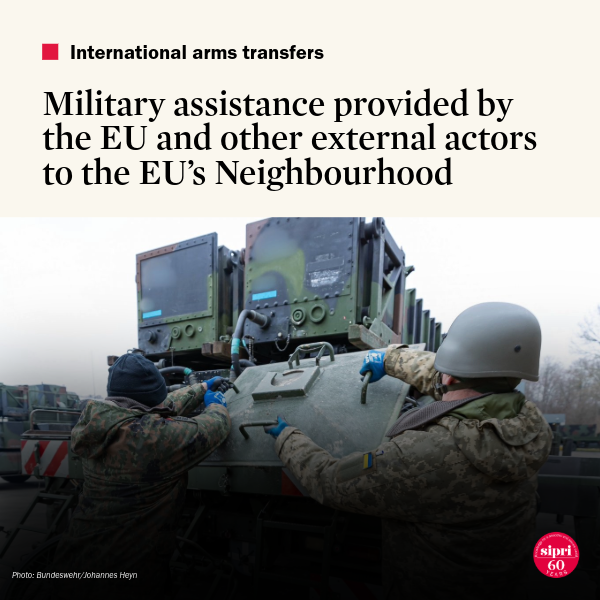 |
Military Assistance Provided by the EU and Other External Actors to the EU’s Neighbourhood
Strengthening the military capabilities of European Union (EU) partner states, including by providing weapons, has become an important element of the EU’s approach to peace and security over the past five years. SIPRI has produced three fact sheets that map military assistance provided by the EU and other external actors to states in the broader European neighbourhood. The fact sheets will feed into a larger study into the effectiveness of the EU’s military assistance to partner states and its coherence with that of EU member states.
Read the fact sheet on the EU’s Eastern Neighbourhood | Read the fact sheet on the EU’s Southern Neighbourhood | Read the fact sheet on West Africa
|
|
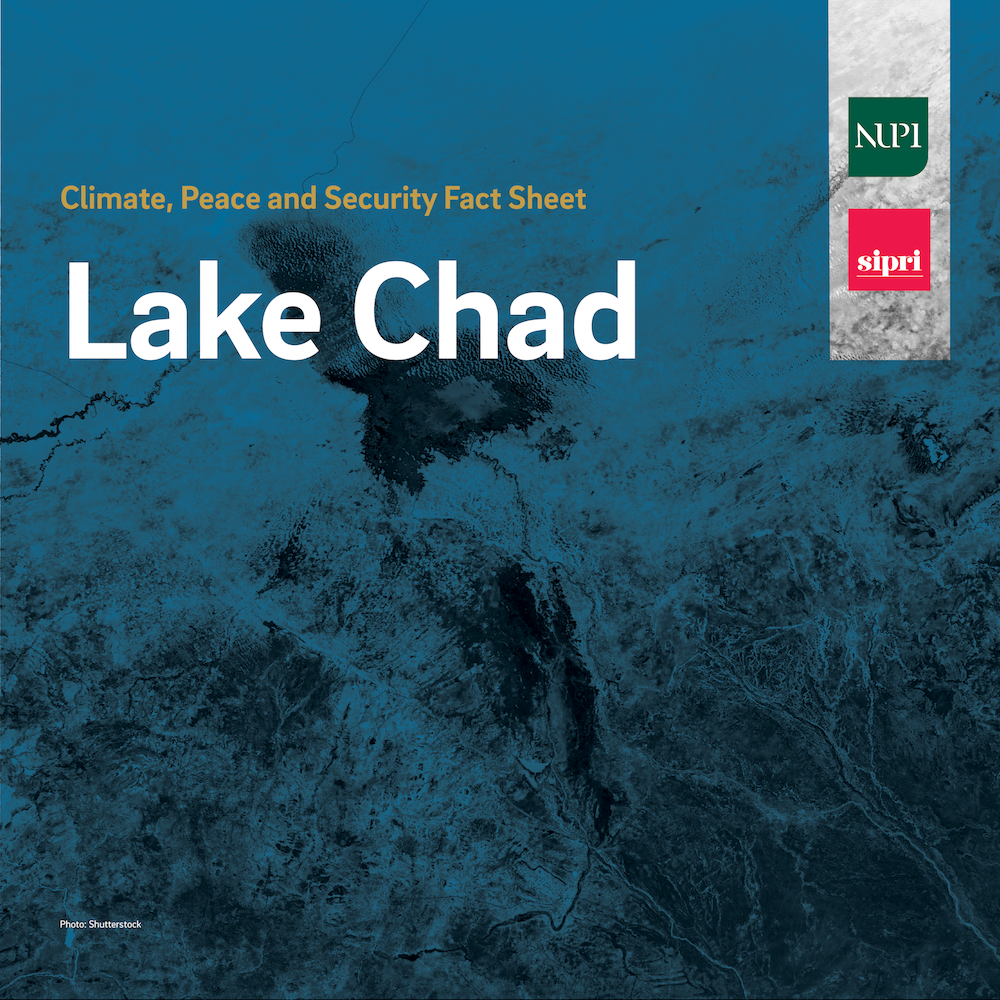 |
Climate, Peace and Security Fact Sheet: Lake Chad (2026)
The ongoing insecurity in the Lake Chad region—which intersects Cameroon, Chad, Niger and Nigeria—cannot be understood in isolation from climate and environmental change. Climate change-related stressors—such as increasingly variable precipitation and drought—contribute to existing tension and conflict between different communities by exacerbating scarcity of natural resources, including land, water and food. This Climate, Peace and Security Fact Sheet is focused on the Lake Chad region and the series of conflict- and climate-related issues that face the region. The fact sheet offers a range of recommended actions for the international community to address these issues effectively.
Read the report
|
|
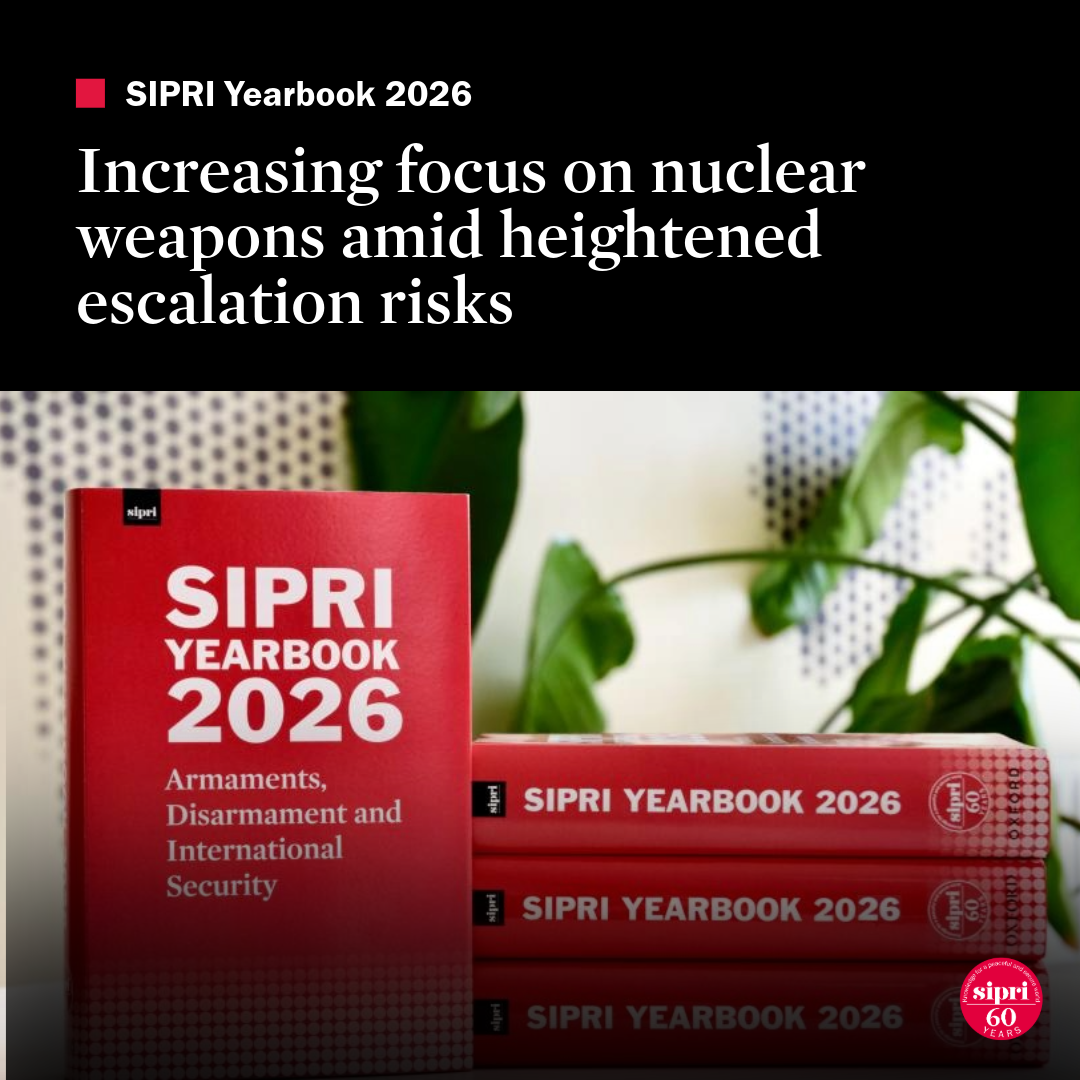 |
SIPRI Yearbook 2026
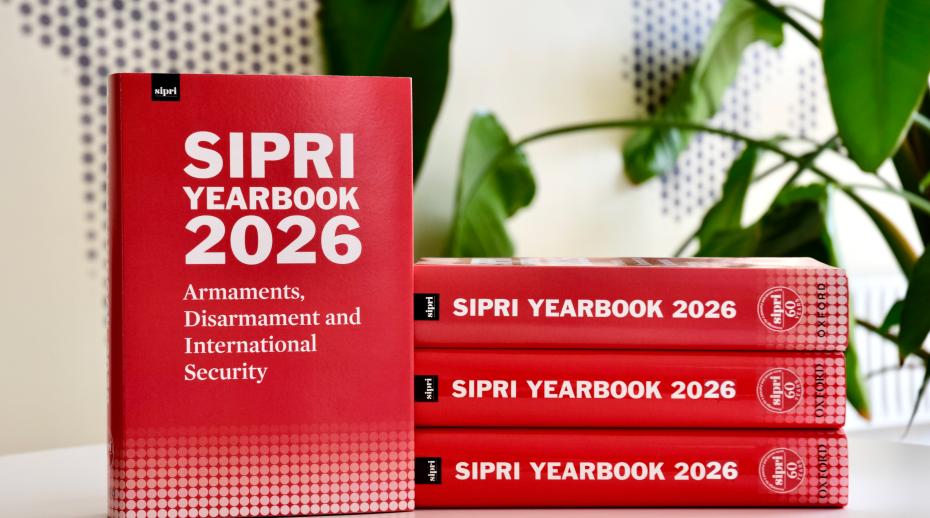
SIPRI Yearbook 2026 provides an overview of developments in international security, weapons and technology, military expenditure, arms production and the arms trade, and armed conflicts and conflict management, along with efforts to control conventional, nuclear, chemical and biological weapons. This 57th edition of the SIPRI Yearbook covers developments during 2025, including:
- armed conflict and conflict management, with an overview of global and regional developments in armed conflict, peace processes and peace operations;
- military expenditure, international arms transfers and developments in arms production, documenting, in particular, the consequences of a significant unravelling of global security;
- the proliferation of missiles and uncrewed aerial vehicles, with a focus on their widening use in armed conflict; and
- world nuclear forces, highlighting the nuclear modernization trends in the nine nuclear-armed states.
Browse the contents page | Download the summary | Download the sample chapter on world nuclear forces | Download the sample chapter on artificial intelligence and international peace and security | Download the sample chapter on space security governance | Download the introductory chapter | Order SIPRI Yearbook 2026
|
|
|
|
|
Accurate, dependable information is more important than ever. Invest in the facts.
Support SIPRI
|
|
 |
| SIPRI is an independent international institute dedicated to research into conflict, armaments, arms control and disarmament. Established in 1966, SIPRI provides data, analysis and recommendations, based on open sources, to policymakers, researchers, media and the interested public. |
|
|