The independent resource on global security

17. Dual-use and arms trade controls
Contents
I. Introduction
II. The Arms Trade Treaty
III. Multilateral arms embargoes
IV. The multilateral export control regimes
V. Developments in the European Union’s export controls
VI. Conclusions
The set of global, multilateral and regional instruments that seek to establish and promote agreed standards for controls on the trade in military items and dual-use items remained under significant strain during 2025—because of geopolitical tensions, new and ongoing armed conflicts and rapid advances in key technological areas. States are increasingly acting unilaterally or operating through alternative frameworks when creating new controls on transfers of items or restricting transfers to destinations. However, there were no significant efforts to dismantle the existing instruments, indicating that many states continue to value them.
The Arms Trade Treaty
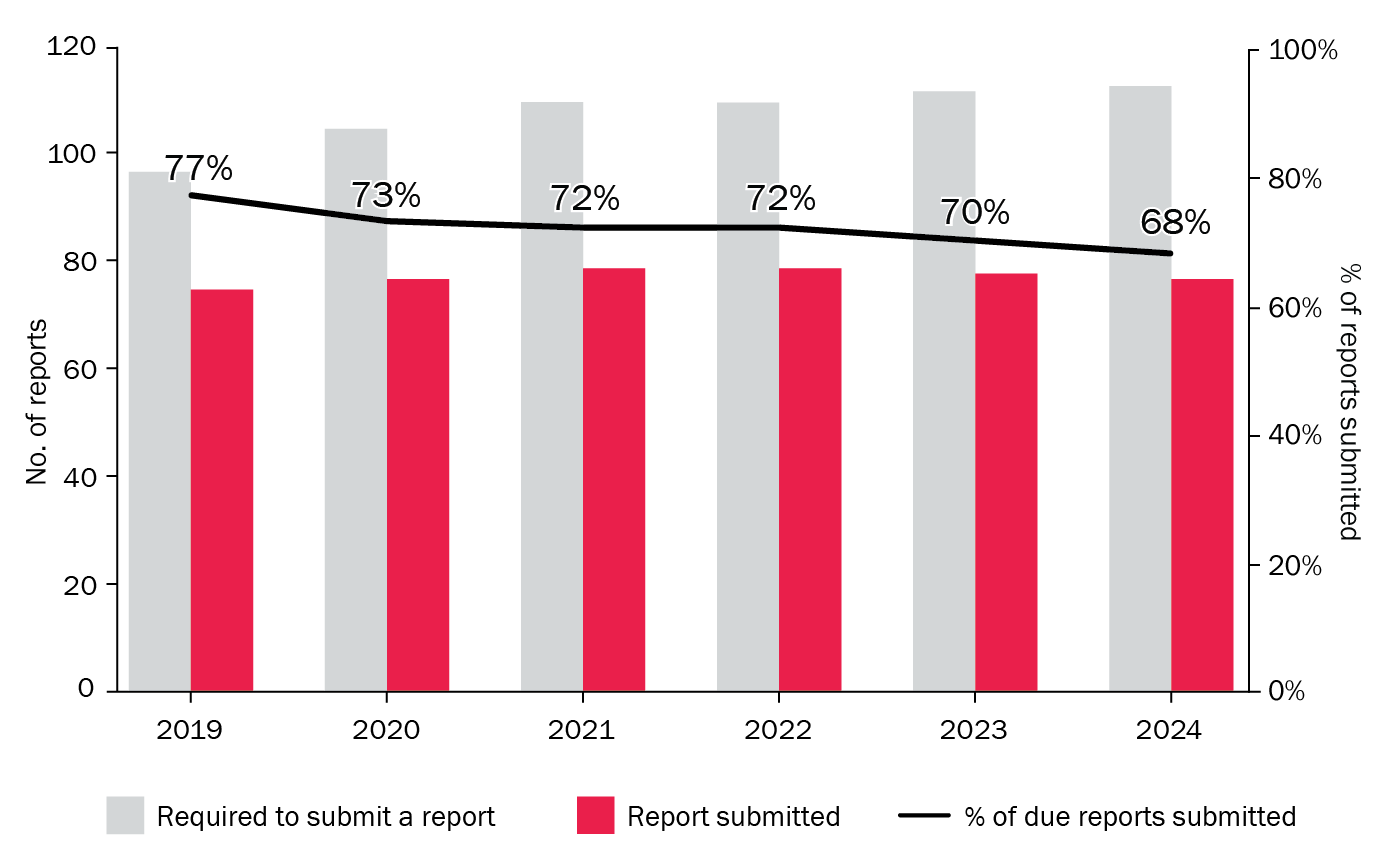
The number of states parties to the 2013 Arms Trade Treaty (ATT) continues to increase slowly but key arms suppliers and recipients have still not joined. In addition, there remain significant gaps in the number of initial reports and annual reports states are submitting. During 2025 the ATT continued to be a forum for difficult discussions about the more contentious arms exports, including arms transfers to Israel and those reaching the conflict parties in Sudan. States also explored ways to reinvigorate the ATT process and agreed on a mandate to elaborate a five-year strategy for the treaty by 2027.
Multilateral arms embargoes
During 2025 there were 14 United Nations embargoes and 22 European Union (EU) embargoes in force. No new multilateral arms embargoes were imposed, but the UN arms embargo on Iran, which had been suspended since 2023, was reimposed. The willingness of certain states to circumvent UN arms embargoes continued to undermine their effectiveness during 2025. For example, there was clear evidence of arms transfers to embargoed destinations in Libya and Yemen and of banned exports from North Korea to Russia. The EU expanded its arms embargoes on Russia and Belarus and sought to close off circumvention channels. However, efforts to align Western states’ arms embargoes on Russia became less coordinated during 2025 due to a change in US policy.
Number of Arms Trade Treaty states parties submitting annual reports, 2019–24
Export control regimes
The repercussions of the Russia–Ukraine war continued to affect the work of the multilateral export control regimes—the Australia Group (on chemical and biological weapons), the Missile Technology Control Regime, the Nuclear Suppliers Group, and the Wassenaar Arrangement (WA) on Export Controls for Conventional Arms and Dual-use Goods and Technologies. Despite these challenges, the regimes were still able to make incremental updates to the control lists and to advance technical discussions. The inability of the WA to find consensus on several control list additions due to a Russian veto led a growing number of states and the EU to adopt controls on items that had been proposed and discussed within the WA.
EU controls
During 2025 the EU took steps to bolster its common legal framework for controls on the export, brokering, transit and transshipment of military items and dual-use items. The EU completed a review of the EU common position on arms exports and adopted amendments that strengthened the common position’s language on risk assessment and that aimed to facilitate the joint production of military equipment in the EU and arms transfers to Ukraine. In addition, the European Commission sought to amend the system that regulates intra-EU transfers of military equipment also in a bid to facilitate joint production. However, some of these proposals met resistance from EU member states that are concerned about losing national oversight of their export control policies.
English