The independent resource on global security

Trends in International Arms Transfers, 2025

March 2026
Stockholm
SIPRI
summary
The global volume of major arms transferred between states in 2021–25 was 9.2 per cent higher than in the previous five-year period (2016–20). This was the biggest increase since 2011–15. Arms imports by states in Europe more than trebled between the two periods (+210 per cent). Arms imports by states in the Americas also increased (+12 per cent), while imports by states in Africa (–41 per cent), Asia and Oceania (–20 per cent) and the Middle East (–13 per cent) decreased.
Ukraine was the world’s largest recipient of major arms in 2021–25, receiving 9.7 per cent of total global arms imports in 2021–25 compared with 0.1 per cent in 2016–20. The United States remained by far the world’s largest supplier of major arms. Its arms exports went up by 27 per cent between 2016–20 and 2021–25, giving it a 42 per cent share of total global arms exports.
From 9 March 2026 the freely available SIPRI Arms Transfers Database includes updated data on transfers of major arms for 1950–2025. Based on the new data, this fact sheet presents key trends in arms exports and arms imports, and highlights selected issues related to transfers of major arms.
Key facts
- The volume of international transfers of major arms in 2021–25 was 9.2 per cent higher than in 2016–20. This was the biggest increase since 2011–15.
- The five largest suppliers of major arms in 2021–25 were the United States, France, Russia, Germany and China.
- Arms exports by the USA increased by 27 per cent between 2016–20 and 2021–25, giving it a 42 per cent share of total global arms exports.
- For the first time in two decades, the largest share of US arms exports went to Europe in 2021–25 (38 per cent).
- In 2021–25 France’s arms exports rose by 21 per cent compared with 2016–20, while Russia’s fell by 64 per cent.
- The five largest recipients of major arms in 2021–25 were Ukraine, India, Saudi Arabia, Qatar and Pakistan.
- States in Europe received 33 per cent of all arms imports in 2021–25, followed by states in Asia and Oceania (31 per cent), the Middle East (26 per cent), the Americas (5.6 per cent) and Africa (4.3 per cent).
- The 29 current European NATO member states’ combined arms imports grew by 143 per cent between 2016–20 and 2021–25. The USA accounted for 58 per cent of these imports in 2021–25.
- Arms imports to Asia and Oceania decreased by 20 per cent as China’s imports more than halved (–72 per cent) between 2016–20 and 2021–25.
- In 2021–25 more than half of arms imports by states in the Middle East came from the USA (54 per cent).
The global volume of major arms transferred between states in 2021–25 was 9.2 per cent higher than in the previous five-year period (2016–20). This was the biggest increase since 2011–15 (see figure 1). Arms imports by states in Europe more than trebled between the two periods (+210 per cent).1 Arms imports by states in the Americas also increased (+12 per cent), while imports by states in Africa (–41 per cent), Asia and Oceania (–20 per cent) and the Middle East (–13 per cent) decreased.
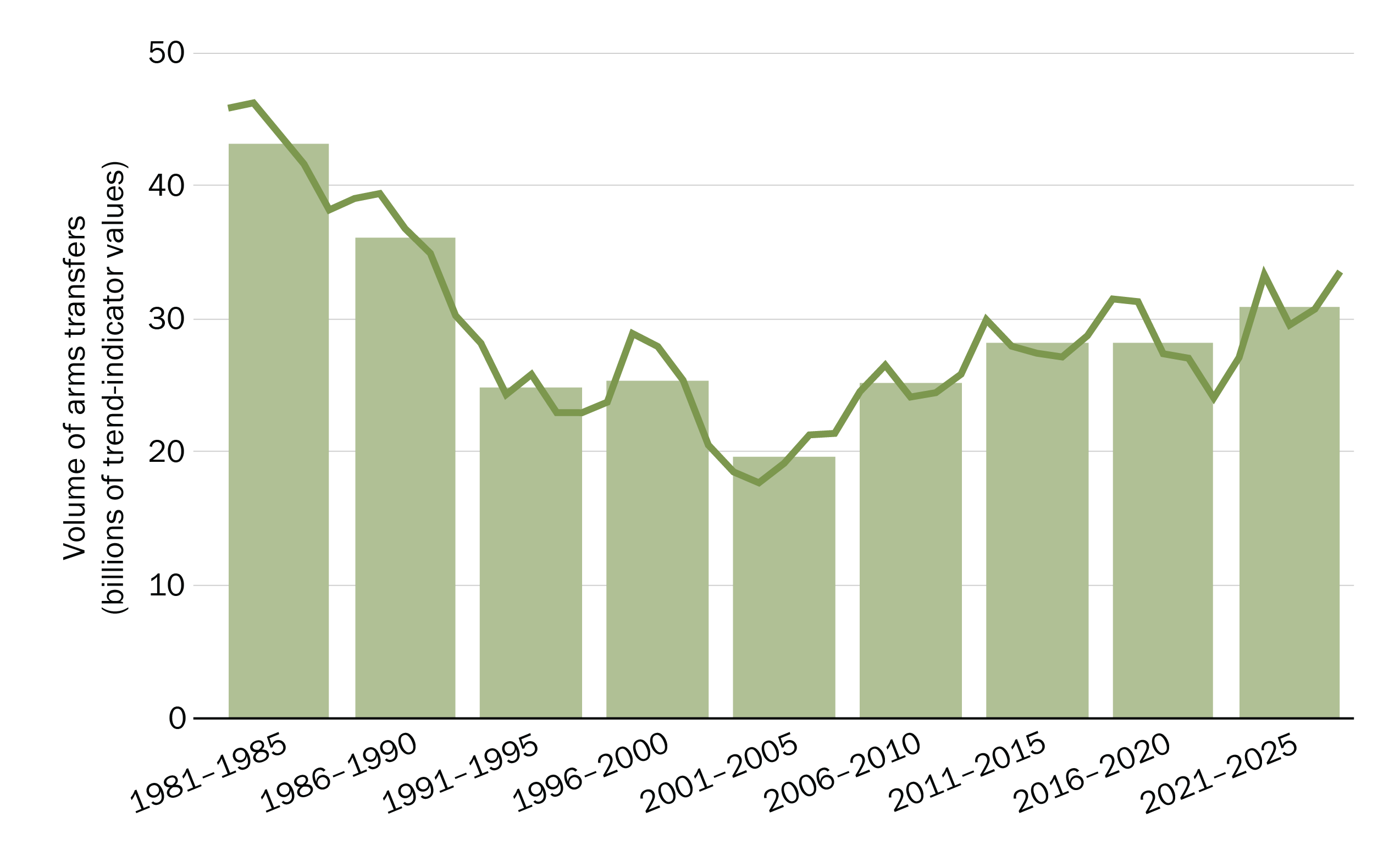
Figure 1. The trend in international transfers of major arms, 1981–2025
Note: The bar graph shows the average annual volume of arms transfers for 5-year periods and the line graph shows the annual totals. The SIPRI trend-indicator value (TIV) is a measure of the volume of international transfers of major arms. The method used for the SIPRI TIV is described on the Arms Transfers Database web page.
Source: SIPRI Arms Transfers Database, Mar. 2026.
Ukraine was the world’s largest recipient of major arms in 2021–25, receiving 9.7 per cent of total global arms imports in 2021–25 compared
with 0.1 per cent in 2016–20. The United States remained by far the world’s largest supplier of major arms. Its arms exports went up by 27 per cent between 2016–20 and 2021–25, giving it a 42 per cent share of total global arms exports.
From 9 March 2026 the freely available SIPRI Arms Transfers Database includes updated data on transfers of major arms for 1950–2025. Based on the new data, this fact sheet presents key trends in arms exports and arms imports, and highlights selected issues related to transfers of major arms.
The Suppliers, 2021–25
SIPRI has identified 66 states as suppliers of major arms in 2021–25. The five largest suppliers during that period—the USA, France, Russia, Germany and China—accounted for 70 per cent of all arms exports (see figure 2 and table 1). US, French, German and Chinese arms exports rose between 2016–20 and 2021–25, while Russian exports fell sharply (see figure 3). States in North America and Western Europe together accounted for 74 per cent of all arms exports in 2021–25 compared with 62 per cent in 2016–20.
Figure 2. Global share of exports of major arms by the 10 largest suppliers, 2021–25
Source: SIPRI Arms Transfers Database, Mar. 2026.
The United States
The USA’s arms exports grew by 27 per cent between 2016–20 and 2021–25 and its share of total global arms exports rose from 36 per cent to 42 per cent. In 2021–25 the USA’s share of total global arms exports was more than the next seven largest suppliers’ shares combined. The USA exported major arms to 99 states in 2021–25 and was among the top three suppliers for 76 states. The 99 recipient states included 35 in Europe, 18 in the Americas, 17 in Africa, 17 in Asia and Oceania and 12 in the Middle East.
For the first time in two decades, the largest share of US arms exports went to Europe in 2021–25 (38 per cent) as US arms exports to the region more than trebled compared with 2016–20 (+217 per cent). In 2021–25 a quarter of US arms exports to Europe (25 per cent)—equivalent to 9.4 per cent of US arms exports globally—consisted of military aid to Ukraine. A notable increase in secrecy in 2025 around US arms exports to Ukraine makes it difficult to provide reliable estimates, but publicly available information indicates that the administration of President Donald J. Trump reduced US military aid to Ukraine during the year.
The USA has large volumes of pending arms exports to Europe. Notably, 12 European states had a total of 466 F-35 combat aircraft on order or preselected for order as of the end of 2025. Of these 466 aircraft, 39 were ordered or preselected for order during 2025.
States in the Middle East received 33 per cent of US arms exports in 2021–25 compared with 45 per cent in 2016–20. US arms exports to states in the region decreased by 6.0 per cent between the two periods. Saudi Arabia received 12 per cent of US arms transfers, making it the largest recipient of US arms exports at both the regional and global level in 2021–25. Qatar (accounting for 7.4 per cent of total US arms exports) and Kuwait (4.2 per cent) were also among the USA’s top 10 recipients. Israel was the 12th largest recipient of US arms exports in 2021–25 with a share of 3.1 per cent.
Transfers to Asia and Oceania accounted for 26 per cent of US arms exports in 2021–25 and remained at roughly the same level as in 2016–20. The USA’s policy on arms exports to Asia and Oceania is at least partly determined by its goal of containing China’s influence. Three states in the region were among the 10 largest recipients of US arms in 2021–25: Japan (8.9 per cent of total US arms exports), Australia (5.6 per cent) and South Korea (3.9 per cent). Taiwan was the 16th largest recipient with a 1.9 per cent share.
The European Union
During 2021–25 the European Union (EU) ramped up its efforts to harmonize member states’ arms export policies and strengthen the competitiveness of the European Defence Technological and Industrial Base (EDTIB). Taken together, the arms exports of the 27 current EU member states went up by 36 per cent between 2016–20 and 2021–25. Their combined arms exports accounted for 28 per cent of total global arms exports in 2021–25. This was two thirds the volume of the USA’s arms exports in the same period, but four times higher than Russia’s export volume and five times higher than China’s. Intra-EU transfers accounted for less than a fifth of combined EU arms exports in the period (16 per cent). Four EU member states were among the top 10 largest suppliers globally in 2021–25: France (rank 2), Germany (rank 4), Italy (rank 6) and Spain (rank 10).
France’s arms exports accounted for 9.8 per cent of total global arms exports in 2021–25, having increased by 21 per cent from the previous five-year period. France exported major arms to 63 states in 2021–25, with most of its exports going to states in Asia and Oceania (31 per cent), followed by states in the Middle East (28 per cent) and Europe (21 per cent). While France’s arms exports within Europe in 2021–25 rose more than fivefold compared with 2016–20 (+452 per cent), almost 80 per cent of its exports still went outside the region.
Germany accounted for 5.7 per cent of total global arms exports in 2021–25, and its arms exports rose by 15 per cent compared with 2016–20. States in Europe received the largest share of German arms exports (41 per cent), followed by states in the Middle East (33 per cent) and Asia and Oceania (17 per cent). Almost a quarter of all German arms exports (24 per cent) went to Ukraine as aid.
Italy’s arms exports increased by 157 per cent between 2016–20 and
2021–25, and it accounted for 5.1 per cent of total global arms exports. Over half of Italy’s exports went to the Middle East (59 per cent), while 16 per cent went to Asia and Oceania and 13 per cent to Europe.
Spain accounted for 2.3 per cent of total global arms exports in 2021–25. Its arms exports grew by 6.7 per cent between 2016–20 and 2021–25. States in the Middle East received 43 per cent of Spanish arms exports, while 22 per cent went to Asia and Oceania and 20 per cent to Europe.
Other Major Suppliers
Russia was the world’s third largest supplier in 2021–25. Its share of global arms exports fell from 21 per cent in 2016–20 to 6.8 per cent in 2021–25. It was the only supplier among the top 10 globally whose arms exports decreased (–64 per cent) between the two periods. The sharp fall was largely due to substantial decreases in Russian arms exports to Algeria, China and Egypt.
In 2021–25 Russia supplied major arms to 30 states and 1 non-state armed group, with 76 per cent of its arms exports going to states in Asia and Oceania. Nearly three quarters of Russian arms exports (74 per cent) went to three states in 2021–25: India (48 per cent), China (13 per cent) and Belarus (13 per cent).
The numbers of pending arms exports from Russia are generally far lower than those of the USA and France—the top two suppliers globally; moreover, for several categories of arms, they are much lower than those of most other suppliers in the top 10 (see box 1).
Box 1. Selected major arms on order or preselected for future orders from the 10 largest arms suppliers, for export after 2025
It is very difficult to make predictions about future trends in arms transfers. Nevertheless, data on orders and final negotiations of orders can give a rough indication of which states will be among the largest suppliers in coming years. The data on combat aircraft and major warships, which have a notably high military value, is particularly telling. As the table below shows, the United States will continue to be by far the largest supplier of major arms beyond 2025. What the future holds for other top suppliers is less certain, but France, the second largest arms supplier in 2021–25, also has relatively high numbers of pending exports of combat aircraft and major warships compared with most other suppliers.
China, the world’s fifth largest arms supplier, accounted for 5.6 per cent of total global arms exports in 2021–25. It increased its arms exports by 11 per cent between 2016–20 and 2021–25. Most Chinese arms exports (77 per cent) went to states in Asia and Oceania in 2021–25, followed by states in Africa (13 per cent). Although China supplied major arms to 47 states in the period, 61 per cent of its arms exports went to just one state: Pakistan.
Accounting for 4.4 per cent of total global arms exports, Israel was the world’s seventh largest arms supplier in 2021–25, moving above the United Kingdom in the top 10 for the first time. Israel’s arms exports grew by 56 per cent over the previous five-year period, helping to strengthen the domestic arms industry to support Israel in its multi-front war. The increase came despite growing reluctance among states to buy Israeli arms because of the mounting civilian death toll linked to Israel’s large-scale military offensive in Gaza. Israel produces major arms such as air defence systems, for which there is high global demand. In 2021–25 it supplied major arms to 23 states in Europe (41 per cent of total Israeli arms exports) as well as 10 states in Asia and Oceania (40 per cent), 5 in the Americas (8.6 per cent), 7 in Africa (7.7 per cent) and 2 in the Middle East (3.0 per cent).
The UK (rank 8) and South Korea (rank 9) were also among the top 10 suppliers in 2021–25, and both increased their arms exports between 2016–20 and 2021–25, by 13 and 24 per cent respectively.
The Recipients, 2021–25
SIPRI has identified 162 states and 4 non-state armed groups as recipients of major arms in 2021–25. The top five recipients—Ukraine, India, Saudi Arabia, Qatar and Pakistan—received 35 per cent of total global arms imports in the period (see figure 4 and table 2).
Figure 4. Global share of imports of major arms by the 10 largest recipients, 2021–25
Source: SIPRI Arms Transfers Database, Mar. 2026.
In 2021–25 Europe was the region with the largest share of total global arms imports (33 per cent) for the first time since the 1960s (see figure 5). Asia and Oceania (31 per cent) was the next largest, followed by the Middle East (26 per cent), the Americas (5.6 per cent) and Africa (4.3 per cent).
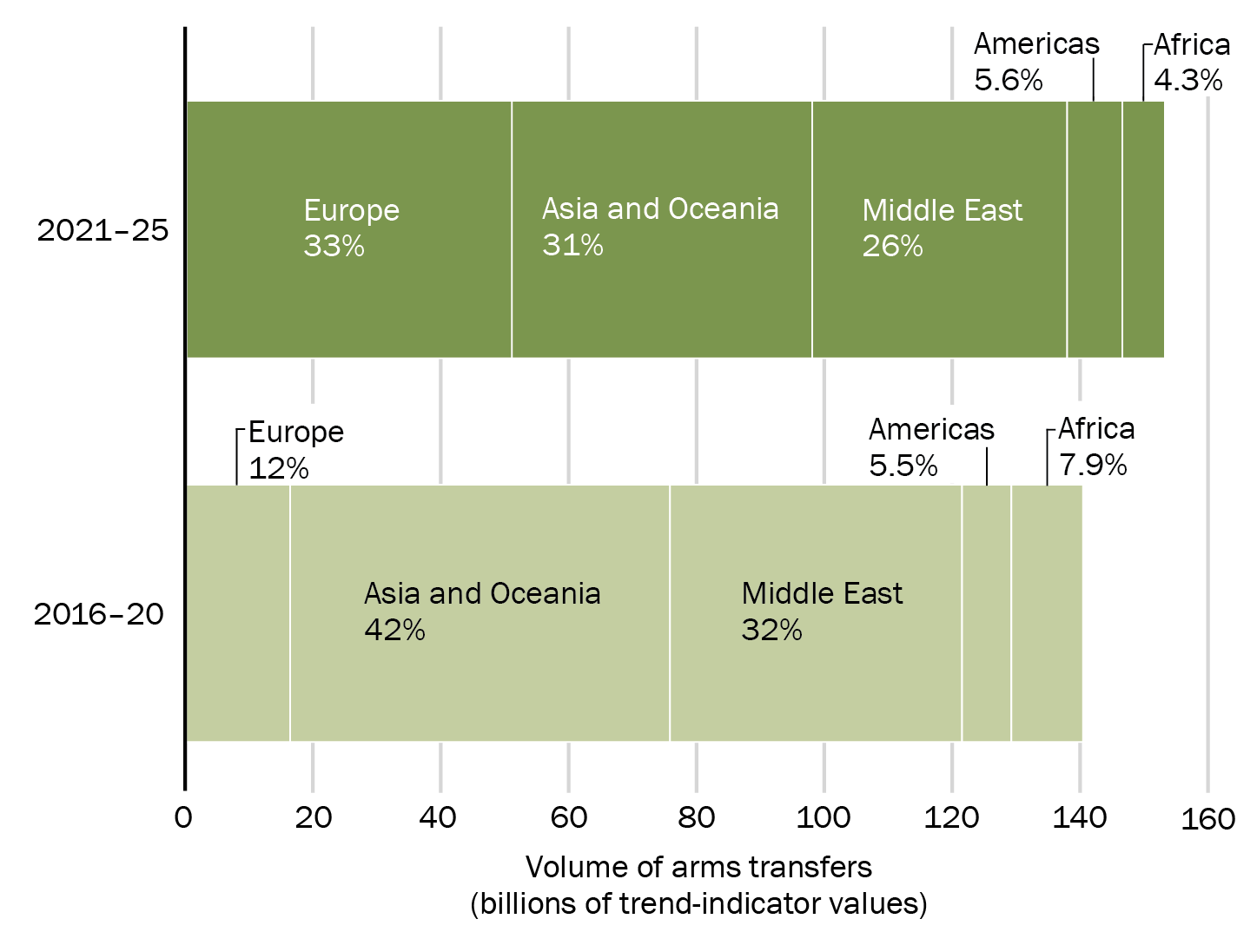
Figure 5. The recipients of major arms, by region, 2021–25 and 2016–20,
per cent of global share
Note: The SIPRI trend-indicator value (TIV) is a measure of the volume of international transfers of major arms. The method used for the SIPRI TIV is described on the Arms Transfers Database web page.
Source: SIPRI Arms Transfers Database, Mar. 2026.
Africa
Imports of major arms by states in Africa decreased by 41 per cent between 2016–20 and 2021–25. The main suppliers to the region in 2021–25 were the USA (accounting for 19 per cent of African imports of major arms), China (17 per cent), Russia (15 per cent) and France (8.3 per cent).
Morocco (rank 28 globally) and Algeria (rank 33) are by far the largest recipients of major arms in Africa. Their long-running tensions with each other are a major driver of their arms imports. Morocco increased its arms imports by 12 per cent between 2016–20 and 2021–25. As of the end of 2025, it had pending imports from several states, including Spain and the USA. Algeria’s arms imports decreased by 78 per cent, having reached a peak in 2016–20. While the latest SIPRI data indicates that Morocco’s arms imports surpassed those of Algeria in 2021–25, Algeria is often secretive about its arms imports, and there were several unverified reports about arms deals with Russia in 2021–25, suggesting that SIPRI’s estimates may be on the low side.
Sub-Saharan Africa
States in sub-Saharan Africa increased their arms imports by 13 per cent compared with 2016–20 and accounted for 2.2 per cent of total global imports of major arms in 2021–25. The three largest recipients were Nigeria (receiving 16 per cent of subregional imports), Senegal (8.8 per cent) and Mali (8.0 per cent). China, which supplied major arms to 23 states and accounted for 22 per cent of subregional imports, was the largest supplier to sub-Saharan Africa. Russia was the next largest supplier (accounting for 12 per cent of imports), followed by Türkiye (11 per cent).
There were several large-scale armed conflicts in sub-Saharan Africa during 2021–25, including the Sudanese civil war that broke out in 2023. Tracking arms transfers to conflicts, especially in Africa, is difficult as they often involve high levels of secrecy. The Sudanese armed forces and the opposing Rapid Support Forces (RSF) received transfers of major arms during 2021–25. Transfers to the RSF included four pieces of artillery and at least one air defence system from unknown suppliers. Transfers to the Sudanese armed forces included armed uncrewed aerial vehicles (UAVs, or drones), armoured vehicles and transport aircraft from at least five known suppliers—Belarus, Iran, Kyrgyzstan, Türkiye and the United Arab Emirates (UAE)—and one combat aircraft from an unknown supplier.
The Americas
Arms imports by states in the Americas increased by 12 per cent between 2016–20 and 2021–25. The USA (receiving 52 per cent of regional arms imports), Brazil (21 per cent) and Canada (11 per cent) were the top three recipients of major arms in the region in 2021–25.
Arms imports by states in South America grew by 31 per cent between
2016–20 and 2021–25, with 6 of 12 states increasing their imports. Brazil (rank 25 globally) was the largest recipient of major arms in South America, receiving 60 per cent of the total subregional arms imports in 2021–25. Its arms imports were 150 per cent higher than in
2016–20. France was the main supplier to the subregion (accounting for 41 per cent of subregional arms imports), followed by the USA (12 per cent) and Sweden (11 per cent). Several South American states have arms procurement programmes under way involving imports of major arms. For example, Argentina has ordered combat aircraft from Denmark, while Brazil and Colombia have ordered combat aircraft from Sweden. Brazil has also ordered frigates from Germany and submarines from France, while Peru has ordered a frigate and submarines from South Korea.
Asia and Oceania
Arms imports by states in Asia and Oceania fell by 20 per cent between 2016–20 and 2021–25. Four of the world’s 10 largest recipients of major arms in 2021–25 were in Asia and Oceania: India (rank 2), Pakistan (rank 5), Japan (rank 6) and Australia (rank 10). The main suppliers to the region were the USA (accounting for 35 per cent of regional arms imports), Russia (17 per cent) and China (14 per cent).
India and Pakistan
India was the world’s second largest recipient of major arms in 2021–25 with an 8.2 per cent share of total global arms imports. Its arms imports are driven by its tensions with both China and Pakistan. These tensions have regularly led to armed conflict, as they did briefly between India and Pakistan in May 2025, with both sides using imported major arms. Indian arms imports fell by 4.0 per cent between 2016–20 and 2021–25. The decrease can be partly attributed to India’s growing ability to design and produce its own weapons—although there are often substantial delays in domestic production. However, India’s recent orders or planned orders—including up to 140 combat aircraft from France and 6 submarines from Germany—indicate its continued and probably increasing reliance on foreign suppliers. India has shifted its arms relations away from Russia towards Western suppliers, especially France, Israel and the USA, over the past decade. Russia’s share of Indian arms imports dropped from 70 per cent in 2011–15 to 51 per cent in 2016–20 and then to 40 per cent in 2021–25.
Pakistan was the 5th largest recipient of major arms globally in 2021–25, up from 10th largest in 2016–20, as its arms imports increased by 66 per cent between the two periods. It received 4.2 per cent of total global arms imports in 2021–25, with 80 per cent of its imports coming from China—up from 73 per cent in 2016–20.
East Asia, Oceania and South East Asia
Arms imports by states in East Asia (–31 per cent), Oceania (–28 per cent) and South East Asia (–30 per cent) decreased between 2016–20 and 2021–25. While tensions between China and states in these subregions drive generally strong demand for major arms, subregional imports have fluctuated over the past two decades due to several factors, including some states’ increasing capacity to design and produce their own major arms.
Japan’s arms imports rose by 76 per cent between 2016–20 and 2021–25. It was the 6th largest recipient of arms globally in 2021–25, up from 11th largest in 2016–20, as it continued to expand its military capabilities with imports of advanced weapon systems.
In 2021–25 South Korea was the 16th largest recipient of major arms globally. Its arms imports fell by 54 per cent compared with 2016–20. The decrease partly stemmed from South Korea’s growing ability to design and produce its own major arms, making it less reliant on imports.
The USA was the main supplier to both Japan and South Korea in 2021–25. It accounted for 95 per cent of Japanese and 93 per cent of South Korean arms imports.
In 2021–25 China was the 21st largest recipient of major arms globally, dropping out of the world’s top 10 largest recipients for the first time since 1991–95. Its arms imports fell by 72 per cent between 2016–20 and 2021–25 as it continued to expand production of its own major arms.
While Taiwan’s arms imports increased by 54 per cent between 2016–20 and 2021–25, it received only 0.8 per cent of total global arms imports in 2021–25, making it the world’s 34th largest recipient of major arms.
Australia dropped from 5th largest recipient of major arms globally in 2016–20 to 10th largest in 2021–25 as its arms imports decreased by 39 per cent. It has large volumes of major arms on order, including frigates, nuclear-powered submarines and long-range missiles from the UK and the USA.
Indonesia was the largest recipient of major arms in South East Asia with a 1.5 per cent share of total global arms imports, followed by the Philippines (1.2 per cent), Singapore (1.1 per cent) and Thailand (0.5 per cent).
During the armed conflict in 2025 between Cambodia and Thailand, both sides deployed imported major arms. For example, Cambodia (which received 0.1 per cent of total global arms imports in 2021–25) employed multiple rocket launchers from China, while Thailand used combat aircraft that were imported from Sweden and the USA and armed with guided bombs from South Korea.
Europe
Imports of major arms by European states more than trebled between
2016–20 and 2021–25 (+210 per cent). Almost half of those imports came from the USA (48 per cent), followed by Germany (7.1 per cent) and France (6.2 per cent).
Ukraine and Russia
In 2021–25 Ukraine was the largest recipient of major arms in Europe (and the world), with a 9.7 per cent share of total global arms imports. Since the start of Russia’s full-scale invasion of Ukraine in 2022 at least 36 states have supplied major arms to Ukraine. Its top three suppliers in 2021–25 were the USA (accounting for 41 per cent of Ukrainian arms imports), Germany (14 per cent) and Poland (9.4 per cent).
In 2025 the volume of arms transfers to Ukraine was substantially lower than in either 2023 or 2024. This can be largely explained by the USA reducing its military aid to Ukraine in 2025. At the same time, many European states, as well as Australia and Canada, together transferred large volumes of major arms to Ukraine during the year and pledged to continue to do so in coming years. In 2025 at least 25 states agreed to buy major arms from the USA for transfer to Ukraine. The transfers of these weapons, including air defence missiles and guided bombs, are counted by SIPRI as US arms exports to Ukraine.
Russia received 0.4 per cent of global imports of major arms in 2021–25. Its imports included one-way attack drones and other missiles from Iran and artillery and missiles from North Korea.
Arms imports by European NATO states
Threat perceptions concerning Russia, compounded by uncertainties over the USA’s commitment to defending its European allies, have boosted demand for arms among European member states of the North Atlantic Treaty Organization (NATO). Taken together, arms imports by the 29 current European NATO states grew by 143 per cent between 2016–20 and 2021–25. Well over half of these imports (58 per cent) came from the USA in 2021–25. This was the same share as in 2016–20 but the volume of transfers from the USA more than doubled between the two periods (+142 per cent). The next biggest suppliers were South Korea (accounting for 8.6 per cent of European NATO states’ arms imports), Israel (7.7 per cent) and France (7.4 per cent).
In 2021–25 Poland received the largest share of all arms imports by European NATO states: 17 per cent—equivalent to a 3.6 per cent share of total global arms imports. The UK received the next largest share of European NATO arms imports (10 per cent, or 2.1 per cent globally), followed by the Netherlands (9.0 per cent, or 1.8 per cent globally). Polish arms imports were more than nine times higher than in 2016–20 (+852 per cent). Almost all of Poland’s arms imports in 2021–25 came from outside Europe, with 47 per cent coming from South Korea and 44 per cent from the USA.
The Middle East
Arms imports by states in the Middle East fell by 13 per cent between 2016–20 and 2021–25. Three of the world’s top 10 recipients of major arms in 2021–25 were in the region: Saudi Arabia (rank 3), Qatar (rank 4) and Kuwait (rank 9). More than half of arms imports to the Middle East came from the USA (54 per cent), while 12 per cent came from Italy, 11 per cent from France and 7.3 per cent from Germany.
Israel and Iran
During 2021–25 Israel was involved in a multi-front war stemming from its large-scale military offensive in Gaza that began in October 2023. In 2025 Israel and Iran attacked each other, with Israel employing a range of imported major arms, while Iran mostly used domestically produced missiles. Israel also launched strikes against targets in Lebanon, Qatar, Syria and Yemen. Israel continued to receive major arms from supplier states throughout 2021–25 despite growing concerns in some states about the high civilian death toll in Gaza. Israel’s arms imports increased by 12 per cent between 2016–20 and 2021–25, making it the 14th largest recipient of major arms globally. The USA was the largest supplier to Israel in 2021–25 (accounting for 68 per cent of Israeli arms imports), followed by Germany (31 per cent). Israel’s arms imports from the USA included armoured vehicles, combat aircraft, guided bombs and missiles. As of the end of 2025, Israel had at least 55 combat aircraft on order from the USA.
Iran’s imports of major arms accounted for 0.2 per cent of total arms imports by states in the Middle East in 2021–25; this was lower than its share in 2016–20 (0.9 per cent). Iran’s only supplier of major arms in 2021–25 was Russia.
Arab states of the Gulf
Amid war and tensions across the Middle East, Arab states of the Gulf continued to build up their military capabilities through arms imports during 2021–25, mostly from Western suppliers. Of these states, the largest recipients of major arms—together accounting for almost 20 per cent of all arms imports—were Saudi Arabia (with a 6.8 per cent share of the global total), Qatar (6.4 per cent), Kuwait (2.8 per cent) and the UAE (2.7 per cent). The USA was the largest supplier to all four states in 2021–25, accounting for 77 per cent of Saudi Arabia’s arms imports, 48 per cent of Qatar’s, 62 per cent of Kuwait’s and 42 per cent of the UAE’s.
Saudi Arabia’s arms imports fell by 31 per cent between 2016–20 and
2021–25. Its arms imports in 2021–25 included 45 combat aircraft from the USA and 5 frigates from Spain. Although Saudi Arabia’s arms imports decreased, based on its known pending imports, it is expected to remain among the world’s largest recipients of major arms in the coming years.
Qatar’s arms imports grew by 106 per cent between 2016–20 and 2021–25. Its arms imports in 2021–25 included 100 combat aircraft, with 48 coming from the USA, 33 from the UK, 13 from France and 6 from Italy. It also received 5 major warships from Italy.
Kuwait moved from 47th largest recipient of major arms in 2016–20 to 9th largest in 2021–25 as its arms imports increased by more than nine times (+805 per cent) between the two periods. In 2021–25 Kuwait’s arms imports included 28 combat aircraft and 218 tanks from the USA and 23 combat aircraft from Italy.
The UAE’s arms imports decreased by 15 per cent between 2016–20 and 2021–25. Its imports in 2021–25 included 32 combat helicopters from the USA and surface-to-air missile systems from Israel, South Korea and the USA.
As of the end of 2025, it had 79 combat aircraft on order from France. The UAE remains a major recipient of European and US arms despite questions being raised in the supplier states about the UAE’s role in the conflicts in Sudan and Yemen.
About SIPRI’s data on arms transfers
SIPRI’s statistical data on arms transfers relates to actual deliveries of major arms, as defined by SIPRI. SIPRI measures the volume of international transfers of major arms using a common unit—the trend-indicator value (TIV). The methodology for the SIPRI TIV is described on the Arms Transfers Database web page.
As the volume of transfers can fluctuate significantly year-on-year, SIPRI presents data for five-year periods, giving a more stable measure of trends. Percentage shares presented in this SIPRI Fact Sheet do not always add up to 100 per cent or to stated totals because of the conventions of rounding.
The SIPRI Arms Transfers Database, accessible on the SIPRI website, is the only public resource that provides consistent information, often estimates, on all international transfers of major arms (including sales, gifts and production under licence) to states, international organizations and non-state groups since 1950. For a list of states in each region see the ‘Regional coverage’ page of SIPRI’s website. The database aims to contribute to an understanding of the effects of arms flows on peace, stability and violent conflict. This fact sheet is intended to encourage the use of the database for further research, investigation, policymaking and public debate.
Endnotes
- 1 In this fact sheet the terms ‘arms exports’ and ‘arms imports’ are used to refer to international transfers of major arms, as defined by SIPRI.
ABOUT THE AUTHOR(S)/EDITORS

Dr Mathew George is the Director of the SIPRI Arms Transfers Programme.

Katarina Djokic is a Researcher in the SIPRI Arms Transfers Programme.

Zain Hussain is a Researcher in the SIPRI Arms Transfers Programme.

Pieter D. Wezeman is a Senior Researcher in the SIPRI Arms Transfers Programme.

Siemon T. Wezeman is a Senior Researcher in the SIPRI Arms Transfers Programme.
When peace is under threat, accurate information is more important than ever.
Invest in the facts