|
| |
|
News | Events | Commentaries | Publications
|
News
|
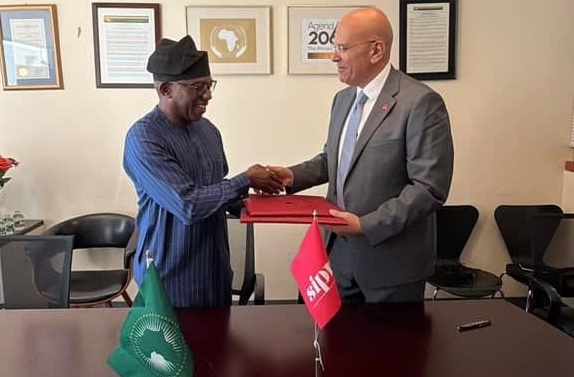 |
SIPRI and the African Union sign memorandum of understanding
On 21 September, SIPRI and the African Union (AU) signed a memorandum of understanding (MOU) in New York for collaboration on peace research. The MOU was signed by SIPRI Director Karim Haggag and HE Ambassador Bankole Adeoye of the AU’s Political Affairs, Peace and Security Department. The ceremony was held at the AU Mission in New York, on the sidelines of the United Nations General Assembly High-level Week 2026. The multi-year agreement will promote the sharing of knowledge, data and expertise between SIPRI and the AU.
Read more
|
|
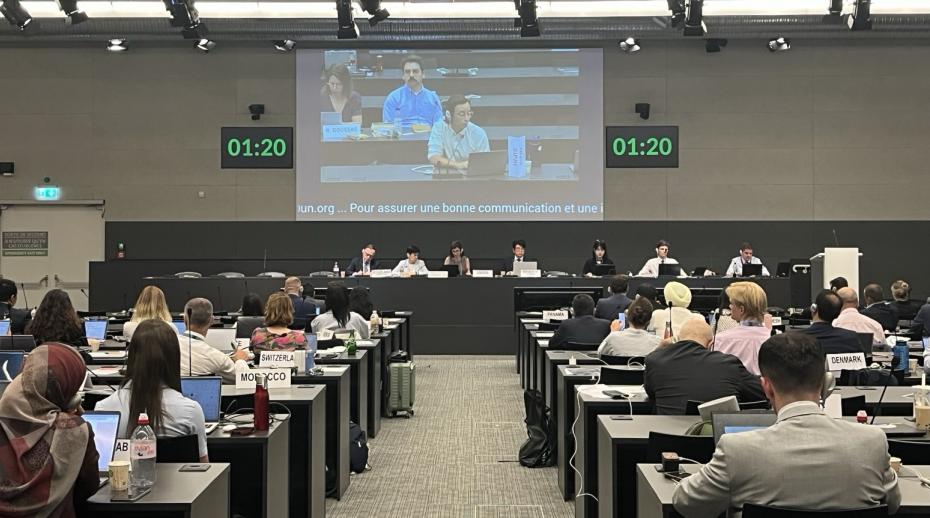 |
SIPRI experts contribute to UN exchanges on AI in the military domain
In June, experts from SIPRI’s Governance of Artificial Intelligence (AI) Programme participated in the first informal UN exchanges on AI in the military domain, held in Geneva. Senior Researcher Dr Alexander Blanchard gave a presentation at a side event on the role of industry in AI in the military domain. Senior Researcher Netta Goussac participated as a panellist during the session ‘The Life Cycle of AI in the Military Domain’, and Programme Director Dr Vincent Boulanin joined as a panellist for a session on AI and other technologies and delivered a statement during a session on the next steps for multilateral dialogue on the topic.
Read more | Read the related SIPRI Topical Backgrounder
|
|
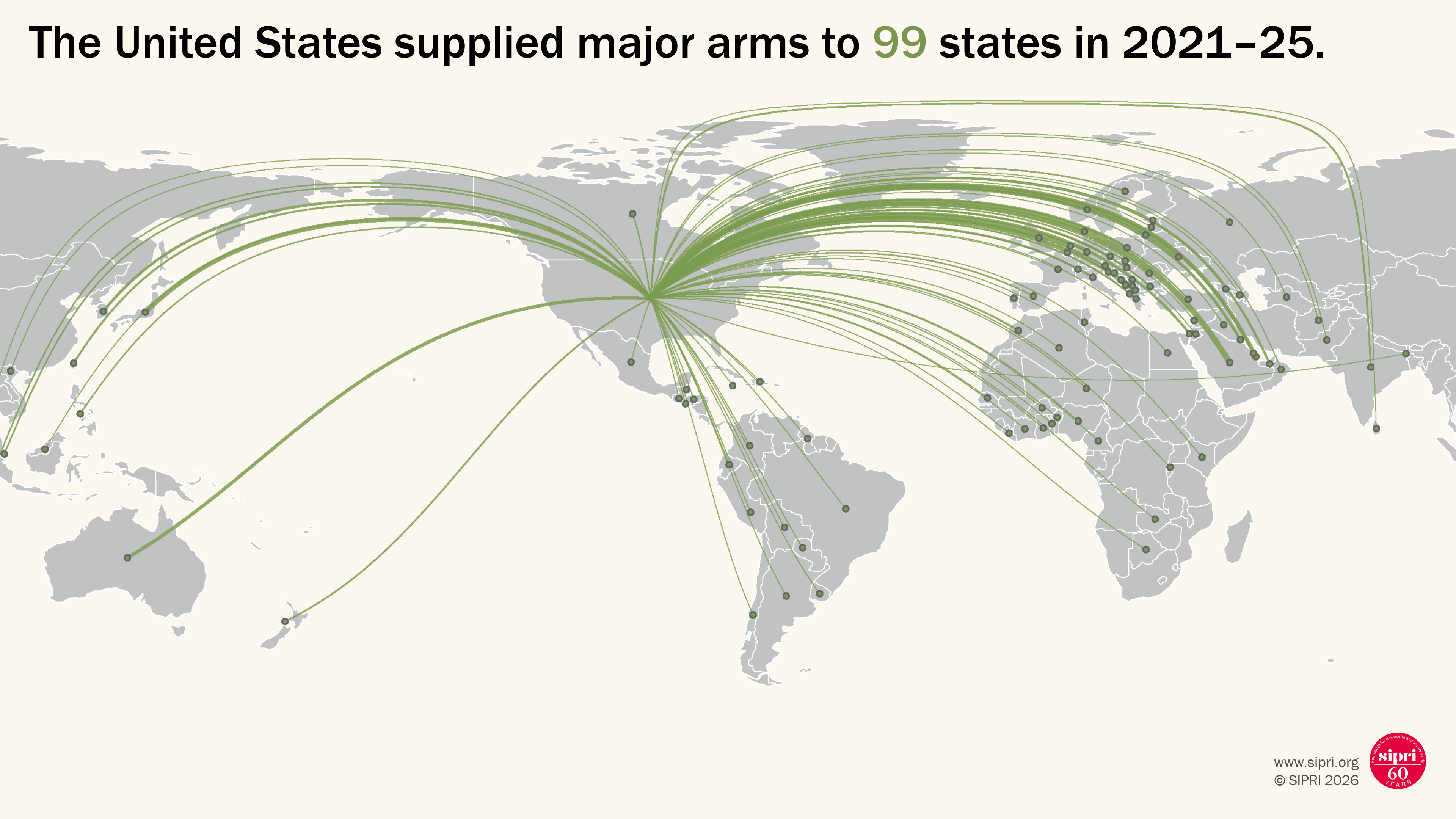 |
Explore SIPRI’s latest data visualizations
SIPRI’s data visualizations page brings together a selection of graphics, maps and charts that depict trends emerging from the institute’s major data launches. Interactive graphics and animations offer ways to explore SIPRI’s findings, from patterns in arms transfers to changes in peace operations deployments. The section also includes downloadable maps and printable materials, including a map of global nuclear weapon inventories.
Read more | Explore SIPRI’s data visualizations | Download the map of global nuclear weapon inventories
|
|
 |
The 2026 Stockholm Forum on Peace and Development to launch a Youth Advisory Board
The 2026 edition of the Stockholm Forum on Peace and Development will establish a Youth Advisory Board to expand youth participation in the event. The board, which is composed of nine young experts and practitioners from a range of backgrounds, has been helping shape the agenda of the Forum. Members of the board will also collaborate with Forum partners on the design of sessions and participate as speakers during workshops and roundtables to ensure that youth voices are amplified in global peace and development debates.
Read more | Read about the 2026 Stockholm Forum
|
|
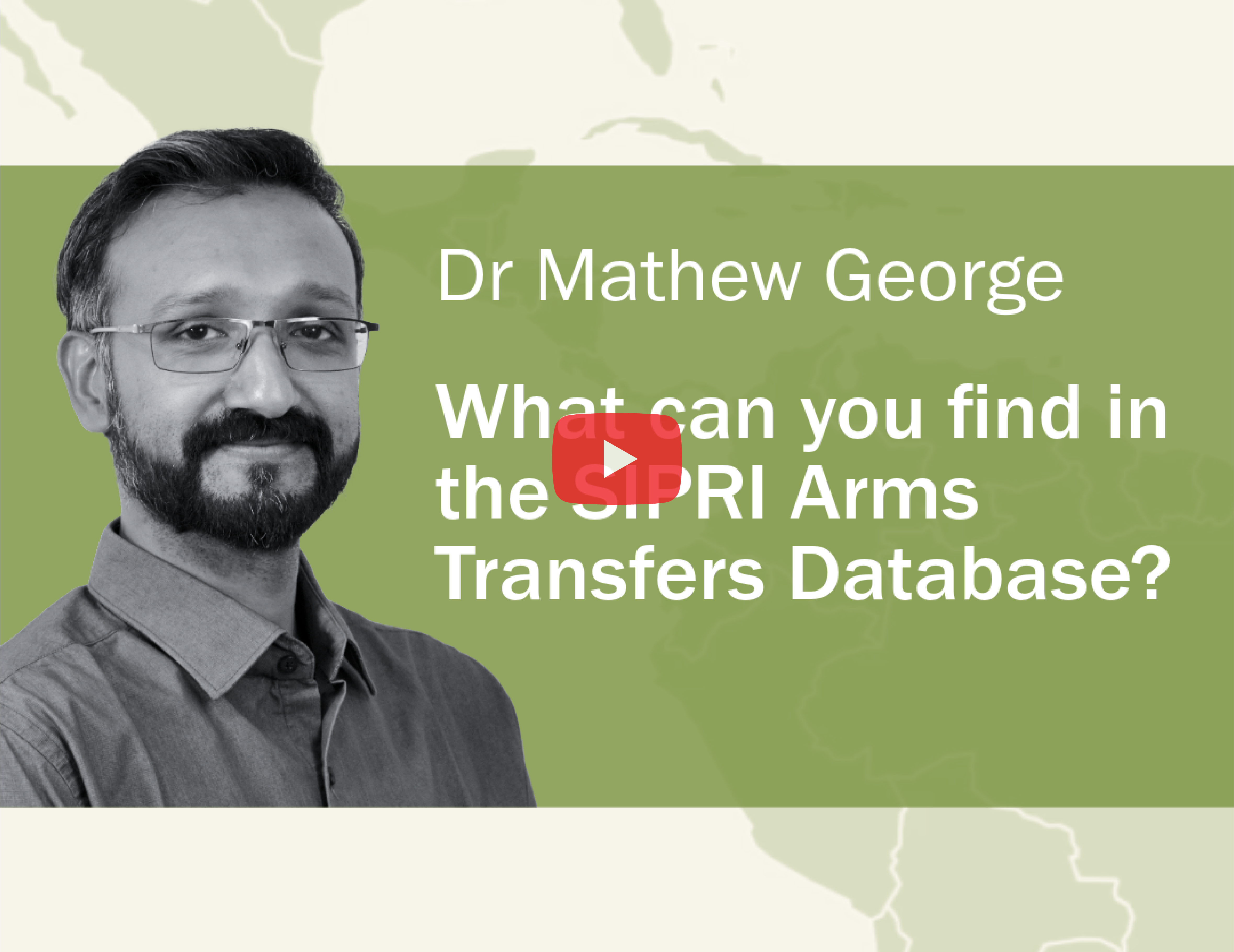 |
Explore the SIPRI Arms Transfers Database
SIPRI has created a series of reels exploring the SIPRI Arms Transfers Database. The SIPRI Arms Transfers Database provides consistent data on international transfers of major arms from 1950 to the most recent full calendar year. In the reels, Arms Transfers Programme Director Dr Mathew George explains what information can be extracted from the database and its various features.
What does the SIPRI Arms Transfers Database show? | Does the SIPRI Arms Transfers Database cover drones?
|
|
|
Upcoming events
|
2026 Stockholm Forum on Peace and Development
3–4 November 2026
SIPRI will host the 2026 Stockholm Forum on the theme ‘From Rupture to Repair: New Visions for Peace and Development’. The 2026 Stockholm Forum will be held by invitation only at Münchenbryggeriet in Stockholm. The plenary sessions will be livestreamed on SIPRI’s YouTube channel.
Read more
|
|
|
Recent events
|
SIPRI hosts discussion on human security and the WPS agenda
10 September 2026
SIPRI convened an online event focused on integrating the women, peace and security agenda into peacebuilding. The event was held through the Community of Practice on Human Security, an initiative by SIPRI and the United Nations Trust Fund for Human Security.
Read more
|
|
SIPRI hosts dialogue on state–industry collaboration for lawful military AI
9–10 September 2026
SIPRI’s Governance of AI Programme hosted a closed in-person dialogue on how states and industry actors can collaborate to support the lawful development and use of AI in the military domain. Participants exchanged experiences of how states and industry currently interact during the design and procurement stages of military AI capabilities.
Read more
|
|
SIPRI co-hosts 2026 Armament and Disarmament Summer School
23–28 August 2026
SIPRI and its partners hosted the 2026 Armament and Disarmament Summer School in Stockholm and Uppsala. An annual initiative, the week-long programme seeks to empower early career professionals by expanding their knowledge and skills in the fields of disarmament, nuclear non-proliferation and arms control. This year’s summer school welcomed 25 participants from 20 countries.
Read more
|
|
SIPRI hosts course on WMD non-proliferation and technological convergence
22–25 June 2026
SIPRI hosted an in-person course on weapons of mass destruction (WMD) non-proliferation and disarmament in an era of technological convergence. Organized and funded through the European Union Non-Proliferation and Disarmament Consortium (EUNPDC), the course brought together 19 graduate and postgraduate students and early career professionals from 11 countries.
Read more
|
|
|
|
|
 |
As military spending mounts, parliamentary oversight must keep pace
At a time of increasing regional tensions, several states have taken extraordinary steps to increase funding for their militaries, bypassing regular budgeting procedures. While they allow governments to react quickly and flexibly to changing threat perceptions, extra-budgetary and off-budget mechanisms can also come at a cost to transparency and democratic oversight. This SIPRI Essay examines how rising military spending and exceptional funding mechanisms challenge parliamentary oversight, and explores ways to strengthen scrutiny, transparency and cooperation between parliaments and the UN.
Read the SIPRI Essay
|
|
 |
Combating new bioweapon risks: A Q&A with Dr Miranda Smith on the European Biotech Act
The EU has resumed work to finalize legislation aimed at regulating access to synthetic genetic material, including DNA and RNA, that could be used to produce biological weapons. If it is adopted, the European Biotech Act could significantly strengthen EU member states’ ability to implement their obligations under the 1972 Biological and Toxin Weapons Convention. In this Q&A, Smith talks about why the European Biotech Act is significant, the new biosecurity risks emerging in the era of rapidly developing AI, and what the Act can and cannot do.
Read the SIPRI Q&A
|
|
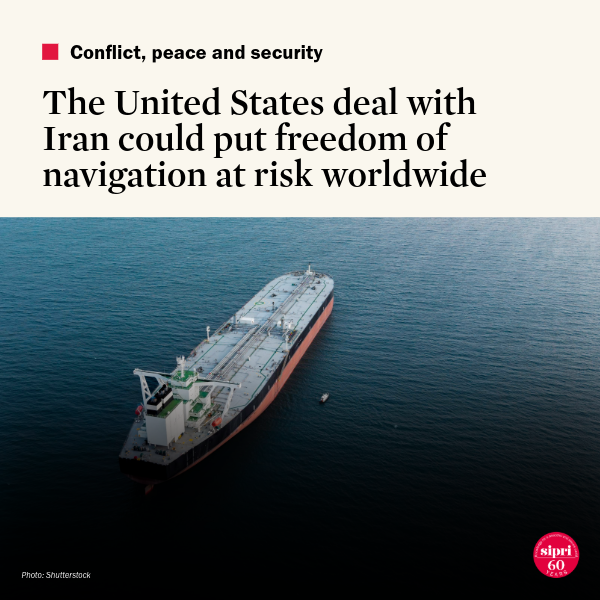 |
The United States deal with Iran could put freedom of navigation at risk worldwide
On 17 June Iran and the USA signed a memorandum of understanding that is intended to pave the way for ending the war between them that started on 28 February this year with a wave of US and Israeli strikes on targets across Iran. Although the agreement now looks very fragile, the wording of one critical paragraph of the so-called Islamabad Memorandum suggests the USA might allow Iran to restrict freedom of navigation in the Strait of Hormuz permanently as part of a final peace treaty. In this essay, Dr Pierre Thévenin looks at the broader implications for freedom of navigation and maritime trade.
Read the SIPRI Essay
|
|
 |
SIPRI experts were recently featured in these external outlets:
|
|
|
Publications
|
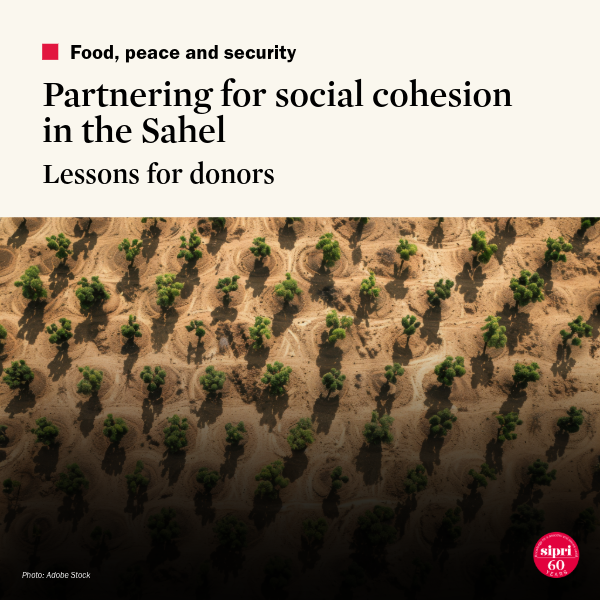 |
Partnering for Social Cohesion in the Sahel: Lessons for Donors
This policy brief draws on lessons from SIPRI’s research on the Sahel Resilience Partnership and provides recommendations to donors seeking to strengthen humanitarian–development–peace nexus programming. The brief argues that donors should fund collective outcomes rather than institutional silos, supporting complementary humanitarian, development and peacebuilding efforts. The brief also emphasizes mainstreaming social cohesion across sectors such as education, food security, climate adaptation, governance and service delivery, rather than treating them separately.
Read the SIPRI Policy Brief
|
|
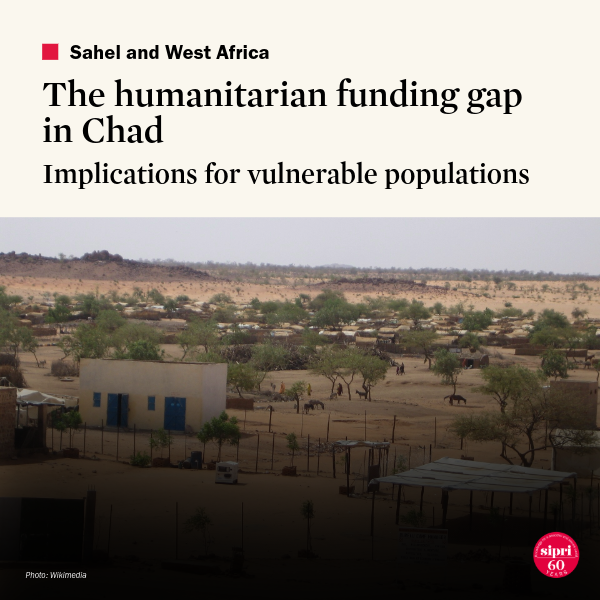 |
The Humanitarian Funding Gap in Chad: Implications for Vulnerable Populations
This fact sheet is part of a set of two that explore the key findings of research carried out by SIPRI and its partner BUCOFORE on the threats that refugee women and girls face in the Chad–Sudan border region. Incorporating insights from seminars held in 2026, this fact sheet expands on three key findings from the research: the humanitarian funding gap in Chad compromises the transition to resilience; it weakens protection mechanisms; and it undermines the safety and dignity of refugee women. The fact sheet aims to guide donors in their decision making and support targeted, effective interventions that boost local resilience and refugee integration.
Read the SIPRI Fact Sheet | Download the fact sheet in Arabic | Download the fact sheet in French
|
|
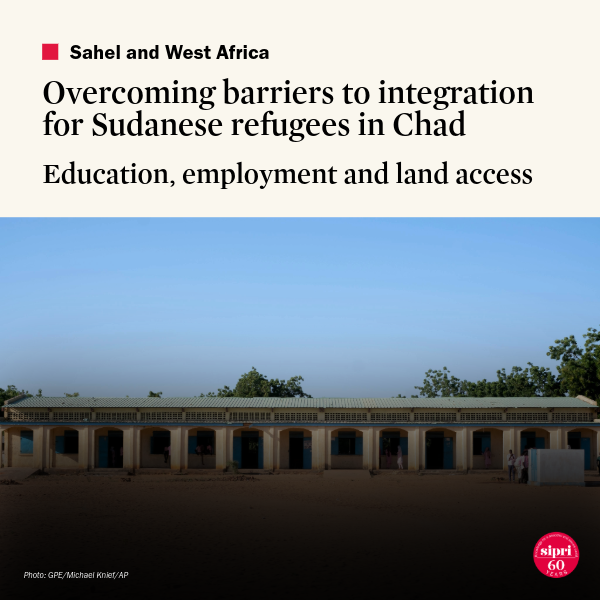 |
Overcoming Barriers to Integration for Sudanese Refugees in Chad: Education, Employment and Land Access
This fact sheet is the second in a set of two that explore the key findings of research carried out by SIPRI and its partner BUCOFORE on the threats that refugee women and girls face in the Chad–Sudan border region. This fact sheet explores how the socioeconomic integration of Sudanese refugee women is constrained by limited access to education, economic opportunities and land. It examines the implications in the context of underfunding and a protracted humanitarian crisis and provides recommendations for donors that boost local resilience and refugee integration.
Read the SIPRI Fact Sheet | Download the fact sheet in Arabic | Download the fact sheet in French
|
|
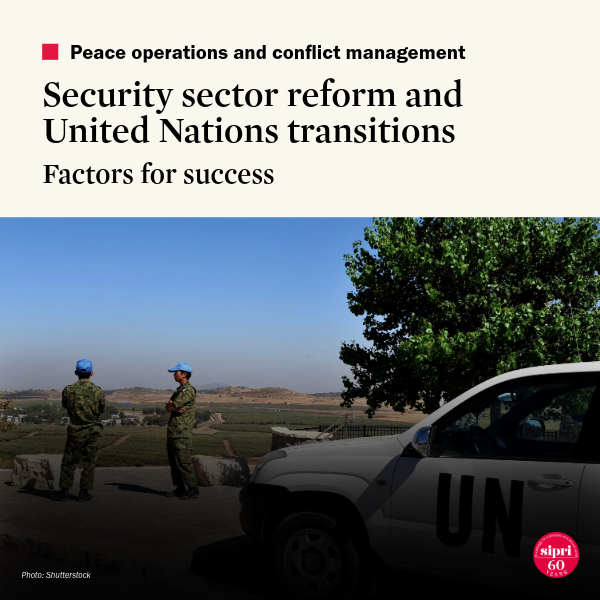 |
Security Sector Reform and United Nations Transitions: Factors for Success
In light of the forthcoming transitions in the Democratic Republic of the Congo and in South Sudan, this study looks at Côte d’Ivoire and Sierra Leone as two historical examples of UN peace operations being involved in security sector reform (SSR). It analyses both cases and makes recommendations based on 11 factors for success or failure of SSR processes and the transition of activities.
Read the SIPRI Report
|
|
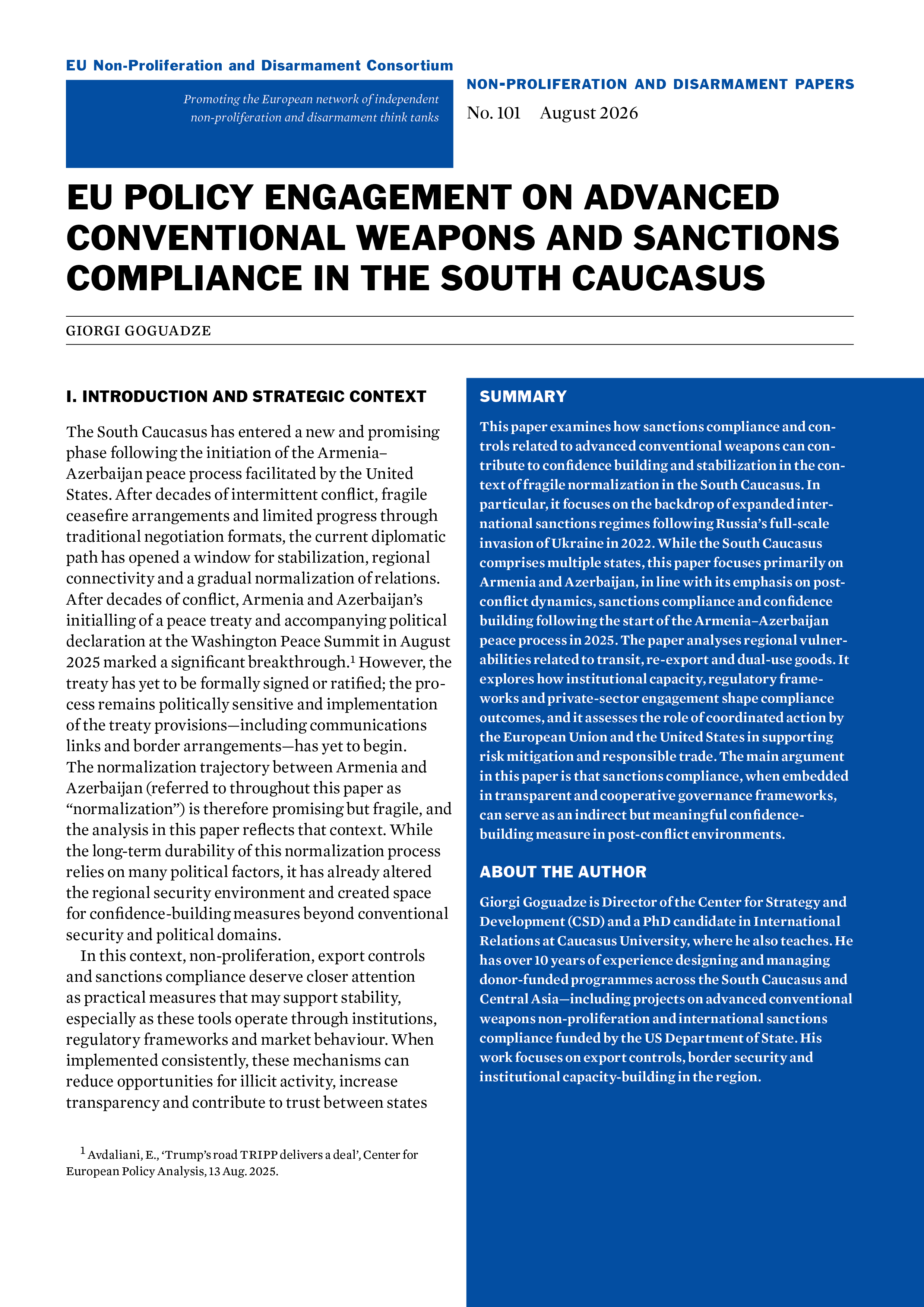 |
EU Policy Engagement on Advanced Conventional Weapons and Sanctions Compliance in the South Caucasus
This paper examines how sanctions compliance and controls related to advanced conventional weapons (ACW) can contribute to confidence building and stabilization in the context of fragile normalization in the South Caucasus. The paper argues that sanctions compliance and controls related to ACWs should be understood not only as enforcement obligations but also as potential indirect confidence-building measures. When embedded within institutional frameworks that emphasize transparency,
predictability and accountability, compliance practices may help to reduce uncertainty, support responsible trade and contribute to trust among regional actors and international partners.
Read the EUNPDC report
|
|
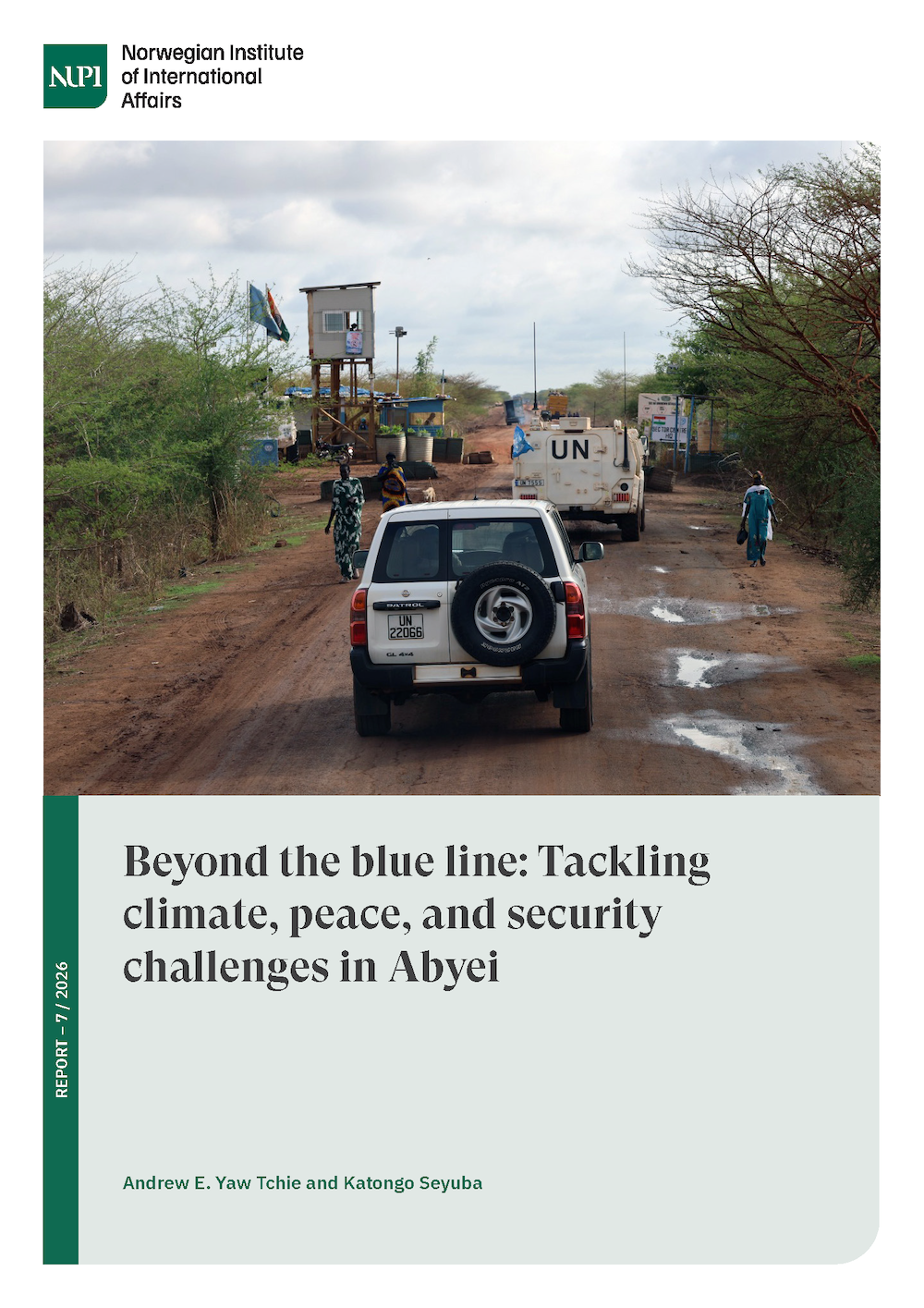 |
Beyond the Blue Line: Tackling Climate, Peace, and Security Challenges in Abyei
Abyei, a disputed area between Sudan and South Sudan, faces interconnected climate, peace and security challenges that affect local communities and the operating environment of the UN Interim Security Force for Abyei (UNISFA). Drawing on the experiences of UNISFA, the report examines existing responses to climate, peace and security challenges and opportunities to strengthen them. It recommends greater integration of climate, peace and security considerations into mission planning, training, early warning and preparedness, alongside support for community-level adaptation and social cohesion.
Read the partner report
|
|
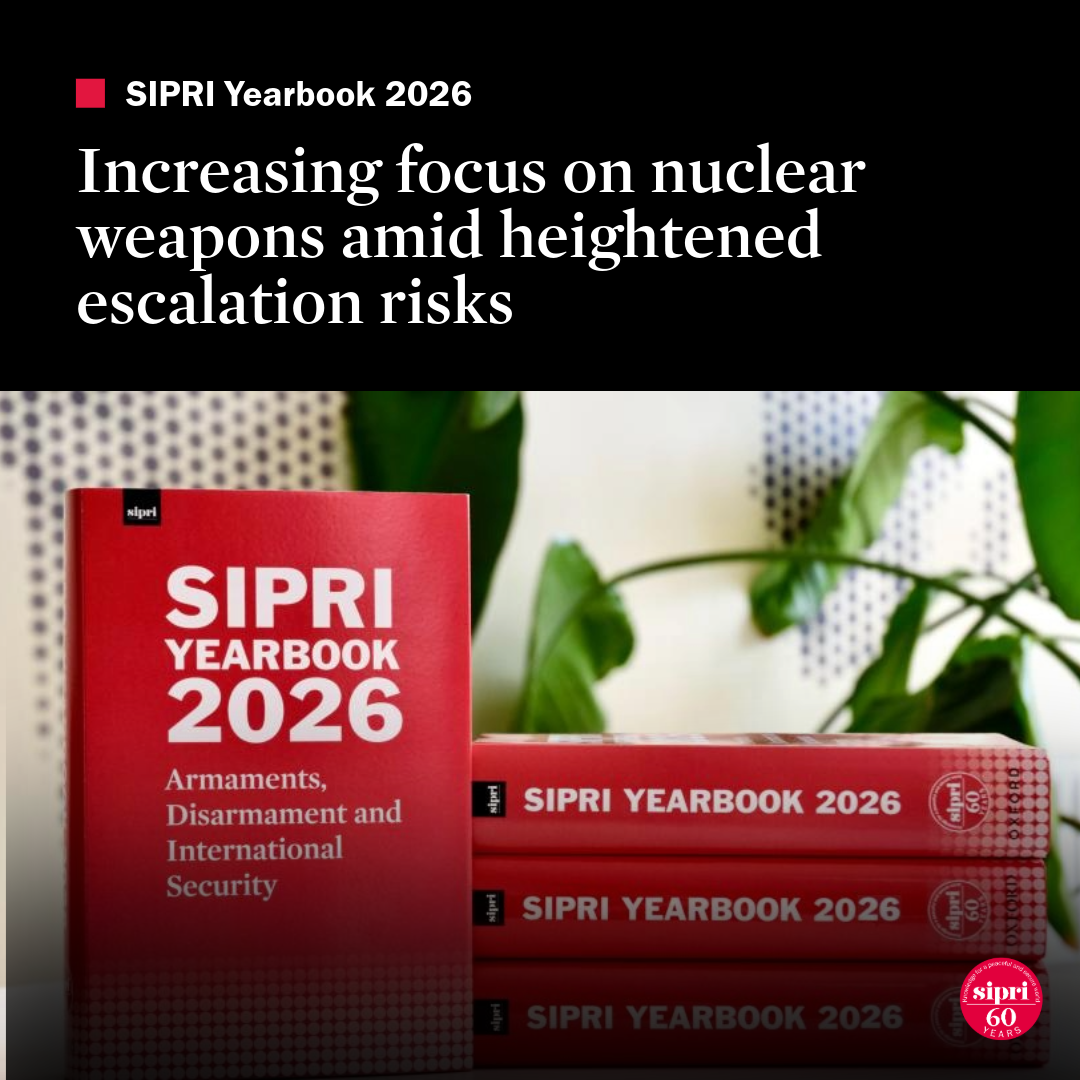 |
SIPRI Yearbook 2026
SIPRI Yearbook 2026 provides an overview of developments in international security, weapons and technology, military expenditure, arms production and the arms trade, and armed conflicts and conflict management, along with efforts to control conventional, nuclear, chemical and biological weapons. This 57th edition of the SIPRI Yearbook covers developments during 2025, including:
- armed conflict and conflict management, with an overview of global and regional developments in armed conflict, peace processes and peace operations;
- military expenditure, international arms transfers and developments in arms production, documenting, in particular, the consequences of a significant unravelling of global security;
- the proliferation of missiles and uncrewed aerial vehicles, with a focus on their widening use in armed conflict; and
- world nuclear forces, highlighting the nuclear modernization trends in the nine nuclear-armed states.
Browse the contents page | Download the summary | Download the sample chapter on world nuclear forces | Download the sample chapter on artificial intelligence and international peace and security | Download the sample chapter on space security governance | Download the introductory chapter | Order SIPRI Yearbook 2026
|
|
|
|
|
|
Accurate, dependable information is more important than ever. Invest in the facts.
Support SIPRI
|
|
 |
| SIPRI is an independent international institute dedicated to research into conflict, armaments, arms control and disarmament. Established in 1966, SIPRI provides data, analysis and recommendations, based on open sources, to policymakers, researchers, media and the interested public. |
|
|