The independent resource on global security

From Silos to Synergies: Partnering for Social Cohesion in the Sahel

October 2025
Stockholm
SIPRI
Summary
The Sahel Resilience Partnership (SRP) is a German government-funded initiative that unites two United Nations entities and Germany’s international development agency to address converging crises in Burkina Faso, Chad, Mali, Mauritania and Niger.
The SRP is an example of the operationalization of the humanitarian–development–peace (HDP) nexus. The partners use coordinated, multisectoral programming covering food and nutrition security, climate-resilient ecosystems, social services and conflict resolution to enhance resilience to shocks and foster social cohesion. Key strengths include a multilevel steering structure and an adaptable joint regional plan.
However, the SRP faces persistent operational challenges, notably navigating political instability and governance issues in the Sahel. Additionally, coordinating across agencies with different mandates, budgets, timelines and set-ups complicates efforts to achieve thorough geographical and programmatic convergence. The SRP and other organizations at the HDP nexus need to deepen complementarity, proactively share data and—where possible—seek operational convergence at the village level.
I. Introduction
Across the Sahel—including Burkina Faso, Chad, Mali, Mauritania and Niger—multiple global crises are converging in unprecedented ways, escalating humanitarian needs, reversing development gains and diminishing prospects for peace.1 Overcoming these crises is a critical problem facing local populations and the international community. Although official development assistance (ODA) reached a record high in 2023, aid allocation remains severely misaligned with peacebuilding needs, particularly in highly fragile regions such as the Sahel. ODA allocated to countries in highly fragile contexts fell to a 20-year low in 2022–23, even as armed conflict in the Sahel intensified. Funding for conflict prevention was particularly scarce, making up less than 4 per cent of total ODA—its second lowest share since 2004. Meanwhile, humanitarian ODA reached record highs, reflecting a continued emphasis on crisis response over addressing root causes of fragility.2 This misalignment undermines resilience across affected contexts.
The growing politicization of humanitarian aid exacerbates this misalignment. In conflict zones, aid is increasingly instrumentalized to serve political or military agendas.3 Amid intense great power rivalry and weak international structures for managing crisis, funding decisions are more heavily influenced by political considerations, geostrategic priorities and security cooperation.4 In the Sahel this situation is compounded by increasing resistance from both governments and civilians to Western presence, which they perceive as an extension of foreign influence and dominance, in particularly from France.5
Given these political and operational difficulties, addressing fragility in such complex, protracted crises demands an integrated approach across the humanitarian–development–peace (HDP) nexus. This means increasing and sustaining development programming in crisis situations and sharing responsibility among HDP actors to avoid undermining one another. It also requires a commitment by humanitarian agencies to consider how their efforts can support longer-term goals and facilitate progress towards sustainable peace.6 Finally, it requires funding tools that are both fast and flexible and are capable of delivering immediate results, while supporting long-term impact over several years.
The Sahel Resilience Partnership (SRP) is a concrete example of this approach that began its inception phase in January 2024 and was officially launched in July 2024. It aims to reduce long-term vulnerability and enhance resilience. The SRP relies on the United Nations definition of resilience, which emphasizes the ability to withstand and adapt to risks while safeguarding the foundations for peace and sustainable development.7 Funded by the German Federal Ministry for Economic Cooperation and Development (Bundesministerium für wirtschaftliche Zusammenarbeit und Entwicklung, BMZ), the SRP brings together the Deutsche Gesellschaft für Internationale Zusammenarbeit (GIZ), which is Germany’s international development agency, the UN Children’s Fund (UNICEF) and the World Food Programme (WFP). By leveraging their complementary humanitarian and development mandates and strengths (see table 1), the SRP aims to operationalize the HDP nexus through coordinated, multisectoral programming.
To generate evidence on HDP nexus approaches, SIPRI serves as the SRP’s knowledge partner. It assesses how approaches like that of the SRP can strengthen social cohesion outcomes and foster inclusive local resilience. The SRP defines social cohesion as ‘trust, respect, tolerance, solidarity and equal opportunities’.8 Conceptually, it distinguishes between horizontal and vertical social cohesion: horizontal social cohesion relates to the quality of relationships among people within a community, particularly across different societal groups, while vertical social cohesion concerns citizens’ relations with government authorities.9 A series of SIPRI policy papers will record key lessons and offer concrete recommendations for international actors and national stakeholders involved in humanitarian, development and peacebuilding efforts across the Sahel region.
This policy paper is the first publication in that series. It is based on 20 semi-structured interviews held in person or online (see appendix A); a two-day workshop organized by GIZ on 22 and 23 April 2025 for SIPRI researchers and regional and country office staff of GIZ, UNICEF and the WFP; and a review of programme documents, including some unpublished internal documents. A year and a half into its operation, it is too early to assess the programme’s impacts on social cohesion. Instead, this paper examines how the SRP is addressing problems related to linking and implementing HDP interventions in Burkina Faso, Chad, Mali, Mauritania and Niger.10 Instead of measuring impact or analysing specific sites, it focuses on design and implementation strengths and operational weaknesses. Future case studies involving extensive fieldwork, including discussions with diverse local stakeholders across the Sahel, will seek to identify pathways to social cohesion in specific locations in each country in which the SRP operates, document early effects of the SRP, and recommend ways to further strengthen and measure contributions to social cohesion.
This policy paper continues in section II by explaining what HDP nexus approaches are and why they matter in the Sahel. Section III then explores the strengths, challenges and strategies of the SRP to reduce needs, risks and vulnerabilities and to address root causes of crises in the region. It spotlights social cohesion as part of peacebuilding. The paper concludes in section IV by taking stock of lessons learned and making recommendations. The analysis identifies several good practices and ways to deepen collaboration.
II. Humanitarian–development–peace nexus approaches in the Sahel: Why they matter
HDP nexus approaches are based on the premise that humanitarian, development and peacebuilding efforts must be coordinated, coherent and complementary.11 By building on the respective comparative strengths of humanitarian actors, development actors and peacebuilding actors operating in the same locations, these approaches are designed to adapt flexibly to rapidly evolving contexts.12 Simultaneously, they aim to reduce vulnerability, address the root causes of conflict, strengthen risk-management capacities and improve overall aid effectiveness.13
The nexus embodies the vision of the 2030 Agenda for Sustainable Development to achieve the Sustainable Development Goals and the 2018 report by the UN secretary-general on sustaining peace.14 These frameworks recognize that sustainable development cannot be achieved without peace, and that peace cannot endure without sustainable development. At the same time, they underscore the urgent need to address conflict in order to alleviate human suffering and reduce the scale and frequency of humanitarian emergencies.
Meeting immediate humanitarian needs can create opportunities for long-term development. Development initiatives, in turn, help strengthen resilience if simultaneous and aligned peacebuilding efforts address the root causes of instability and create a more stable environment for development to solidify.15 However, incorporating peacebuilding into the work of humanitarian and development actors has proven to be hard. There is no commonly agreed-upon conceptual definition of the peacebuilding aspect of the nexus; instead, the mandates of each of the actors that address conflict shape how they can work on peace.
Humanitarian and development actors that operationalize the peacebuilding component of the HDP nexus tend to focus on fostering long-term, transformative change within systems and societies. This typically involves strengthening social cohesion, human rights and justice through conflict-sensitive bottom-up action and relationship-building at the individual and community levels. This is frequently referred to as small-p peacebuilding.16 These approaches contrast with top-down peace negotiations at the national level, which is commonly referred to as big-P peacebuilding. This approach may at times be incompatible with humanitarian principles and mandates.17
Although distinguishing between small-p and big-P peacebuilding can be administratively and operationally convenient for donors and implementing agencies, framing them as separate or discrete categories risks oversimplification. Peace, particularly in contexts of violent conflict, is non-linear and is shaped by shifting power relations and intensities of violence.18 A more holistic understanding of peacebuilding lies in recognizing and leveraging the complementarities between small-p and big-P peacebuilding. Such a recognition can foster coherence across actors and levels of intervention.
Against these challenges, putting HDP approaches into practice and achieving the expected positive feedback loop requires, among other things, conflict sensitivity, prioritization of local participation and ownership, operating in the same geographical areas (geographical convergence), coordination, complementarity of partners with distinct mandates and expertise, and strategic alignment of programmes and interventions (programmatic convergence).19
In the Sahel, where the linkages between multiple drivers of fragility and insecurity mutually exacerbate each other, HDP nexus partnerships have greater potential than siloed interventions. Across the region, fragility is shaped by an intricate web of poor governance, insecurity, displacement, food scarcity and climate crises that are both causes and consequences of one another. The ability of the Burkinabe, Chadian, Malian, Mauritanian and Nigerien governments to address these challenges is hampered by the low capacity of state and local institutions.20 This is reflected in weak administrative capacity, uneven service delivery and underdeveloped public infrastructure, especially in remote and border areas.21 In addition to capacity constraints, the incentive structures shaped by centralized governance left in the wake of colonization prioritize the stability of the national regimes.22 This comes at the expense of accountability to citizens within the Sahel states.23 These incentives are entrenched by pervasive patronage networks and clientelism, which shape governance throughout the region.24 Combined with persistent institutional weakness, they contribute to some of the lowest human development levels in the world (see table 2).25
Since independence, cyclical political instability, ethnic tensions and armed conflict have plagued the region.26 These dynamics undermine the provision of basic services, social protection and safety—all of which are crucial factors for building and maintaining trust.27 Since 2020 there have been frequent changes or attempted changes in political leadership—sometimes by violent and contested means—in four of the five Sahelian states (see table 3).28 In 2024 the combined total deaths recorded from organized violence in Burkina Faso, Chad, Mali, Mauritania and Niger was 7572, with a broader upward trend since 2010.29 This trajectory has been driven by a combination of jihadi insurgency, armed conflict, organized crime, political instability and weak governance.30 Jihadi extremist organizations, including the Group for the Support of Islam and Muslims (Jama’a Nusrat ul-Islam wa al-Muslimin, JNIM) and affiliates of the Islamic State group, are particularly active in Burkina Faso, Mali and Niger.31
In addition to political instability and insecurity, climate change is a major source of fragility in the Sahel. Agriculture and pastoralism are prominent livelihoods across the region, where they engage over 70 per cent of the population.32 The high reliance on agricultural and pastoralist livelihoods makes large numbers of people vulnerable to climate impacts. Climate change is causing temperatures in the Sahel to increase at one and a half times the global average rate, creating more frequent and intense droughts and floods.33 This pattern devastates crops and exacerbates conflict over resources.34
These mutually exacerbating drivers of instability and insecurity entrenched an average of about 37 per cent of the population across the region in stressed and crisis levels of food insecurity in 2024.35 Chad experienced the highest rate of acute food insecurity in the region in 2024, with about 17 per cent of its population suffering from crisis-level food insecurity.36 While Mauritania differs from the rest of the Sahel—with lower levels of conflict and no recent coups—food insecurity is similarly widespread, with 26 per cent of the population experiencing stressed food insecurity and 14 per cent crisis-level food insecurity in 2024 (see table 2).37
As political instability, insecurity and climate change persist, they erode resilience to new shocks and the coping capacities of already vulnerable individuals, communities and systems. This interlocking cause–consequence relationship among humanitarian, development and conflict-related challenges makes it crucial to shift from scattered, small, short-term, siloed approaches towards geographically concentrated, scaled, longer-term, multisectoral programming through strategic HDP partnerships, such as the SRP.
III. The Sahel Resilience Partnership: Strengths and challenges
The Sahel Resilience Partnership aligns GIZ’s Sahel Resilience Strengthening (SARES) project, UNICEF’s Building Resilience in the Sahel (BRS) programme and the WFP’s Sahel Integrated Resilience Programme (SIRP).38 The purpose of joining the resilience efforts of GIZ, UNICEF and the WFP together in a portfolio of interventions is to combine their respective strengths in a coherent, complementary and coordinated fashion. This is expected to enhance impact across four common outcomes, linked to the main drivers of fragility in the Sahel: food and nutrition security; climate-resilient ecosystems; continuous, shock-resilient social services; and conflict resolution and social cohesion (see table 4).39
Food and nutrition interventions (e.g. food and cash transfers and treatment of acute malnutrition) address immediate humanitarian needs. Climate and social service interventions (e.g. rehabilitation of degraded land, climate-resilient water, sanitation and hygiene, and school meal programming) complement immediate food and nutrition needs to create long-term resilience. Conflict-resolution and social cohesion activities (e.g. intercommunal dialogues, cultural activities, and improved use and ownership rights of restored land) aim to improve the environment for resilience-building interventions to take root. Through such multisectoral resilience-building, the SRP seeks to pave the way for communities’ long-term self-sufficiency across the region.40
Two main factors explain the formation of this strategic partnership. First, according to interviewees from the three partner organizations, the SRP has been driven by the BMZ.41 Some further suggested that the BMZ had both a vision for reducing reliance on humanitarian aid and using funds more efficiently in the Sahel and a financial tool to achieve this.42 Its transitional development assistance is used to finance localized, bottom-up strategies for improving resilience that are aligned with the HDP nexus.43
Second, GIZ, UNICEF and the WFP were natural partners, given their complementarities and track record of collaboration in the Sahel. The WFP started SIRP in 2018 and UNICEF joined in 2019, given synergies in the areas of nutrition, health and education. By the time that the SRP was launched, UNICEF and the WFP had already worked together for five years. According to one interviewee, local governance and peacebuilding—areas in which neither UNICEF nor the WFP specializes—presented key opportunities for GIZ to complement the work of UNICEF and the WFP in order to enhance interventions and their sustainability.44 Another interviewee reported that, as with UNICEF, the WFP had previously collaborated with GIZ on resilience-building and values its technical expertise and closeness to communities.45 Past collaborations provided a trusted base upon which to both deepen past efforts and increase their scale.
Design and implementation strengths
Analysis of the set-up of the SRP reveals four key design and implementation strengths: its multilevel governance structure to align the resilience activities of GIZ, UNICEF and the WFP; an adaptable joint regional plan; common community engagement and participatory planning; and in-built knowledge generation. Each is examined in turn below.
Multilevel steering structure
The SRP’s governance structure is multilevel (see figure 1). At the regional level, GIZ regional management, the UNICEF and WFP regional bureaus, and BMZ staff have set up a steering committee.46 It helps to institutionalize a focus on continued improvement, collaboration and joint accountability and creates a platform for the partners to align their objectives and operations while pursuing their distinct mandates and sectoral expertise. While donor participation is unusual, in this case interviewees reported that the BMZ ensures that the partners dedicate necessary time, effort and expertise to strategic, programmatic and geographical convergence, rather than conducting business as usual or working in a vacuum.47 In addition, one interviewee noted that the BMZ’s participation in the regional steering committee allows for resilience programming and resources to be adapted to evolving dynamics in the Sahel countries.48 The outcomes of the discussions in the regional steering committee guide the follow-up meetings by the partners’ regional coordinators and national-level implementation.
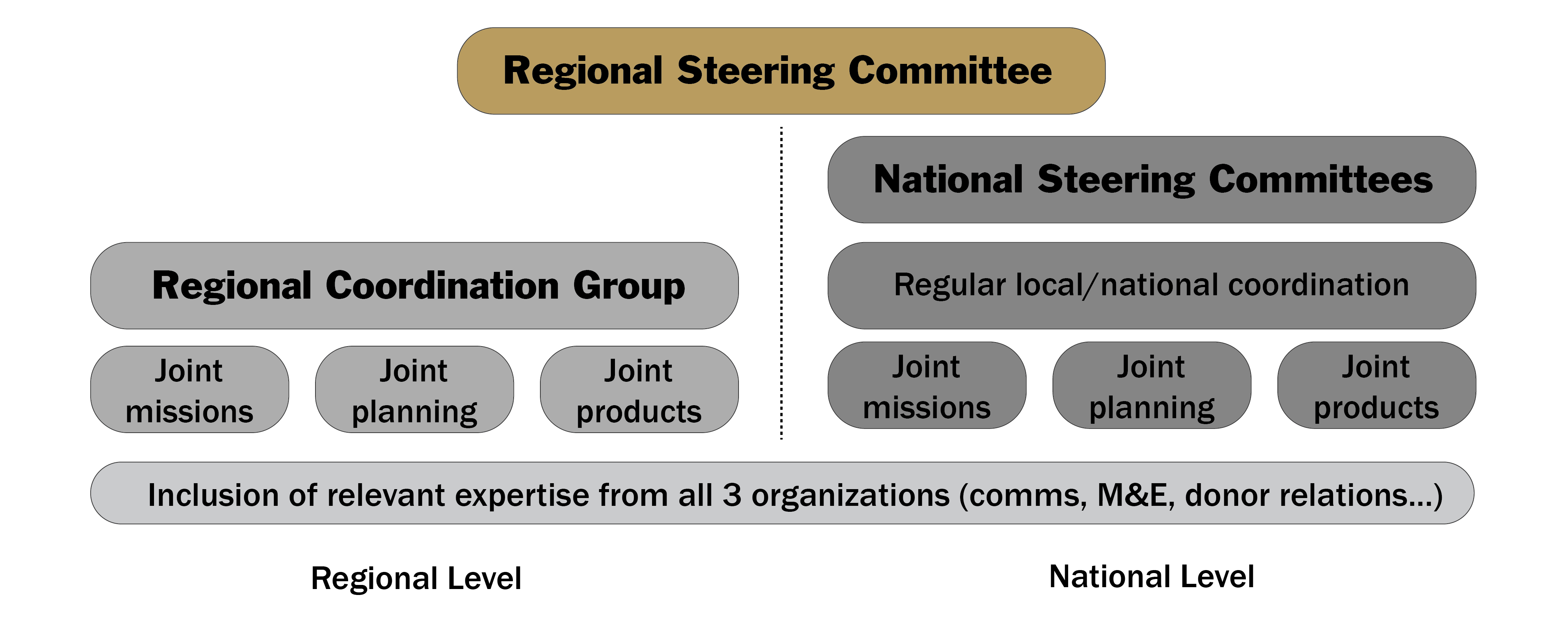
Figure 1. The multilevel steering structure of the Sahel Resilience Partnership
Source: SIPRI, Deutsche Gesellschaft für Internationale Zusammenarbeit (GIZ), UN Children’s Fund (UNICEF) and World Food Programme (WFP), Internal kick-off workshop presentation, Dakar, Unpublished internal document, 22 Apr. 2025.
At the national level, each of the five countries in the Sahel has established a steering structure. The participation and involvement of the governments and their line ministries is important for ensuring links to national policies and future sustainability, with the frequency of meetings depending on the respective context. National steering committee meetings may also involve German embassies (e.g. in annual review meetings). How the three partners work together in each country also depends on the context and involves signing trilateral partnership agreements.49
To strengthen complementarity, regular joint field missions that engage target groups, cooperatives and local authorities and that monitor progress have been conducted in some countries, including Burkina Faso and Niger, but not yet in others, such as Chad.50 While most coordination occurs at country level and varies in the field, some interviewees report that the partners are extending their strategic and technical coordination at the national level to the subnational level.51
At the subnational level, UNICEF and the WFP are putting in place SRP focal points as counterparts to GIZ’s SARES project staff in order to strengthen the coordination and complementarity of their activities and those of their implementing partners. SRP focal points are also engaging with local authorities, including municipalities and technical services. Instituting focal points was a response to the partners’ initial difficulties in connecting in the field and integrating their resilience activities.52 Such a multilevel governance structure for an HDP nexus partnership can help avoid duplication while deepening coverage, leverage comparative advantages, and share understandings of evolving political, economic, social, environmental and legal conditions. The BMZ’s insistence and its consistent engagement have contributed to structures becoming institutionalized, rather than remaining dependent on individual staff members.53 Importantly, the SRP’s steering structure facilitates inter-agency learning through regular exchange between stakeholders with different expertise from all three organizations and the donor.54
Adaptable joint regional plan
The SRP developed a common regional plan (referred to as a regional chapeau) during an inception period. This was important for clarifying partners’ roles and expectations and understanding organizational similarities and differences, strengths and constraints, according to one interviewee.55 The regional chapeau provides an adaptive common framework, rather than a rigid partnership model.56
Starting from a joint context analysis and agreed-upon definitions of resilience and social cohesion, this operational plan commits GIZ, UNICEF and the WFP to common outcomes based on a theory of change spanning multiple sectors. The plan lays out a division of labour that reflects the partners’ organizational strengths and the complementarity of their resilience activities (see table 5).57 Its emphasis on strengthening systems, connecting with government authorities, and enhancing accountability of decision makers and service providers is key for future sustainability and scaling.
Common community engagement and participatory planning
GIZ, UNICEF and the WFP work on aligning and, where possible, harmonizing the approaches to community engagement and participatory planning that underlie their resilience activities, especially in newly selected SRP intervention sites. According to one interviewee, the partners involve individuals, communities, partners and local authorities through group discussions and consultations.58 These processes range from the initial needs analysis to the development, implementation and monitoring of community plans. They seek to strengthen communities’ ownership of the agreed plans and municipal leaders’ accountability for their support of the implementation of these plans.
Pursuing community engagement jointly is meant to prevent duplication and fragmentation. Another interviewee reports that it also helps GIZ, UNICEF and the WFP to develop a common vision.59 The aim is to build a joint SRP planning framework for each targeted community based on five key principles: (a) recognizing community members as rights holders and change agents; (b) building bridges between groups; (c) including marginalized groups; (d) adapting to local context and government priorities; and (e) building on existing local capacity. GIZ, UNICEF and the WFP have done some joint community engagement, but developing a harmonized model is a work in progress.60
Knowledge generation
Finally, the SRP built knowledge generation and sharing into its priorities.61 In addition to a research collaboration with SIPRI to leverage resilience interventions for food, climate and social protection to further peace and social cohesion, the partners work with the Network of Sahel Universities for Resilience (Réseau des Universités du Sahel pour la Résilience, REUNIR) to disseminate resilience tools, develop technical experts, support research and evidence generation, and foster innovation.62 REUNIR deploys Sahelian masters students at SRP intervention sites to study integrated interventions, uncover good practices, and learn about community participation, landscape restoration and regenerative agricultural practices.63 This may help close capacity gaps in the future.
Operational challenges
Despite the above strengths, several operational challenges nonetheless persist. They relate to working with government authorities in the Sahel; inter-agency coordination; convergence; and monitoring and evaluation.
Working with governments in the Sahel
Working with government authorities in the Sahel involves navigating political instability, governance challenges and high levels of insecurity that prevent access to certain areas and hinder or delay implementation. Coups and political transitions can undermine relationships between the SRP’s constituent partners and public authorities, complicating efforts to address root causes of the region’s most pressing issues. The disconnects left by these complications can be observed across the region. After the 2023 coup in Niger, for example, the German government advised against formal cooperation with government institutions, recommending a strictly technical approach.64 In Burkina Faso and Niger, coups have also led to the replacement of elected mayors with military staff, which has complicated development cooperation with local state authorities and, in some cases, brought contract financing and capacity-building to a standstill.65
Meanwhile, the government of Chad has not been a bilateral development partner of Germany since 2011/12, meaning that GIZ has had to implement interventions directly with local partners. With partnerships abruptly changing throughout the Sahel, the institutional set-up for implementing the SRP had to be newly built.66 More generally, one interviewee reported that identifying government counterparts at different government levels for SRP activities can be complex.67
Political instability can also change government priorities, affecting SRP programming. For example, in Burkina Faso—which has been governed by the current military junta since September 2022—the Ministry of Economy, Finance and Planning has prioritized building infrastructure over social cohesion according to one interviewee.68 This required GIZ, UNICEF and the WFP to reassess their complementary approach and GIZ to allocate more funds and visibility to infrastructure while adjusting the presentation of its work on social cohesion to improve alignment with government expectations.
Finally, security concerns have increased operational complexity in some countries and the partners encounter changing bureaucratic processes and higher costs. In Niger, for example, military escorts for field missions became mandatory in 2024, complicating efforts to work with communities. While the impact of this policy change on social cohesion activities is not yet clear and government demands differ from country to country, the SRP must adapt to this new reality according to one interviewee.69
Inter-agency coordination
Inter-agency coordination is laborious and complicated.70 The three partners work in separate offices with budgets whose sizes and cycles differ (see table 6).71 GIZ operates with a project logic and dedicated leadership and staffing structure from the regional to the country level for the duration of SARES. In contrast, UNICEF and the WFP take a programmatic, country-based approach with regional and thematic advisors who work across different interventions and with frequent staff changes.72 Incoming staff may be unfamiliar with the strategic complementarity pursued.73
UNICEF and the WFP are GIZ’s main partners, while GIZ is one of many partners for UNICEF’s and the WFP’s resilience programming.74 UNICEF staff have sometimes prioritized meetings with government authorities over SRP coordination meetings, given their focus on strengthening social protection systems and services.75
Partly due to their different mandates, the organizations also work at different speeds. Interviewees reported that humanitarian actors (e.g. the WFP) tend to focus on being fast, while development actors (e.g. GIZ) implement with longer time frames in mind.76 Partners need to strike a balance between coordination, planning and implementation across agencies.
Geographical and programmatic convergence
Geographical and programmatic convergence have been hard to operationalize. The WFP’s SIRP runs until 2028, a year longer than BRS and SARES, which both conclude in 2027. Given UNICEF’s and WFP’s bigger sizes and budgets and their responsibilities towards multiple donors, their resilience programmes cover a broader area than GIZ can serve.77 Geographical convergence is highest where the Sahel resilience partners had the flexibility to complement each other’s programming. This has been the case of UNICEF in Mauritania, where the WFP did the initial targeting. Similarly, GIZ was flexible in Niger and other locations where UNICEF and the WFP were already working together.78 Flexibility, however, has limits. Partners cannot exit existing SRP intervention sites in order to achieve convergence goals. Site changes need careful planning and communication to avoid conflict and reputational risks.
While the partners measure geographical convergence at the municipal level, participants in the research kick-off workshop indicated that, for maximum strategic complementarity, an operational focus on convergence at the village level may be needed.79 However, achieving convergence below municipal level is difficult given that databases are not necessarily disaggregated at the village level. One interviewee suggested that partners may thus work in the same municipalities without concentrating their resilience activities in the same villages or schools.80
So far, each organization maintains separate databases and confidential beneficiary lists. Data integration and evidence-sharing have been inconsistent according to various interviewees.81 Beyond the formal coordination structures, including those of the UN Office for the Coordination of Humanitarian Affairs (OCHA) and the five humanitarian country teams, work to track convergence and detect who is working where and with whom (including implementing partners and community actors) is ongoing.82
Importantly, the need for geographical convergence can undermine the continuity of previous interventions.83 To achieve convergence and strategically complement UNICEF and WFP activities, GIZ stopped its work at several of its previous project sites in Niger. If unexplained, such discontinuity can carry both conflict and reputational risks. In the light of these constraints, some workshop participants concluded that ‘[geographical] convergence cannot be perfect and cannot be everywhere’.84
Programmatic convergence, in turn, is complicated by partners’ different implementation structures. GIZ usually has a field presence. According to one interviewee, UNICEF and the WFP work with local non-governmental organizations (NGOs), which do not always coordinate with or understand the SRP and what complementarity entails.85 This reduces efficiency and opportunities for meaningful programmatic synergies.86 GIZ, UNICEF and the WFP have therefore started to connect in the field, and UNICEF and the WFP have explored working with common implementing NGOs. One interviewee stressed that ‘complementarity must be intentional’, meaning that complementarity must be carefully designed rather than coincidental.87 While further formalization of collaboration and coordination is necessary, a different interviewee noted that ‘there needs to be a balance between the coordination burden of redefining partnership mechanisms and keeping the structure efficient and streamlined’.88 Ensuring that resilience activities build on one another and maximize strategic complementarity requires strong field coordination (see box 1 for an illustration).89
Box 1. Maximizing strategic complementarity
In cases where the three partners of the Sahel Resilience Partnership (SRP) work at the same intervention site (i.e. cluster of villages), the implementing collaborators need to work together to create meaningful programmatic synergies and detect opportunities for efficiency gains. For example, when the United Nations Children’s Fund (UNICEF) and the World Food Programme (WFP) implement their resilience-building activities in the same school and the Deutsche Gesellschaft für Internationale Zusammenarbeit (GIZ) joins to strengthen social cohesion and local governance in the same SRP intervention site, their work may be coordinated as follows.
- UNICEF may work on education quality standards, access to water, safe school environments, gender-sensitive sanitation and protection issues, including the prevention of violence.
- The WFP may provide school meal programmes, establish community vegetable gardens and support school management committees for the meal programmes.
- GIZ may complement these efforts through infrastructure investment in community-managed facilities for activities that support UNICEF and WFP interventions and bring together women, young people, different communities and stakeholders.
Strong field-level coordination can increase the quality of the interventions by ensuring the following.
- The water point provided by UNICEF has enough capacity to supply the WFP’s community vegetable garden.
- Joint training takes place for different aspects of school improvement to reap efficiency gains.
- Inclusive spaces are created for and managed by community groups to learn, support the partners’ livelihood activities, and meet or engage with local authorities, thereby contributing to stronger horizontal and vertical social cohesion and accountability.
As a result, through intentional complementarity, partners implement the same activities as before but, in the words of one workshop participant, ‘without doing the same’.
Source: SIPRI, Deutsche Gesellschaft für Internationale Zusammenarbeit (GIZ), UN Children’s Fund (UNICEF) and World Food Programme (WFP), Internal kick-off workshop presentation, Dakar, Unpublished internal document, 22 Apr. 2025.
Monitoring and evaluation
Monitoring and collecting data are difficult because each organization has distinct reporting requirements, monitoring systems and data-collection procedures.90 The WFP, for example, uses post-distribution monitoring (PDM) conducted at fixed intervals, at times when partners may not be available for joint field data collection. GIZ does its monitoring and evaluation project-by-project according to each project’s budget, resources, subject or other project-specific factors. One interviewee lamented the lack of awareness of each other’s data and surveys, suggesting that there is room for more proactive sharing, joint monitoring and evaluation.91 Another interviewee emphasized a willingness to share data, but highlighted a lack of clarity over what to share and how.92
Harmonizing selected indicators requires dividing responsibilities between the partners for developing and integrating data across the different monitoring systems. Currently, according to one interviewee, each organization is gathering its data from different sources that are subsequently aggregated.93 According to another, some diagnostic tools, such as joint questionnaires, have been developed to generate a common understanding of needs in the intervention areas in order to permit joint activities to be carried out and to coordinate aid.94 Joint questionnaires could be replicated elsewhere and could also be used to measure progress.
Spotlight on social cohesion
Integrating the peace component across interventions has historically been difficult given constraints on mandates, concerns about humanitarian neutrality, different understandings of peace across organizations and a lack of measurement frameworks.95 Building on earlier resilience-building collaborations, the SRP seeks to promote peace and reduce conflict by mainstreaming the building of social cohesion across GIZ, UNICEF and WFP interventions, rather than treating it as a standalone effort.96 In practice, this means designing both implementation processes and technical interventions intentionally to promote social cohesion and prevent conflict.
Implementation processes describe the ways in which activities should be carried out. For example, they ensure that planning, delivery and engagement are inclusive, participatory and equitable. These approaches support social cohesion by modelling continuous inclusion and participation, particularly of marginalized groups such as women and youth and disabled or displaced people. Technical interventions, in turn, focus on the content of programming and are designed to foster positive interactions across groups and with government authorities. For example, inclusive social protection programmes can build trust in institutions, while natural resource-management initiatives can incorporate conflict prevention and can strengthen legitimate, collaborative governance.97
This combination of participatory implementation processes and technical interventions corresponds to complex linkages between social, political, economic and environmental drivers of social tension across the Sahel. For example, social cohesion in Mauritania is threatened by ethno-racial divisions and uneven access to basic services and infrastructure throughout its vast territory.98 Historically marginalized ethno-racial groups and impoverished rural populations face the additional impacts of climate change, economic shocks and migration pressure.99 Climate change is disrupting transhumance periods in Niger, driving conflict over resources and land rights between farmers and pastoralists.100 These tensions are compounded by political and economic shocks following from changes in governance and post-coup sanctions since 2023.101 These examples demonstrate the need for complementary, inclusive and conflict-sensitive programming.
The SRP aims to promote social cohesion through conflict-sensitive inclusive, participatory, bottom-up design and equitable access to services. This is achieved through technical interventions, such as dialogues and community-led events, as well as collective, collaborative soil regeneration and natural resource management, which foster positive interactions and relationships among people. In addition, SRP efforts to strengthen the capacity and local ownership of social protection programmes may improve trust between people and their governments.102
Theories of change apply a structured approach to understanding how such a holistic design may affect the complex drivers of social cohesion.103 While data collection to develop and measure such theories of change is ongoing, the SRP represents a crucial shift in integrating peacebuilding in HDP nexus operationalization. Mainstreaming social cohesion could represent a more holistic way to ignite the positive feedback loops of multisectoral interventions.104 Understanding and measuring these impacts is key to improving coordination and complementarity in the SRP’s HDP nexus approach.
IV. Conclusions and ways forward
Several good practices and lessons for deepening collaboration and increasing efficiency emerge from the SRP experience of operationalizing the HDP nexus. They include the following:
- Breaking down siloed organizational working approaches through donor insistence on strategic complementarity of interventions that translates into the implementation of partnership activities. This requires leadership buy-in.
- Establishing a clear steering structure with partnership focal points at all levels to ensure ongoing partner engagement, joint coordination, strategizing and implementation, as well as inter-agency learning.
- Generating an adaptable common operational plan that defines joint outcomes and how to reach them with a division of labour based on organizational strengths and complementarity. The SRP did this through an inception period during which partners learned about organizational differences, strengths and constraints.
- Engaging continuously with communities through ongoing joint partner processes focused on strengthening community ownership, participation and inclusion.
- Conducting regular joint field missions and working through connected or common implementing partners to strengthen strategic complementarity and efficiency.
- Embedding knowledge generation and learning into implementation through local and international research partnerships.
Future recommendations for the SRP and organizations seeking to operationalize the HDP nexus include the following.
- Avoiding competition for protagonism and deepening accountability towards each other, in addition to the affected populations and the donor.
- Seeking operational convergence at village level for deeper complementarity. This may involve a trade-off between breadth and depth of coverage.
- Deepening operational and programmatic complementarity and ensuring staff and collaborators understand what the SRP is about. This could involve strengthened knowledge management within and across organizations to overcome the challenges related to frequent staff rotation.
- Strengthening community ownership further by sourcing solutions from communities.
- Generating specific opportunities for marginalized groups to elevate their position within their communities.
- Continuing to identify entry points for everyday peacebuilding, for example, through sustained community engagement and reliable social service provision with a focus on prevention.
- Sharing and systematically comparing available data more proactively, harmonizing selected indicators for joint assessments and improving data-management tools to avoid overlap. This may include consideration of a common monitoring and evaluation approach to investigate the theory of change underlying the SRP or use of common surveys to measure trust, respect, tolerance, solidarity and perceptions of equal opportunities.
- Tracking where and how the SRP managed to avoid duplication and recorded efficiency gains, for example, through joint field missions or shared contractors.
- Nurturing a culture of cooperation between HDP actors beyond the SRP.
Endnotes
- 1 UN Office for the Coordination of Humanitarian Affairs (OCHA), Global Humanitarian Overview 2025: The Cruel Math of Aid Cuts (OCHA: New York, 2025); UN Development Programme (UNDP), Human Development Report 2025—A Matter of Choice: People and Possibilities in the Age of AI (UNDP: New York, 2025); and, Smith, D., ‘Introduction: International stability and human security in 2023’, SIPRI Yearbook 2024: Armaments, Disarmament and International Security (Oxford University Press: Oxford, 2024).
- 2 Organisation for Economic Co-operation and Development (OECD), States of Fragility 2025 (OECD: Paris, 2025); and OECD, Peace and Official Development Assistance (OECD: Paris, Oct. 2023).
- 3 Karamagioli, E., Pikoulis, M. and Arvaniti, C., ‘Humanitarian aid in the polycrisis: Local and systems thinking approaches’, Polycrisis & Policy Brief Series no. 2, PolyCivis, Mar. 2025; and Pozo Marin, A., Perilous Terrain: Humanitarian Action at Risk in Mali, Case study (Medecins Sans Frontiers, Centre for Applied Reflection on Humanitarian Practice: Barcelona, Mar. 2017).
- 4 Smith (note 1); and VanRooyen, M., ‘The future of humanitarian aid: Navigating a politicized and fragmented landscape’, Harvard Humanitarian Initiative, 2 June 2025.
- 5 Vo, S., ‘Junta rule in the Sahel: Decolonization and destabilization’, Harvard International Review, 25 Jan. 2025.
- 6 Brown, S., Mena, R. and Brown, S., ‘The peace dilemma in the triple nexus: Challenges and opportunities for the humanitarian–development–peace approach’, Development in Practice, vol. 34, no. 5 (Aug. 2024).
- 7 UN Sustainable Development Group (UNSDG), UN Common Guidance on Helping Build Resilient Societies (United Nations: New York, Sep. 2021).
- 8 Deutsche Gesellschaft für Internationale Zusammenarbeit (GIZ), World Food Programme (WFP) and UN Children’s Fund (UNICEF), ‘Regional chapeau: BMZ–GIZ–WFP–UNICEF partnership for resilience in the Sahel 2023–2027’, Unpublished internal document, Apr. 2024.
- 9 Social Cohesion Hub, ‘UNDP conceptual framework of social cohesion’, German Institute of Development and Sustainability (IDOS), [n.d.].
- 10 German Federal Ministry for Economic Cooperation and Development (BMZ), ‘WFP, UNICEF, GIZ—Sahel Resilience Partnership—An innovative flagship programme’, Advocacy paper, Unpublished internal document, Jan. 2024; WFP, UNICEF and GIZ, ‘Sahel Resilience Partnership—WFP, UNICEF and GIZ join forces for resilience building in the Sahel’, Jan. 2024; and WFP, UNICEF and GIZ, ‘Conflicts, economic crises and the impact of climate change: Comprehensive investments from Germany bolster resilience in the Sahel region’, Joint press release, Sahel Alliance, 15 May 2024.
- 11 United Nations, Peacebuilding Support Office, ‘Rightsizing peace in the triple nexus’, 31 Mar. 2023.
- 12 Kunová, A. D. and Mélinon, A., ‘Humanitarian–development–peace nexus approaches in conflict and disaster settings’, UNDP, Independent Evaluation office, 5 June 2024.
- 13 Morinière, L. and Morrison-Métois, S., Working Across the Humanitarian–Development–Peace Nexus: What Can We Learn from Evaluations? (Overseas Development Institute (ODI), Active Learning Network for Accountability and Performance (ALNAP): London, Dec. 2023).
- 14 UN General Assembly Resolution 70/1, ‘Transforming our world: The 2030 Agenda for Sustainable Development’, A/RES/70/1, 25 Sep. 2015; and United Nations, General Assembly and Security Council, ‘Peacebuilding and sustaining peace’, Report of the secretary-general, A/72/707–S/2018/43, 18 Jan. 2018.
- 15 OECD, Development Assistance Committee (DAC), ‘DAC recommendation on the humanitarian–development–peace nexus’, OECD/LEGAL/5019, 2025.
- 16 Kunová and Mélinon (note 12).
- 17 Böttcher, C. and Wittkowsky, A., Give “P” a Chance: Peacebuilding, Peace Operations and the HDP Nexus (Center for International Peace Operations (ZIF): Berlin, Dec. 2021, pp. 22–23.
- 18 Brusset, E. et al., Measuring Peace Impact: Challenges and Solutions (SIPRI: Stockholm, Nov. 2022).
- 19 BMZ, The Humanitarian–Development–Peace Nexus in Practice: A Literature Review (BMZ: Berlin, 2021), p. 4; Inter-Agency Standing Committee (IASC), Mapping Good Practice in the Humanitarian–Development–Peace Nexus: Synthesis Report (IASC: Geneva, Sep. 2024), p. 19; and Swithern, S. and Schreiber, D., Co-ordination across the Humanitarian–Development–Peace Nexus, OECD Development Co-operation Working Paper no. 114 (OECD: Paris, Dec. 2023), pp. 8–9.
- 20 Bøås, M. and Strazzari, F., ‘Governance, fragility and insurgency in the Sahel: A hybrid political order in the making’, Contemporary Politics, vol. 26, no. 1 (2020), p. 5.
- 21 Bøås and Strazzari (note 20), p. 5; and Massaoud, M. H., ‘Reforming the security sector in the Sahel: Governance issues and institutional challenges’, International Journal of Science and Research Archive, vol. 16, no. 1 (July 2025), p. 1431.
- 22 Massaoud (note 21), p. 1430; and Mbaye, A. A. and Benjamin, N., ‘Institutions, informality, and conflict in the Sahel: The case of Mali’, Policy brief, Africa Growth Initiative at Brookings, Apr. 2022.
- 23 Massaoud (note 21), p. 1430; and UNDP, The Future of Governance in the Sahel: (Re)building Social Cohesion and Public Trust (UNDP: Dakar, 2025), p. 20.
- 24 Mbaye and Benjamin (note 22).
- 25 UN Development Programme (note 1); and Mahmood, M., ‘The G5 Sahel: At the nexus of fragility, conflict, and climate’, Policy brief, International Growth Centre (IGC), Feb. 2025.
- 26 Yabi, G. O., ‘The Sahel’s intertwined challenges’, Finance & Development, Sep. 2024.
- 27 Center for Preventive Action, ‘Violent extremism in the Sahel’, Global Conflict Tracker, Council on Foreign Relations, 4 Sep. 2025.
- 28 Center for Preventive Action (note 27); and Tshuma, D. et al., ‘The nexus between security and development in the Sahel: West African perspectives on EU interventions’, European Think Tanks Group (ETTG) Policy Brief no. 3/2025, 2025, pp. 5–6.
- 29 Uppsala Conflict Data Program (UCDP), ‘UCDP Conflict Encyclopedia’, [n.d.]. On the definition of organized violence see table 2, note d, above.
- 30 Thurston, A., Military Coups, Jihadism and Insecurity in the Central Sahel, West African Papers no. 43 (OECD: Paris, May 2024).
- 31 Institute for Economics and Peace (IEP), Global Terrorism Index 2025: Measuring the Impact of Terrorism (IEP: Sydney, 2025), pp. 22, 25–26.
- 32 Dieng, A., ‘The Sahel: Challenges and opportunities’, International Review of the Red Cross,
vol. 103, no. 916 (Dec 2021), p. 772. - 33 Sahel Alliance, ‘The Sahel and the challenges of climate change’, [n.d.].
- 34 Dieng (note 32), p. 772.
- 35 Food and Agriculture Organization of the UN (FAO) et al., The State of Food Security and Nutrition in the World 2024: Financing to End Hunger, Food Insecurity and Malnutrition in All Its Forms (FAO: Rome, 2024), pp. 154–55; and Internal Displacement Monitoring Centre (IDMC), Global Report on Internal Displacement 2024 (IDMC: Geneva, 2024).
- 36 Food Security Information Network (FSIN) and Global Network Against Food Crises (GNAFC), Global Report on Food Crises 2025 (FSIN: Rome, 2025), p. 92.
- 37 FSIN and GNAFC (note 36), p. 92.
- 38 WFP, ‘Sahel Integrated Resilience Programme and scale-up 2023–2028’, Feb. 2024; GIZ, ‘Project data: Sahel Resilience Strengthening (SARES)’, Apr. 2025; and UNICEF, Building Resilience in the Sahel Programme: Annual Report January–December 2024 (UNICEF: New York, 2025).
- 39 SIPRI, GIZ, UNICEF and WFP, Internal kick-off workshop presentation, Dakar, Unpublished internal document, 22 Apr. 2025; BMZ, ‘Sahel Resilience Partnership’, Unpublished internal document, Dec. 2024, pp. 3–4; and GIZ et al. (note 8).
- 40 OECD (note 15), p. 11.
- 41 WFP staff member, Interview no. 2, 6 Mar. 2025; UNICEF staff member, Interview no. 8, 7 Mar. 2025; GIZ staff member, Interview no. 15, 24 Apr. 2025; BMZ staff members, Interview no. 20, 22 July 2025; and SIPRI et al. (note 39).
- 42 WFP, ‘Germany supports UNICEF, WFP and GIZ joining forces to boost resilience in the Sahel amid worsening effects of conflict, climate and macroeconomic shocks in West and Central Africa’, 29 May 2024.
- 43 WFP staff member, Interview no. 6, 6 Mar. 2025; WFP staff member, Interview no. 7, 7 Mar. 2025; and BMZ, Strategy on Transitional Development Assistance: Overcoming Crises—Strengthening Resilience—Creating New Prospects, BMZ Strategy Document no. 02/2020 (BMZ: Bonn, 2020).
- 44 WFP staff member, Interview no. 4, 6 Mar. 2025.
- 45 WFP staff member, Interview no. 9, 12 Mar. 2025.
- 46 GIZ staff member, Interview no. 14, 23 Apr. 2025; and SIPRI et al. (note 39).
- 47 WFP staff member, Interview no. 2 (note 41); and GIZ staff member, Interview no. 16, 24 Apr. 2025.
- 48 BMZ staff members, Interview no. 20 (note 41).
- 49 GIZ et al. (note 8).
- 50 SIPRI et al. (note 39).
- 51 GIZ staff member, Interview no. 15 (note 41); and GIZ staff member, Interview no. 16 (note 47).
- 52 GIZ staff member, Interview no. 18, 18 May 2025.
- 53 GIZ staff member, Interview no. 16 (note 47).
- 54 SIPRI et al. (note 39).
- 55 UNICEF staff member, Interview no. 8 (note 41).
- 56 UNICEF staff member, Interview no. 8 (note 41).
- 57 GIZ et al. (note 8).
- 58 WFP staff member, Interview no. 4 (note 44).
- 59 WFP staff member, Interview no. 2 (note 41).
- 60 UNICEF staff member, Interview no. 8 (note 41); GIZ staff member, Interview no. 17, 24 Mar. 2025; and SIPRI et al. (note 39).
- 61 OECD (note 15); and BMZ(note 19).
- 62 GIZ et al. (note 8); and WFP, ‘Collective academics forces for a resilient Sahel’, Feb. 2024.
- 63 WFP staff member, Interview no. 9 (note 45).
- 64 GIZ staff member, Interview no. 14 (note 46); and German Federal Foreign Office, ‘Niger: Steckbrief’ , 3. Apr. 2025.
- 65 GIZ, ‘Annual report 2024: Agency-specific report—Sahel Resilience Strengthening (SARES)’, Unpublished internal document, 2024.
- 66 GIZ staff member, Interview no. 19, 23 Apr. 2025.
- 67 WFP staff member, Interview no. 4 (note 44).
- 68 GIZ staff member, Interview no. 13, 23 Apr. 2025.
- 69 GIZ staff member, Interview no. 14 (note 46).
- 70 WFP staff member, Interview no. 6 (note 43).
- 71 WFP staff member, Interview no. 3, 6 Mar. 2025; WFP staff member, Interview no. 4 (note 44); WFP staff member, Interview no. 7 (note 43); WFP staff member, Interview no. 9 (note 45); and GIZ staff member, Interview no. 16 (note 47).
- 72 GIZ staff member, Interview no. 15 (note 41); and SIPRI et al. (note 39).
- 73 SIPRI et al. (note 39).
- 74 SIPRI et al. (note 39).
- 75 UNICEF staff members, Interview no. 10, 25 Apr. 2025.
- 76 GIZ staff member, Interview no. 15 (note 41); WFP staff member, Interview no. 2 (note 41); GIZ staff member, Interview no. 16 (note 47); UNICEF staff member, Interview no. 8 (note 41); and SIPRI et al. (note 39).
- 77 WFP staff member, Interview no. 2 (note 41); and WFP staff member, Interview no. 9 (note 45).
- 78 WFP staff member, Interview no. 3 (note 71); WFP staff member, Interview no. 7 (note 43); UNICEF staff member, Interview no. 8 (note 41); and GIZ staff member, Interview no. 16 (note 47).
- 79 SIPRI et al. (note 39).
- 80 UNICEF staff member, Interview no. 8 (note 41).
- 81 GIZ staff member, Interview no. 15 (note 41); and GIZ staff member, Interview no. 16 (note 47).
- 82 UNICEF staff member, Interview no. 8 (note 41).
- 83 WFP staff member, Interview no. 2 (note 41); and GIZ staff member, Informal conversation with author, 4 June 2025.
- 84 SIPRI et al. (note 39).
- 85 GIZ staff member, Interview no. 16 (note 47).
- 86 UNICEF staff member, Interview no. 8 (note 41).
- 87 GIZ staff member, Interview no. 16 (note 47).
- 88 GIZ staff member, Interview no. 19 (note 66); and WFP staff member, Interview no. 2 (note 41).
- 89 UNICEF staff member, Interview no. 8 (note 41).
- 90 GIZ staff member, Interview no. 14 (note 46); and GIZ staff member, Interview no. 15 (note 41).
- 91 GIZ staff member, Interview no. 15 (note 41).
- 92 WFP staff member, Interview no. 6 (note 43).
- 93 GIZ staff member, Interview no. 15 (note 41).
- 94 GIZ staff member, Interview no. 19 (note 66).
- 95 BMZ(note 19), p. 14; Tschunkert, K. et al., ‘Financing food security: Promises and pitfalls of the humanitarian–development–peace nexus in South Sudan’, SIPRI Research Policy Paper, Jan. 2023; and Brown et al. (note 6).
- 96 GIZ et al. (note 8).
- 97 Lichtenheld, A. et al., ‘Harnessing local sources of social cohesion in Niger: Lessons for building resilience in protracted crises and conflict-affected settings’, Resilience Evaluation, Analysis and Learning (REAL), Jan. 2021.
- 98 Melly, P., Mauritania’s Unfolding Landscape: Elections, Hydrocarbons and Socio-Economic Change (Chatham House: London, 2019), chapter 3; and Bertelsmann Stiftung, BTI 2024 Country Report: Mauritania (Bertelsmann Stiftung: Gütersloh 2024).
- 99 Bertelsmann Stiftung (note 98).
- 100 Climate Diplomacy, ‘Farmer–herder conflict between Fulani and Zarma in Niger’, [n.d.].
- 101 Yabi, G., ‘The Niger coup’s outsized global impact’, Carnegie Endowment for International Peace, 31 Aug. 2023.
- 102 GIZ et al. (note 8), pp. 10–11, 12–13, 33.
- 103 Delgado, C. and Bunse, S., ‘Inception report: Multisectoral resilience-building and social cohesion in Mauritania’, Unpublished internal document, SIPRI, Apr. 2024, pp. 7, 9, 12, 14.
- 104 GIZ et al. (note 8).
Funder note
The research for this publication was financed by Deutsche Gesellschaft für Internationale Zusammenarbeit (GIZ) GmbH.
ABOUT THE AUTHOR(S)/EDITORS

Dr Simone Bunse is a Senior Researcher in the SIPRI Food, Peace and Security Programme.

Dr Caroline Delgado is a Senior Researcher and Director of the Food, Peace and Security Programme at SIPRI.

Rachel Blair was an intern in SIPRI’s Food, Peace and Security Programme.