The independent resource on global security

8. World nuclear forces
Contents
I. Introduction
II. Nuclear weapon modernization trends
III. Changing nuclear doctrines and developments in nuclear sharing
IV. Conclusions
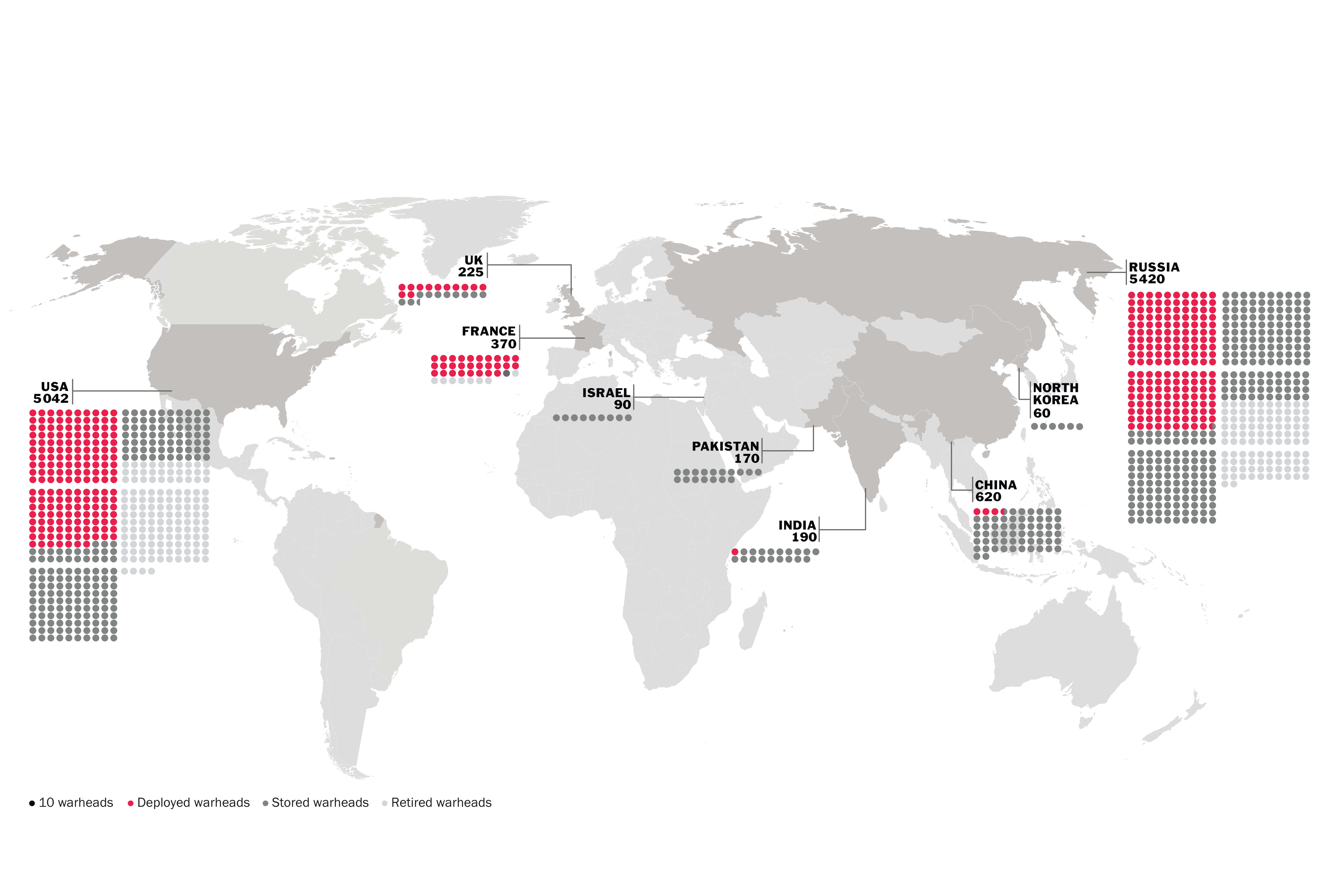
At the start of 2026, nine states—the United States, Russia, the United Kingdom, France, China, India, Pakistan, North Korea and Israel—together possessed approximately 12 187 nuclear weapons, of which 9745 were in military stockpiles and considered to be potentially operationally available. An estimated 4012 of these stockpiled warheads were deployed with operational forces, with just over half thought to be kept in a state of high operational alert on ballistic missiles (2100–2200 warheads).
Overall, the number of nuclear warheads in the world continues to decline, but this is only due to the USA and Russia dismantling retired warheads. Notably, the number of warheads being dismantled annually appears to be decreasing and it seems likely that the rate at which retired warheads are dismantled will soon be outpaced by the rate at which new warheads enter global stockpiles. Low levels of transparency hinder assessments of the status of nuclear arsenals and states have become even more secretive about their nuclear weapons over the past few years. This is partly due to the degradation of arms control agreements that included transparency measures, such as the 2010 Treaty on Measures for the Further Reduction and Limitation of Strategic Offensive Arms (New START).
Nuclear weapon modernization trends
All the nine nuclear-armed states continued to strengthen their nuclear arsenals in 2025 and some deployed new nuclear-armed or nuclear-capable weapon systems during the year. The USA and Russia together possess almost 86 per cent of all nuclear warheads and both have extensive nuclear modernization programmes under way. China is also in the middle of a significant modernization and expansion of its nuclear arsenal, which is estimated to have increased from 600 to up to 620 warheads during the year.
The modernization and further deployment of nuclear weapons raise potential risks related to nuclear escalation. Two of the most destabilizing developments are nuclear–conventional entanglement—the increasing overlap between dual-capable nuclear and non-nuclear (conventional) military capabilities, especially missiles—and the proliferation of multiple independently targetable re-entry vehicles. In recent years, submarine-based nuclear weapon delivery systems have also been proliferating, especially in the four nuclear-armed states in the Indo-Pacific.
Global nuclear weapon inventories, January 2026
Nuclear doctrines and nuclear sharing
With the global strategic context undergoing major changes in recent years, the nuclear doctrines of the nuclear-armed states also appear to be changing to reflect this new environment, with several states expanding the role of nuclear weapons in their security strategies and lowering the threshold for potential use. There were notable developments related to nuclear sharing and coordination in 2025, including a new coordination agreement between France and the UK.
English