The independent resource on global security
The Humanitarian Funding Gap in Chad: Implications for Vulnerable Populations

August 2026
Stockholm
SIPRI
summary
In 2024, SIPRI and its partner BUCOFORE carried out research showing that refugee women and girls in the Chad–Sudan border region face considerable threats to their safety, and existing protection measures are inadequate. The research also found that humanitarian funding in Chad remains insufficient to match the scale of need.
Incorporating insights from seminars held in 2026, this fact sheet expands on three key findings from the research: the humanitarian funding gap in Chad compromises the transition to resilience; it weakens protection mechanisms; and it undermines the safety and dignity of refugee women. The fact sheet aims to guide donors in their decision making and support targeted, effective interventions that boost local resilience and refugee integration.
This fact sheet is part of a set of two that explore key findings of the SIPRI report Through Their Eyes: Experiences of Displaced Sudanese Women and Girls in Eastern Chad. Click here to download the other fact sheet.
Key facts
- The rapid increase in displacement has significantly increased humanitarian needs in Chad, while humanitarian funding has failed to keep pace
- Humanitarian actors are caught in a cycle of emergency response; resources are being used to address urgent needs rather than invest in long-term recovery and resilience, thereby leaving populations reliant on humanitarian aid
- The crisis response would require donors’ long-term investments that support the transition from humanitarian response to resilience, including strengthening national public services and local capacity to respond to the needs of all communities
- The operational capacity of humanitarian assistance organizations is declining, reducing the effectiveness of protection and adding to the protection crisis
- Protection needs are driven by armed conflict and forced displacement, but they are exacerbated by the funding crisis
Research carried out by SIPRI in Chad in 2024 and 2026 examined how armed conflict and displacement impact refugee women and girls. It sought to assess the extent to which the humanitarian response in Chad was meeting the needs and expectations of Sudanese refugee women and girls and their communities.1
The research in April and May 2024 was conducted in collaboration with SIPRI’s Chadian partner BUCOFORE in four refugee camps in eastern Chad. Researchers collected the experiences of displaced Sudanese women and girls, Chadian returnees and host communities via perception surveys, qualitative interviews and focus group discussions.
In January and February 2026, SIPRI and BUCOFORE convened two seminars with humanitarian actors in Abéché and N’Djamena, Chad—with support from the Forum of International Non-governmental Organizations in Chad (FONGIT) and the United Nations Office for the Coordination of Humanitarian Affair (OCHA)—to reflect collectively on the research findings. The seminars were designed to strengthen the link between research, practice and accountability to affected populations.
This SIPRI Fact Sheet expands on three key findings in the research by incorporating insights from the seminars. These findings are particularly relevant to humanitarian programming and resource allocation amid the global humanitarian funding crisis. Focusing on the implications of gaps in the funding of the humanitarian response in Chad, the fact sheet aims to guide donor decision making and support for targeted and effective interventions that minimize harm and foster positive impact.
Context
The armed conflict that resumed in Sudan in April 2023 has triggered the largest humanitarian and displacement crisis in the world, with over 11 million people forcibly displaced as of June 2026.2 Over four million people have sought refuge in neighbouring countries, primarily Chad, Egypt and South Sudan. In the wake of the 2003 Darfur conflict, approximately 400 000 Sudanese refugees crossed the border into Chad. Since April 2023, this number has increased by more than 900 000 new refugees.
Women and children make up more than 80 per cent of new arrivals in Chad. This poses specific challenges for humanitarian organizations, including in the provision of maternal and child healthcare, education, psychosocial support, safeguarding against sexual and gender-based violence (GBV), and preventing sexual exploitation and child labour. The rapid increase in displacement has significantly increased humanitarian needs in Chad, while humanitarian funding has failed to keep pace (see figure 1).
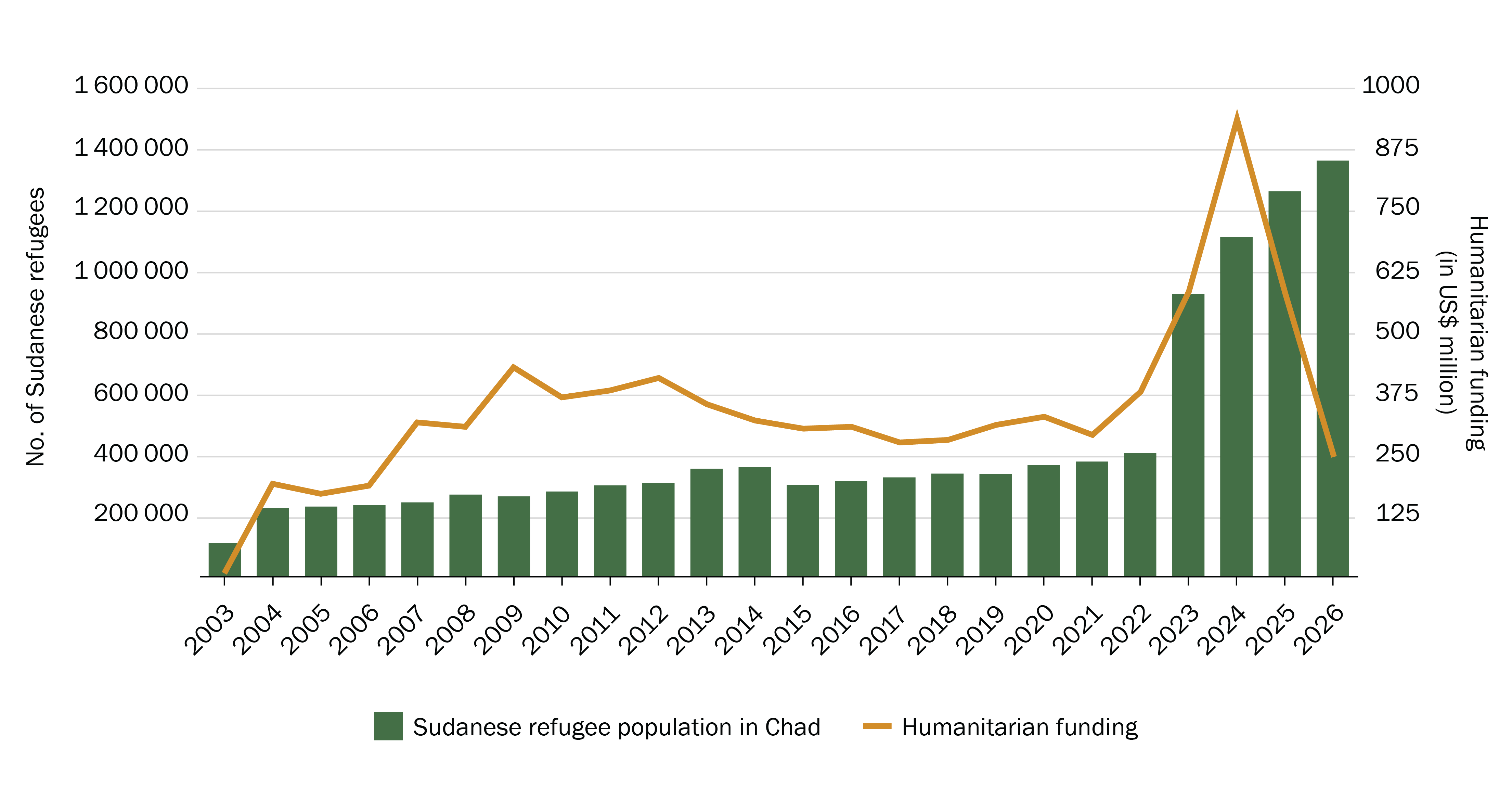
Figure 1. Comparison of the Sudanese refugee population in Chad with the humanitarian funding, 2003–26
Sources: OCHA Financial Tracking Services, Chad: Snapshot of total humanitarian funding, accessed 26 May 2026. Data for 2003–25 is from UNHCR, Humanitarian Data Exchange, Population data for Chad (TCD) (dataset), accessed 26 May 2026; and data for 2026 is from UNHCR, Operational Data Portal, Chad, accessed 26 May 2026.
A Widening Funding Gap
The research found that in the Chad–Sudan border region, refugee women and girls face considerable threats to their safety, and existing protection measures are inadequate. While women report feeling relatively safer after arriving in Chad, they still face a range of threats and risks.
Furthermore, amid the global funding crisis, humanitarian funding in Chad remains insufficient to match the scale of need. In 2025, the gap between the funding required to meet humanitarian needs in Chad and the actual financial contributions from donors increased significantly, due to the drop in total funding (see figure 2). This gap is directly impacted by the dismantling of United States Agency for International Development (USAID), which had been one of the biggest humanitarian donors in Chad.3
Incorporating insights from the seminars, the following sections discuss three key findings from the research and their implications: the humanitarian funding gap in Chad compromises the transition to resilience; it weakens protection mechanisms; and it undermines the safety and dignity of refugee women.
The Funding Gap Compromises the Transition to Resilience
Humanitarian actors are caught in a cycle of emergency response; resources are being used to address urgent needs rather than invest in long-term recovery and resilience, thereby leaving populations reliant on humanitarian aid. For several reasons, humanitarian and local organizations have long been calling for a transition from emergency response to a resilience-oriented approach in Chad.
First, the emergency response since 2003 has not led to the socioeconomic integration or empowerment of refugees. Second, growing needs are compounding structural vulnerabilities in eastern Chad, for both Chadian returnees and the host community. Third, participants in the seminars reported that the targeting of the response can be status based, rather than vulnerability based, which may be less inclusive.4 Fourth, many Sudanese refugee women have become heads of the household, assuming primary responsibility for supporting their families. The lack of sustained, multiyear support hinders their recovery and limits opportunities for becoming self-reliant.
‘The aid is not enough. There are people who have nowhere to stay. There is a shortage of water and food.’5
‘The money we were receiving has gone down. We’d like to be told what’s wrong . . . For 2026, [the World Food Programme] has let us know that we’ll only receive rations for six months and won’t receive any for the other six months.’6
The lack of funding is limiting progress towards durable solutions. As a result, many refugee women continue to face vulnerabilities such as prolonged displacement, limited socio-economic opportunities, responsibility for caregiving and protection risks.7 Efforts to promote resilience should be accompanied by ongoing humanitarian assistance to avoid excluding the most vulnerable.
Against this backdrop, the crisis response would require donors’ long-term investments that support the transition from humanitarian response to resilience, including strengthening national public services and local capacity to respond to the needs of all communities. Given the strain on Chad’s limited resources, sustained support is needed to ease pressure on the national authorities, which lack sufficient resources to cover the basic needs of refugees and host communities, and to promote social cohesion. Multiyear, flexible funding would also be essential to advance the localization of aid and to support a more sustainable and inclusive response, strengthen long-term capacity, local ownership and the effectiveness of the humanitarian system.
The Funding Gap Undermines Protection Mechanisms
While the gap in funding affects the transition to resilience, it also has consequences for protection mechanisms. With GBV ranked as the highest risk, protection risks are so widespread in Chad that protection needs are classified as just as urgent and basic as food and water.8 At the same time, the operational capacity of humanitarian assistance organizations is declining, reducing the effectiveness of protection and adding to the protection crisis. Furthermore, although gender mainstreaming is now a feature of humanitarian assistance, despite clear policies and guidelines to address protection risks, funding shortfalls and the high turnover of trained staff weaken their implementation.
Thus, while needs remain widespread, humanitarian organizations have revised their targets to focus on only the most vulnerable. In Chad, this means that the targeted population decreased from 3.4 million to 1.9 million. In addition, the reduction in funding compels humanitarian organizations to operate below international standards by, for instance, providing reduced water rations and lower quality material to build shelters.9 The use of more fragile and cheaper material undermines the durability of shelters and the well-being of the displaced populations, especially in areas subject to extreme heat and heavy rain.
Figure 3 shows a snapshot of international humanitarian funding per category in Chad between 2023 and 2024, illustrating that food security remains the main area of humanitarian spending while resources allocated to protection and to GBV remain insufficient to match the scale of the needs.10 Recent reductions in international assistance, including the withdrawal of USAID funding and broader budget cuts, have further constrained the financing of sectors that are critical to the well-being of women and children, including sexual and reproductive health (SRH) and GBV services.11 The funding shortfall risks disrupting essential SRH and GBV services, increasing the risk that women and girls will be left without access to SRH care and GBV protection. With an estimated 90 per cent funding gap, urgent additional resources are needed to sustain SRH and GBV services, psychosocial support and education to avoid disruption in support and care.12
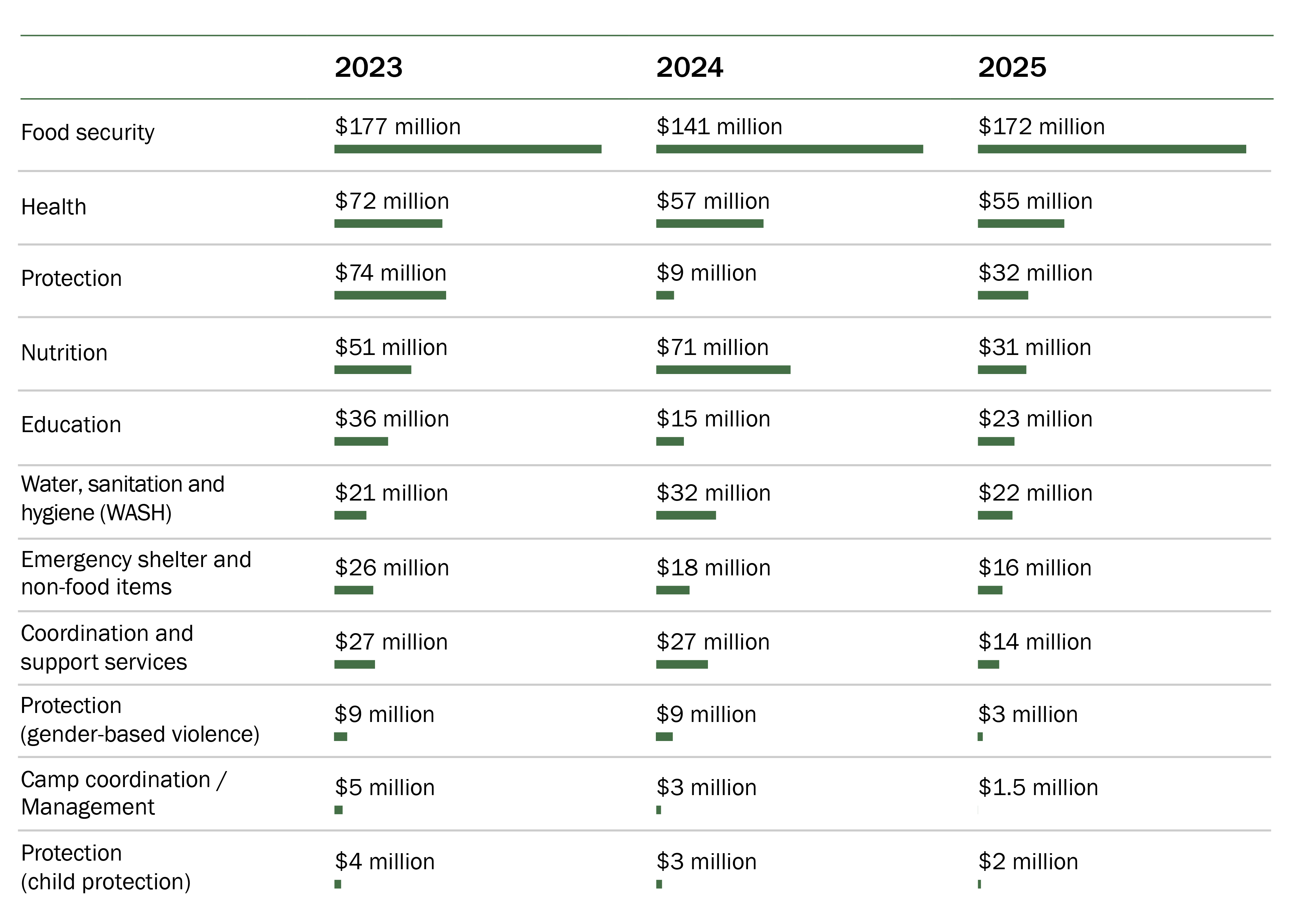
Figure 3. Humanitarian funding across major humanitarian sectors in Chad, 2023–25
Source: OCHA Financial Tracking Services, Chad: Snapshot of total humanitarian funding, accessed 26 May 2026.
In the context of the global funding crisis, including the withdrawal of USAID, the sectors most affected by the humanitarian aid cuts—particularly SRH and GBV services, psychosocial support and education—require sustained financing from other donors. Funding levels need to be sufficient for responses to meet minimum standards in humanitarian response while humanitarian organizations identify and expand cost-effective and cost-sharing measures to reduce operational costs. This could include building on existing office-sharing arrangements with other organizations and expanding support to community-led initiatives that can deliver sustainable and effective responses, supporting local capacity and ownership.
The Funding Gap Weakens the Safety and Dignity of Sudanese Refugee Women
Funding gaps also have tangible consequences for the daily lives of refugee women and girls. Protection needs are driven by armed conflict and forced displacement but are exacerbated by the funding crisis. Although women feel relatively safer in the camps in Chad than they did in Sudan, they still face pervasive protection risks, including GBV, early marriage, unwanted pregnancies and sexual exploitation. Women experience physical and psychological harm not only as a result of the conflict and during their journey to Chad but also due to reduced access to essential protection services as humanitarian funding declines.
‘There’s no psychological support here, no mental health services. Yet we need to talk about everything we’ve been through in Sudan and on the journey to feel a bit better.’13
Women are exposed to harm during daily activities—when they venture outside the camps to collect firewood, to fetch water and when they visit the few latrines available. Hygiene spaces are not always gendered and are often unsafe. The women expressed fear for their own safety and that of their daughters.
As a result, many women, who are often now the sole breadwinners in their families, resort to harmful or negative coping strategies, including prostitution and sexual exploitation. Such settings mean women are more vulnerable to abuse and exploitation by those in control of resources (men from their own community, other communities, the aid community, host communities or local and national authorities).
Continuous support to income-generating activities for women is crucial to reduce their economic vulnerability and to contribute to lowering the risk of exploitation and other negative coping strategies. Phased assistance programming, which takes into consideration the different phases of displacement, is also essential as newly arrived women and girls require timely access to psychological support, reproductive healthcare services and safe spaces to recover from violence or trauma. As recovery progresses, assistance could gradually shift towards supporting livelihood and economic empowerment.
Endnotes
- 1 For the full findings of the research see: Bourhrous, A. et al., Through Their Eyes: Experiences of Displaced Sudanese Women and Girls in Eastern Chad (SIPRI: Stockholm, Mar. 2025); and Riquier, M. and Nandoumabe, P., ‘The impact of conflict and displacement on Sudanese refugee women in eastern Chad’, Policy brief, XCEPT, June 2025. See also Baudais et al., ‘Overcoming barriers to integration for Sudanese refugees in Chad: Education, employment and land access’, SIPRI Fact Sheet, Aug. 2026.
- 2 United Nations High Commissioner for Refugees (UNHCR), Operational Data Portal, Sudan Situation, accessed 29 June 2026.
- 3 Rubio, M., ‘Making foreign aid great again’, US Mission to the UN Agencies in Rome, 1 July 2025; Faguy, A., ‘USAID officially closes, attracting condemnation from Obama and Bush’, BBC, 2 July 2025; and Cassam-Chenaï, F., Nandoumabe, P. and Riquier, M., ‘Study of the effects of the reduction in US aid on the response to the war in Sudan and its consequences in Chad’, Internal report, French Development Agency, 2026.
- 4 Working seminar, N’Djamena, 11 Feb. 2026.
- 5 Focus group discussion with Sudanese refugee women, Iridimi camp, Chad, Jan. 2026.
- 6 Focus group interview with Sudanese refugee women, Farchana Camp Extension, Jan. 2026.
- 7 Authors’ correspondence with humanitarian organizations operating in eastern Chad, Jan.–
Mar. 2026. - 8 Swedish International Development Cooperation Agency (Sida), ‘Humanitarian crisis analysis: Chad’, 31 Mar. 2026; and Humanitarian Action, ‘Chad’, 5 Feb. 2026.
- 9 Authors’ correspondence with humanitarian organizations operating in eastern Chad, Mar. 2026.
- 10 Working seminars with humanitarian organizations in Chad, Jan.–Feb. 2026.
- 11 Borel, F., Damavandi, S. and Taqi, I., ‘Six months in: How the Trump administration is undermining sexual and reproductive health and rights globally’, Guttmacher Institute, Aug. 2025; and Cassam-Chenaï, Nandoumabe and Riquier (note 3).
- 12 United Nations Population Fund, ‘Funding gaps in Eastern Chad threaten essential protection for women and girls’, Press release, 30 Mar. 2026.
- 13 Focus group discussion, refugee camp, Iridimi, Chad, Jan. 2026.
ABOUT THE AUTHOR(S)/EDITORS

Dr Virginie Baudais is a Senior Researcher and Director of the SIPRI Sahel and West Africa Programme.
Olivier Guiryanan is the Executive Director of the Chadian research centre, BUCOFORE.
Prisca Nandoumabe is coordinator of the Chadian research centre BUCOFORE and holds a Master’s degree in law and certificates in gender analysis, and statelessness and nationality law.
Marie Riquier is a Researcher in the SIPRI Sahel and West Africa Programme.
When peace is under threat, accurate information is more important than ever.
Invest in the facts