The independent resource on global security
Aid Cuts and Security Risks: From Health System Disruption to Human Insecurity

June 2026
Stockholm
SIPRI
Summary
At a time when the impacts of conflict, forced displacement and humanitarian needs are increasingly global, foreign aid to fragile and conflict-affected contexts is declining. The current shift towards narrower national security priorities and sudden aid cuts can disrupt health systems in fragile states, with cascading human, humanitarian and security risks and costs that have broader international security implications.
Case studies from Somalia and Mali, with the cross-border dynamics in Mauritania, alongside interviews with government officials, policymakers, practitioners and donors, reveal how aid cuts in highly aid-dependent fragile contexts affect healthcare services, disease surveillance and institutional trust. Simultaneous pressures on development and humanitarian assistance can risk entrenching cycles of crisis and dependency.
The paper highlights the need for a human-centred approach in security strategies that can bridge the divide between development and security policies.
I. Introduction
At a time when war, forced displacement and humanitarian crises are surging, foreign aid from several major donor countries is sharply declining. In 2024 France and Germany, the United Kingdom and the United States—four of the world’s largest donors—all substantially reduced their aid in the same year for the first time in almost 30 years.1 Total official development assistance (ODA) by members of the Organisation for Economic Co-operation and Development (OECD) dropped even further in 2025, with the annual decrease reaching 23 per cent.2 These reductions occurred amid growing geopolitical tensions that are increasingly shaping allocation decisions and have raised concerns about their eventual impacts on development and global health.3 Indeed, recent research suggests that aid cuts are already associated with disruptions in health systems, including delivery of and access to health services, which are projected to potentially increase global mortality.4
At the same time, global military spending has continued to rise. The annual rate of increase in 2024 was the highest since the end of the cold war and the global total rose again in 2025, for the 11th consecutive year, to reach $2.9 trillion.5 While there is not necessarily a direct trade-off between decisions on military spending and those on development spending, the increases in military spending signal shifting policy priorities, with a risk of resources being diverted from welfare and development objectives.6 However, the broader security implications of aid cuts in fragile and conflict-affected contexts have not yet been fully explored in the context of the current geopolitical dynamics, global power shifts and competing national priorities.7 Exploring the security implications of cuts to development aid in contexts of conflict and fragility becomes particularly important at a time when humanitarian and peacebuilding budgets are also shrinking.8 These simultaneous reductions after years of persistent fragmentation across the triple humanitarian–development–peace nexus impede efforts to improve coordination across the nexus in supporting countries’ transitions out of fragility.9 Simultaneous reductions across the triple nexus can risk trapping countries in reinforcing cycles of vulnerability and fragility.10
This paper examines how reductions in ODA translate into increasing human security risks in fragile and conflict-affected contexts, focusing on health systems as a key pathway through which these risks manifest. The research presented here draws on 17 interviews with government officials, health policymakers and advisers, representatives of donor agencies, aid experts and practitioners (listed in appendix A). The paper continues in section II with a brief outline of the concepts and scope of health and human security. This is followed in section III by case studies on Somalia and on Mali and the cross-border impacts in Mauritania. These explore how aid cuts are experienced by actors operating within affected systems in these contexts. Section IV then explores the pathways that can lead to health and human insecurity. The paper concludes in section V by outlining opportunities to reconsider how aid is prioritized and delivered and by making policy recommendations to strengthen human-centred approaches to national security strategies through prioritizing human security as a fundamental part of broader security.
The analysis here indicates that sudden ODA cuts, particularly in the health sector, undermine the state’s ability to respond to crises and can generate cascading social, financial and security risks across local systems. This paper highlights the importance of strengthening the role of aid-recipient governments as regulators of health systems as well as improving donor-coordination mechanism to support predictable aid transitions. The recommendations thus aim to strengthen human security under shifting geopolitical and funding priorities.
II. Human and health security: Concepts and scope
This paper examines the implications of aid cuts in selected fragile and conflict-affected contexts through a human security lens (see section III). Human security, as initially introduced in 1994, centres on the protection of people’s lives, livelihoods and dignity across multiple, interconnected dimensions, including economic, food, health, social and personal security.11 While the concept has evolved since its introduction by the United Nations Development Programme (UNDP), subsequent UN frameworks have reinforced its core emphasis on people-centred—rather than state-centred—context-specific and prevention-oriented approaches to interconnected risks.12 Within this framework, health security refers not only to the ability to prevent and respond to health threats, but also to the continuity of essential health services that underpin broader social and economic stability.13
Health is used in this paper as an analytical entry point and key pathway through which the effects of aid cuts can manifest themselves in practice and have an impact on people’s lives. While the paper draws on evidence in the health sector, it does not seek to provide a technical assessment of health systems or an evaluation of aid effectiveness across sectors. Instead, it explores disruptions across key health system functions, drawing on the six building blocks of a health system designated by the World Health Organization (WHO)—service delivery, health workforce, information systems, access to medicines and medical technologies, financing, and governance—as an analytical framework.14
The paper primarily focuses on disruptions and cuts to development assistance for health (DAH) in fragile and conflict-affected contexts by the United States and major European donors, while also recognizing the interdependence between development and humanitarian assistance in human security outcomes. DAH refers to the financial and in-kind resources transferred through international development actors to low- and middle-income countries with the primary goal of maintaining or improving health outcomes and health systems.15 While DAH includes both ODA and non-ODA sources (e.g. private philanthropy), official development assistance from the member states of the OECD Development Assistance Committee (DAC) has represented its largest source of financing, covering aid to basic health, medical research, and population policies and reproductive health.16 The cascading human and security risks discussed throughout the analysis are often particularly pronounced where there are simultaneous cuts to development assistance and to humanitarian assistance, especially in fragile and conflict-affected contexts.17 This is especially relevant given that ODA encompasses humanitarian components such as disaster relief, refugee support and crisis coordination.18 The paper therefore explores the impacts of cuts to DAH—including its humanitarian components—as well as the cascading impacts of ODA cuts on the humanitarian and security sectors more broadly.
III. Health financing and aid cuts in Somalia, Mali and Mauritania
This section explores health financing structures and the effects of aid cuts in two selected fragile and conflict-affected situations in Africa as case studies: Somalia; and Mali along with the cross-border dynamics in Mauritania. These contexts are characterized by recurrent shocks, protracted conflict, and constrained and fragile governance capacity, where external support plays a significant role in sustaining essential services. This makes these contexts particularly relevant for analysing how disruptions in aid are experienced in practice, especially when both Somalia and Mali are among the 10 countries that reportedly faced the most severe impacts from aid cuts.19
A quarter of a century after African states made the Abuja Declaration on HIV/Aids, Tuberculosis and Other Related Infectious Diseases, over 30 of them are still falling short to the declaration’s target to allocate 15 per cent of their national budgets to the health sector.20 The primary goal of the declaration was to strengthen health systems in order to reverse the burden of infectious diseases, especially HIV/Aids.
Major global health initiatives were launched to support that goal such as the Global Fund to Fight Aids, Tuberculosis and Malaria, launched in 2002, and the US President’s Emergency Plan for Aids Relief (PEPFAR), launched in 2003, for which the US Agency for International Development (USAID) was the largest implementing agency. These initiatives became the backbone of the continent’s HIV/Aids response, serving as the primary financial and operational mechanisms through which African states worked towards the Abuja Declaration commitments within their economic constraints. The dismantling of USAID and disruption of PEPFAR funding therefore represent more than a financial gap; they signal a structural disruption in systems for health financing that are already characterized by critically low domestic health expenditure and limited capacity to absorb sudden external financial shocks.
Health spending includes government expenditure, out-of-pocket payments (OOPs) made by individuals to healthcare providers when they receive healthcare services, and other sources such as health insurance and programmes by non-governmental organizations (NGOs). Because OOPs can have adverse effects on equality and can lead vulnerable groups to poverty, they are among the most significant financing mechanisms in many low- and middle-income countries.21
Health spending in Somalia, Mali and Mauritania is far below the Abuja Declaration target, with health financing structures across the three countries reflecting different forms of vulnerability. Somalia’s health system remains highly dependent on external assistance, which accounts for over half of total health expenditure.22 According to WHO, 95 per cent of essential health services in Somalia are also externally funded, making health services vulnerable to policy changes made in other parts of the world.23 Government health spending remains extremely limited, having fallen from 0.53 per cent of gross domestic product (GDP) in 2023, before aid cuts, to 0.47 per cent in 2024.24 This indicates that the state has only a limited capacity to compensate for any sudden change in external funding of the health sector. The Federal Government of Somalia nevertheless appears to have made efforts to prioritize health within its constrained budget: the planned health sector allocation of 6.8 per cent of the total national budget in 2025 rose to an actual allocation of 7.2 per cent by the end of the year.25 In Mali, government health spending as a share of GDP declined from 1.35 per cent in 2023 to an estimated 0.9 per cent in 2024, while the health budget represented 4.78 per cent of Mali’s total national budget in 2025.26 Mauritania presents a comparatively more stable picture, with health expenditure as a share of GDP remaining broadly unchanged at approximately 1.5 per cent in 2023 and 2024 while the health budget share was 5.8 per cent of the total national budget in 2024.27 Although external financing represents a smaller share of total health expenditure in both Mali and Mauritania (c. 6 per cent in Mali and 19 per cent in Mauritania) than in Somalia, this reflects a high reliance on OOPs by households—almost half of total health spending—rather than higher domestic government financing.28 This indicates that financial risk is shifted to individuals, rather than mitigated through government service provision.29
Since the latest comparable WHO health expenditure data dates to 2023 and the estimates above show a decline in 2024, it is likely that these conditions have further deteriorated following the aid cuts in 2025 and 2026. This indicates a gap between decision-making on aid and realities on the ground, leaving governments and local actors with little capacity to anticipate, coordinate or manage system disruptions. The following case studies provide contextual insights into how these funding disruptions are unfolding and being experienced on the ground.
Case study: Somalia
ODA has played a key role in Somalia, which has received equal amounts of humanitarian and development funding and has been among the largest recipients of aid from the main providers of ODA: France, Germany, the United Kingdom and the United States.30 According to some interviewees, despite its limitation, ODA has supported governance outside Mogadishu, with local administrations and better services.31 These gains include improved physical infrastructure and elements of a social contract (presence of the police, schools, health centres).32
Nonetheless, Somalia’s dependence on aid has created a vulnerability to shifting donor priorities. ODA was already declining, but abrupt US cuts in 2025 triggered stop-work orders for organizations delivering health, nutrition, water, sanitation and hygiene (WASH), education, and protection services.33 According to practitioners, rural and displaced communities were hardest hit due to lack of affordable alternatives.34
Health security impacts of ODA cuts
Somalia’s health sector illustrates how ODA funding cuts translate to human insecurity. Following the dismantling of USAID, the UN Office for the Coordination of Humanitarian Affairs (OCHA) revised its 2025 Humanitarian Response Plan (HRP) for Somalia, with the number of people targeted to receive aid lowered from 4.6 million to 1.3 million.35 The lack of preparedness for these cuts meant that 8 hospitals, 40 primary healthcare facilities and 16 mobile outreach teams operated by six partners had suspended services in 21 districts across 9 regions by mid-2025.36 The impact of the ODA cuts continued, and by early 2026 these numbers had reached 26 hospitals, 184 primary healthcare facilities and 50 mobile outreach teams.37
While private healthcare provision, including private health insurance and private clinics, is growing in Somalia, it is largely inaccessible to poor households, rural communities and displaced people.38 ODA cuts led to an estimated 1.7 million people losing access to basic health, nutrition or WASH services in 2025 as rural clinics supported by the Cooperative for Assistance and Relief Everywhere (CARE) and Save the Children were closed: the former shut more than 150 clinics in April–July 2025 and the latter closed one-third of its nutrition clinics, ending treatment for 55 000 children.39 Taking just the example of rural and urban areas in Baidoa city, the end of USAID-funded programmes led to the closure of at least 37 health facilities along with several nutrition centres, leaving over 50 000 children in the area at immediate risks.40
Service gaps in fragile systems can quickly cascade into wider crises, triggering disease outbreaks and depriving vulnerable populations of access to healthcare. In the three months between mid-April and mid-July 2025, reported cases of measles, diphtheria, whooping cough and cholera in Somalia doubled.41 Women, infants and people with chronic illnesses were disproportionately affected by the cuts and are now more vulnerable to malnutrition and disease outbreaks due to the drought taking place in the country.42
Security consequences of ODA cuts
Aid reductions are also creating broader social and political risks in Somalia. According to one NGO practitioner, the sudden termination of US-funded programmes in 2025 eroded trust in NGOs and the international community, and undermined stabilization programmes intended to reinforce government legitimacy in areas newly recovered from al-Shabab—the non-state armed group that controls a large proportion of Somalia’s territory.43 In areas that are contested by the government and al-Shabab, lack of employment and weak public services and governance (including oversight and accountability of security institutions) could enable predatory behaviour by government armed forces and police, which could foster community resentment.
Interviewees suggest that NSAGs can capitalize on erosion of public trust in state-providers of essential services by providing local communities with some of the missing services, such as governance, justice, health, education or public security.44 Service provision by non-state actors, including NSAGs, in a context of weak or absent state services can strengthen the legitimacy of the provider in the eyes of the people.45 According to some interviewees, this may benefit the political and strategic interests of actors such as NSAGs.46 An example mentioned by donors in Somalia is the mobile courts that were a common, and key, mechanism for bringing formal justice to remote or recently recovered areas that lack judicial infrastructure.47 These courts stopped operating due to aid cuts, which, according to interviewees, raised donors’ concern that people would turn to al-Shabab as an alternative source of justice.48 Thus, according to interviewees, shrinking development aid can amplify insecurity by weakening the population’s trust in state capacity and increasing their vulnerability to NSAGs.49 Similarly, Somalia’s aid-driven economy has also contracted as a result of the recent ODA cuts.50 With fewer licit jobs, people can be pushed towards illicit activities or NSAGs, reversing steps towards the demobilization of armed actors.51
ODA cuts have also hindered progress towards durable solutions for protracted displacement in Somalia.52 Many displaced people depend on health, education and cash support provided by NGOs. When these disappear, families may be forced to move to where services are available.53
In sum, unanticipated reductions of ODA can exacerbate the drivers of fragility that aid had been initially designed to address. In Somalia, ODA has supported development of the physical and social infrastructure to support stronger health, governance and security. Declining ODA to Somalia shifts responsibility to domestic actors with limited capacity. According to some interviewees, Somalia’s government and NGOs lack the financial and technical resources to fully fill the gaps in services, so declining aid typically means that services will not be replaced.54 There are now increased risks of disease outbreaks, renewed displacement and conflict resurgence if that gap persists. Predictable, coordinated and transitional support is crucial to avoid aid reductions becoming a crisis.
Case study: Mali and cross-border impacts in Mauritania
The impacts of ODA cuts on human security in Mali and Mauritania are closely linked due to the approximately 170 000 Malian refugees registered in Mauritania.55 The multidimensional crisis faced by Mali since 2012, with the intensification of the conflict in the centre of the country in 2015 and its resurgence in the north in 2021, caused thousands of Malians to find refuge in the Hodh El Chargui region of Mauritania. The consequences for the region have been far-reaching, ranging from economic disruption caused by the closure of trade routes to the strains caused by the influx of refugees on the already limited resources and the basic social services on which vulnerable host communities depend.56
Aid to Mali has been highly unstable since the coups in 2020 and 2021, with the three leading donors—France, Germany and the USA—cutting their humanitarian and development funding.57 With 5.1 million people in need of assistance, ODA remain essential for assisting vulnerable populations in the face of state failure.58 Similarly, ODA has proven fundamental in Mauritania to support both host communities and refugees. The withdrawal by USAID in 2025 resulted in project closure and gaps in important aid responses to nutrition, health and social cohesion needs.59 However, according to a donor and a practitioner interviewed for this study, compensation from other states through investments and partnerships have resulted in similar levels of aid funding to those 2024.60
Health security impacts of ODA cuts
The conflict in Mali has had deep consequences for health services due to the destruction of infrastructure and shortages of medical staff, medicine and medical equipment.61 The share of the national budget dedicated to health was reduced in 2024: falling from an initial share of 5.15 per cent to 4.56 per cent in the adjusted budget. Similarly, in 2025 the coverage of the health needs identified in the HRP (25 per cent) was lower than in 2024 (44 per cent).62 ODA cuts have aggravated the shortcomings of the country’s health system, increasing reliance on households and local support networks to meet health needs, particularly in rural areas and in most conflict-affected regions.63 As a consequence, the number of operational partners (i.e. national and international NGOs) in the health sector has been drastically reduced, falling from 105 active in March 2024 to only 43 in December 2025, with domestic NGOs being the most affected.64 Such impacts have cascading risks for human security. Population movements in Mali are mainly the result of the increasing violence, but according to NGO practitioners the lack of access to public services and the destruction of health infrastructures amplify such forced displacement, both within the country and to neighbouring countries where these services are available.65
According to NGO practitioners, reduction in ODA funding for Hodh El Chargui—the health sector lost about $1.3 million and the food security sector lost $7 million (almost half of its budget)—has had a significant impact on the health and food security responses to Malian refugees and Mauritanian communities.66 One interviewee reported that the cuts affected access to healthcare outside and within the Mbera refugee camp, as the Office of the UN High Commissioner for Refugees (UNHCR) and its partners had to refocus their support to only target maternal health and children under five.67 Further, healthcare services such as mental health support for refugees and the host community, which had started to be included in new projects, are no longer considered a priority due to the scarcity of funds.68 Furthermore, although ODA has contributed to increased rates of vaccination since 2001 in Mali, vaccination coverage remains low.69 Combined with reduced health assistance and malnutrition, this has raised concerns among Mauritanian stakeholders about the risk of more children and vulnerable populations being exposed to disease and increasing the risk of an epidemic among both refugees and host communities.70 Stakeholders warn that further cuts to aid would increase pressure on health systems and other public services, such as water points located outside the camps. Both research and interviews indicate that this would exacerbate tensions between the host population and refugees over access to basic resources and could, in the long run, jeopardize their peaceful coexistence.71
Social consequences and impact on vulnerable populations of ODA cuts
These ripple effects on social cohesion are a recurring concern in Mauritania.72 The UNHCR’s 2025 Response and Resilience Plan for the region emphasizes the importance of providing basic social services to host communities in order to prevent feelings of resentment and injustice and to ensure social cohesion with refugees.73 ODA cuts could have affected this as two major USAID-supported programmes for social cohesion and youth resilience were abruptly stopped, leaving both local NGOs and aid-recipient communities without strategies to continue their efforts or wind them down.74
Vulnerable populations in Mali, especially children, women and girls, are already the most affected by these cuts. Between 2024 and 2025 the number of reported incidents of gender-based violence (GBV) dropped by 37 per cent due to the lack of trained staff available to receive survivors in Mali; in Ménaka region in eastern Mali in later 2025, nearly 90 per cent of survivors of GBV were waiting for care and support.75 Only 27 NGOs are still working actively on GBV in Gao, Mopti and Tombouctou regions, compared to 92 in 2024.76 NGOs have observed a drastic decline in funding for GBV prevention as well as for education access, and an increase in family separation due to displacement, which has reduced community resilience to conflict and had long-term effects on society.77
IV. Aid pathways to security and to insecurity
Building on the case studies in section III, this section examines three pathways through which aid can shape human security outcomes: aid in its original design (i.e. aligned and accountable aid), aid in practice (which is often fragmented and donor-driven) and sudden cuts to aid (see figure 1). Using health security and health system disruption as analytical lenses, the section first explores how the design and delivery of aid, especially development assistance for health, can strengthen or undermine health and human security. It then explores how aid cuts may generate broader social, financial and security risks in fragile and conflict-affected situations, drawing on interviews and the case studies.
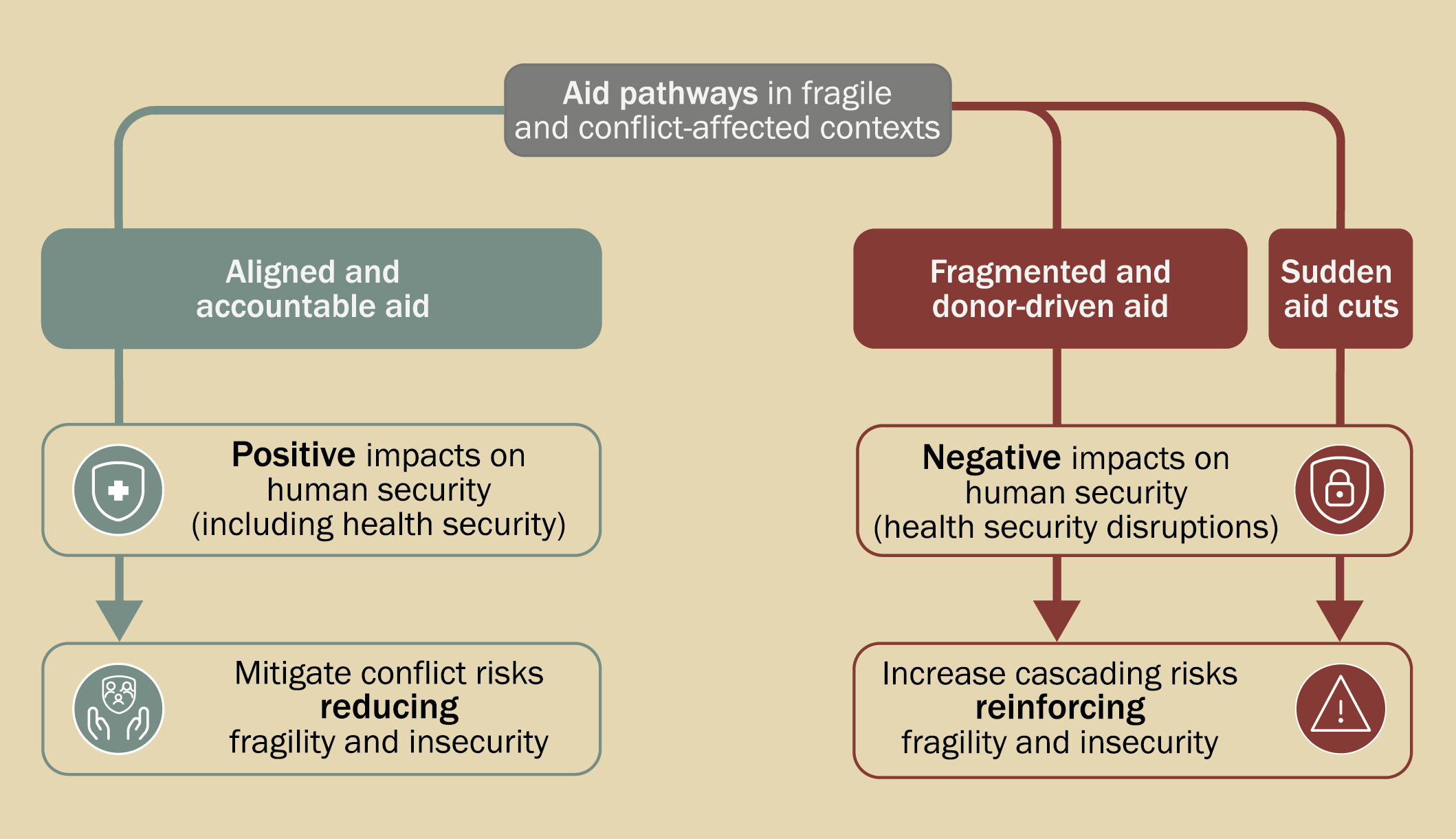
Figure 1. Three aid pathways leading to two outcomes: security or insecurity
Note: The three pathways show the immediate impacts on health and human security and the cascading, long-term outcomes of
(a) aligned, coordinated and accountable aid (green pathway); (b) fragmented and donor-driven aid (first red pathway); and (c) sudden aid cuts (second red pathway).
Source: The figure is based on the authors’ analysis of 17 interviews with government officials, policymakers and advisers, donors, aid experts and practitioners conducted between 2 Feb. and 26 Mar. 2026.
Aid in design versus aid in practice
Questions have long been raised about the effectiveness of development aid in practice, particularly whether it really leads to significant structural improvements or just leads to aid dependency. However, most interviewees emphasized two key points: first, a lack of tangible improvement does not necessarily imply that conditions would not have deteriorated further without aid;78 and second, the underlying challenge lies less with aid as an instrument and more with how it has been designed and implemented.79
The original objective for which development aid, and more specifically ODA, was designed was to promote the welfare and economic development of low- and middle-income countries.80 In fragile and conflict-affected countries, development aid aims to support the functionality of public systems, including health systems, which are key for social protection, economic stability and other dimensions of human security.81 This is in line with the core ODA goals on poverty reduction, reducing inequalities, and promoting living conditions that can mitigate conflict and fragility risks.82 However, its effectiveness depends on how it is designed, allocated, implemented and monitored, including whether its implementation is conflict-sensitive (i.e. adapted to local context to avoid fuelling tensions) and aligned with ‘do no harm’ principles.83 This becomes more even more pronounced during an armed conflict, when all dimensions of human security deteriorate, including health, food, community and economic security.84
By looking at the original aid design through a health security lens, it is possible for aligned, well-targeted, transparent, coordinated and accountable aid—including DAH—to contribute to strengthening health systems, thereby contributing to broader positive impacts on health and thus on human security.85 In the long term, this can reduce fragility and mitigate conflict risks, and thus reinforce stability (see the green pathway in figure 1).86 Nonetheless, in practice in the two case study contexts—and long before the aid cuts occurred—there were limitations (outlined in the next subsection) that resulted in fragmented and poorly targeted aid driven by external donor priorities. These limitations reinforced aid dependency, disrupted health security and undermined alignment with national systems; the aid thus failed to address the structural drivers of fragility and to lay the groundwork for sustained growth.87 This constrained governments’ ability to coordinate and regulate the health system effectively (as seen in the case studies), including service delivery, financing and governance.88 In the long term, this can generate cascading social, financial and security risks across local systems that can reinforce fragility risks (see the first red pathway in figure 1).89
This distinction is important when assessing the impacts of aid cuts. The negative impacts on human security outlined in this paper are most pronounced where cuts affect well-functioning systems that are already heavily dependent on aid. At the same time, reducing poorly designed or ineffective programmes may not produce the same outcomes and may, in some cases, reduce inefficiencies.
Persistent limitations of official development assistance
Three main persistent limitations of ODA have adversely affected development outcomes, leading it to drift away from its main goals, long before the recent cuts.
First, aid delivery is often fragmented and dictated by national donor priorities and strategic interests.90 Research suggests that over 90 per cent of health aid is tied to and channelled through donor-led project mechanisms, often reflecting external priorities more than locally identified needs.91 The findings here are in line with literature showing that aid allocations across Somalia and Mali have, at times, been shaped by the strategic, geopolitical and domestic priorities of donors, including stabilization objectives and migration control, rather than consistently being aligned with locally identified development objectives.92
Second, inflexible programming with short, uncertain funding cycles and inadequate accountability—on the part of both the donor and the recipient—have constrained proper planning and continuity.93 This has also limited the recipient state’s ability to effectively coordinate and regulate service delivery. In the fragile contexts of the two case studies, this has contributed to uneven access to services and further exacerbated existing vulnerabilities in already fragile states.94 Inflexible and uncertain funding cycles have also made it difficult to maintain services, retain or pay staff or reallocate resources as needs shift or evolve, especially in essential core sectors such as health.95 This has also fuelled and increased risks of corruption, with resources diverted away from where they are most needed.96
Third, donor behaviour is increasingly shaped by risk aversion.97 According to interviewees, this has exerted pressure on implementing organizations and local partners to demonstrate positive programme outcomes and has led to competition over a shrinking pot of aid.98 While donors often allocate aid to countries with high levels of need, they also often favour lower-risk areas, where access and implementation are easier than in highly insecure areas despite greater levels of vulnerability there.99 Such behaviour reinforces existing inequalities since it leaves the most vulnerable populations without access to essential services.100
Health system disruption as a pathway from aid cuts to human insecurity
By disrupting health systems and access to essential services, cuts to development aid can undermine—and in some contexts diminish—the role that ODA, and specifically development assistance for health, plays in addressing human security (see the second red pathway in figure 1). In fragile and conflict-affected situations, aid cuts can act as a major systemic shock that exacerbate the complex interplay of existing vulnerability factors. These factors include displacement, climate shocks, presence of armed groups and inadequate state capacity to provide essential services.101 ODA cuts also affect international and domestic organizations that help national institutions to deliver healthcare services in the absence of state funding. These are all critical contexts for international aid, where a substantial share of spending on health often comes from external sources (as seen in the cases of Somalia and Mali).102
Sudden and uncoordinated aid cuts in fragile and conflict-affected contexts can disrupt multiple health system building blocks, including service delivery, health workforce, medical supplies, financing and information systems.103 In fragile and conflict-affected contexts that are heavily reliant on external support, such disruptions may significantly reduce access to essential health services and weaken disease-prevention and -response capacities as not many national reforms can adapt to sudden donor exits.104
Predictive modelling studies warn that global health funding cuts alongside discontinued PEPFAR support could increase preventable disease burdens, including an estimated 4.4–10.8 million new HIV/Aids infections by 2030 and up to 2.2 million additional deaths from tuberculosis by 2035.105 Other projections point to major risks for malaria, polio and outbreak-prone diseases.106 The disruptions can also cause shortage of medical supplies, reduced workforce and interruptions to essential programmes such as vaccination, maternal health services, disease surveillance and the whole supply chain—as documented in research and currently seen in the cases of Somalia and Mali.107
The consequences of aid cuts for disease surveillance, the health workforce and outbreak response are already materializing.108 The 2026 Ebola outbreak in the Democratic Republic of Congo—which aid agencies have warned may become the deadliest on record—has already spread into Uganda. This has raised concerns about the global health impact of weakened surveillance capacity and critical shortages of protective equipment on containment efforts, with at least 16 health workers infected during the response.109 Data from six vulnerable countries in West and Central Africa suggests that recent cuts could increase maternal deaths by an estimated 45 per cent among affected populations, potentially resulting in around 1000 additional avoidable maternal deaths per year.110 A rapid assessment by WHO also shows that aid cuts have already disrupted vaccination campaigns, routine immunization and access to supplies in nearly half of surveyed low- and lower middle-income countries, while disease surveillance systems have been affected in more than half, increasing the risk of cross-border health insecurity.111 As a result, cuts to DAH can contribute to higher deaths rates, especially in countries that are highly dependent on external health aid for service delivery given that there are no immediate domestic or external financing substitutes for the lost resources.112
Health systems are the most visible sector to be affected by aid cuts as they influence multiple dimensions of human security.113 When health security gets disrupted, the disruption may cascade to other sectors with knock-on effects on other dimensions of human security. Economically and socially, the analysis indicates that affected populations become more likely to be at risk of poverty as a result of deteriorating health services and falling access to those services.114 This is particularly important where a significant share of health expenditure is financed by external aid, as seen in the case of Somalia; in such cases, sudden aid cuts can increase pressure on already constrained public systems and shift healthcare costs onto households through higher OOPs.115 Politically, the analysis suggests that aid cuts may lead to a decline in people’s trust in public health institutions when they can no longer offer the healthcare services that they used to provide with the help of external aid support.116 As a result, several interviewees expressed their concern that sudden disruptions to health aid amid the humanitarian aid cuts could increase people’s vulnerability to violence and contribute to secondary displacement since affected communities are currently forced to move in search of immediate essential services to meet their needs caused by crisis or conflict.117
Development assistance and humanitarian assistance often operate across different time periods and with different objectives. While development actors generally focus on strengthening systems, including health systems, humanitarian actors primarily respond to immediate needs arising from crises and conflict.118 The findings here suggest that development cuts that occur simultaneously along with humanitarian cuts can amplify and cascade insecurity risks beyond the recipient country by weakening asylum and migration-management systems in transit and refugee-hosting states.119 This may increase pressures for irregular onward movement, incurring broader humanitarian and security costs.120
These dynamics can be understood as a redistribution of risks and costs, whereby development aid cuts shift the burden of unmet health and social needs from states and development actors onto households, local communities, humanitarian systems and security costs.121 Over time, vulnerabilities that were previously mitigated through long-term development support may re-emerge as humanitarian crises, displacement pressures and broader security challenges that require more reactive and resource-intensive responses.
In the long term, the negative health and human security impacts start to create cascading risks; rather than eliminating risks as initially designed, cuts to development aid instead shift and redistribute risks and costs across systems, sectors and actors. Aid cuts can therefore amplify state vulnerabilities, which may cause social fragmentation, loss of trust, expansion of armed group control and erosion of the state.122 The dynamics of health and human insecurity can generate a vicious cycle that would perpetuate the existing fragility of state capacity.123 The cause and effect of declining services and decreased trust may result in a further decrease in the ability of systems to absorb the external shocks that inevitably arise.124 The impact would be particularly pronounced in fragile and conflict-affected situations, where deep-seated structural vulnerabilities are exposed when aid levels are reduced due to the reliance of national health systems on external aid.
V. Conclusions: Opportunities and policy recommendations
The current changing aid landscape and shrinking budgets have exposed long-standing structural weaknesses in financing models for development aid. This has renewed policy pressure to reconsider how aid is prioritized, how it is delivered, and how it is aligned with long-term health and human security objectives. The interviewees, in their diversity, highlighted the importance of moving away from donor-based models to a more aligned, predictable, transparent and coordinated international cooperation model.125 This reflects a growing recognition that long-term security depends not only on the volume of aid but also on how aid is delivered and how it is aligned with the national priorities of partner governments. This model should prioritize external support to investments in state capacity of those partner governments, which has been shown to improve effectiveness and sustainability when implemented.126
At the same time, non-ODA flows from emerging non-DAC partner states in the region, diaspora remittances and faith-based finance such as zakat are growing. The global total of remittances reached $905 billion in 2024, more than four times total ODA of $215 billion.127 Nevertheless, critical bottlenecks and restrictions on diaspora transfers to their families and communities have been introduced by regulatory frameworks. For example, taxes on remittances have increased, and compliance constraints known as ‘de-risking’—which occurs when financial institutions terminate banking relationships with entire regions, banks or sectors to avoid regulatory penalties, rather than managing the individual risks—are growing.128 Zakat—a pillar of Islam that requires the annual donation of 2.5 per cent of accumulated personal wealth to support the poor and vulnerable—is an underutilized mechanism that is currently being leveraged to bridge acute healthcare resource and funding gaps created by sudden ODA withdrawals.129 The Every Pregnancy initiative serves as a model for innovative community-based financing that pools philanthropy and Islamic social finance, including zakat, to establish a self-sustaining financial ecosystem for global maternal and newborn health in fragile and conflict-affected contexts.130 A few interviewees referred to Türkiye, Gulf countries (especially Saudi Arabia) and China as increasingly important bilateral actors that have helped to address development and humanitarian needs and support investment partnerships.131 While interviewees perceived these actors’ engagement as relatively transparent and predictable, such engagement also reflects broader geopolitical, economic and strategic interests that should not be overlooked.132 This funding from states in the region and from individuals acts as a bridge and potential alternatives to traditional aid to fill gaps created by the sudden withdrawal of major donors. The local private sector may also offer a potential to diversify funding resources; however, people’s access remains uneven in fragile contexts and requires safeguards to avoid excluding vulnerable populations who cannot afford private costs and health OOPs.133 This is even more noticeable in countries such as Mali, where the capacity and legitimacy of the private sector and the military government are limited.134
The opportunities outlined above—alternative diversified partnerships and community-based funding—can transform governments from a passive recipient of aid that is always at risk into a strategic orchestrator of diverse capital flows. If these opportunities are well coordinated, aligned with national priorities and implemented in ways that respond to locally identified needs while taking conflict dynamics into account, then they may help states mitigate disruptions to health aid, and eventually to health and human security.
As this paper demonstrates, despite limitations, ODA in the contexts explored here has provided vital support in maintaining many essential healthcare services. Recent aid cuts reflect shifting donor priorities in which health and human security priorities are increasingly deprioritized compared to other political and strategic interests. These cuts may therefore increase humanitarian pressures over time, shifting vulnerabilities into emergency needs. The current shift towards even narrower national security priorities and reduced development spending may generate longer-term humanitarian, health and instability risks and costs that can ultimately carry broader regional and international security implications for all stakeholders involved, including both fragile states and international partners. The following policy recommendations should therefore be highlighted.
Re-prioritize a human-centred approach
Development and security policymakers should re-prioritize a human-centred approach in security strategies by prioritizing human security and seeing it as a fundamental part of the broader security that can bridge the divide between development and security policy. Policymakers, including ODA providers (e.g. DAC states and multilateral institutions) should consider human security as part of a two-pronged strategy that focuses both on conflict prevention and on achieving development goals in support of conflict prevention. This would counter the current approach, with its narrow focus on national security, which has proven to be insufficient in a globally connected world.
Refocus on state stewardship and development sovereignty
Development actors—including bilateral donors, multilateral institutions and international NGOs—should refocus on state stewardship and development sovereignty by aligning external support and strategic investments with national systems and by supporting nationally led development planning. This should aim to recentre the role of ‘partner’ governments in development cooperation, shifting away from the asymmetric dynamics of ‘aid-recipient’ models in traditional development assistance. Partner governments, in turn, should strengthen their role as regulators of health systems, including health finance, that lead their own development trajectory, rather than functioning merely as service providers. Together, these actors should prioritize strengthening government and institutional capacity to coordinate all external support, to set national service standards, to oversee private and humanitarian providers, and to align fragmented funding flows with national health priorities. This can help move away from siloed emergency responses to more sustainable health and human security.
Strengthen donor-coordination mechanisms
Donor governments, multilateral institutions and implementing partners should strengthen donor-coordination mechanisms to support predictable aid transitions. Where funding reductions are unavoidable, donors should avoid sudden withdrawals from critical services, such as surveillance, vaccination and primary healthcare. Instead, they should strengthen coordination mechanisms and jointly plan phased aid transitions with national authorities and implementing partners. This would reduce disruptions caused by sudden funding changes and help government, local actors and NGOs on the ground to continue their service delivery, which can contribute to reducing human insecurity repercussions.
In view of the shrinking donor budgets, the recommendations outlined above shift the focus away from whether aid should be cut or maintained and towards how existing budgets, investments and opportunities can be shaped and further supported by strategic partnership investments to secure both stability and global human security in the long term.
Appendix A. List of interviewees
Endnotes
- 1 Organisation for Economic Co-operation and Development (OECD), ‘Cuts in official development assistance: OECD projections for 2025 and the near term’, Policy brief, 26 June 2025.
- 2 OECD, ‘A historic decline in foreign aid: Preliminary 2025 ODA data’, 9 Apr. 2026.
- 3 da Silva, A. F. et al., ‘Impact of two decades of humanitarian and development assistance and the projected mortality consequences of current defunding to 2030: Retrospective evaluation and forecasting analysis’, The Lancet Global Health, vol. 14, no. 5 (May 2026).
- 4 da Silva et al. (note 3); and World Health Organization (WHO), ‘The impact of suspensions and reductions in health official development assistance on health systems’, 10 Apr. 2025.
- 5 SIPRI Military Expenditure Database, Apr. 2026, <https://doi.org/10.55163/CQGC9685>.
- 6 von Boemcken, M. and Bolaños Suárez, R., ‘A good investment in sustainable development? A literature review on the economic and social effects of military spending’, Defence and Peace Economics, vol. 37, no. 3 (Apr. 2026).
- 7 Friedman Lissner, R. and Rapp-Hooper, M., ‘The day after Trump: American strategy for a new international order’, Washington Quarterly, vol. 41, no. 1 (spring 2018).
- 8 Spiegel, P. et al., ‘Johns Hopkins Center for Humanitarian Health–Lancet commission on health, conflict, and forced displacement: Health in a world of crises and impunity’, The Lancet, 23 May 2026; and Li, M., Biller, M. and Rotmann, P., Peace & Security Aid in Crisis: Rethinking Civilian Investment and Local Leadership (Global Public Policy Institute: Berlin, July 2025).
- 9 Lilja, J. et al., ‘Foreign aid composition and sustaining peace after war’, Journal of Peacebuilding & Development, vol. 20, no. 3 (Dec. 2025); Caparini, M. and Reagan, A., ‘Connecting the dots on the triple nexus’, SIPRI, 29 Nov. 2019; and OECD, States of Fragility 2025 (OECD: Paris, 2025).;
- 10 Brys, I., Hergaden, M. and Schilling-Alvarez, E., ‘Developing countries’ vulnerabilities to the changes of US foreign aid policy under the second Trump administration’, Briefing, European Parliament, July 2025; and Oxfam, Transforming the Systems that Contribute to Fragility and Humanitarian Crises: Programming Across the Triple Nexus (Oxfam: Oxford, July 2021).
- 11 UN Development Programme (UNDP), Human Development Report 1994 (Oxford University Press: Oxford, 1994), chapter 2.
- 12 UN General Assembly Resolution 66/290, ‘Follow-up to paragraph 143 on human security of the 2005 World Summit Outcome’, 10 Sep. 2012; and Commission on Human Security, Human Security Now (Commission on Human Security: New York, 2003).
- 13 Commission on Human Security (note 12).
- 14 WHO, ‘National health planning tools: Health system building blocks’, 2010.
- 15 Institute for Health Metrics and Evaluation (IHME), Financing Global Health 2025: Cuts in Aid and Future Outlook (IHME: Seatle, WA, 2025).
- 16 OECD, ‘DAC and CRS code lists’, [n.d.].
- 17 Nomura, S. et al., ‘Tracking development assistance for health: A comparative study of the 29 Development Assistance Committee countries, 2011–2019’, International Journal of Environmental Research and Public Health, vol. 18, no. 16 (Aug. 2021); UN High Commissioner for Refugees (UNHCR), ‘On the brink: The devastating toll of aid cuts on people forced to flee’, 2025; Vigersky, S., ‘The great aid recession: 2025’s humanitarian crash in nine charts’, Council on Foreign Relations (CFR), 23 Dec. 2025; and Spiegel et al. (note 8).
- 18 OECD, Development Assistance Committee (DAC), DAC Working Party on Development Finance Statistics, ‘Proposal for modernising CRS classifications for humanitarian assistance and disaster risk reduction’, 8 June 2017.
- 19 International Rescue Committee (IRC), ‘Global aid crisis: 13 countries most affected by international aid cuts’, 16 June 2025.
- 20 Organization of African Unity (OAU), Abuja Declaration on HIV/Aids, Tuberculosis and Other Related Infectious Diseases, Apr. 2001; and Africa Centres for Disease Control and Prevention (Africa CDC), Africa’s Health Financing in a New Era, Concept paper (Africa CDC: Addis Ababa, Apr. 2025).
- 21 Jalali, F. S., Bikineh, P. and Delavari, S., ‘Strategies for reducing out of pocket payments in the health system: A scoping review’, Cost Effectiveness and Resource Allocation, vol. 19 (2021).
- 22 WHO Global Health Expenditure Database, Dec. 2025, <https://apps.who.int/nha/database/> (using latest available data, for 2023).
- 23 WHO, ‘WHO: Sustaining health services in Somalia amid unprecedented funding challenges’, 30 Oct. 2025. See also Organisation for Economic Co-operation and Development (note 1).
- 24 WHO Global Health Expenditure Database (note 22); Federal Government of Somalia, Budget Directorate, ‘Fiscal year 2024 end-year budget performance report’, 16 Mar. 2025, p. 35. The 2023 figure is retrieved from the latest figures available in the WHO database while the 2024 figure is based on the authors’ calculations using the latest World Bank GDP data for 2024 and the official government health expenditure data reports for 2024.
- 25 Federal Government of Somalia, Budget Directorate, ‘Fiscal year 2025 end-year budget performance report’, 1 Mar. 2026, p. 41.
- 26 Malian Ministry of Economy and Finance, Directorate-General for the Budget, ‘Projet de loi de finances 2025’ [2025 finance bill], Sep. 2024; Mauritanian Ministry of Economy and Finance, ‘Projet de loi de finances pour l’année 2025’ [2025 finance bill], Oct. 2024; and WHO Global Health Expenditure Database (note 22). See also note 24.
- 27 Mauritanian Ministry of Health and UN Children’s Fund (UNICEF), ‘Mauritanie: Analyse du budget de la santé’ , 2025; Mauritanian Ministry of Economy and Finance, ‘Projet de loi de finances pour l’année 2025’ [2025 finance bill], Oct. 2024; and WHO Global Health Expenditure Database (note 22). See also note 24.
- 28 WHO Global Health Expenditure Database (note 22).
- 29 WHO Global Health Expenditure Database (note 22).
- 30 Donor, Somalia, Interview no. 8, 11 Feb. 2026; and Organisation for Economic Co-operation and Development (note 1). See also Sandefur, J. and Kenny, C., ‘USAID cuts: New estimates at the country level’, Center for Global Development (CGD), 26 Mar. 2025.
- 31 NGO practitioner, Somalia, Interview no. 1, 2 Feb. 2026; Donor, Interview no. 8 (note 30); and Donors (a senior adviser and a programme manager), Somalia, Interview no. 13, 26 Feb. 2026.
- 32 NGO practitioner, Interview no. 1 (note 31).
- 33 Donor, Interview no. 8 (note 30); and Sandefur and Kenny (note 30).
- 34 Practitioner, Somalia, Interview no. 7, 11 Feb. 2026; Donor, Interview no. 8 (note 30); Government official, Federal Ministry of Health, Somalia, Interview no. 12, 25 Feb. 2026; and Donors, Interview no. 13 (note 31).
- 35 UN Office for the Coordination of Humanitarian Affairs (OCHA), ‘Somalia’, Monthly Humanitarian Update, July 2025.
- 36 OCHA (note 35).
- 37 Health Cluster Somalia, Health Cluster Bulletin, Jan. 2026.
- 38 Policymaker (policy adviser), Somalia, Interview no. 2, 6 Feb. 2026. See also WHO, Regional Office for the Eastern Mediterranean, ‘Understanding the private health sector in Somalia’, 2024.
- 39 WHO (note 23); Dubow, U., ‘The human cost of funding cuts: Lives and futures at risk in Somalia’, Cooperative for Assistance and Relief Everywhere (CARE), 7 Aug. 2025; and Save the Children, ‘Cases of infectious diseases in Somalia double in 3 months as aid cuts bite, with children under five hit hardest’, 24 July 2025.
- 40 Médecins sans Frontières (MSF), ‘Deadly delays: How funding gaps are undermining health care in Somalia’, 11 Aug. 2025.
- 41 Save the Children (note 39).
- 42 NGO practitioner, Interview no. 1 (note 31). See also Save the Children, ‘When aid disappears, childhoods disappear too’, Mar. 2026; and Radio France Internationale, ‘Famine looms in Somalia amid drought, dwindling aid and Middle East war’, 15 Mar. 2026.
- 43 NGO practitioner, Interview no. 1 (note 31).
- 44 International Crisis Group (ICG), Considering Political Engagement with Al-Shabaab in Somalia, Africa Report no. 309 (ICG: Brussels, 21 June 2022).
- 45 ICG, ‘Sustaining gains in Somalia’s offensive against Al-Shabaab’, Africa Briefing no. 187, 21 Mar. 2023.
- 46 NGO practitioner, Interview no. 1 (note 31); and Donors, Interview no. 13 (note 31).
- 47 UNDP, ‘Evaluation of UNDP’s support to mobile courts in Sierra Leone, Democratic Republic of the Congo, and Somalia’, Summary, May 2014.
- 48 Donors, Interview no. 13 (note 31).
- 49 NGO practitioner, Interview no. 1 (note 31); Practitioner, Interview no. 7 (note 34); Donors, Interview no. 13 (note 31); and NGO practitioner (security and access manager), Mali, Interview no. 15, 10 Mar. 2026.
- 50 International Monetary Fund (IMF), ‘IMF staff completes staff-level agreement on the fourth review of the Extended Credit Facility arrangement for Somalia’, Press Release no. 25/341, 12 Oct. 2025.
- 51 Heritage Institute for Policy Studies, ‘Youth unemployment in Somalia: Causes, consequences and possible solutions’, Apr. 2022.
- 52 NGO practitioner, Interview no. 1 (note 31).
- 53 Save the Children (note 42).
- 54 Donor, Interview no. 8 (note 30); and Practitioner, Interview no. 7 (note 34).
- 55 UNHCR, ‘Registered refugees and asylum seekers in Mauritania as of 31/01/2026’, 16 Feb. 2026.
- 56 Groupe régional d’analyse intersectorielle (GRANIT), ‘Impact de la dégradation sécuritaire au Mali sur les zones frontalières : Mauritanie, Sénégal, Guinée’ [The impact of the deteriorating security situation in Mali on border regions: Mauritania, Senegal and Guinea], 31 May 2025.
- 57 Ba, F. É., ‘L’aide publique et humanitaire de la France n’est plus la bienvenue au Mali’ [France’s official and humanitarian aid is no longer welcome in Mali], Institut de relations internationales et stratégiques (IRIS), 16 Feb. 2023; and Ward, C. and Plant, M., ‘West Africa at a crossroads: Fostering stability after aid cuts’, CGD, 7 May 2025.
- 58 OCHA, ‘Mali—Besoins humanitaires et plan de réponse 2026: Cycle de programmation humanitaire 2026’ [Mali—Humanitarian needs and response plan: Humanitarian programming cycle 2026], Jan. 2026.
- 59 NGO practitioners, Mauritania, Interview no. 6, 10 Feb. 2026; and NGO practitioner (head of operations), Mauritania, Interview no. 5, 10 Feb. 2026.
- 60 Donor (first adviser and deputy head), Mauritania, Interview no. 16, 16 Mar. 2026; and NGO practitioner, Interview no. 5 (note 59). On the other government investments and partnerships see Agence Mauritanienne d’Information (AMI), ‘Le Conseil des ministres approuve le programme d’urgence pour l’accès universel aux services essentiels au développement local’ [The Council of Ministers approves the emergency programme for universal access to services essential for local development], 2 Apr. 2025.
- 61 WHO and Health Cluster, ‘Mali: Public health situation analysis (PHSA)’, 24 Apr. 2025.
- 62 Malian Ministry of Economy and Finance (note 26); and OCHA, Financial Tracking Service (FTS), ‘Mali 2025 Besoins Humanitaires et Plan de Réponse’ [Mali 2025 Humanitarian Needs and Response Plan], 2025.
- 63 NGO practitioner, Interview no. 15 (note 49); Health Cluster, ‘Note d’analyse du cluster santé sur les effets de la pénurie de carburant sur la réponse humanitaire des acteurs du cluster santé au Mali’ [Health Cluster analysis note on the impact of the fuel shortage on the humanitarian response of Health Cluster stakeholders in Mali], Oct. 2025; and OCHA, ‘Mali : Suivi de la réponse humanitaire janvier à juin 2025’ , 2025.
- 64 OCHA (note 63); and OCHA, ‘Mali : Qui fait quoi, où (3W)—Présence opérationnelle des acteurs humanitaires au 31 décembre 2025’ , 2026.
- 65 NGO practitioner (head of development and partnership), Mauritania, Interview no. 10, 18 Feb. 2026; and NGO practitioner, Interview no. 15 (note 49).
- 66 OCHA, Financial Tracking Service (FTS), ‘Mauritania 2025 country summary’, 2025.
- 67 NGO practitioner, Interview no. 10 (note 65).
- 68 NGO practitioners, Interview no. 6 (note 59). See also Liscia, T. et al., La prise en compte de la santé mentale dans les contextes de crise au Sahel/Afrique de l’Ouest [Addressing mental health into account in Sahel/West Africa crisis contexts] (Plateforme d’Analyse du Suivi et d’Apprentissage au Sahel (PASAS): 8 May 2025).
- 69 WHO and Health Cluster (note 61).
- 70 NGO practitioners, Interview no. 6 (note 59). See also UNHCR, ‘Plan de réponse et de résilience pour les réfugiés maliens en Mauritanie 2024’ [Response and resilience plan for Malian refugees in Mauritania 2024], 2024.
- 71 Government official, Mauritania, Interview no. 4, 6 Feb. 2026; and NGO practitioner, Interview no. 5 (note 59). See also Traoré, K. and Saye, A., ‘Cartographie des potentielles sources de conflits existant entre les réfugiés maliens et la population hôte dans la Moughataa de Bassikounou, Mauritanie’ [Mapping potential sources of conflict between Malian refugees and the host population in the Moughataa of Bassikounou, Mauritania], UNHCR, Jan. 2020.
- 72 Government official, Interview no. 4 (note 71); NGO practitioner, Interview no. 10 (note 65); and NGO practitioners, Interview no. 6 (note 59).
- 73 NGO practitioner, Interview no. 5 (note 59); Traoré and Saye (note 71). See also UNHCR, ‘Plan de réponse et de résilience pour les réfugiés maliens en Mauritanie janvier à décembre 2025’ [Response and resilience plan for Malian refugees in Mauritania January to December 2025], 2025.
- 74 Donor, Interview no. 16 (note 60). See also Alonso Cabré, M., ‘Analyse de l’arrêt des activités de l’USAID dans le domaine des migrations en Mauritanie’ [Analysis of the ending of USAID’s migration-related activities in Mauritania], Policy brief, Plateforme d’Analyse du Suivi et d’Apprentissage au Sahel (PASAS), 17 Nov. 2025.
- 75 International Rescue Committee (IRC), ‘Lives at risk: How funding cuts endanger gender-based violence survivors in West Africa’, Oct. 2025.
- 76 Cluster Protection Mali, ‘Mali—Analyse de protection : Mise à jour des tendances en matière de conflits et de risques de protection’ [Mali—Protection analysis: Update on conflict trends and protection risks], May 2025.
- 77 Regional Protection Working Group–West and Central Africa, ‘Sustaining protection under pressure: Impact of humanitarian funding cuts on protection programming in West and Central Africa’, [2025].
- 78 NGO practitioner (director), Sweden, Interview no. 3, 6 Feb. 2026; Policymaker, Interview no. 2 (note 38); Practitioner, Interview no. 7 (note 34); Donor, Interview no. 8 (note 30); NGO practitioner (senior adviser), Sweden, Interview no. 9, 17 Feb. 2026; Government official, Interview no. 12 (note 34); Donors, Interview no. 13 (note 31); NGO practitioners, Interview no. 6 (note 59); NGO practitioner, Interview no. 15 (note 49); and Donor, Interview no. 16 (note 60).
- 79 NGO practitioner, Interview no. 3 (note 78); Policymaker, Interview no. 2 (note 38); Practitioner, Interview no. 7 (note 34); Donor, Interview no. 8 (note 30); NGO practitioner, Interview no. 9 (note 78); Government official, Interview no. 12 (note 34); Donors, Interview no. 13 (note 31); NGO practitioners, Interview no. 6 (note 59); NGO practitioner, Interview no. 15 (note 49); Donor, Interview no. 16 (note 60); NGO practitioner, Interview no. 10 (note 65); Donor (programme director), Mauritania, Interview no. 11, 20 Feb. 2026; and NGO practitioner (programme director), Mali, Interview no. 14, 27 Feb. 2026.
- 80 OECD, ‘Official development assistance (ODA)’, [n.d.].
- 81 Greenley, R. et al., ‘How health systems contribute to societal goals’, Bulletin of the World Health Organization, vol. 102, no. 7 (July 2024); Swedish International Development Cooperation Agency (SIDA), Thematic Support Unit, ‘Health system strengthening: An essential part of universal health coverage’, June 2023; and Commission on Human Security (note 12).
- 82 Organisation for Economic Co-operation and Development (note 80).
- 83 Dreher, A., ‘When aid misses the target: Competing objectives, new classifications, and smarter delivery’, World Development, vol. 196 (Dec. 2025); and Schmeidl, S., Ware, A. and Alberti, C., ‘Conflict sensitivity/do no harm (DNH) in development, humanitarian, and peacebuilding practice—Reflections and emerging trends, special issue editorial’, Development in Practice, vol. 33, no. 5 (Aug. 2023).
- 84 Vesco, P. et al., ‘The impacts of armed conflict on human development: A review of the literature’, World Development, vol. 187 (Mar. 2025).
- 85 Negeri, K. G., ‘The long-run effects of health aid in low-income countries’, Journal of Public Health in Africa, vol. 14, no. 4 (Apr. 2023).
- 86 Lilja et al. (note 9); and Heidland, T. and Hope, A., ‘Aid that pays off: Evidence the EU can’t ignore in its next long-term budget’, Commentary, European Centre for Development Policy Management (ECDPM), 25 June 2025.
- 87 Spicer, N. et al., ‘“It’s far too complicated”: Why fragmentation persists in global health’, Globalization and Health, vol. 16 (2020); and Gatome-Munyua, A. et al., ‘Reducing fragmentation of primary healthcare financing for more equitable, people-centred primary healthcare’, BMJ Global Health, vol. 10, no. 1 (Jan. 2025).
- 88 UN University, World Institute for Development Economics Research (WIDER), ‘Barriers to effective development assistance for health’, Research brief, Mar. 2013.
- 89 Zürcher, C., ‘What aid works (or not) in highly fragile states? Evidence from Afghanistan, Mali, and South Sudan, 2008–21’, eds R. M. Gisselquist, P. Justino and A. Vaccaro, Fragile Aid: Development Cooperation in Weak States and Conflict Contexts (Oxford University Press: Oxford, 2025).
- 90 Hennessy, J. et al., ‘Donor preferences for recipient control of international development aid’, Social Science & Medicine, vol. 384 (Nov. 2025); Baydag, R. M., ‘The political economy of aid giving: A literature review’, Zeitschrift für Politikwissenschaft, vol. 36, no. 1 (Mar. 2026); and Briggs, R., ‘Why does aid not target the poorest?’, International Studies Quarterly, vol. 65, no. 3 (Sep. 2021).
- 91 Hennessy et al. (note 90); Dieleman, J. L., Micah, A. E. and Murray, C. J. L., ‘Global health spending and development assistance for health’, JAMA, vol. 321, no. 21 (June 2019); and Global Burden of Disease 2020 Health Financing Collaborator Network, ‘Tracking development assistance for health and for COVID-19: A review of development assistance, government, out-of-pocket, and other private spending on health for 204 countries and territories, 1990–2050’, The Lancet, 16 Oct. 2021.
- 92 NGO practitioner, Interview no. 3 (note 78); NGO practitioner, Interview no. 5 (note 59); Donor, Interview no. 11 (note 79); NGO practitioner, Interview no. 14 (note 79); and Donor, Interview no. 16 (note 60). See also Corbeil, R., ‘Foreign aid allocation as migration control: Root causes or migration management?’, International Migration Review, Published online 10 Nov. 2025; Dreher, A., Lang, V. and Reinsberg, B., ‘Aid effectiveness and donor motives’, World Development, vol. 176 (Apr. 2024); and Weisner, Z. and Pope, S., From Development to Deterrence? Migration Spending under the EU Neighbourhood Development and International Cooperation Instrument (NDICI), Oxfam Briefing Paper (Oxfam International: Oxford, Sep. 2023).
- 93 Policymaker, Interview no. 2 (note 38); Practitioner, Interview no. 7 (note 34); NGO practitioners, Interview no. 6 (note 59); NGO practitioner, Interview no. 14 (note 79); and Donor, Interview no. 16 (note 60).
- 94 Practitioner, Interview no. 7 (note 34); and NGO practitioner, Interview no. 15 (note 49).
- 95 NGO practitioner, Interview no. 3 (note 78); Policymaker, Interview no. 2 (note 38); Practitioner, Interview no. 7 (note 34); NGO practitioner, Interview no. 5 (note 59); and NGO practitioner, Interview no. 10 (note 65).
- 96 Policymaker, Interview no. 2 (note 38); Practitioner, Interview no. 7 (note 34); and NGO practitioner, Interview no. 15 (note 49).
- 97 Esson, M., Luo, J. and Ellis, C., ‘The source of nonprofit risk aversion: Theory and evidence from hospitals’, SSRN, 2 July 2025; Daniels, K. M. and Valdés, L., ‘Trying and failing: Biases in donor aversion to rejection’, Production and Operations Management, vol. 30, no. 12 (Dec. 2021); and Lis, P., ‘The impact of armed conflict and terrorism on foreign aid: A sector-level analysis’, World Development, vol. 110 (Oct. 2018).
- 98 NGO practitioner, Interview no. 9 (note 78); Policymaker, Interview no. 2 (note 38); NGO practitioner, Interview no. 10 (note 65); and NGO practitioner, Interview no. 15 (note 49).
- 99 Dreher et al. (note 92); Briggs (note 90); Policymaker, Interview no. 2 (note 38); NGO practitioner, Interview no. 14 (note 79); and NGO practitioner, Interview no. 15 (note 49).
- 100 NGO practitioner, Interview no. 9 (note 78); and Donors, Interview no. 13 (note 31).
- 101 UN Regional Information Centre for Western Europe (UNRIC), ‘Humanitarian aid: The most vulnerable already severely impacted by budget cuts’, 1 Sep. 2025.
- 102 Donor, Interview no. 8 (note 30); Government official, Interview no. 12 (note 34); Donor (head of health programme), Mauritania, Interview no. 17, 26 Mar. 2026; and WHO, Global Expenditure on Health: Public Spending on the Rise? (WHO: Geneva, 2021).
- 103 WHO (note 4).
- 104 Ghimire, A., ‘Not every country can absorb a shock: Unequal capacity to withstand World Health Organization aid cuts’, Public Health Challenges, vol. 5, no. 1 (Mar. 2026); NGO practitioner, Interview no. 1 (note 31); Policymaker, Interview no. 2 (note 38); Donors, Interview no. 13 (note 31); NGO practitioner, Interview no. 15 (note 49); and NGO practitioner, Interview no. 10 (note 65).
- 105 ten Brink, D. et al., ‘Impact of an international HIV funding crisis on HIV infections and mortality in low-income and middle-income countries: A modelling study’, The Lancet HIV, vol. 12, no. 5 (May 2025); KFF, ‘The Trump administration’s foreign aid review: Status of U.S. global tuberculosis efforts’, Fact sheet, July 2025; and Mandal, S. et al., ‘A deadly equation: The global toll of US TB funding cuts’, PLOS Global Public Health, vol. 5, no. 9 (10 Sep. 2025).
- 106 Tezuka, T., Ito, N. and Takahashi, K., ‘The impact of U.S. foreign aid reduction on global health’, Tropical Medicine and Health, vol. 54 (2026).
- 107 Cummins, M., ‘Aid cut, lives lost: Estimating the impact of USAID’s withdrawal on maternal mortality in six African countries’, Health Policy and Planning, vol. 41, no. 5 (May 2026); Gutema, E. A. et al., ‘Fund contraction challenges for supplies for maternal and newborn health services in low- and middle-income countries: A scoping review’, BMC Public Health, vol. 25 (2025); NGO practitioner, Interview no. 1 (note 31); Policymaker, Interview no. 2 (note 38); Donors, Interview no. 13 (note 31); NGO practitioner, Interview no. 15 (note 49); and NGO practitioner, Interview no. 10 (note 65).
- 108 International Rescue Committee (IRC), ‘Ebola response faces critical supply shortages as border closures hamper essential aid’, Press release, 9 June 2026; and Think Global Health, ‘Charting Ebola responses: How 2026 stacks up after aid cuts’, Council on Foreign Relations (CFR), 1 June 2026.
- 109 Mahase, E., ‘Ebola in numbers: Aid agencies warn current outbreak may become “deadliest on record”’, BMJ, 28 May 2026; United Nations, ‘DR Congo Ebola outbreak: Nurses discharged after full recovery’, UN News, 1 June 2026; and European Centre for Disease Prevention and Control (ECDC), ‘Ebola disease outbreak in the Democratic Republic of the Congo and Uganda’, 8 June 2026.
- 110 Cummins (note 107).
- 111 WHO, UNICEF and Global Alliance for Vaccines and Immunization (GAVI), ‘Increases in vaccine-preventable disease outbreaks threaten years of progress, warn WHO, UNICEF, Gavi’, 24 Apr. 2025.
- 112 Chitrakar, S. B., Choi, J. and Kim, K., ‘Unstable aid, unstable lives: A call for reinforced global health solidarity’, Frontiers in Public Health, vol. 14 (2026); da Silva et al. (note 3); and Gazeley, U. et al., ‘The re-emergence of a data desert for maternal survival is a serious risk amid global health funding cuts’, BMJ Global Health, vol. 11, no. 5 (May 2026).
- 113 Caballero-Anthony, M. and Amul, G. G., ‘Health and human security’, eds S. Rushton and J. Youde, Routledge Handbook of Global Health Security (Routledge: London, 2014); Stoeva, P., ‘Dimensions of health security—A conceptual analysis’, Global Challenges, vol. 4, no. 10 (Oct. 2020); and Gutlove, P. and Thompson, G., ‘Human security: Expanding the scope of public health’, Medicine, Conflict and Survival, vol. 19, no. 1 (Mar. 2003).
- 114 NGO practitioner, Interview no. 1 (note 31). See also O’Donnell, O., ‘Health and health system effects on poverty: A narrative review of global evidence’, Health Policy, vol. 142 (Apr. 2024); Vrtikapa, K., Hoque Urmy, F. and Hoque, F., ‘Social determinants of health: The impact of this overlooked vital sign’, Journal of Brown Hospital Medicine, vol. 4, no. 3 (summer 2025).
- 115 Barasa, E. et al., ‘Avoidable pitfalls on the path to health financing self-reliance in low-income and middle-income countries’, BMJ Global Health, vol. 10, no. 11 (Nov. 2025).
- 116 NGO practitioner, Interview no. 14 (note 79); and NGO practitioner, Interview no. 15 (note 49).
- 117 Donors, Interview no. 13 (note 31); and NGO practitioner, Interview no. 15 (note 49).
- 118 Oroma, W. F. and Orji, K. E., ‘Distinction between humanitarian aid and development aid’, Port Harcourt Journal of History & Diplomatic Studies, vol. 9, no. 4 (Dec. 2022), p. 195.
- 119 Refugees International, ‘A generational collapse: Tracking the toll of Trump’s humanitarian aid cuts’, Issue brief, Feb. 2026.
- 120 Donor, Interview no. 8 (note 30); Donors, Interview no. 13 (note 31); Government official, Interview no. 4 (note 71); and Donor, Interview no. 16 (note 60).
- 121 Policymaker, Interview no. 2 (note 38); and NGO practitioner, Interview no. 14 (note 79).
- 122 Policymaker, Interview no. 2 (note 38); Practitioner, Interview no. 7 (note 34); Donors, Interview no. 13 (note 31); Government official, Interview no. 4 (note 71); NGO practitioner, Interview no. 15 (note 49); and Donor, Interview no. 16 (note 60).
- 123 Justino, P. and Saavedra-Lux, L., ‘Development aid cuts will hit fragile countries hard, could fuel violent conflict’, The Conversation, 16 Nov. 2023.
- 124 Policymaker, Interview no. 2 (note 38); Practitioner, Interview no. 7 (note 34); Donor, Interview no. 8 (note 30); and NGO practitioner, Interview no. 9 (note 78).
- 125 See also Future of Development Cooperation Coalition, ‘The development balance sheet: Rethinking development cooperation from the ground up’, May 2026.
- 126 Donors, Interview no. 13 (note 31); and Donor, Interview no. 16 (note 60).
- 127 Policymaker, Interview no. 2 (note 38); and Migration Data Portal, ‘Remittances’, 2024.
- 128 Financial Action Task Force (FATF), Guidance on Financial Inclusion and Anti-Money Laundering and Terrorist Financing Measures (FATF: Paris, June 2025).
- 129 Government official, Interview no. 12 (note 34); NGO practitioner, Interview no. 10 (note 65); and NGO practitioner, Interview no. 14 (note 79). On zakat see OECD, How Islamic Finance Contributes to Achieving the Sustainable Development Goals, OECD Development Policy Papers no. 30 (OECD: Paris, June 2020).
- 130 Every Pregnancy, ‘New partnership harnesses the power of Muslim charitable giving for a world where every pregnancy is safe’, 4 Mar. 2025.
- 131 Policymaker, Interview no. 2 (note 38); Practitioner, Interview no. 7 (note 34); Government official, Interview no. 12 (note 34); and NGO practitioner, Interview no. 10 (note 65).
- 132 Africa Center for Strategic Studies (ACSS), ‘Mapping Gulf state actors’ expanding engagements in East Africa’, 8 July 2025.
- 133 NGO practitioner, Interview no. 1 (note 31); and Donors, Interview no. 13 (note 31).
- 134 NGO practitioner, Interview no. 14 (note 79); and NGO practitioner, Interview no. 15 (note 49).
This is the first in a series of three publications produced under the project ‘Development Aid as a Security Priority’ funded by the Gates Foundation. This first paper examines how reductions in official development assistance (ODA) increase risks to health and human security in fragile and conflict-affected contexts. The second paper will examine data trends related to ODA and military expenditure budgets, and the final paper will explore the future of ODA in fragile and conflict-affected contexts.
ABOUT THE AUTHOR(S)/EDITORS

Abeer S. Ahmad is a Researcher in the SIPRI Peace and Development Programme.

Cyrielle Trebosc is a Research Assistant in the SIPRI Sahel and West Africa Programme.
Kheira Tarif was a Researcher in the SIPRI Climate Change and Risk Programme.