The independent resource on global security

Calibrating Deterrence: Disruptors of Strategic Stability on NATO’s New Northern Flank

summary
Geostrategic conditions on the North Atlantic Treaty Organization’s (NATO) new northern flank have evolved considerably in recent years. Finland’s and Sweden’s accession to NATO, changes in force posture, and advances in military technology are all developments in the High North and the Arctic that could potentially impact strategic stability, both when it comes to arms race stability and crisis stability.
These developments warrant a fresh look at NATO’s northern flank and an examination of what they mean for strategic stability. The aim of this paper is thus to inform readers about the various factors that might affect strategic stability in the High North and the Arctic.
Explore the map of Nordic military facilities and areas accessible to the USA under defence cooperation agreements near the Russian border.
Executive summary
Geostrategic conditions on the North Atlantic Treaty Organization’s (NATO) northern flank have evolved considerably in recent years. Finland’s and Sweden’s accession to NATO, changes in force posture, and advances in military technology are all developments that could potentially impact strategic stability, both when it comes to arms race stability and crisis stability.
Understanding strategic stability and its disruptors is essential to analysing and designing a deterrence posture. First, this allows more accurate assessments of the security threats posed by adversaries. Second, it is essential to fine-tuning and calibrating said deterrence posture in that it allows a better idea of the likely effects on strategic stability of any measure taken with the aim to deter. Against this backdrop, this report discusses two major categories of potential disruptors at play in the High North and the Arctic: military capabilities and military activity.
Military capabilities and technological advancements will first and foremost affect arms race stability. Moreover, the spread of new weapon systems also has the potential to affect stability in crisis, given that analysing their impact is so dependent on context. Both the United States and Russia are modernizing their nuclear arsenals and investing in new weapon systems. Technology relevant to strategic stability includes strategic submarines (also referred to as SSBNs) and attack submarines as well as anti-submarine warfare (ASW) capabilities. The survivability of strategic submarines does yet not appear to be a concern for the foreseeable future. Relevant technology also includes conventional long-range precision strike capabilities, in which both NATO countries and Russia continue to invest. These weapons can impact strategic stability given their accuracy and earth-penetration capabilities and take on roles that used to be reserved for nuclear weapons such as in counter-force missions. Following NATO’s northern enlargement, allied capabilities can now be deployed in close proximity to assets Russia considers strategic.
The effects of military capabilities are often cumulative, linked to factors such as deployment options and command structures. Consequently, how and where states choose to use or deploy their capabilities, the way armed forces are structured and what sort of activities they engage in are also important. Military activity in the High North and in the Arctic has increased on both sides in recent years, especially when it comes to exercises which are an important element in any deterrence posture. Following NATO enlargement, allied activity occurs much closer to areas Russia considers strategically relevant, in a context of growing tension, shows of force and nuclear signalling. Both Russia and NATO have sought to strengthen their military posture in the region through structural and force posture adapations. These factors, combined with new Nordic capabilities and new potential deployment options for the USA on the basis of bilateral defence cooperation agreements, increase the potential impact of military activity on crisis stability.
Managing these potential disruptors of strategic stability is challenging given the absence of dialogue between NATO and Russia. There is currently no risk reduction regime that covers the High North and the Arctic. Instruments that would allow crisis situations to be addressed in the northern European and Arctic context are not available for most scenarios. As a result, managing the potential effects of disruptors becomes more complicated, or even impossible, if a crisis were to emerge. Given the geopolitical context, unilateral measures on the NATO side consequently appear to be the most realistic.
The report recommends five measures to manage disruptors of strategic stability in the High North and the Arctic.
Avoid surprises by ensuring situational awareness
The better the situational awareness that NATO and its member states have, the fewer surprises they will need to fear. A priority area is, and should remain, Intelligence, Surveillance and Reconnaissance, and notably European capabilities. Removing obstacles to intelligence sharing and secure real-time communications is another priority.
Avoid surprises by ensuring predictable behaviour and transparency
NATO members should continue to behave in a predictable manner, e.g. by communicating and displaying maximum transparency regarding exercises and other military activities, as well as avoiding overly aggressive behaviour that could reasonably leave the other side in doubt about intentions. NATO and its member states should therefore continue to adhere to the Vienna Document and other notification instruments.
Carefully monitor the effects of climate change
The effects of climate change—such as an ice-free Arctic during summer in a few decades—will impact security in the High North and and in the Arctic. These developments therefore need to be monitored carefully and incorporated into strategic analysis and military planning.
Work towards overcoming implicit divisions among the Nordic states and within NATO
NATO members have different ideas of how deterrence ‘works’. They also hold divergent views on whether safety valves, for example in the form of risk reduction regimes, are a necessity or a way to undermine effective deterrence. These differences are rarely addressed but at times pose fundamental problems when it comes to jointly defining a deterrence posture. Working to overcome these differences is therefore an important element in a wider transatlantic and European context, with concrete ramifications for the High North and the Arctic.
Find a new basis for strategic dialogue—once peace in Ukraine has been achieved
The High North and the Arctic currently lack regional governance forums involving all Arctic states that would allow security concerns to be addressed. While re-establishing any kind of dialogue forum before the end of Russia’s war against Ukraine is unrealistic, a possible peace agreement could constitute a starting point for resumed strategic dialogue on security and strategic stability in the High North and the Arctic, thereby allowing for safer management of an adversarial relationship.
1. Introduction
In a geopolitical context characterized by tensions between the North Atlantic Treaty Organization (NATO), its member states and Russia, the High North and the Arctic are back at the centre of attention. In case of conflict, the region would likely play a crucial strategic role. While increased militarization in the region predates Russia’s annexation of Crimea in 2014, it has amplified in recent years.1 Geostrategic conditions on NATO’s northern flank have evolved considerably following Finland’s and Sweden’s accessions in 2023–24, bringing the alliance closer to military assets that Russia considers vital. Advances in military technology mean that although many fundamental cold war questions related to strategic stability remain relevant, the situation in the early 21st century is different. Both NATO member states and Russia have developed and acquired—or are about to acquire—capabilities, such as conventional long-range precision-strike systems, that change the picture from a strategic stability vantage point compared to the cold war. What is more, the developments described in this paper take place against the backdrop of the collapse of arms control. With the expiration of the 2010 Treaty on Measures for the Further Reduction and Limitation of Strategic Offensive Arms (New START) in February 2026, there are no more limits on any kind of nuclear weapons. Frameworks for data exchanges and verification have disappeared.
Understanding strategic stability and its disruptors is essential to managing the security dilemma that is invariably exacerbated when states seek to deter each other. In many current debates, the focus tends to be on the deterrent effect of capabilities and military activities, rather than their impact on strategic stability. However, awareness and understanding of potential disruptors of strategic stability are crucial for two reasons. First, this allows more accurate assessments of the security threats posed by adversaries. Second, it is essential to fine-tuning and calibrating a deterrence posture in that it allows a better idea of the likely effects of any measure taken with the aim to deter.
Given the considerable geopolitical and technological evolutions, a fresh look is warranted at developments on NATO’s northern flank and what they mean for strategic stability. The main goal of this paper is to inform readers about the various factors that might affect strategic stability in the High North and the Arctic. Assessing the strategies and military policies of the respective sides in and vis-à-vis the region, and how these disruptors fit into them, is beyond the scope of this study. Rather, it intends to provide an overview of the capabilities and activities that may be considered disruptors of strategic stability. In so doing, the paper considers NATO and Russian military capabilities and activities alike, given that both sides’ perceptions are fundamental to strategic stability. Chapter 2 introduces the notion of strategic stability and its disruptors. Chapter 3 defines the geographic scope of the study. Chapters 4 and 5 discuss the two major categories of disruptor: military capabilities and military activity. Chapter 6 draws conclusions on managing disruptors in the absence of strategic dialogue and makes recommendations to that effect.
2. Strategic stability and its disruptors
Strategic stability is generally understood as a state of affairs in which states have no perceived incentive to build up their nuclear weapons or to use them first in a crisis.2 One key reason why a state would have no such incentive is because it can be confident that other states cannot undermine its nuclear deterrence capability, and in particular its ability to launch a second strike. Confidence in nuclear deterrence capability matters both in the long term and in an immediate crisis. In the long term, it matters because a state might be driven to acquire a larger, more capable or more diverse arsenal of nuclear weapons and delivery systems if it assumes that an adversary has or may acquire an ability to undermine its nuclear deterrence. This dimension of strategic stability is commonly referred to as ‘arms race stability’.3 During an acute crisis, a state might use nuclear weapons first in order to pre-empt an adversary’s assumed ability to undermine nuclear deterrence. This dimension of strategic stability is commonly referred to as ‘crisis stability’. 4 Alongside these two dimensions of strategic stability, the first use of nuclear weapons could also be driven by other considerations, such as escalation control or retaliation for a major conventional attack. Attempts to understand strategic stability unavoidably take place in the context of debates on nuclear strategy, which now include questions related to the integration of conventional strategic weapons systems. There is no universally agreed definition of strategic stability, either between the United States and Russia, or in academic and policy circles.5 Nonetheless, it seems fair to argue that there are factors that would increase incentives to launch a first nuclear strike for fear that second-strike capability is not assured, and factors that would increase incentives to acquire weapons and other systems intended to increase the survivability of second-strike capabilities.
Debates surrounding strategic stability in the current geopolitical context continue to be characterized by different ideas. Beyond the obvious fact that NATO and Russia consider each other to be threats, both also have different theories on how a war would start. In western discussions, the scenario arguably considered most likely is one in which a minor incident leads to uncontrollable escalation and eventually results in major war. Other widely discussed scenarios include Russia ‘testing’ NATO’s article 5, for example in one of the Baltic states. In Russian thinking, on the other hand, an out-of-the-blue disarming first nuclear strike or massed aerospace attack by NATO are considered possibilities.6
Moreover, debates on strategic stability are difficult to disentangle from debates about and ideas on the causal mechanisms of deterrence, which are usually referred to as theories of deterrence. The same applies to broader discussions on nuclear doctrine, such as debates surrounding US damage limitation capabilities or counterforce strategies. Actual nuclear posture is another essential factor.
Seeking a pragmatic approach, this paper therefore aims to identify potential disruptors of strategic stability, rather than assess strategic stability itself. A disruptor is here defined as anything that could reasonably impact a state’s perception of its adversary’s ability to undermine that state’s nuclear deterrence capability. Such a disruptor could have a direct effect (e.g. new weapon technologies or capabilities for anti-submarine warfare, ASW) or an indirect effect (e.g. changes in the physical environment affecting the detectability of submarines) on nuclear capabilities. This paper focuses on the northern flank of NATO; that is, the High North and the Arctic. Strategic stability would for instance be affected if targets relevant to nuclear deterrence located in the region were hit or if an actor’s behaviour could be interpreted as a sign of an imminent attack. Any weapon system or activity that could theoretically serve that purpose must therefore be considered a potential disruptor of strategic stability. Military capabilities commonly considered to impact strategic stability include strategic missile defence, conventional precision-strike missiles and ASW. There is also concern regarding anti-satellite capabilities and so-called emerging technologies, such as cyberwarfare, quantum computing and artificial intelligence.
3. Geographic scope and regional characteristics
This paper covers NATO’s northern flank, understood as the contact zone between Russia and the alliance in the High North and the European Arctic. This contact zone comprises both land and sea borders, as seen in the map in figure 3.1.
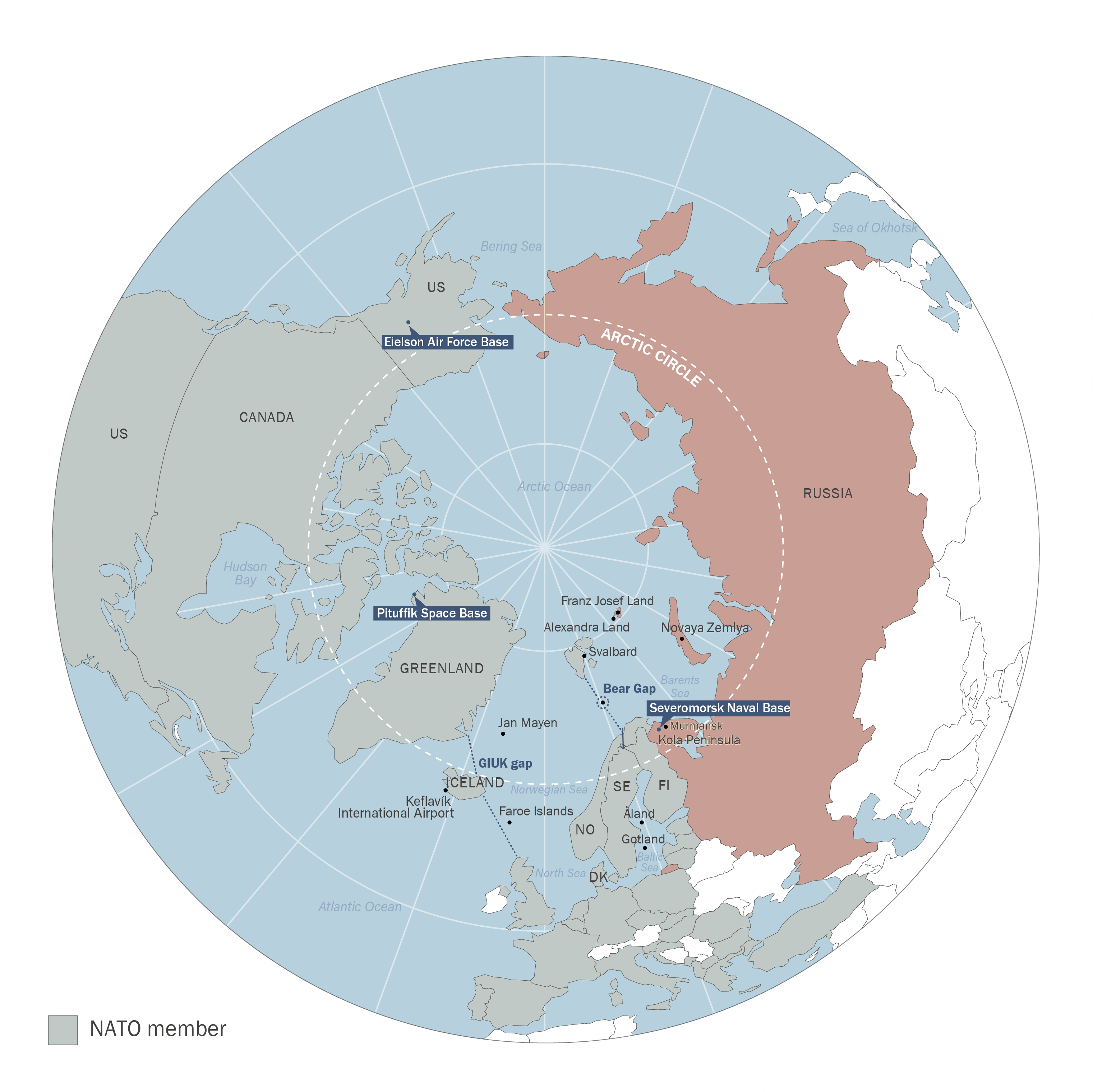
Figure 3.1. Map of the High North and the Arctic
DK = Denmark, FI = Finland, GIUK = Greenland–Iceland–UK, NATO = North Atlantic Treaty Organization, NO = Norway, SE = Sweden, US = United States.
The region has undergone massive geopolitical change since Finland’s and Sweden’s accessions to NATO. New military capabilities have been added and the alliance’s access to the territories of the two Nordic countries allows an entirely new take on NATO military and defence planning for north-eastern Europe.
NATO members Norway and Finland have land borders with Russia, but a much greater portion of the area is covered by water. It is thus in a vast maritime theatre that NATO borders Russia’s Northern Fleet Military Administrative Territory. Despite the change brought about by NATO’s northern enlargement, many of the fundamental issues debated during the cold war are as relevant now as they were then. The Kola Peninsula remains of crucial strategic relevance to Russia and its bastion defence, as more than half of its fleet of strategic submarines (also referred to as SSBNs) is based there. Protecting sea lines of communication, crucial for reinforcement from North America to European theatres, remains at the heart of NATO’s concerns. Similarly, preventing Russian attack submarines from passing chokepoints such as the Greenland–Iceland–UK (GIUK) gap and dispersing into the ocean, possibly putting the US mainland at risk, remains high on the strategic agenda. That said, although these fundamentals are unchanged, technological evolution means that the threats and risks of the 21st century differ from those of cold war times.
Notably, technological evolution and the improved range and accuracy of weapon systems make it increasingly difficult to locate specific threats or disruptors of strategic stability. In approaching the study of potential disruptors of strategic stability in this geographic space, it is therefore useful to resort to a framework that distinguishes between threats to, through and in the Arctic.7 This paper is primarily concerned with threats in, but also through the Arctic—the latter referring to threats emanating from outside the region and passing through or over it to strike targets most likely also located outside of the High North. The capabilities used to launch missiles that pose such a threat may or may not be located in the Arctic and the same applies to the infrastructure intended to counter them (e.g. radars for early warning).
Most of the permanent military infrastructure directly relevant to strategic stability located in the area covered in this paper primarily belongs to Russia. For Russia, a key concern is the Kola Peninsula, home to its Northern Fleet. When it comes to SSBN operations, the preconditions for NATO countries and Russia are very different. While the USA, France and the United Kingdom have direct access to open oceans, Russia’s direct access is limited to the Arctic Ocean. Its nuclear submarines at naval bases on the Kola Peninsula have therefore been described as ‘sitting ducks’, giving Russian military planners much less confidence when it comes to their survivability and leading them to emphasize mobile intercontinental ballistic missiles (ICBMs) instead, which constitute about half the country’s ICBM arsenal. Ukraine’s attacks on Russian strategic bombers must be assumed to have further undermined this confidence.8 Sweden’s and especially Finland’s accessions to NATO reduce strategic depth from Russia’s perspective. As a target for Russian attacks, NATO and individual member states’ military infrastructure in the region is less directly relevant to strategic stability, not least because the Nordic countries are not nuclear powers.
However, the Nordic states do or will operate weapon systems with the potential to impact strategic stability, and temporary military activity by nuclear powers—the USA, the UK and France—takes place on their territories, in their territorial waters and in their airspace. Norway, Sweden, Finland and Denmark have also concluded bilateral defence cooperation agreements (DCAs), which among other things allow the USA access to military infrastructure such as airbases, some of which are in close proximity to the Russian border (see figure 5.1). NATO as an alliance is also present on the Scandinavian Peninsula with boots on the ground, for example through its (future) Forward Land Forces in Finland. Finally, the USA also has assets in the geographic area covered in this report that are important for its security beyond the narrower context of the High North and the Arctic. These include the Eielson US Air Force Base, missile detection capabilities at Clear Air Force Station and ICBM interceptors at Fort Greely in Alaska. They also include the US rotational naval air presence at Keflavík in Iceland and the Pituffik space base in Greenland, which, inter alia, is instrumental in detecting and tracking ICBMs launched against North America. Needless to say, the military developments in the geographic area covered in this paper are relevant in much broader contexts. Notably from a North American perspective, the Arctic has not only an Atlantic dimension but also a Pacific one.
The Arctic is disproportionally affected by climate change. Its exact implications for strategic stability, however, remain to be seen. Climate change affects the operational environment and may impact the functioning of technology.9 For instance, with regard to critical infrastructure, more frequent and severe wildfires and the rising sea level in the Arctic region could threaten runways and ports, including Russian submarine bases in the Kola Peninsula.10 In addition, melting permafrost could have an impact on the structural integrity of early-warning structures in the region (e.g. by damaging radar systems).11 Popular narratives such as the one on the greater accessibility of the Arctic due to melting ice are not unequivocally true. The region remains an environment characterized by significant challenges to human activity, both military and civilian. Ideas, for instance, of various routes ‘opening up’ for navigation therefore need to be taken with a grain of salt and are not imminent. Reliable, seasonal access to the Central Arctic Ocean by non-ice-strengthened vessels and the emergence of a transpolar sea route are unlikely to be viable before 2050.12 Moreover, environmental hazards such as storms, fog and icebergs will continue to pose navigational challenges and risks during ice-free periods. Search and rescue infrastructure remains rudimentary. Assessments of operational environments in the High North consequently require nuance and careful distinction of realistic timeframes. In the long run climate change is likely to have an increasing impact on security in the High North. Its impact on strategic stability is more unclear.
4. Military capabilities as potential disruptors of strategic stability
The intensified threat perceptions within both NATO and Russia have clearly translated into increased investments in military capabilities on both sides, including when it comes to the High North and the Arctic.13 The following sections are not intended to provide a complete overview of the military capabilities present in the region. Rather, they focus on those capabilities that are the most directly relevant to strategic stability in that they qualify as potential disruptors as defined above.
States primarily acquire military capabilities based on the wars they believe they may have to fight, but also in relation to the ways in which they believe deterrence works. For non-nuclear powers, deterrence by denial will inevitably be more prominent than deterrence by punishment. That said, in the context of NATO as a nuclear alliance with a strong emphasis on extended deterrence, deterrence by punishment and the roles that support it, such as Intelligence, Surveillance and Reconnaissance (ISR) or allowing nuclear operations on national territory, are equally part of the equation. Many defence policy choices made by European NATO member states reflect this, including when it comes to military capabilities operated.
The capabilities discussed below are not specific to the Arctic or the High North. Rather, they pertain to technology and technological advances that happen to be present in the region, operated by actors within it. Historically, when it comes to NATO’s northern flank, the focus has been on the maritime dimension. When Norway was the only NATO member to share a short land border with the Soviet Union, the High North was primarily a naval theatre. As noted above, a key concern for NATO was and remains preventing the Soviet (now Russian) Northern Fleet from crossing the GIUK gap and dispersing in the Atlantic Ocean. Submarines and ASW were consequently the centre of the attention throughout the cold war, and they continue to be a key issue in the current context. NATO’s northern flank has undergone massive change since the cold war. Finland’s and Sweden’s accessions in 2023 and 2024 respectively turned the area into what may be described as a more traditional theatre, adding a significant air and land dimension. In addition to these geopolitical changes in the region, military technology has also evolved considerably in recent decades. Military operations—and deterrence—are even more multidomain. There is now also an increasing role in deterrence for non-nuclear weapon systems, including in counterforce missions against hardened targets, which considerably complicates the picture from a strategic stability vantage point.
The following sections discuss military technology as potential disruptors of strategic stability in the naval, land and air domains. Given that space is not geographically tied to NATO’s northern flank, relevant systems such as satellites and anti-satellite (ASAT) capabilities are not discussed in this paper—despite their obvious importance. The focus is on the weapons with the most direct potential to impact strategic stability: first, the naval dimension, especially submarines; and then the air and land domains, with a special emphasis on conventional long-range precision-strike capabilities.
Military technology in the naval domain
Especially in the West, SSBNs are widely considered the most survivable and hence the most important leg of the nuclear triad. The naval domain therefore requires particular attention in any analysis of disruptors of strategic stability—notably in a geographic area such as NATO’s northern flank, which is predominantly covered in water and ice. The SSBNs themselves and the weapons they carry, but also the defences against submarines and the means to detect them, as well as communications with them, are all relevant to strategic stability.14 A long-standing key issue in this context is therefore the survivability of submarines and the efficacy of ASW.15 Vulnerable SSBNs in a ‘transparent’ ocean would severely undermine any state’s confidence in nuclear deterrence, and the survivability of its second-strike capability in particular. This consequently represents one of the most significant potential disruptors of strategic stability. Overall, however, finding, tracking and possibly trailing a submarine is an extremely challenging endeavour, not least as illustrated by incidents such as the collisions between US and Russian submarines in the High North.16
SSBN survivability and strategic stability
Norman Friedman distinguishes between three different approaches to ASW:
One focuses on the enemy submarines; it is often called offensive ASW. It includes the use of long-range sensors to cue attackers and the concentration of ASW forces at choke points. A second focuses on making concentrations of targets (convoys or battle groups) dangerous for submarines to attack, both deterring attacks and destroying submarines. A third focuses on protecting the targets rather than on destroying submarines. The third approach includes evasion (usually based on knowledge of submarine positions) and defensive measures such as anti-torpedo weapons.17
ASW involves a variety of technologies and capabilities: surface ships, submarines and undersea sensors, specialized aircraft such as the P-8 Poseidon, but also unmanned and space-based systems. The physical principles on which systems designed to detect submarines are based can be acoustic or non-acoustic.18 Moreover, in the context of strategic stability, submarine vulnerability refers not only to the detection (and subsequent destruction) of SSBNs per se, but also to command and control (C2). If an adversary could find a way to disrupt and/or detect communications with SSBNs, this would have an impact on strategic stability. Technological progress notwithstanding, options for communicating with a submerged submarine remain limited since radio waves do not travel well in water.19 This makes C2 for SSBNs particularly sensitive.
SSBNs are not the only types of submarines relevant to strategic stability. Nuclear-powered attack submarines (SSNs), nuclear-powered guided-missile submarines (SSGNs) and diesel-electric attack submarines (SSKs) also matter, and these may be even less detectable than SSBNs. In addition to an ASW context, they are relevant to strategic stability in that they can more easily approach coastlines and hold nuclear infrastructure in an adversary’s homeland at risk. Russia, for example, equipped its Akula-class and Lada-class with Kalibr cruise missiles, suitable for attacking targets on land, including in North America.20 Russia’s new Yasen-class SSGN in particular is the kind of concern that underlies the undersea dimension of the North American Aerospace Defence Command (NORAD) modernization. This was for instance emphasized by the Commander of the US Northern Command and NORAD in 2023, when he argued that they ‘are designed to deploy undetected within cruise missile range of our coastlines to threaten critical infrastructure during an escalating crisis’.21 These SSGNs are very quiet and designed to carry Kalibr, Oniks and Tsirkon missiles and thus pose a considerable threat to North America (in addition to potentially threatening NATO naval forces, sealines of communication or critical undersea infrastructure).22
New questions arise in the face of technological advances.23 The new technologies discussed in this context include quantum sensing, large networked sea bottom matrices of sensors, or unmanned underwater vehicles (UUVs). There is often a special focus on non-acoustic methods, such as remote sensing from space with synthetic aperture radars (SAR), which seek to detect submarines using wake waves on the ocean surface.24 Overall, however, ‘[a]ttempts at non-acoustic submarine detection have a long but generally unsuccessful history’.25 With regard to acoustic methods, sensors have improved in recent decades but technological progress has occurred at both ends: more advanced acoustic sensors are faced with even quieter submarines. A 2025 study concludes that: ‘[t]he effectiveness of SSBN protection measures is very likely to increase more rapidly than threats to SSBNs. The costs of threatening and attacking SSBNs are likely to be high in the foreseeable future. As a result of this trend, SSBNs are likely to be reliable second-strike nuclear forces over the next 20 years and beyond.’26 At present, there seems to be no indicator that submarines are significantly more vulnerable today than they were in the past.
Another question that arises in this context is regarding the impact of climate change on SSBN survivability. Disappearing ice cover and warming waters are changing the operational environment for SSBNs in the Arctic. Melting ice reduces the number of ‘hiding spots’ while reduced salinity of the water, alongside temperature and depth, affects the range and resolution of acoustic sensors. In 1994, Eugene Miasnikov published a study on the ranges at which Russian strategic submarines can be detected in the High North. He concluded that ‘it is implausible that US attack submarines would be able to trail covertly Russian SSBNs on a day-to-day basis in their patrol areas in the Barents Sea, the Sea of Okhotsk and the Marginal Ice Zones of the Arctic, provided that Russia applies advanced submarine silencing technologies and that the strategic submarines are properly maintained and operated’.27 More recent research by Gilli et al. suggests that climate change could affect detectability ranges.28 However, given the overall complexity at play when it comes to detecting submarines, the great variation of conditions in oceans around the globe and phenomena such as increased noise due to maritime traffic or crackling Arctic ice, other experts warn against overstating climate change as a single factor. Tom Stefanick, for example, argues that ‘[t]he amount of variability is so great that a long-term trend of the sort . . . would be washed out’.29 It is thus not a given that climate change will have a direct impact on strategic stability when it comes to SSBN vulnerability. While climate change certainly does affect the operational environment, and navies will have to adapt accordingly, these effects do not necessarily appear to be destabilizing in the grander scheme of things.
Naval capabilities in the High North
While the survivability of SSBNs does not seem to be at stake, Arctic states continue to make considerable investments in naval capabilities for various purposes: nuclear deterrence, ASW, and surveillance and situational awareness, all of which have at least indirect significance for strategic stability.
The USA bets heavily on its undersea deterrent. Russia is less reliant on its SSBNs due to the ‘sitting duck’ problem (see above). Submarine-launched ballistic missiles constitute about one-third of Russia’s strategic nuclear delivery systems.30 What is more, ‘Russia’s navy remains a force focused on countering the military capabilities of the United States, and deterring other naval powers with conventional and nuclear weapons’.31 Both Russia and the USA are currently implementing programmes to modernize their SSBN fleets, suggesting that submarines will continue to play a key role in nuclear deterrence in the High North and elsewhere. France and the UK also operate SSBNs and are continuously developing their capabilities.32
Non-nuclear Arctic nations possess submarine and ASW capabilities and consequently operate systems that are potentially relevant to strategic stability.33 Trends clearly indicate more such acquisitions. Norway in particular prides itself on being the ‘eyes and ears of NATO in the North’ and has long prioritized ASW. The country operates five P-8 Poseidon maritime patrol aircraft, the first of which was delivered in 2022.34 In addition, Norway plans to acquire new long-range maritime surveillance drones to support P-8 operations in the Arctic.35 Building on its existing submarine partnership with Germany and German manufacturer TKMS, Norway signed a contract for four new submarines in 2021, for delivery estimated in 2029. These form the basis for close cooperation with Germany. Norway announced its intention in December 2025 to acquire two more.36 In August 2025, Norway announced another major investment in ASW capabilities and the purchase of British-built Type 26 frigates, which will underpin intensified operational cooperation between the two countries (see below).37 Denmark’s 2025 Defence Agreement foresees major investments in naval capabilities.38 The country’s Second Agreement on the Arctic and North Atlantic—following a first such package in January 2025 and the adoption of a ‘Consensus on strengthening the Danish Armed Forces’ ability to detect, identify, and react to threats, and establishing facilities for the construction of larger ships’ in July of the same year—aims to significantly strengthen Danish capabilities in the High North.39 Sweden currently operates four submarines and plans to operate five in the future after acquiring two and phasing out one. Canada also owns four submarines and intends to invest in more. Iceland, which has no armed forces, and Finland do not operate submarines.
Military technology in the air and land domains
Finland’s and Sweden’s accessions to NATO have drastically changed geostrategic conditions on the alliance’s northern flank, for both NATO and Russia. The capabilities these two countries add further tilt the conventional military balance in favour of NATO. In the north, Russia and NATO now share a land border that is over 1300 kilometres long. Bases on the Kola Peninsula, where Russia concentrates assets, now find themselves in proximity to much more NATO territory, within range, for example, of Finnish cruise missiles. This has implications for Russia’s nuclear deterrence since ‘considering the changing geopolitical situation for Russia in the High North, it is no longer obvious that operating close to home ports offers the greatest chance of survival for Russian SSBNs. With two additional NATO allies in the Scandinavian Peninsula, it may not be possible to support wartime SSBN activities in the Barents Sea from ashore in the same way as before.’40
Conventional long-range precision-strike capabilities
Conventional capabilities can be considered potential disruptors of strategic stability if they can be used against relevant targets. Examples of such targets would be SSBNs in port and ICBMs, as well as related installations and C2 infrastructure, or any other target that constitutes an element of a nuclear (second) strike capability.
The development of conventional long-range precision-strike systems constitutes major military technological progress since the cold war. With ranges up to an estimated 2500 km for certain variants, these weapons now allow to hold targets at risk in missions that used to be reserved for nuclear weapons. Recent research has concluded that ‘conventional weapons must now be considered to properly analyse the relative survivability and reliance on specific nuclear forces among nuclear powers that factor into strategic stability concerns and determine nuclear force requirements’.41 The single-shot kill probability of the two most prominent types of US-built long-range conventional cruise missiles destroying a hardened missile silo is comparable to that of a US or Russian nuclear ballistic missile: ‘typically well over 90%’.42 As a consequence, these weapons blur the lines between deterrence and warfighting. A conventional cruise missile can both serve a strategic counterforce purpose and be used in a strike against targets that are not related to an adversary’s nuclear deterrence.
NATO countries and Russia have invested in the development and/or acquisition of conventional long-range precision-strike capabilities.43 Besides sea-launched Tomahawks, air-launched Joint Air-to-Surface Standoff Missiles (JASSMs) are of particular relevance to the NATO countries located within the geographic area covered in this paper. These are owned and deployed not only by the USA, but also by an increasing number of European NATO countries. Finland decided to purchase JASSMs as early as 2012 and decided to acquire the even longer range JASSM-ER version in 2024.44 Sweden is considering the acquisition of further conventional long-range precision-strike capabilities, after earlier making the decision to purchase German-built Taurus missiles for its Gripen jets.45 Sweden is moreover a partner in the European Long-Range Strike Approach (ELSA).46 The Swedish Armed Forces stressed the usefulness of this kind of weapons and discussed the need to further analyse the various options in their official recommendations to the government in November 2025.47 Sweden’s Minister of Defence Pål Jonson has declared acquiring such weapons ‘absolutely necessary’.48 Denmark announced its decision to procure long-range precision-strike capabilities in September 2025 but a decision on the exact type is still to be made.49 Norway announced in January 2026 that it would acquire South Korean-built long-range precision artillery.50 Among the non-Arctic European nations that have acquired or are in the process of acquiring US-built cruise missiles are the Netherlands, Germany and Poland. Especially in conjunction with other factors, these weapons have the potential to impact strategic stability. This notably concerns stealthy fifth generation fighter jets and strategic bombers designed to more easily evade enemy air defences, such as the F-35 or the B-21. In the specific context of the Arctic, these factors include geography and the proximity of targets that Russia values, on the Kola Peninsula and elsewhere, as well as deeper integration in Nordic air force command structures (see chapter 4).
Unsurprisingly, western long-range precision-strike capabilities have long been a concern for Russia, as, for example, expressed by Russian President Vladimir Putin in 2014:
Today, many types of high-precision weaponry are already close to mass-destruction weapons in terms of their capabilities, and in the event of full renunciation of nuclear weapons or radical reduction of nuclear potential, nations that are leaders in creating and producing high-precision systems will have a clear military advantage. Strategic parity will be disrupted, and this is likely to bring destabilization. The use of a so-called first global pre-emptive strike may become tempting. In short, the risks do not decrease, but intensify.51
Specifically related to the High North, ‘Russia fears that adversaries could use the Arctic marginal seas to conduct a massive and unanticipated precision-strike campaign, as NATO’s superior capabilities could potentially cripple Russia, politically and militarily, without having to resort to nuclear weapons’.52
Russia has also invested in the development of long-range precision-strike capabilities.53 These include its dual-capable Kalibr sea-launched cruise missiles and the air-launched conventional KH101 and nuclear KH102. While its range is too short to reach the USA, the Oreshnik ballistic missile allows Russia to hold targets in large parts of Europe at risk.54 Russia has also been testing nuclear-powered and nuclear-capable systems, such as its Burevestnik cruise missile.55
Shorter range weapons, with ranges below the former 1987 Intermediate-range Nuclear Forces (INF) Treaty threshold of 500 km, may also impact strategic stability in the European Arctic, given that they could potentially be deployed in close proximity to Russian assets (see chapter 4).
Strategic missile defence
Strategic missile defence is not directly relevant to strategic stability specifically in the Arctic. Given its wide-ranging implications, however, it must be briefly discussed in this context. Mutual vulnerability is one of the core elements of strategic stability, and arms race stability in particular. Any attempt to reduce vulnerability must therefore be viewed as a disruptor of strategic stability. The argument primarily rests on a scenario where a first strike would take out most of an adversary’s second-strike capability, thereby eliminating the fear of retaliation. The idea that mutually accepted vulnerability is stabilizing was notably behind the origins of the 1972 US–Soviet Treaty on the Limitation of Anti-Ballistic Missile Systems (ABM treaty). The USA unilaterally withdrew from the treaty in 2002, citing risks from so-called rogue states.
While Russia responded to the USA developing long-range precision-strike capabilities with its own programmes (see above), its response to the end of the ABM treaty was more asymmetric. Russia did not make its own strategic missile defence a priority but sought to develop weapons explicitly designed to overcome US defences.56 When Russian President Vladimir Putin unveiled his country’s new nuclear capabilities in 2018, he described them as ‘invincible against all existing and prospective missile defence and counter-air defence systems’.57 The actual performance of these so-called exotic weapons remains a matter of debate. Nonetheless, they serve as an example of strategic missile defence driving arms race instability. Against this backdrop, the decision by the administration of US President Donald J. Trump to announce its ‘Golden Dome’ project—and notably the fact that it is intended to rely on space-based interceptors—is likely to have further negative effects from a strategic stability perspective.58 Likewise, the effects of European investments in multi-layered, integrated air defence remain to be seen.
Conclusions: Military capabilities as potential disruptors of strategic stability
Military capabilities and technological advancements will first and foremost affect
arms race stability. The dynamics underpinning this observation have clearly been in play in the wider context of Russia–West security relations and beyond. Debates in the USA are increasingly driven by perceptions of China as the ‘pacing threat’. These dynamics also matter on NATO’s northern flank, driving threat perceptions and decisions on acquisitions. The end of the US–Russian INF treaty, which limited ground-based missiles and possible deployments of INF-range missiles in Europe, could further impact arms race stability, including in the northern parts of the continent. Historically, genuine or perceived vulnerabilities or ‘missile gaps’ have been a non-negligible driver of arms races. In that sense, vulnerability—including on the adversary’s side—can prove to be more destabilizing than strength. Notably military capabilities that affect a state’s perceptions of its own vulnerabilities will likely be a driver in the arms race.
The spread of new weapon systems also has the potential to affect crisis stability. When deploying conventional long-range precision-strike capabilities, states face a dilemma: while the intention behind acquiring them is to bolster deterrence, another effect is increased risk of escalation, especially in a crisis. The potential impact of these weapons on strategic stability is considerable but at the same time difficult to assess, given that context is crucial. The proverbial fog of war, a lack of information and a shortage of time may all contribute to miscalculations and erroneous assessments of the situation at hand. Managing this deterrence-instability dilemma is complicated by the fact that these capabilities are arguably not yet sufficiently incorporated into conceptual and doctrinal thinking about strategic stability in all European states who (will) own them. Moreover, the number of actors that deploy them is already much larger than the number of nuclear powers, and many of these states lack experience in managing nuclear security dilemmas.
5. Military activity as a potential disruptor of strategic stability
Deterrence is not just about the purely material factors of military capabilities and the ways in which weapon systems work. The effects of military capabilities are often cumulative, linked to factors such as deployment options and command structures. Consequently, how and where states choose to use or deploy their capabilities, the way armed forces are structured and what sort of activities they engage in are also important.
Exercises are a key element of any deterrence posture, and they can have an impact on strategic stability. The scenarios on which exercises are based provide insight into states’ assessments of their adversary’s intentions and the kind of operations for which armed forces are preparing. How states choose to communicate—or not to communicate—around their exercises is another relevant factor in the practice of deterrence. In particular, the concentration of forces that can occur in exercises tends to heighten the security concerns of the adversary, especially when intentions are not clearly communicated or there are good reasons not to trust what is being communicated. Russia’s full-scale invasion of Ukraine in February 2022 is one salient example of a military attack that started with an exercise and many, including Ukraine’s President Volodymyr Zelensky, warn that Russia could repeat a move it had already carried out before 2022.59
In the context of this category of disruptors—tied to what states do with their capabilities—the NATO accessions of Finland and Sweden have led to considerable changes adding relevant military capabilities and strategic depth on the NATO side while reducing strategic depth for Russia. Seen from NATO’s vantage point, they have also allowed more holistic approaches to planning—and thus also exercising—for the defence of the eastern flank, an evolution widely seen as increasing regional security. At the same time, Finland and Sweden being part of NATO—as well as changes to Norwegian guidelines—now bring military activity much closer to Russia’s border, in a context where Russia views NATO enlargement as a threat. Given these perceptions, allied activity in the region potentially affects strategic stability.
Both Finland and Sweden explicitly chose to join the alliance without restrictions. This is in contrast to the approach taken by Norway (and to some extent Denmark) from 1949 and throughout the cold war, which restricted allied activity and prohibited the presence of nuclear weapons on Norwegian territory in peacetime.60 Over the years, Norwegian guidelines were adapted to military evolutions since their initial definition. In particular, some restrictions have been lifted since 2022, partly as a consequence of NATO’s northern enlargement. While the policy prohibiting nuclear weapons on Norwegian territory in peacetime remains in place, Norway has changed its approach to military operations in its Finnmark county, which borders Russia.61 Bilateral DCAs the USA has concluded with Norway, Denmark, Finland and Sweden give it access to military infrastructure that is in very close proximity to the Russian border.
NATO and its member states were already concerned by Russia’s behaviour before its full-scale invasion of Ukraine.62 Recurring Russian sub-threshold operations had been observable on NATO’s northern flank (and elsewhere) beyond official exercises and what may be termed legitimate patrolling.63 So-called buzzing and flying close to Norwegian military assets are of particular concern but there have also been airspace incursions, GPS spoofing and jamming, and drone overflights of critical civilian infrastructure.64 While the direct impact of such dangerous activities on strategic stability is limited, it is obvious that they—at times significantly—increase the risk for misinterpretations and miscommunication, and consequently of escalation.
The sections below focus on activities and behaviour engaged in by NATO, its member states and Russia. By themselves and in conjunction with the capabilities discussed above, these have the potential to affect strategic stability and are thus relevant in the current context. A first section discusses exercises as a core element of any deterrence posture. It is followed by a second section dedicated to the explicit nuclear dimension. Finally, a third section discusses structural change in military organization and increased cooperation.
Exercises and overflight
The High North and the Arctic have seen an increase in military activity in recent years. This applies to both NATO and Russian activity, as well as individual countries or smaller groups of states, which have amplified their presence notably in the form of exercises and training.65 Besides being useful for training troops and other personnel, and testing plans and strategies, exercises also serve a deterrent purpose by ‘showing off’ capabilities and how forces are able to use them. They are consequently a key building block in any deterrence posture. The communication that surrounds such activity—or the lack of such communication—is also significant in that it conveys messages to both allies and adversaries, with the aim of being reassuring, deterring or both. Russia no longer abides by the Vienna Document 2011 on Confidence- and Security-Building Measures, which among other things requires its participants to provide notification of major exercises at least 42 days in advance.66
Russia—alone or with partners such as Belarus or China—regularly conducts military exercises to train its forces and send signals to its adversaries. Among these, the biannual Zapad (‘West’) iterations are the most important in terms of scale and the number of troops involved. They are intended to train forces at the level of Russian military districts. Zapad exercises take place not only in Russia but also in Belarus.67 Scenarios usually ‘depict an attack by foreign states with the support of irregular forces aimed at destabilising the Union State and pursuing regime change’.68
Between April 2023 and December 2025, Russian forces conducted at least 23 military exercises in the High North and in the Arctic.69 A notable trend within the High North has been the increased issuing of Notices to Air Missions (NOTAMs) for live-fire events, although several of these events did not take place.70 Observers have characterized Russia’s communication around its exercises as ‘weaponization of notices to air missions’, describing how ‘[w]ith very short notice, Russia sends notices for live-fire air and naval exercises in waters and airspace adjacent to Norwegian territory—and sometimes even overlapping Norway’s EEZ [Exclusive Economic Zone] by the Barents and Norwegian Seas. The goal is to disrupt regional NATO and allied exercises with attempts at sea denial, which conveys the risk of horizontal escalation to and from the Baltic Sea’.71
Against this backdrop of military activity, Åtland et al. posit that ‘despite its increasingly harsh anti-NATO rhetoric in the post-invasion period, Russia may have taken a more careful approach in its dealings with NATO in the High North’.72 They note that since 2022 Russian military exercises in the High North have moved further north, away from the Norwegian Sea into the Barents Sea. This move seems to indicate a renewed emphasis on strengthening nuclear deterrence and the Northern Fleet’s Bastion Defence, with a decreased focus on coercive signalling attempts towards NATO.73
However, Russian military activity in the proximity of the Svalbard archipelago remains a cause of concern. The Northern Fleet has been repeatedly suspected of simulating attacks and the occupation of the archipelago, and the annual Arctic voyage of the Northern Fleet has on several occasions turned towards the archipelago under the stated objective of defending Russian territories and islands.74
NATO has placed strong emphasis on deterrent activities in peacetime since its adoption of the Concept for Deterrence and Defence of the Euro-Atlantic Area (DDA) in 2020. Exercising the implementation of its so-called family of plans is at the heart of this endeavour. Of NATO’s three classified regional defence plans adopted at its 2023 Vilnius summit, two are of relevance to the High North and the Arctic: the plan on the High North and the Atlantic led by Joint Force Command Norfolk and the plan covering Central Europe and thus the Baltic Sea Region, led by Joint Force Command Brunssum.75 In the absence of significant permanent NATO infrastructure in the region, exercises are considered essential to demonstrate the alliance’s presence. NATO’s training and exercises vary considerably in terms of size, scope and duration (see appendix A). They include article 5 scenarios, such as Steadfast Duel in October 2025, which was the first such exercise in which Finland and Sweden participated as members.76 Given the highly specific operational conditions in the High North, cold weather training—especially for NATO forces from outside the region—is viewed as a priority. NATO adheres to Vienna Document stipulations and Supreme Headquarters Allied Powers Europe (SHAPE) publishes NATO’s annual exercise planning on its website.77
NATO’s biannual Cold Response format (labelled ‘Nordic Response’ in 2024) is the principal northern flank exercise. Its 2024 edition saw the participation of 20 000 soldiers from 13 nations, 10 000 of which trained on land in central Finnmark.78 This exercise was tied to NATO’s broader exercise activity aimed at preparing for article 5 situations in Steadfast Defender.79 This was NATO’s first large-scale exercise intended to put into action the regional plans adopted at the alliance’s 2023 Vilnius summit. In 2024, it comprised 14 associated activities across NATO territory.80
More broadly, approximately 44 bilateral and multilateral exercises have taken place between NATO members in the High North and the Arctic between Finland’s accession in April 2023 and the end of 2025. Moreover, sailings and exercises by NATO forces in the Barents Sea have resumed, although in a very limited manner, with one or two sailings by allied ships a year.81 NATO carrier groups have focused their operations on the sea off the Norwegian coast. Renewed engagement by allies in the High North is also reflected in the increase in port visits in Norway. Starting in 2023 with the USS Gerald R. Ford, the USA has deployed its carrier groups for exercises and port visits in the Norwegian Sea and Norway’s fjords annually.82 Perhaps most noteworthy, US B-52 bombers have participated in exercises with Finland and Sweden in northern Lapland at very close proximity to Russia’s border on multiple occasions since 2014.83 The US B-52 bomber fleet comprises nuclear capable aircraft, as well as aircraft converted to carry conventional cruise missiles, which Russia views as impacting strategic stability.
The nuclear dimension and nuclear signalling
Alongside an uptick in conventional military activity, the nuclear dimension—obviously the most directly relevant to strategic stability—has come to the fore in the region in a manner that was difficult to envisage just a few years previously. Nuclear signalling occurs on both sides, but with different degrees of aggressive rhetoric and practice.
Russia has not refrained from threatening rhetoric, including nuclear threats, for many years. In 2015, the Russian ambassador to Sweden emphasized that Russia’s reaction to Sweden’s NATO accession would be ‘to reorient its forces and missiles’ accordingly.84 In 2022, prior to Finland and Sweden joining NATO, former president of Russia Dmitry Medvedev threatened that there would be ‘no more talk of any nuclear-free status for the Baltic’, alluding to the storage of nuclear warheads in the Russian exclave of Kaliningrad.85 Russia has further intensified its nuclear rhetoric and signalling since 2022.86 Since 2019, Russia has demonstrated unusual openness in its communication about its annual nuclear exercises (Grom), while also increasing the scale of its drills.87 Russia’s 2025 Zapad exercise also had a clear nuclear dimension, involving the use of nuclear weapons and the Oreshnik dual-capable, intermediate-range ballistic missile system.88 Russia repeatedly simulates nuclear attacks on other countries in its exercises. In what came to be known as the ‘Russian Easter’ in 2013, for instance, Russian fighters and bombers practiced a nuclear attack on (then non-aligned) Sweden on Good Friday.89
To what extent there have been changes to Russian deployments, however, remains unclear. Russia and Belarus claim that tactical nuclear weapons have been deployed in Belarus under their 2023 nuclear sharing agreement, but observers doubt the veracity of these claims.90 Similarly, its nuclear rhetoric notwithstanding, there are no indications that Russia has removed its non-strategic warheads from storage to deploy them. Russia’s 2023 decision to withdraw its ratification of the 1996 Comprehensive Nuclear-Test-Ban Treaty (CTBT) is of particular importance to the Arctic, given the location of Russia’s testing facility in Novaya Zemlya.91 There are currently no indications that any tests have been carried out. However, Putin’s call to make preparations to resume full-scale testing after Trump suggested that the USA might resume testing suggests that nuclear testing—or the threat to do so—might become a more prominent instrument in the nuclear signalling toolbox in the years to come.92
Examples of nuclear signalling on NATO’s side include Steadfast Noon, the alliance’s annual nuclear deterrence exercise. Both new NATO members Finland and Sweden participated in the 2025 edition, which took place ‘over the North Sea region’.93 However, in the Arctic context and the High North, western nuclear signalling does not just pertain to joint NATO activities. Overflight by B-52 bombers (see above) is also part of the picture. The surfacing of the USS Tennessee, an Ohio-class SSBN, off the coast of Norway in June 2024 is the perhaps most salient recent example of a US show of force—an unprecedented event that was accompanied by photo opportunities and Facebook posts.94 There were also activities by other nuclear-armed NATO states, such as an exercise with French nuclear-capable Rafale combat aircraft in April 2025, which received considerable media attention and thus clearly served a signalling purpose.95 This event ought to be seen in the wider context of France’s President Emmanuel Macron’s offer to discuss the role of nuclear deterrence in European security.96
While NATO refrains from aggressive nuclear rhetoric, and seeks to be more transparent around exercises such as Steadfast Noon, Europe’s ‘nuclear landscape’ is changing.97 These changes include the return of an air-based leg to the UK under NATO nuclear sharing arrangements, and the UK purchase of 12 dual-capable F-35A aircraft.98 The US airbase in Lakenheath seems to have been added to the US/NATO nuclear infrastructure.99 France also announced the ‘return of nuclear deterrence’ to the airbase in Luxeuil-Saint-Sauveur, bringing the number of French airbases with a nuclear mission to four by 2032. The airbase will also be the first to serve as a home to the F5 version of the Rafale DCA and France’s new ‘hypersonic’ ASN4G nuclear cruise missile.100 The UK and France have also agreed to cooperate more closely on nuclear matters in their 2025 Northwood Declaration.101 While these changes are not directly related to the High North or the Arctic, they are directly relevant to strategic stability in the grander scheme of things. They are also likely to alter how Russia perceives military activity by nuclear armed NATO members in the region—even though the French and British deterrents seem to be a comparatively minor concern for Moscow for the time being.102
Structural change in organizing armed forces and increased cooperation
The changes in command structures and increased cooperation described in this section do not necessarily have a direct impact on strategic stability. Rather, they add up with other factors—especially military capabilities—to create effects that have the potential to significantly alter the military balance and potentially also strategic stability. Given that NATO member countries have more partners to work with than Russia, increased cooperation and integration are primarily observable on the NATO side, and notably among the Nordic countries. Alongside long-standing formats such as Nordic Defence Cooperation (NORDEFCO) or the UK-led Joint Expeditionary Forces (JEF), Finland’s and Sweden’s accessions to NATO have created new avenues for Nordic cooperation at the bilateral and mini-lateral levels. Especially in a Nordic context, changing structures and increased cooperation—at times even integration—often go hand in hand.
Since 2012, Russia has increased its permanent presence in the region by building and modernizing bases. It has also changed its military structures in the Arctic, notably elevating the status of the Northern Fleet, and created an Arctic joint strategic command in 2014 with a view to protecting existing and planned military infrastructure along the Northern Sea Route.103 The overall ambition has been to reinforce its military posture in light of intensified threat perceptions. However, the war in Ukraine has prevented Russia from fully achieving its posture goals.104
NATO, on the other hand, in reaction to its perception of Russia as a growing threat, has also made changes to its command structure and adopted its new Force Model.105 Several of these changes are directly relevant to the High North.106 These include the activation, by the North Atlantic Council, of Joint Force Command (JFC) Norfolk in 2019 under Allied Command Operations (ACO), as well as work led by Allied Command Transformation (ACT). Since December 2025, at their explicit request, all Nordic countries are under JFC Norfolk.107 NATO also strengthened the cooperation between Allied Maritime Command (MARCOM) and the Danish Joint Arctic Command in Greenland in 2020.108
Below the NATO level, there have been qualitative evolutions in the Nordic region, in particular more integrated command structures and streamlined logistics, relevant to military mobility and thus part of the deterrence posture. In 2024, Norway, Sweden and Finland announced the creation of a ‘military transport corridor’.109 One of the most notable qualitative leaps, however, is the development of the Nordic Airpower Concept (NAPC), first introduced by a joint declaration of intent in 2023.110 Building on more than two decades of air force cooperation through NORDEFCO, the framework seeks to foster the ability of Nordic air forces to operate as ‘one force in full-scale joint air operations with day-zero readiness’.111 Cooperation under the NAPC has steadily progressed, resulting in the Nordic Combat Enhanced Training in May 2025 and the creation of a Nordic division at the Norwegian Joint Air Operations Centre in Bodø tasked with further operationalizing and developing the NAPC.112 Under the concept, the future joint Nordic fighter fleet would comprise 250 fighter aircraft.113 The recent opening of the new Combined Air Operations Centre (CAOC) in Bodø (Norway) significantly enhances operational awareness in the High North, as well as the planning and command-and-control of air operations in the region.114 In addition to investing in related capabilities, Arctic and non-Arctic countries are also increasing their cooperation in an attempt to bolster anti-submarine warfare. In December 2025, for instance, the UK and Norway announced their Lunna House agreement, a naval alliance intended to ‘hunt Russian submarines’.115
Changes have also occurred on the US side. Perhaps most significantly, and related to the activation of JFC Norfolk (see above), the USA decided in 2018 to re-establish its Second Fleet, which was disbanded in 2011.116 This decision was based on the assessment that ‘we’re back in an era of great power competition as the security environment continues to grow more challenging and complex’, leading the US government to stand up the Second Fleet ‘to address these changes, particularly in the north Atlantic’.117
Recent evolutions also directly impact presence in the region of both NATO and individual member states. Following enlargement, NATO has been building its footprint in Finland in Sweden. Officially inaugurated in October 2025, NATO’s new Multi Corps Land Component Command Northwest in Mikkeli (Finland) will be tasked with the command-and-control and synchronization of national and NATO land forces in the High North during crises.118 Through its Sweden-led Forward Land Forces (FLF) Finland, NATO is seeking to directly bolster its ‘posture and deterrence against Russia’.119 The brigade-level FLF will follow NATO’s post-2022 strategic shift, which focuses stationed forces on deterrence-by-denial.120
The US government decided to base F-35 fighter jets in Alaska in 2022, where they play a role in both the Arctic and the Indo-Pacific contexts.121 Since withdrawing from Iceland and decommissioning its Naval Air Station Keflavík in 2006, the USA has renewed its—not officially permanent—presence on the strategically important island in the Atlantic.122 Iceland’s location at a key maritime chokepoint has led the USA to currently forward deploy its navy Patrol Squadron 1, a multi-mission maritime aircraft squadron of P-8A Poseidon aircraft, at Keflavík.123 The role of the rotational squadron is to ‘maintain maritime domain awareness, conduct anti-submarine warfare training operations, enhance regional stability and promote cooperative maritime safety and security’ in the North Atlantic and Arctic regions.124
Recent developments have also increased the USA’s footprint in the European Arctic, or at least opened for increased US presence. Alongside its cold war presence in Iceland until 2006, the USA has maintained military infrastructure in Greenland based on a 1941 agreement with Denmark, most notably the Pituffik Space Base, formerly known as Thule Air Base.125 A second agreement between the USA and Denmark on the defence of Greenland, which dates from 1951, provides the USA with ‘the right of free access to and movement between the defense areas through Greenland, including territorial waters, by land, air and sea’.126 Through Greenland, Denmark is today the only Nordic country with a permanent US military presence.
More recently, the USA has concluded bilateral DCAs with Norway, Finland, Sweden and Denmark.127 Among other things, these agreements provide the USA with access to military facilities in the respective countries (for an overview, see table 5.1).
While US presence on the basis of these DCAs is not permanent, they open up new deployment options. Some of the infrastructure the USA now has access to is so close to strategic Russian assets that they can be reached with systems below INF range, such as the US PrSM missile. The locations of relevant military facilities and areas are indicated in the map in figure 5.1.
Analysts consequently warn of a ‘looming missile crisis’ in the Arctic, arguing that a potential US decision to deploy missiles on Nordic bases close to Russian assets could ‘create a Cuban Missile Crisis situation between NATO and Russia that could lead to war’.128
Conclusions: Military activity as a potential disruptor of strategic stability
Finland’s and Sweden’s accessions to NATO have brought about considerable changes to the alliance’s northern flank, including from the vantage point of strategic stability. While they have clearly helped to bolster NATO’s deterrence posture, including its emerging deterrence posture in the High North, they have also created a number of potential disruptors of strategic stability. In the Arctic region, including in the continental European Arctic, potential disruptors of strategic stability are primarily tied to Russian perceptions. Neither European members of NATO nor the USA have much military infrastructure in the region that is directly linked to western second-strike capabilities. If Russia intended to undermine the USA’s confidence in its second-strike capabilities, its actions would therefore need to be directed elsewhere, beyond the regional scope of this study.
What makes the developments described in this chapter particularly relevant for strategic stability is that they alter NATO’s (or an individual NATO member state’s) options for strikes against Russian strategic targets. The effects of NATO enlargement and the deepening of cooperation it made possible tend to add up. For instance, from a Russian vantage point, it seems fair to assume that Nordic conventional long-range precision-strike capabilities become more threatening in combination with deployment close to assets it considers essential and with increasingly integrated airpower in the region. Seen from Russia’s point of view, a potential US presence and deployments in Lapland are of particular concern. All these developments have the potential to negatively impact stability if there were a crisis.
6. Conclusions: Managing disruptors in the absence of dialogue
Strategic stability is under strain and disruptors present on NATO’s northern flank are a contributing factor. The disruptors discussed in this paper affect both arms race and crisis stability. Structural drivers such as strategic missile defence and technological advances in weapon systems fuel the arms race and therefore undermine arms race stability. Increased military activity in the region has the potential to increase uncertainty about actors’ operations and intentions, resulting in challenges to crisis stability. Gaining better knowledge of these disruptors is crucial, especially when it comes to challenges to crisis stability and consequently to situations that could escalate from a comparatively small incident to a fully blown conflict. This applies to all actors in the deterrence relationship between NATO, its member states and Russia.
A thorough understanding of the disruptors of strategic stability first and foremost means understanding the effects of specific systems and actions, and how they are viewed by the other side. This understanding is crucial to calibrating and fine-tuning any deterrence posture and helps to determine what the adversary might consider to have a deterrent effect and what possible reactions might be.
A thorough understanding of disruptors of strategic stability also helps with assessing specific situations, notably from a crisis stability perspective. This is where communication and transparency are particularly important, in addition to or instead of situational awareness and intelligence to avoid surprises. More concretely, the following measures could help to manage disruptors of strategic stability in the High North and the Arctic.
Risk reduction
The classic tool for managing disruptors of strategic stability is arms control, and notably risk reduction when it comes to crisis stability. There is currently no risk reduction regime that covers the High North and the Arctic. Instruments that would allow crisis situations to be dealt with in the northern European and Arctic context are not available for most scenarios.129As a result, managing the potential effects of disruptors becomes more complicated or even impossible if a crisis were to emerge. This could adversely affect crisis stability, making miscalculations more likely. Norway is the only Nordic country with a hotline to the Russian Northern Fleet. No other Nordic country has an Incidents at Sea (INCSEA) agreement with Russia. Low-key steps forward might comprise a return to everyday military-to-military contacts, even if on areas only adjacent to nuclear security such as search and rescue operations. The return of a high-level US–Russian military-to-military dialogue is consequently a welcome development.130
However, given the geopolitical context, it seems highly unlikely that NATO, its member states and Russia will be able to agree on shared frameworks for managing disruptors in the High North and the Arctic in the foreseeable future. For this reason, and against the backdrop of the breakdown of cooperative security, unilateral measures on the NATO side appear more achievable in current circumstances.
Avoid surprises by ensuring situational awareness
The first such unilateral measure concerns ISR capabilities. The better the situational awareness that NATO and its member states have, the fewer the surprises they need to fear. ISR capabilities have therefore been identified as a priority area.131 This is reflected, for example, in Danish investment decisions. From a European vantage point, the fact that many relevant assets are US assets presents an important challenge. If the USA were to withdraw them, this would leave Europeans at a disadvantage vis-à-vis Russia. Acquiring the means to independently ensure ISR must therefore be a priority from a Nordic and more broadly European vantage point. Beyond capabilities, another key aspect to ensuring situational awareness is removing obstacles to intelligence sharing and secure communications in real-time.
Avoid surprises by ensuring predictable behaviour and information
Another way to avoid surprises and escalation risks is to adopt behaviour, at least unilaterally, that supports these objectives by being predictable. Means of achieving predictability include communication and transparency about exercises and other military activity. NATO and its member states should therefore continue to adhere to the Vienna Document and other notification instruments. Other means of achieving predictability include avoiding overly aggressive behaviour that could reasonably leave the other side in doubt over intentions. A historic example of such an approach are Norway’s guidelines, which have been in place with modifications since 1949, although changed circumstances make them partially obsolete. Responding to uncertainty caused by Russia by causing more uncertainty should not be NATO’s strategy.
Carefully monitor the effects of climate change
Climate change will almost certainly exacerbate security challenges in the High North and the Arctic. While most of the related developments, such as an ice-free Arctic ocean in the summer, are not imminent, their impact will be considerable once they materialize. Increased traffic may affect crisis stability. The threat assessments of both Russia and NATO will evolve with direct maritime access from and to Russia’s northern coast. On land, climate change could affect factors such as military mobility and consequently impact deterrence. All these developments need to be monitored carefully and incorporated into strategic analyses and military planning.
Work towards overcoming implicit divisions among the Nordic states and within NATO
Obstacles to implementing risk reduction instruments or unilateral restraint are not only to be found on the Russian side. Within NATO, the idea of engaging in risk reduction conversations with Russia is highly controversial. These disagreements are one illustration of a key issue when it comes to alliance cohesion. NATO members have very different approaches to deterrence and the causal mechanisms that make it ‘work’, as well as divergent views on whether safety valves are a necessity or a way to undermine effective deterrence. As a result, some, such as Norway, have long pursued approaches that seek to balance deterrence with reassurance. Others—in particular on the so-called eastern flank—view risk reduction as compromising deterrence and consequently oppose it as a means for managing an adversarial relationship. These different approaches to deterrence are rarely addressed but pose at times fundamental problems when it comes to jointly defining a deterrence posture within the alliance. Working to overcome these differences is therefore an important element in a wider transatlantic and European context, with concrete ramifications for the High North and the Arctic. It should consequently constitute a priority in strategic dialogue among NATO members.
Ultimately: Find a new basis for strategic dialogue—once peace in Ukraine has been achieved
Beyond risk reduction mechanisms, the High North and the Arctic currently lack regional governance forums involving all the Arctic states, which would allow security concerns to be addressed. The Arctic Council—of which Russia still is a member, although much of the in-person cooperation has been suspended—is not intended to deal with security issues. The only forum for Arctic defence is the Arctic Security Forces Roundtable, but Russia no longer participates as a result of sanctions in the wake of its 2014 annexation of Crimea. Similarly, Russia does not participate in the Arctic Chiefs of Defence Staff meetings. Beyond the region, the NATO–Russia Council does not serve as a forum for discussions on security and defence among all eight Arctic states. While re-establishing any kind of dialogue forum before the end of Russia’s war against Ukraine is unrealistic, a possible peace agreement could constitute a starting point for resumed strategic dialogue on security and strategic stability in the High North and the Arctic.
The future of strategic stability on NATO’s new northern flank will very much depend on the behaviour of all the actors involved: Russia, but also NATO, its Arctic member states and most notably the USA. The recent—and effectively still unresolved— transatlantic conflict over the Trump administration’s desire to acquire Greenland has a clear impact on Arctic and Euro-Atlantic security. While its consequences for strategic stability in a stricter sense might be limited, it creates a great degree of uncertainty and hence potential instability. The subsequent decision to increase NATO’s role and footprint in the High North may also be viewed as a potential disruptor of strategic stability by Russia. A complete US retreat from the region is in any case highly unlikely. As the then NORAD commander, General Terrance O’Shaughnessy, argued in 2020, the High North is of direct relevance to US security as North America is no longer a ‘sanctuary’. Rather, the USA’s ‘key adversaries watched and learned, invested in capabilities to offset our strengths while exploiting our weaknesses, and have demonstrated patterns of behaviour that indicate they currently have the capability, capacity, and intent to hold our homeland at significant risk below the threshold of nuclear war’.132 While the USA is expected to reduce its engagement in Euro-Atlantic security more broadly, as underlined by its decision to hand over JFC Naples and Norfolk to European commanders, it is likely to continue to consider the High North to be an area where it needs to be present. That said, (partial) US retreat from European security more broadly may affect strategic stability in various ways, including in the Arctic. For instance, if the French and potentially British nuclear deterrent were to play a more prominent role in European security, this would likely also change Russia’s perceptions of these countries’ military activities. Needless to say, more European governments deciding to acquire their own nuclear weapons would have even greater impact.
Actors outside the region, such as China which is at the heart of much of US thinking about nuclear affairs, can also impact strategic stability. If either side pursues strategies intended to produce instability or unpredictability, this would be problematic. As of now, it still seems unlikely that the High North or the Arctic would be where large-scale conflict between NATO and Russia would start. Many factors are at play: broader dynamics in European security and the evolution of the transatlantic link, technological advances and the spread of conventional long-range precision weapons, potentially climate change and changing operational environments, and evolutions at the domestic level in Arctic nations and elsewhere. Managing strategic stability will consequently become even more challenging on NATO’s northern flank and beyond.
Appendix A. Military exercises in the High North and in the Arctic (Apr. 2023–Dec. 2025)
Endnotes
- 1 Wezeman, S. T., ‘Military capabilities in the Arctic: A new cold war in the High North?’, SIPRI Background Paper, Oct. 2016.
- 2 For a thorough discussion—and criticism—of the notion of strategic stability, see the various contributions to Colby, E. and Gerson, M. S. (eds), Strategic Stability: Contending Interpretations (US Army War College Press: Carlisle, 2013).
- 3 Schelling, T. C. and Halperin, M. H, Strategy and Arms Control (Pergamon-Brassey’s: Washington, 1985).
- 4 Schelling and Halperin (note 3).
- 5 Bidgood, S., ‘What we talk about when we talk about US–Russia strategic stability’, Journal for Peace and Nuclear Disarmament, vol. 6, no. 1 (2023), pp. 9–27.
- 6 Bruusgaard, K. V., ‘Deterrence asymmetry and strategic stability in Europe’, Journal of Strategic Studies, vol. 47, no. 3 (June 2024), p. 345.
- 7 Lackenbauer, P. W., ‘Threats through, to, and in the Arctic: A framework for analysis’, North American and Arctic Defence and Security Network Policy Brief, 23 Mar. 2021.
- 8 Gozzi, L. and BBC Verify, ‘How Ukraine carried out daring “Spider Web” attack on Russian bombers’, BBC News, 2 June 2025.
- 9 Kwong, J., ‘A warning about warming: Climate change threatens Arctic nuclear security’, Royal United Services Institute (RUSI), 11 Dec. 2018; see also NATO, The Effects of Climate Change on Security, Final report of the STO Research Task Group SAS-182, STO Technical Report AC/323(SAS-182)TP/1315, Jan. 2026.
- 10 NATO, NATO Climate Change and Security Impact Assessment, 3rd edn (NATO: Brussels, 2024); and Goodman, S. et al., Climate Change and Security in the Arctic (Center for Climate and Security: Washington, DC, Jan. 2021).
- 11 Kwong (note 9).
- 12 Pezard, S. et al., ‘The future of maritime presence in the central Arctic Ocean’, RAND Research Report, 30 July 2025, pp. 30–35.
- 13 See e.g. Grisé, M., ‘Russia in the High North’, RAND Research Report, Feb. 2026; Kjellén, J., ‘The Russian Northern Fleet and the (re)militarisation of the Arctic’, Arctic Review on Law and Politics, vol. 13 (2022), pp. 34–52; Rumer, E., Sokolsky, R. and Stronski, P., ‘Russia in the Arctic: A critical examination’, Carnegie Endowment for International Peace, Mar. 2021; Boulègue, M., ‘Russia’s military power in the Arctic. Managing hard power in a “low tension” environment’, Chatham House Research Paper, June 2019; and Pallin, K. et al., ‘Western military capability in Northern Europe 2023: Part 1, National capabilities’, Swedish Defence Research Agency (FOI) Report FOI-R–5527–SE, Mar. 2024.
- 14 Friedman, N., ‘Strategic submarines and strategic stability: Looking towards the 2030s’, eds R. Metcalf et al., The Future of the Undersea Deterrent: A Global Survey (Australian National University, National Security College: Canberra, Feb. 2020), pp. 69–79.
- 15 Garwin, R. L., ‘Will strategic submarines be vulnerable?’, International Security, vol. 8, no. 2 (Fall 1983), pp. 52–67.
- 16 Cushman, J. H., ‘Two subs collide off Russian port’, New York Times, 19 Feb. 1992; Miasnikov, E., ‘Submarine collision off Murmansk: A look from afar’, DACS Breakthroughs (Winter 92/93), pp. 19–24; and Gordon, M. R., ‘US and Russian subs in collision in Arctic Ocean near Murmansk’, New York Times, 23 Mar. 1993.
- 17 Friedman (note 14), p. 69.
- 18 For an overview of anti-submarine warfare technologies and systems see Friedman (note 14).
- 19 Carter, A., Steinbruner, J. D. and Zraket, C. A. (eds), Managing Nuclear Operations (Brookings Institution: Washington, DC, 1987).
- 20 Sutton, H. I., ‘Russia increasing submarine cruise missile capacity as US navy decreases its own’, Royal United Services Institute (RUSI), 19 Aug. 2021.
- 21 VanHerck, D. (Gen.), United States Air Force Commander, United States Northern Command and North American Aerospace Defense Command, Statement before the House Armed Services Committee Subcommittee on Strategic Forces, 1 Mar. 2022, p. 6.
- 22 Kaushal, S. et al., ‘The Yasen-M and the Future of Russian Submarine Forces’, RUSI Defence Systems, May 2021.
- 23 Stefanick, T. A., ‘Undersea nuclear forces: Survivability of Chinese, Russian, and US SSBNS’, Journal of Strategic Studies, vol. 48, no. 2 (2025), pp. 334–406; and Friedman (note 14). See also Fetter, S. and Sankaran, J., ‘Emerging technologies and challenges to nuclear stability’, Journal of Strategic Studies, vol. 48, no. 2 (2025).
- 24 Stefanick (note 23), p. 30.
- 25 Friedman (note 14), p. 77.
- 26 Stefanick (note 23), p. 2.
- 27 Miasnikov, E., ‘Can Russian strategic submarines survive at sea? The fundamental limits of passive acoustics’, Science and Global Security, vol. 4 no. 2 (1994), pp. 213–51.
- 28 Gilli, A. et. al., ‘Climate change and military power: Hunting for submarines in the warming ocean’, Texas National Security Review, vol. 7, no. 2 (2024).
- 29 Judah, J., ‘Submarines are hard to detect: Climate change might make it even harder’, New York Times, 12 June 2025.
- 30 Kristensen, H. et al., ‘Russian nuclear forces, 2025’, Bulletin of the Atomic Scientists, 13 May 2025.
- 31 Kofman, M., ‘The role of nuclear forces in Russian naval strategy’, eds Metcalf et al. (note 14), pp. 32–35.
- 32 Brustlein, C., ‘The role of SSBNs in French nuclear posture and maritime strategy’, eds Metcalf et al. (note 14), pp. 55–57; and Gower, J., ‘UK nuclear deterrence: Security and stability through SSBN CASD’, eds Metcalf et al. (note 14), pp. 58–63.
- 33 For a comprehensive overview, see Pallin, K. et al., ‘Western military capability in Northern Europe 2023’, Part 1, National capabilities, Swedish Defence Research Agency (FOI) Report FOI-R–5527-SE, Mar. 2024.
- 34 Norwegian Armed Forces, ‘Norway’s first P-8 Poseidon landed at Evenes Air Base’, 24 Feb. 2022.
- 35 Gosselin-Malo, E., ‘US vendors tussle over Norway’s maritime-surveillance drone business’, Defence News, 1 July 2025.
- 36 Norwegian Government, ‘Regjeringen går inn for anskaffelse av ytterligere to ubåter’ [The government settles on acquiring two additional submarines], 5 Dec. 2025.
- 37 Black, E. and Kaushal, S., ‘Norway’s purchase of type 26 frigates’, Royal United Services Institute (RUSI) Commentary, 15 Sep. 2025.
- 38 Danish Ministry of Defence, ‘Navy plan strengthens maritime capabilities of Danish Armed Forces’, Press release, 22 Apr. 2025.
- 39 Danish Ministry of Defence, ‘The second agreement on the Arctic and North Atlantic strengthens the operational effectiveness of the Danish Armed Fores with new acquisitions totalling DKK 27.4 billion’, Press release, 10 Oct. 2025.
- 40 Kjellén, J., ‘The Russian Northern Fleet bastion revisited’, ed. N. Wegge, Journal of Advanced Military Studies, Special issue on Arctic security (2025), pp. 7–27.
- 41 Snyder, R., ‘Assessing the lethality of conventional weapons against strategic missile silos in the United States, Russia, and China’, Science & Global Security, vol. 32, nos 1–3 (2024), p. 146.
- 42 Snyder (note 41).
- 43 See Kaushal, S. with Suess, J., ‘A net assessment of Russian and allied capabilities in a modern strike campaign’, Royal United Services Institute (RUSI) Occasional Paper, Feb. 2025.
- 44 Government of Finland, ‘Defence Forces to purchase long-range air-to-surface missiles’, 31 May 2024.
- 45 Gosselin-Malo, E., ‘Sweden hastens Gripen deep strike punch with Taurus missiles’, Defense News, 22 Dec. 2025.
- 46 Ministry of National Defence of Poland, ‘Joint Communiqué of the Defence Ministries of ELSA Nations’, 12 Feb. 2026.
- 47 Swedish Armed Forces, ‘Överväganden om det framtida försvarets utformning’ [Reflections on the future design of defence], Document FM2025-17150:8, 24 Nov. 2025, p. 7.
- 48 Aftonbladet, ‘Robotar med lång räckvidd helt nödvändigt’ [Long-range missiles are absolutely necessary], 25 Nov. 2025.
- 49 Danish Ministry of Defence, ‘Regeringen melder klart ud: Danmark skal i fremtiden råde over længererækkende præcisionsvåben’ [The government makes it clear: Denmark will in the future possess longer-range precision weapons], Press release, 17 Sep. 2025.
- 50 Ruitenberg, R., ‘Norway picks Hanwa to supply rocket artillery in 2 billion deal’, Defense News, 29 Jan. 2026.
- 51 President of Russia, ‘Meeting of the Valdai International Discussion Club’, 24 Oct. 2014.
- 52 Kjellén (note 40), pp. 7–27.
- 53 Reach, C., Russia’s Evolution Toward a Unified Strategic Operation. The Influence of Geography and Conventional Capability, RAND Research Report, Feb. 2023. See also Center for Strategic & International Studies (CSIS) Missile Defense Project, ‘Missile threat: Russia’, [n.d.].
- 54 Kaushal, S. and Savill, M., ‘The Oreshnik Ballistic Missile: From Russia with Love?’, Royal United Services Institute (RUSI) Commentary, Dec. 2024.
- 55 Lapham, J., ‘Russia says it has tested nuclear-powered Burevestnik missile’, BBC News, 26 Oct. 2025.
- 56 Mezey, J., ‘Russian and Chinese strategic missile defense: Doctrine, capabilities and development’, Atlantic Council Issue Brief, Sep. 2024.
- 57 President of Russia, ‘Presidential address to the Federal Assembly’, official English translation, 1 Mar. 2018.
- 58 Facini, A. and Stewart, M., ‘We might regret Golden Dome’s greatest ambition’, War on the Rocks, 11 Dec. 2025.
- 59 Zadorozhnyy, T., ‘Zelensky warns Russia is “preparing something” in Belarus under guise of military drills’, Kyiv Independent, 30 Apr. 2025.
- 60 On traditional Norwegian policy see Solli, P. E. and Solvang, Ø., ‘Deterrence and (re)assurance in the High North: Norway and Finland compared’, Norwegian Institute of International Affairs (NUPI) Policy Brief no. 4/2024, 23 Feb. 2024.
- 61 Government of Norway, ‘Norway is adjusting its guidelines in Finnmark to enable more training with Sweden and Finland’, Ministry of Defence, 22 May 2025.
- 62 Rumer, E., Sokolsky, R. and Stronski, P., Russia in the Arctic. A Critical Examination (Carnegie Endowment for International Peace: Washington, DC, Mar. 2021), p. 10.
- 63 Boulègue, M., ‘Up north: Confronting Arctic insecurity’, CEPA Report (Dec. 2024), p. 19.
- 64 Graef, A. and Oliker, O., ‘A three body problem: Russia, NATO, and the politics of air incursions’, Deep Cuts
Issue Brief no. 20, 17 Dec. 2025; and see Boulègue (note 63), p. 19. - 65 For an overview of military exercises in the High North and the Arctic since Finland’s accession to NATO in April 2023, see appendix A. See also the Center for Strategic and International Studies’ Arctic Military Activity Tracker.
- 66 Organization for Security and Co-Operation in Europe, Vienna Document on Confidence- and Security-building Measures, 2011; and Hernández, G. I. R., ‘Russia reneges on military data sharing commitment’, Arms Control Today (Apr. 2023).
- 67 Graef, A., ‘Not so quiet on the western front: Why Russia’s Zapad exercise highlights the need for military confidence-building measures’, European Leadership Network, Commentary, 9 Sep. 2025.
- 68 Graef (note 67).
- 69 Deployments and tests of new military equipment are not included in this estimate.
- 70 Friis, K., ‘Arctic spillover? Military signalling in the European Arctic before and after the full-scale invasion of Ukraine’, Scandinavian Journal of Military Studies, vol. 8, no.1 (May 2025), pp. 240–55.
- 71 Boulègue (note 63), p. 20 (footnotes omitted).
- 72 Åtland, K., Nilsen, T. and Pedersen, T., ‘Bolstering the bastion: The changing pattern of Russia’s military exercises in the High North’, Scandinavian Journal of Military Studies, vol. 7, no. 1 (Sep. 2024), p. 155.
- 73 Åtland, Nilsen and Pedersen (note 72), pp. 145–60. Specifically on coercive signalling see Charap, S. et al., Understanding Russian Coercive Signalling (RAND: Santa Monica, CA, 2022).
- 74 Zysk, K., ‘Svalbard’s deterrence gap’, Survival, vol. 68, no. 1 (Feb. 2026), pp. 91–108; Staalesen, A., ‘Cruise missiles over Franz Josef Land’, The Barents Observer, 14 Sep. 2025; and Stensrud, C. J. and Østhagen, A., ‘Hybrid warfare at sea? Russia, Svalbard and the Arctic’, Scandinavian Journal of Military Studies, vol. 7, no.1 (June 2024), pp. 111–130.
- 75 NATO, ‘Media briefing with Chair of the Military Committee, Admiral Rob Bauer, and SHAPE Deputy Chief
of Staff Operations, Major General Mathew Van Wagenen’, as delivered, 3 July 2023. - 76 NATO Joint Warfare Centre, ‘NATO’s premier deterrence and defence exercise Steadfast Duel 2025 begins’, 22 Oct. 2025.
- 77 See Supreme Headquarters of Allied Powers in Europe (SHAPE).
- 78 Moregård, E., ‘Nordic Response 2024: NATO returns to the north in large scale’, Swedish Defence Research Agency (FOI) Memo 8504 (Apr. 2024); and Norwegian Defence Forces, ‘Nordic Response 2024’, 20 Dec. 2024.
- 79 NATO/SHAPE, ‘NATO wraps up Steadfast Defender 2024’, Press release, 31 May 2024.
- 80 Moregård (note 78), p. 2.
- 81 Friis (note 70), pp. 240–55.
- 82 Edvardsen, A., ‘US carrier strike group trained with British and Norwegian forces in the High North’, High North News, 12 June 2023; Edvardsen, A. and Hansen, B. A., ‘Extensive training activity in the High North with US carrier strike group’, High North News, 11 Sep. 2025; and Nilsen, T., ‘Two carrier groups on exercise outside Norway’, Barents Observer, 20 Oct. 2024.
- 83 See Kristensen, H. et al., ‘Nuclear notebook: The changing nuclear landscape in Europe’, Bulletin of the Atomic Scientists, 10 Dec. 2025. See also US Air Forces in Europe, ‘Allies integrate for first-ever B-52 simulated weapons drop in Finland’, 26 Nov. 2024; and Nilsen, T., ‘B-52 on first time mission over northern Finland’, Barents Observer, 21 July 2024.
- 84 Winiarski, M., ‘Rysslands ambassadör: vi har gjort allt för att starta en dialog’ [Russia’s ambassador: We have done everything to start a dialogue], Dagens Nyheter, 18 June 2015.
- 85 Henley, J. and Borger, J., ‘Russia warns of nuclear weapons in Baltic if Sweden and Finland join NATO’, The Guardian, 12 Apr. 2022.
- 86 Sivitsky, A. and Taranov, A., ‘Russia transitions to nuclear intimidation’, Eurasia Daily Monitor, Jamestown Foundation, 18 Dec. 2025.
- 87 Ratsiborynska, V., Petraitis, D. and Akimenko, V., ‘Russia’s strategic exercises: Messages and implications’, NATO Strategic Communications Centre of Excellence, 20 July 2019.
- 88 Graef (note 67).
- 89 Swedish Radio, ‘Russians practiced attack on Sweden’, 22 Apr. 2013.
- 90 Kristensen et al. (note 30).
- 91 Edvardsen, A., ‘All clear for nuclear testing at Novaya Zemlya, says Russian head of test site’, High North News, 23 Sep. 2024.
- 92 President of Russia, ‘Meeting with permanent members of the Security Council’, Transcript, 5 Nov. 2025.
- 93 NATO, ‘NATO annual nuclear deterrence exercise, Steadfast Noon’, 20 Oct. 2025.
- 94 Nilsen, T., ‘Norwegians embark US nuke submarine in a rare flex of force’, Barents Observer, 10 July 2024.
- 95 SvT Nyheter, ‘Fransk militär ökar närvaron: Kärnvapnen skyddar även Sverige’ [French military increases presence: Nuclear weapons also protect Sweden], 24 Apr. 2025.
- 96 Chevreuil, A., ‘France’s nuclear offer to Europe’, Center for Strategic & International Studies (CSIS), Commentary, 23 Oct. 2024; and France in the United Kingdom, ‘President delivers speech on France’s nuclear deterrence’, 4 Mar. 2026.
- 97 Kristensen et al. (note 83).
- 98 Government of the UK, ‘UK to purchase F-35As and join NATO nuclear mission as government steps up national security and delivers defence dividend’, Press release, 24 June 2025.
- 99 Johns, E. and Kristensen, H., Reawakening a Nuclear Legacy: The Potential Return of the US Nuclear Mission to RAF Lakenheath (Federation of American Scientists: Washington, DC, Feb. 2025).
- 100 French Ministry of the Armed Forces, ‘Retour de la dissuasion nucléaire à Luxeuil-Saint-Sauveur’ [Return of nuclear deterrence to Luxeuil-Saint-Sauveur], 19 Mar. 2025. See also Maitre, E., ‘La base aérienne de Luxeuil va retrouver sa function nucléaire’ [The Luxeuil airbase will return to its nuclear function], Fondation pour la recherche stratégique, 6 May 2025.
- 101 British Prime Minister’s Office, ‘Northwood Declaration: 10 July 2025 (UK-France joint nuclear statement)’, 10 July 2025.
- 102 Wolford, Z. et al., Evolving Russian Perceptions of the British and French Nuclear Deterrents (RAND Europe: Santa Monica, CA and Cambridge, UK, 2025).
- 103 Grisé (note 13); and Rumer, E., Sokolsky, R. and Stronski, P., Russia in the Arctic: A Critical Examination (Carnegie Endowment for International Peace: Washington, DC, 2021), p. 9.
- 104 Grisé (note 13), p. 19.
- 105 Hooker, R., ‘A new NATO command structure’, Atlantic Council Issue Brief, 5 June 2024; and NATO, ‘NATO force model’, Updated 2 Apr. 2025.
- 106 NATO, ‘The future of the High North’, 12 May 2023.
- 107 NATO/SHAPE, ‘JFC Norfolk formally activated by NAC’, Press release, 30 July 2019; and NATO, ‘NATO JFC Norfolk welcomes Finland, Sweden and Denmark to its area of responsibility’, Press release, 5 Dec. 2025.
- 108 NATO, ‘NATO begins cooperation with Danish Joint Arctic Command in Greenland’, Press release, 1 Oct. 2020.
- 109 Government of Norway, ‘Transport corridor to be established in the north’, Press release, 20 June 2024.
- 110 Finnish Air Force, ‘Four Nordic air forces fighting as one’, 3 Mar. 2025; and Vanttinen, P., ‘Nordics coordinate air defence without intention to unify forces’, Euractiv, 24 Mar, 2023.
- 111 Finnish Air Force (note 110), para 3.
- 112 Finnish Air Force, ‘Nordic air forces in a joint air operation over the Baltic Sea’, 21 May 2025; and Finnish Air Force (note 110).
- 113 Jakobsen E. and Solvang, Ø., ‘The future Nordic powerhouse in NATO’, Northern Connections, Jan. 2025.
- 114 NATO, ‘NATO opens new combined air operations centre in Norway’, Press release, 10 Oct. 2025.
- 115 Government of the UK, ‘UK and Norway to operate together to counter Russian undersea threat through major new defence agreement’, Press release, 4 Dec. 2025; and Yeung, T., ‘UK and Norway form naval alliance to hunt Russian submarines’, BBC News, 4 Dec. 2025.
- 116 US Navy Office of Information, ‘CNO announces establishment of US 2nd Fleet’, Press release, 4 May 2018.
- 117 US Navy Office of Information (note 116).
- 118 Finnish Army, ‘The official inauguration of NATO’s Multi-corps Land Component Command Northwest is held in Mikkeli’, Press release, 3 Oct. 2025; and Edvardsen, A., ‘NATO’s new Northern Land Command inaugurated in Finland’, High North News, 8 Oct. 2025.
- 119 Government Offices of Sweden, ‘Statement regarding NATO’s Forward Land Forces in Finland’, 25 June 2025, para. 4.
- 120 Swedish Defence Research Agency, ‘NATO is moving towards a new generation of forward defence’, Press release, 26 June 2025.
- 121 Ted Stevens Center for Arctic Security Studies, ‘The F35 delivers unmatched global deterrence’, [n.d.].
- 122 Government of Iceland, ‘Joint declaration between the department of defence of the United States and the ministry for foreign affairs of Iceland’, 28 June 2016.
- 123 US Naval Forces Europe and Africa, ‘Adm. Stuart B. Munsch visits Keflavík Air Base, reaffirms US commitment to Arctic security and strong alliance with Iceland’, Press release, 10 July 2025.
- 124 US Naval Forces Europe and Africa (note 123); and Clark, J., ‘Brown visits US Navy rotational squadron in Iceland, underscores importance of Arctic security’, DOD News, 10 Oct. 2024, para. 6.
- 125 Denmark allowed the United States to keep and expand this base in the US–Danish Greenland Defense Agreement of 1951. It came to play an important role in defending the USA, as a base for US bombers and as an early-warning radar station intended to detect Soviet missiles launched against the USA.
- 126 Yale Law School, Lillian Goldman Law Library, ‘Defense of Greenland: Agreement Between the United States and the Kingdom of Denmark’, signed 27 Apr. 1951, entered into force 8 June 1951, Art V(3).
- 127 Supplementary Defense Cooperation Agreement Between the Government of the Kingdom of Norway and the Government of the United States of America, signed 31 Mar. 2021 and 16 Apr. 2021, entered into force 17 June 2022; Agreement to Amend Annex A of the Supplementary Defense Cooperation Agreement between Norway and the Government of the United States of America, signed 2 Feb. 2024, entered into force 10 June 2024; Agreement on Defense Cooperation Between the Government of the Republic of Finland and the Government of the United States of America, signed 18 Dec. 2023, entered into force 1 Sep. 2024; Agreement on Defense Cooperation Between the Government of the Kingdom of Sweden and the Government of the United States of America, signed 5 Dec. 2023, entered into force 15 Aug. 2024; and Agreement on Defense Cooperation Between the Government of Denmark and the Government of the United States of America, signed 21 Dec. 2023, entered into force 1 July 2025. See also Salonius-Pasternak, C., ‘Defense cooperation agreements in Northern Europe’, FIIA Comment no. 6 (Sep. 2024).
- 128 Marakhonov, V., ‘The looming missile crisis in the Arctic’, Bulletin of the Atomic Scientists, 4 Dec. 2025.
- 129 Erästö, T. and Wan, W., ‘Risk reduction is urgently needed amid rising tensions in Northern Europe’, SIPRI Commentary, 16 Dec. 2025.
- 130 US European Command, ‘The US and Russian Federation agreed to reestablish high level military-to-military dialogue’, Press release, 5 Feb. 2026.
- 131 Vidhammer Berge, J. and Bergman, M., ‘Addressing Arctic vulnerabilities. Lessons from Ukraine’, Center for Strategic & International Studies (CSIS), Brief, (Dec. 2024).
- 132 O’Shaughnessy, T. (Gen.), United States Air Force Commander, United States Northern Command and North American Aerospace Defense Command, Statement before the Senate Armed Services Committee, Subcommittee on Readiness and Management Support, 3 Mar. 2020.
Acknowledgments
SIPRI and the authors express their sincere gratitude to the UK Foreign, Commonwealth and Development Office (FCDO) for their generous financial support of this project. The authors thank the external reviewer as well as SIPRI colleagues for their thoughtful feedback. Thanks also to the SIPRI editorial department for excellent cooperation.
The authors also wish to thank the project workshop participants for generously sharing their time, knowledge and perspectives. The same applies to the experts and officials who generously agreed to talk to the authors in background interviews.
The views and opinions in this report are solely those of the authors and do not represent the official view of SIPRI or the FCDO. Responsibility for the content of this report lies entirely with the authors.
ABOUT THE AUTHOR(S)/EDITORS

Dr Barbara Kunz was a Senior Researcher and Director of the SIPRI European Security Programme.

Aino Esser was a Research Assistant in the SIPRI European Security Programme.