News
|
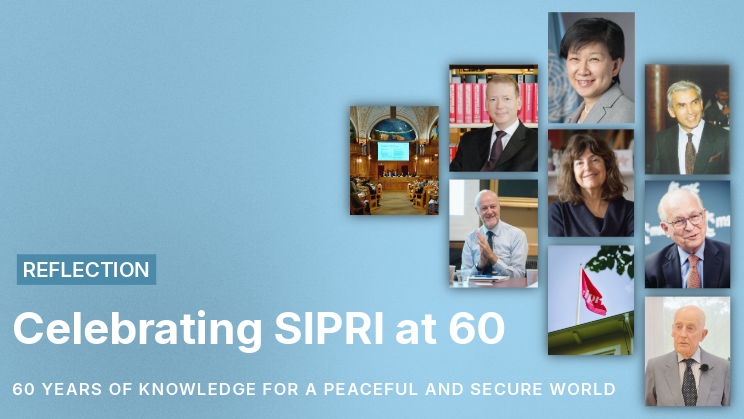 |
Celebrating SIPRI at 60
This year has been one of celebration for SIPRI, marking 60 years of research for international peace and security. As part of those celebrations SIPRI has created a collection of online materials on a dedicated 60th anniversary page. This includes video interviews and written messages from SIPRI alumni and friends, such as United Nations High Representative for Disarmament Affairs Izumi Nakamitsu and SIPRI’s longest-serving director, Dr Adam Daniel Rotfeld.
Read more | Visit the anniversary page
|
|
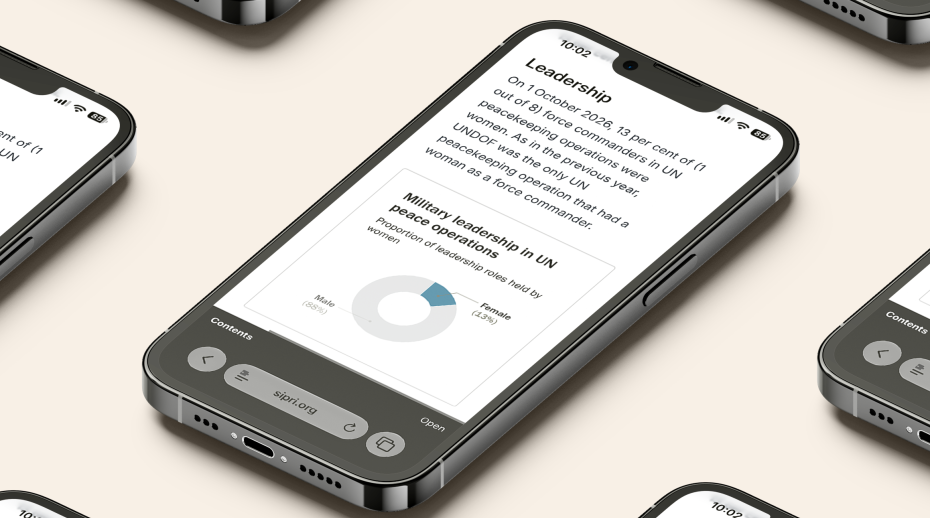 |
SIPRI publications—now available in full-text HTML
SIPRI is pleased to announce that all publications issued in SIPRI’s regular series in 2025 and 2026 are now available in full-text HTML. Future publications in these series will also be available in this format. The HTML editions offer layouts that adjust to different screen sizes, making publications easier to read on computers, tablets and mobile phones. Many publications also include interactive charts, maps and tables, allowing readers to explore SIPRI data in greater detail.
Read more | Access SIPRI’s publications
|
|
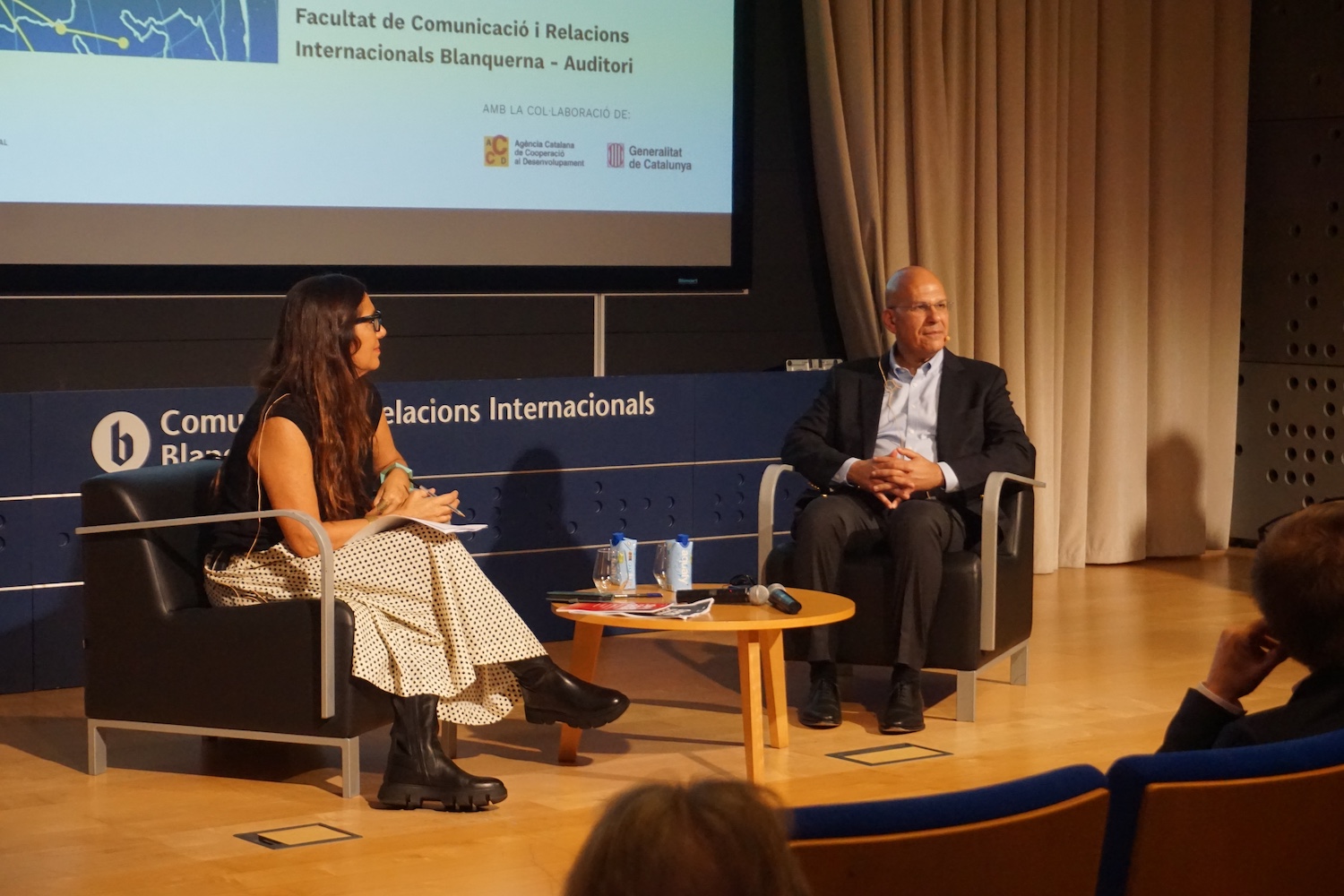 |
SIPRI and translation partner mark two anniversaries
In October, SIPRI Director Karim Haggag joined two events in Barcelona as part of SIPRI’s 60th anniversary celebrations. A conversation on the findings of SIPRI Yearbook 2026, organized by FundiPau and the International Catalan Institute for Peace, also marked 20 years of SIPRI partner FundiPau translating the SIPRI Yearbook summary into Catalan and Spanish. Haggag also joined a breakfast hosted by the Barcelona Centre for International Affairs and FundiPau to discuss the current state of international security at a time of profound geopolitical transformation.
Read more | Explore the SIPRI Yearbook summaries in different languages
|
|
|
Recent events
|
SIPRI co-organizes event on nuclear deterrence at Swedish Parliament
11 November 2026
SIPRI, Swedish Physicians Against Nuclear Weapons and the Alva Myrdal Centre for Nuclear Disarmament organized an event at the Swedish Parliament on nuclear deterrence. The event, titled ‘What Happens When Deterrence Fails?’, featured author and journalist Annie Jacobsen, who briefed members of the parliament about the consequences of nuclear escalation based on her book Nuclear War: A Scenario.
Read more
|
|
2026 Stockholm Forum on Peace and Development
3–4 November 2026
More than 450 people from over 100 countries gathered for two days in Stockholm for the 2026 edition of the Stockholm Forum on Peace and Development. Under the theme ‘From Rupture to Repair: New Visions for Peace and Development’, the Forum aimed to move beyond crisis management and narratives of gridlock to focus on new visions and transformative solutions when addressing today’s global peace, security and development challenges.
Read more | Watch the opening plenary | Watch the closing plenary
|
|
SIPRI hosts discussion on human security and AI
20 October 2026
SIPRI convened an online event exploring how artificial intelligence (AI) can advance peacebuilding. The event was part of the Community of Practice on Human Security, a joint initiative by SIPRI and the UN Trust Fund for Human Security. Participants discussed how adopting a human security lens can contribute significantly to the governance, development and application of AI.
Read more
|
|
SIPRI co-hosts side events at UN First Committee
14–19 October 2026
SIPRI co-organized three side events during the 81st session of the UN General Assembly First Committee. Two of the events were co-hosted by the SIPRI Weapons of Mass Destruction Programme. The first explored how military applications of AI may affect nuclear escalation risk and the second examined the nexus between outer space and nuclear weapons in a changing strategic environment. The SIPRI Governance of AI Programme co-hosted a side event on the role of the military AI industry in promoting compliance with international humanitarian law.
Read more
|
|
|
|
|
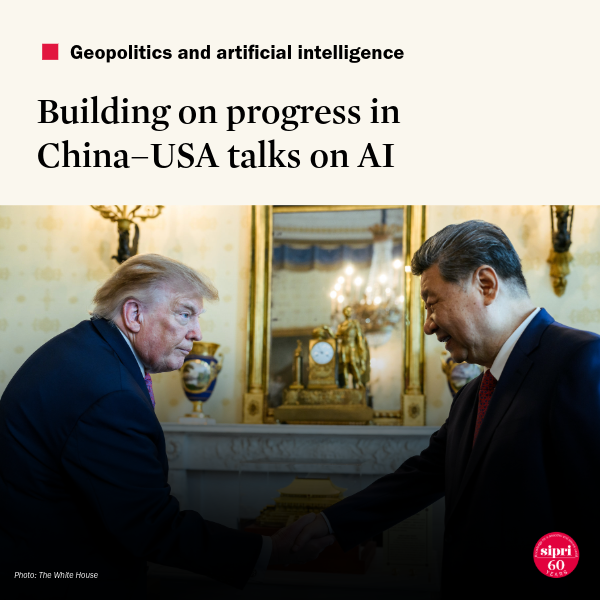 |
Building on progress in China–USA talks on AI
On 24 September 2026, United States President Donald J. Trump hosted Chinese President Xi Jinping for a summit in Washington, DC. The two leaders discussed a range of issues, among which AI featured prominently. Building on their May 2026 summit in Beijing, this meeting prioritized bilateral talks, trade and industry representation, a hotline for reporting AI incidents and a deadline of November 2026 for a follow-on technical dialogue. This essay explores these shifts and what is needed to build on the achievements of the September summit at the follow-on dialogue and beyond.
Read the SIPRI Essay
|
|
 |
SIPRI experts were recently featured in these external outlets:
|
|
|
Publications
|
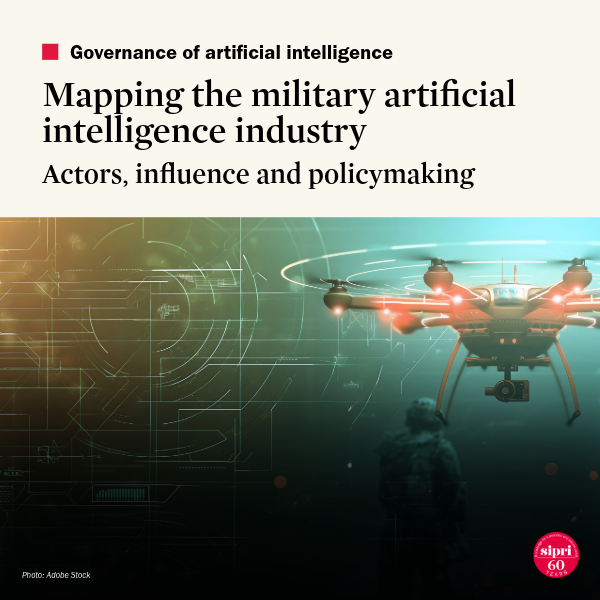 |
Mapping the Military Artificial Intelligence Industry: Actors, Influence and Policymaking
As international efforts to regulate military applications of AI accelerate, there is wide agreement that the AI industry should have a seat at the table. While this could allow industry’s technical expertise to be leveraged, there are associated risks, such as regulatory capture. To guard against these risks, policymakers, diplomats and observers need a detailed understanding of the military AI industry—who it is, what it wants and how it seeks to influence policy discussions. This report aims to map the military AI industry to equip policymakers to make more effective decisions about the nature of their engagement with industry and will help states to exercise their normative authority over military uses of AI.
Read the SIPRI Report
|
|
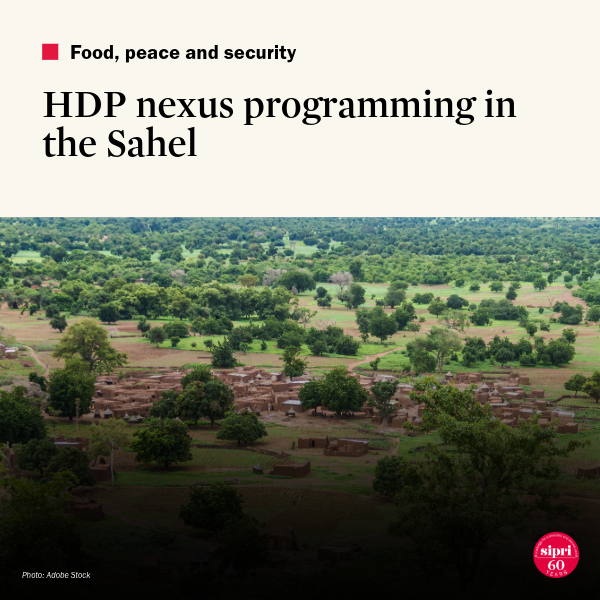 |
HDP Nexus Programming in the Sahel: Partnering for Social Cohesion in a Changing Geopolitical and Aid Landscape
The evolving geopolitical landscape in the Central Sahel, persistent insecurity and declining international aid are challenging approaches to the humanitarian–development–peacebuilding (HDP) nexus. Focusing on Burkina Faso, Mali and Niger, this research policy paper examines how international actors can sustain their engagement and promote peace amid political fragmentation and constrained operating environments. The paper argues that the HDP nexus remains relevant but requires more pragmatic, politically modest and context-sensitive implementation.
Read the SIPRI Research Policy Paper
|
|
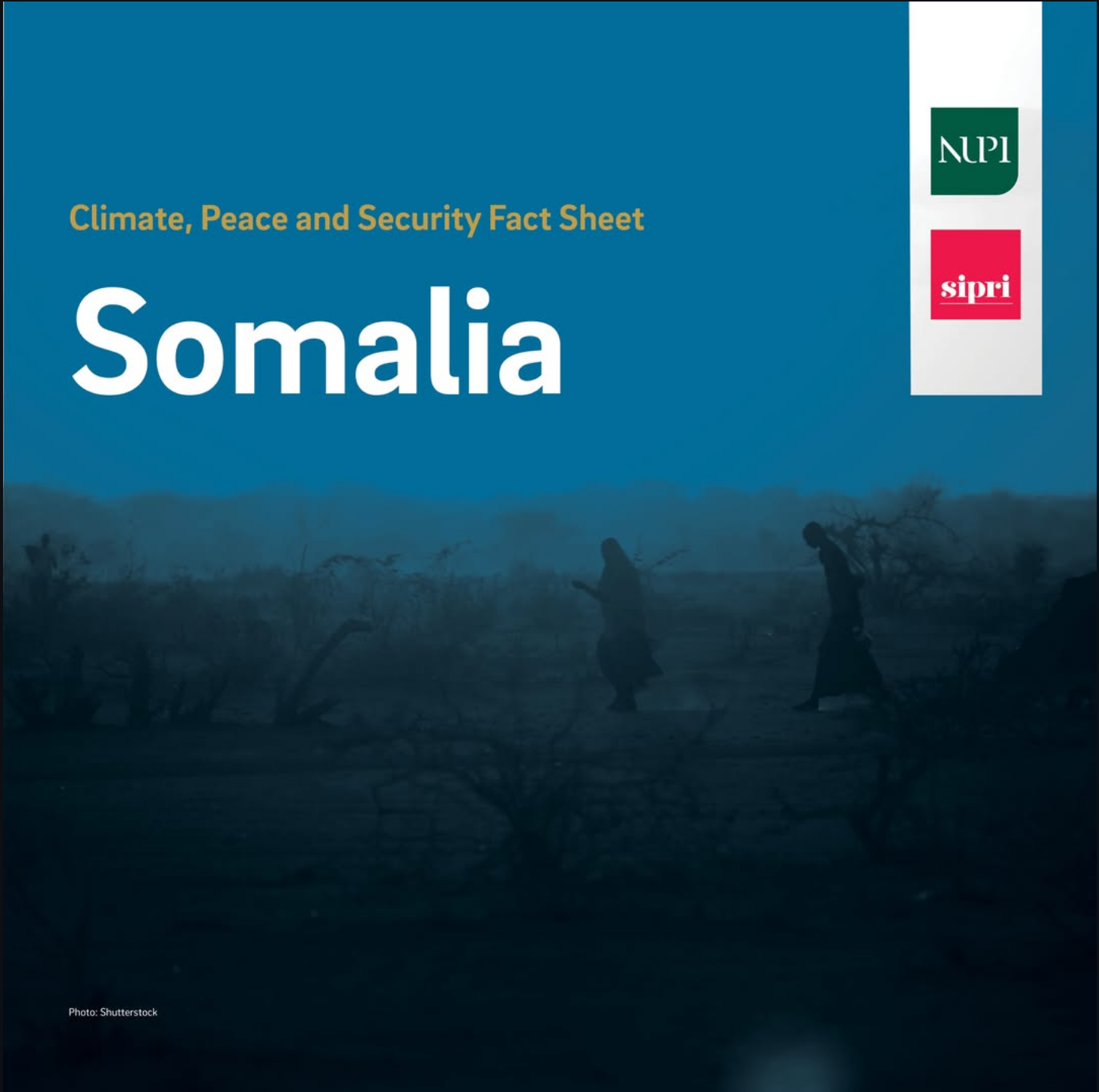 |
Climate, Peace and Security Fact Sheet: Somalia (2026)
Somalia continues to grapple with increasingly severe and frequent climate shocks that impede people’s livelihoods, worsen the existing humanitarian crisis and influence local conflict dynamics over access to natural resources. This Climate, Peace and Security Fact Sheet explores Somalia and the series of conflict- and climate-related issues that face the region. The fact sheet offers a range of recommended actions for the international community to address these issues effectively.
Read the report
|
|
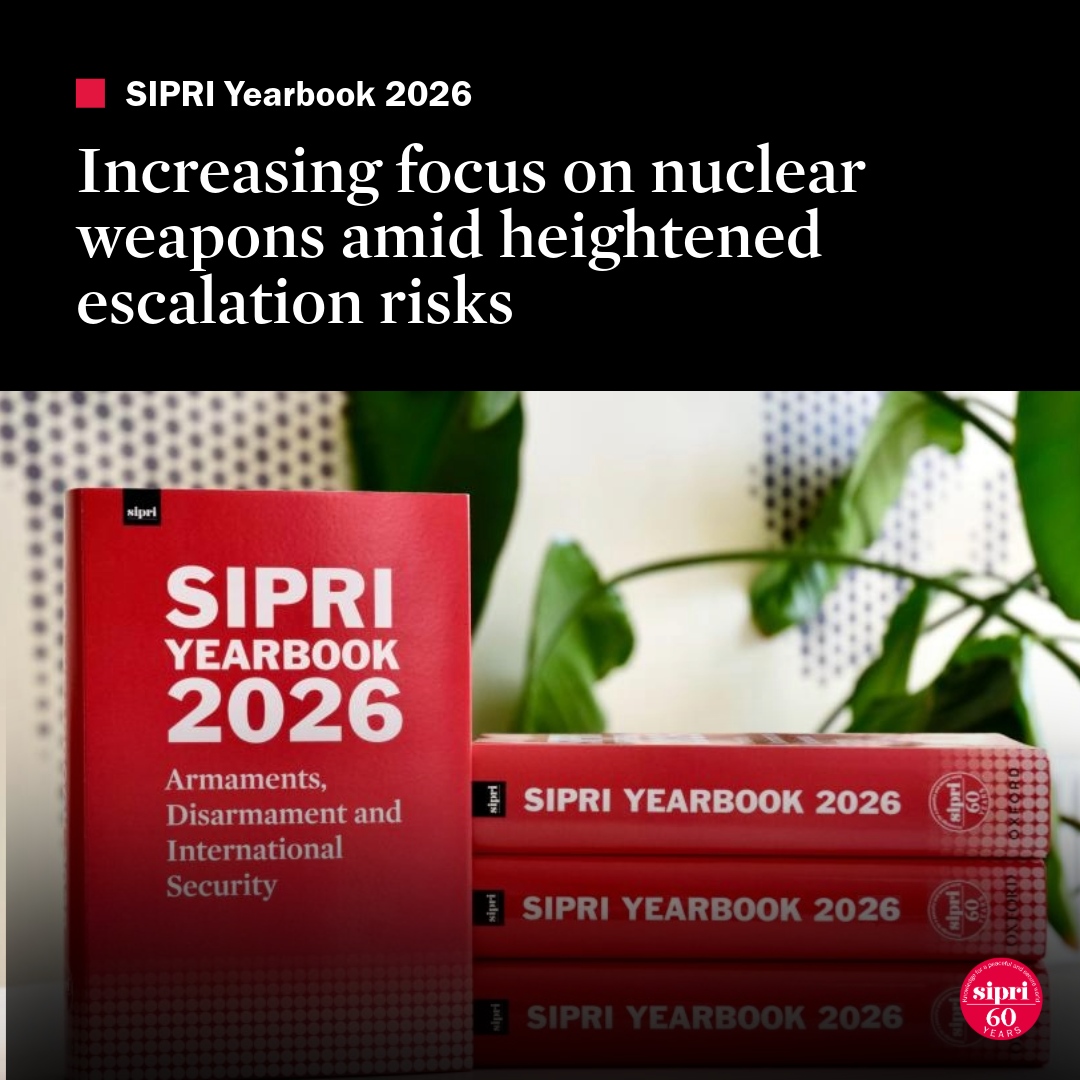 |
SIPRI Yearbook 2026
SIPRI Yearbook 2026 provides an overview of developments in international security, weapons and technology, military expenditure, arms production and the arms trade, and armed conflicts and conflict management, along with efforts to control conventional, nuclear, chemical and biological weapons. This 57th edition of the SIPRI Yearbook covers developments during 2025, including:
- armed conflict and conflict management, with an overview of global and regional developments in armed conflict, peace processes and peace operations;
- military expenditure, international arms transfers and developments in arms production, documenting, in particular, the consequences of a significant unravelling of global security;
- the proliferation of missiles and uncrewed aerial vehicles, with a focus on their widening use in armed conflict; and
- world nuclear forces, highlighting the nuclear modernization trends in the nine nuclear-armed states.
Browse the contents page | Download the summary | Download the sample chapter on world nuclear forces | Download the sample chapter on artificial intelligence and international peace and security | Download the sample chapter on space security governance | Download the introductory chapter | Order SIPRI Yearbook 2026
|
|
|
|
Accurate, dependable information is more important than ever. Invest in the facts.
Support SIPRI
|
|
 |
| SIPRI is an independent international institute dedicated to research into conflict, armaments, arms control and disarmament. Established in 1966, SIPRI provides data, analysis and recommendations, based on open sources, to policymakers, researchers, media and the interested public. |
|
|