News
|
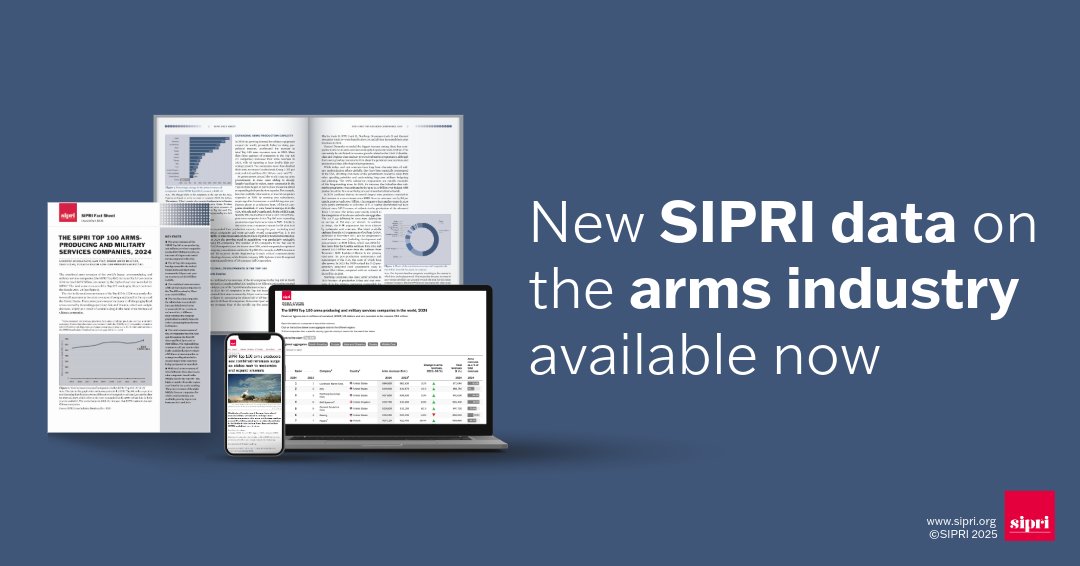 |
SIPRI Top 100 arms producers see combined revenues surge as states rush to modernize and expand arsenals
Revenues from sales of arms and military services by the 100 largest arms-producing companies rose by 5.9 per cent in 2024, reaching a record $679 billion, according to new data released by SIPRI. Global arms revenues rose sharply in 2024, as demand was boosted by the wars in Ukraine and Gaza, global and regional geopolitical tensions, and ever-higher military expenditure. For the first time since 2018, all of the five largest arms companies increased their arms revenues.
Read more | Download the SIPRI Fact Sheet | Access the interactive table of the SIPRI Top 100
|
|
 |
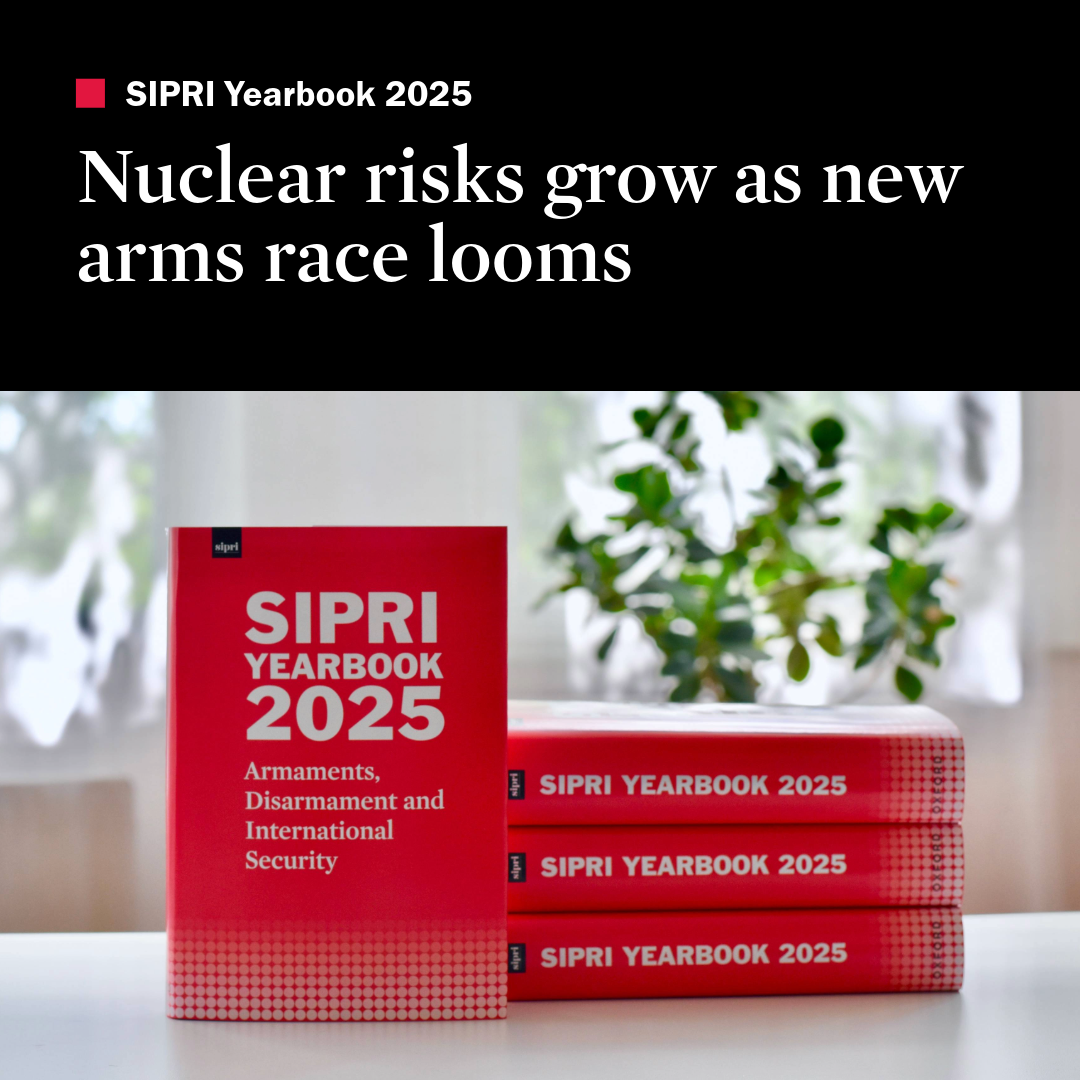
SIPRI Yearbook 2025 summary: Now available in 14 languages
As part of SIPRI’s efforts to counter disinformation, the summary of SIPRI Yearbook 2025 is now available in 14 languages, including Arabic, Chinese, French, Russian, Swedish and Ukrainian. The SIPRI Yearbook is a compendium of cutting-edge information and analysis on developments in armaments, disarmament and international security. The 56th edition was released in June this year and analyses the continuing deterioration of global security in 2024. Key findings of SIPRI Yearbook 2025 are that a dangerous new nuclear arms race is emerging at a time when arms control regimes are severely weakened.
Read more
|
|
 |
Give the gift of peace (research)
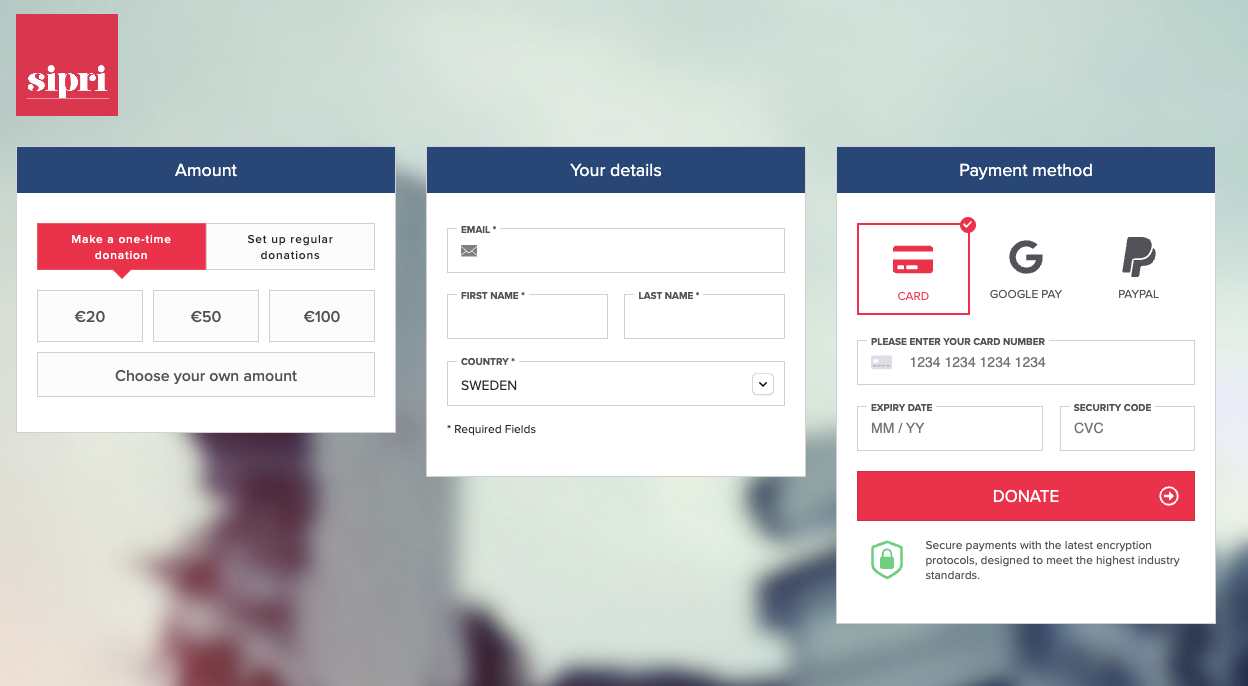
This month SIPRI upgraded its online fundraising page with the help of the online fundraising platform iRaiser. Using the simple form, you can now make a private donation to support SIPRI’s work with your bank card or via a range of other payment options. Alongside the regular donation form it is also possible to make a donation to SIPRI on someone else’s behalf, for example as a holiday gift or in memory of a loved one, and SIPRI will send a personalized certificate acknowledging the donation. Over the next few months SIPRI will increase the number of payment methods and donation options. SIPRI is grateful for your generosity.
Make a donation | Read about how SIPRI uses donations
|
|
|
Recent events
|
SIPRI engages at Doha Forum 2025
6–7 December 2025
Representatives from SIPRI participated in Doha Forum 2025. SIPRI’s delegation included Karim Haggag, Dr Wilfred Wan, Dr Jingdong Yuan and Marie Riquier. In addition, Stefan Löfven, SIPRI Chair, participated as a speaker in a roundtable.
Read more
|
|
From ashes to insight: 80 Years after Hiroshima and Nagasaki
1 December 2025
SIPRI, the Alva Myrdal Centre for Nuclear Disarmament and Swedish Physicians Against Nuclear Weapons jointly hosted a discussion on the current nuclear policy debate.
Read more
|
|
SIPRI expert launches policy brief at Call to Europe conference in Copenhagen
28 November 2025
SIPRI expert Giovanna Maletta launched a new policy brief at the Call to Europe conference in Copenhagen, Denmark.
Read more | Read the policy brief
|
|
SIPRI and Red Cross convene roundtable on humanitarian action
26 November 2025
SIPRI, the Swedish Red Cross Society and the Ukrainian Red Cross Society held a roundtable to discuss the future of principled humanitarian action in an increasingly contested operating environment.
Read more
|
|
SIPRI hosts two events on reducing military escalation risks
26 November and 4 December 2025
SIPRI hosted two events on risk reduction. The first event was a roundtable focused on Northern Europe. The second event concentrated on risk reduction in the Baltic Sea region.
Read more
|
|
SIPRI hosts workshop on technological opportunities for the biological weapons regime
20–21 November 2025
SIPRI held a closed-door workshop to examine how emerging technologies, including artificial intelligence (AI), could support and strengthen the biological weapons prohibition regime.
Read more
|
|
SIPRI hosts dialogue on governance of multidomain escalation risk
17–18 November 2025
SIPRI convened a group of international experts and policymakers to discuss the intersection of emerging technologies and nuclear weapons, with particular attention given to how military operations involving the cyber and outer space domains can contribute to more varied pathways to escalation.
Read more
|
|
SIPRI hosts discussions on development cooperation in conflict-affected settings
25 September and 27 November 2025
SIPRI convened two closed-door meetings to explore how evolving development cooperation models are influencing peace and development work in fragile and conflict-affected contexts.
Read more
|
|
|
|
|
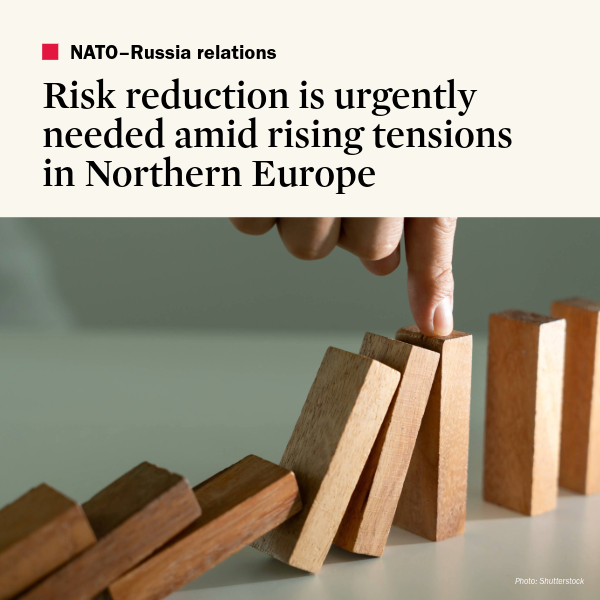 |
Risk reduction is urgently needed amid rising tensions in Northern Europe
Russia’s invasion of Ukraine has driven European North Atlantic Treaty (NATO) states toward rapid militarization based on worst-case assumptions about Russian aggression, but this focus risks overlooking the more probable danger of inadvertent escalation. Northern Europe—particularly the Baltic Sea and the Arctic—has seen frequent close encounters, sanctions-related incidents, and expanding military deployments that heighten the risk of conventional and even nuclear escalation. The text argues for urgent risk-reduction measures, including restored military communication channels, confidence-building arrangements, and renewed dialogue to prevent accidental conflict.
Read the SIPRI Essay
|
|
 |
Can the growth trend in South Korea’s arms industry last?
South Korea has emerged as one of the world’s fastest-growing arms producers and, more recently, arms exporters. Four South Korean companies appear in the SIPRI Top 100 list of arms producers with the biggest arms sales revenues in 2024. This backgrounder explores the combination of domestic drivers and international circumstances that have enabled the South Korean arms industry’s rapid growth, and the challenges that lie ahead.
Read the SIPRI Topical Backgrounder
|
|
 |
The politicization of export controls and its impacts on arms industry supply chains: The case of Australia
In early October China announced that it would significantly expand its controls on exports of critical minerals, including rare earths. This was widely perceived as a further escalation in the geopolitical competition between China and the United States, which has seen both sides using export controls against the other. This backgrounder examines recent developments and their implications with a focus on Australia.
Read the SIPRI Topical Backgrounder
|
|
 |
SIPRI experts were recently featured in these external outlets:
- ‘Weapons of Mass Destruction’ in Global Catastrophic Risks 2026, Dr Wilfred Wan, Global Challenges Foundation, 16 December 2025.
- ‘Episode 291: Climate insecurity, conflict, and Europe’s expanding risk perimeter’, Dr Florian Krampe, the International Risk Podcast, 28 November 2025.
- ‘Latin America: A test case for aligning climate action, food security and social sustainability’, Dr Caroline Delgado, Siani, 19 November 2025.
|
|
|
Publications
|
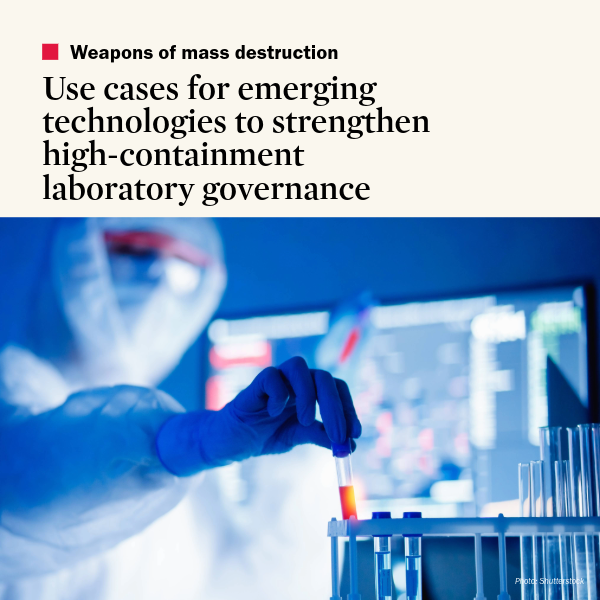 |
Use Cases for Emerging Technologies to Strengthen High-containment Laboratory Governance
High-containment laboratories are expanding worldwide as countries invest in infectious disease research and health security. These facilities are essential for developing vaccines, therapeutics and diagnostics, but their rapid growth has outpaced transparency and consistent oversight. Confidence in compliance with the 1972 Biological Weapons Convention is weakened by these variations in regulatory capacity and reporting.
Read the SIPRI Research Policy Paper
|
|
 |
Use Cases for Emerging Technologies to Strengthen Export Controls on Biological Items
Emerging technologies risk charting new pathways for the development, production, acquisition and proliferation of biological weapons, but they also offer opportunities to help reduce these risks and to strengthen states’ implementation of their biological weapons non-proliferation obligations. For example, states are increasingly exploring the adoption of AI and distributed ledger technology (DLT) to strengthen their implementation of export controls on dual-use items.
Read the SIPRI Research Policy Paper
|
|
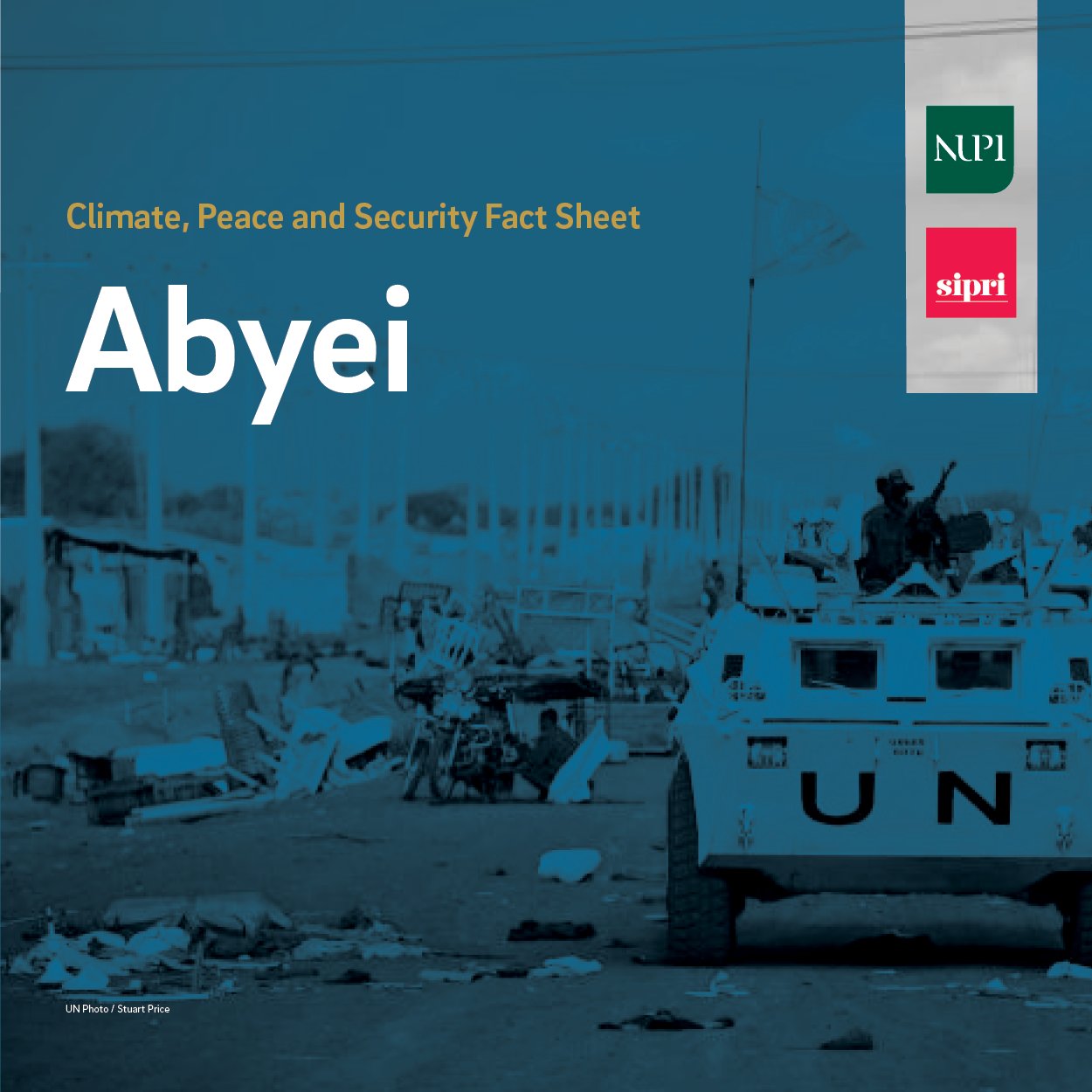 |
Climate, Peace and Security Fact Sheet: Abyei (2025)
This Climate, Peace and Security Fact Sheet is focused on Abyei and the series of conflict- and climate-related issues it faces. The fact sheet offers a range of recommended actions for the international community to address these issues effectively.
Read the Climate, Peace and Security Fact Sheet
|
|
 |
The Impact of Conflict and Displacement on Sudanese Refugee Women in Eastern Chad
SIPRI and its Chadian partner, BUCOFORE, carried out field research in four refugee camps in eastern Chad, focusing on the situation of Sudanese refugee women and girls. This policy brief presents the main findings of the research, which was gathered via perception surveys, qualitative interviews and focus group discussions. The research finds critical gaps in aid provision, protection and gender-sensitive programming and demonstrates that the infrastructure in place is not currently gender responsive.
Read the policy brief
|
|
 |
The SIPRI Top 100 Arms-producing and Military Services Companies, 2024
The combined arms revenues of the world’s largest arms-producing and military services companies (the SIPRI Top 100) increased by 5.9 per cent in 2024 to reach $679 billion, the highest level ever recorded by SIPRI. The total arms revenues of the Top 100 went up by 26 per cent over the decade 2015–24. The rise in the total arms revenues of the Top 100 in 2024 was mostly due to overall increases in the arms revenues of companies based in Europe and the USA.
Read the SIPRI Fact Sheet
|
|
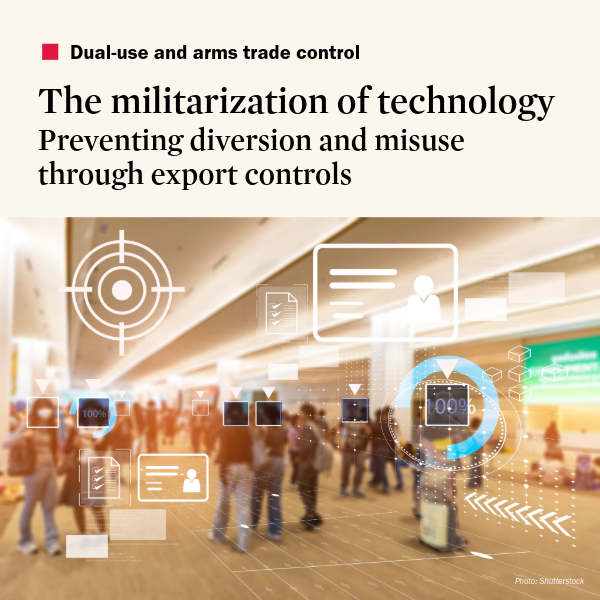 |
The Militarization of Technology: Preventing Diversion and Misuse Through Export Controls
Processes associated with the militarization of technology are leading to a blurring of distinctions in the way civilian technologies and military and security equipment are developed and produced. As a result, technologies and systems that would previously have been classed as ‘civilian’ may need to be reclassified as ‘dual-use items’. This SIPRI Research Policy Paper examines some of the diversion and misuse risks generated by these developments and assesses potential policy responses through an analysis of facial recognition technologies and their incorporation into military and security equipment.
Read the SIPRI Research Policy Paper
|
|
|
|
|
Vacancies
|
- Project and Events Coordinator (26 December)
- Researcher for the Sahel/West Africa Programme (26 December)
Read more
|
|
|