The independent resource on global security
Press releases

SIPRI statement on the 2026 Nobel Peace Prize
(Stockholm, 9 October 2026) SIPRI congratulates Navanethem ‘Navi’ Pillay on the award of the 2026 Nobel Peace Prize, ‘for her efforts to promote peace and international law’.

Increasing focus on nuclear weapons amid heightened escalation risks—new SIPRI Yearbook out now
(Stockholm, 8 June 2026) SIPRI today launches its annual assessment of the state of armaments, disarmament and international security.

Peacekeeping in peril amid plummeting troop numbers and geopolitical deadlock: New SIPRI report
Geopolitical tensions, political pressure and funding crises are putting the viability of multilateral peacekeeping in jeopardy, according to a new analysis of developments and trends in multilateral peace operations released today by SIPRI.

Global military spending rise continues as European and Asian expenditures surge
World military expenditure reached $2887 billion in 2025, an increase of 2.9 per cent in real terms over 2024. Military spending declined in the United States but rose by 14 per cent in Europe and by 8.1 per cent in Asia and Oceania.

Global arms flows jump nearly 10 per cent as European demand soars
The volume of major arms transferred between states increased by 9.2 per cent between 2016–20 and 2021–25. States in Europe more than trebled their arms imports, making it the biggest recipient region.

SIPRI Top 100 arms producers see combined revenues surge as states rush to modernize and expand arsenals
Revenues from sales of arms and military services by the 100 largest arms-producing companies rose by 5.9 per cent in 2024, reaching a record $679 billion. The increase came as demand was boosted by the wars in Ukraine and Gaza, global and regional geopolitical tensions, and ever-higher military expenditure.

SIPRI statement on the 2025 Nobel Peace Prize
SIPRI congratulates María Corina Machado on the award of the 2025 Nobel Peace Prize, ‘for her tireless work promoting democratic rights for the people of Venezuela and for her struggle to achieve a just and peaceful transition from dictatorship to democracy’.

Nuclear risks grow as new arms race looms—new SIPRI Yearbook out now
(Stockholm, 16 June 2025) The Stockholm International Peace Research Institute (SIPRI) today launches its annual assessment of the state of armaments, disarmament and international security. Key findings of SIPRI Yearbook 2025 are that a dangerous new nuclear arms race is emerging at a time when arms control regimes are severely weakened.

Deployments fall more than 40% in a decade, as geopolitical tensions and funding cuts increase pressure on multilateral peace operations
A total of 61 multilateral peace operations were active in 36 countries or territories during 2024.

2025 Stockholm Forum opens—a space to rethink peace and conflict resolution in the face of a shifting landscape
Over the next two days, more than 400 participants from over 70 countries will gather in Sweden’s capital for the 12th annual Stockholm Forum on Peace and Development.

Unprecedented rise in global military expenditure as European and Middle East spending surges
World military expenditure reached $2718 billion in 2024, an increase of 9.4 per cent in real terms from 2023 and the steepest year-on-year rise since at least the end of the cold war.

Ukraine the world’s biggest arms importer; United States’ dominance of global arms exports grows as Russian exports continue to fall
Ukraine became the world’s largest importer of major arms in the period 2020–24, with its imports increasing nearly 100 times over compared with 2015–19.

SIPRI appoints new Director
(Stockholm, 5 March 2025) The Stockholm International Peace Research Institute is pleased to announce the appointment of Karim Haggag as its new Director.

World’s top arms producers see revenues rise on the back of wars and regional tensions
Revenues from sales of arms and military services by the 100 largest companies in the industry reached $632 billion in 2023, a real-terms increase of 4.2 per cent compared with 2022.

SIPRI statement on the 2024 Nobel Peace Prize
(Stockholm, 11 October 2024) SIPRI congratulates Nihon Hidankyo on the award of the 2024 Nobel Peace Prize, ‘for its efforts to achieve a world free of nuclear weapons and for demonstrating through witness testimony that nuclear weapons must never be used again’.

Role of nuclear weapons grows as geopolitical relations deteriorate—new SIPRI Yearbook out now
SIPRI today launches its annual assessment of the state of armaments, disarmament and international security.
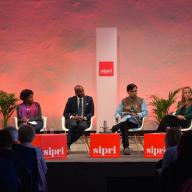
2024 Stockholm Forum opens, focuses on a divided world
(Stockholm, 6 May 2024) Over the next three days, more than 400 participants from over 40 countries and over 70 partner organizations will convene in person for the 11th annual Stockholm Forum on Peace and Development.
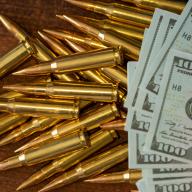
Global military spending surges amid war, rising tensions and insecurity
(Stockholm, 22 April 2024) Total global military expenditure reached $2443 billion in 2023, an increase of 6.8 per cent in real terms from 2022. This was the steepest year-on-year increase since 2009.
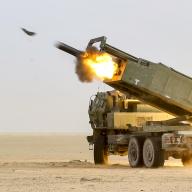
European arms imports nearly double, US and French exports rise, and Russian exports fall sharply
(Stockholm, 11 March 2024) States in Europe almost doubled their imports of major arms (+94 per cent) between 2014–18 and 2019–23. Far larger volumes of arms flowed to Asia and Oceania and the Middle East in 2019–23, where nine of the 10 largest arms importers are.
Russia’s new budget law signals determination to see the war in Ukraine through, according to new SIPRI analysis
(Stockholm, 13 December 2023) Russia’s military and war-related spending is set to rise sharply in 2024 under new federal budget plans for 2024–26 signed into law by President Vladimir Putin on 27 Nove
Rise in SIPRI Top 100 arms sales revenue delayed by production challenges and backlogs
Revenues from sales of arms and military services by the 100 largest companies in the industry totalled $597 billion in 2022, 3.5 per cent less than 2021 in real terms, even as demand rose sharply.

SIPRI statement on the 2023 Nobel Peace Prize
(Stockholm, 6 October 2023) SIPRI congratulates Narges Mohammadi on the award of the 2023 Nobel Peace Prize, in recognition of ‘her fight against the oppression of women in Iran and her fight to promote human rights and freedom for all’.

SIPRI contributes to Lancet Commission on peaceful societies
The Stockholm International Peace Research Institute (SIPRI) is proud to announce its role in the Lancet Commission report on Peaceful Societies Through Health Equity and Gender Equality.
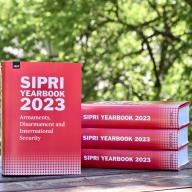
States invest in nuclear arsenals as geopolitical relations deteriorate—New SIPRI Yearbook out now
SIPRI today launches its annual assessment of the state of armaments, disarmament and international security.
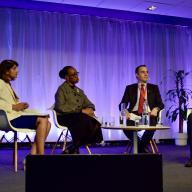
2023 Stockholm Forum concludes, emphasizes need for inclusive respectful collaboration
(Stockholm, 17 May 2023) Over the past three days, over 300 participants from 56 countries and over 40 partner organizations convened in person for the annual Stockholm Forum on Peace and Development.

World military expenditure reaches new record high as European spending surges
(Stockholm, 24 April 2023) Total global military expenditure increased by 3.7 per cent in real terms in 2022, to reach a new high of $2240 billion. Military expenditure in Europe saw its steepest year-on-year increase in at least 30 years.
Poorly understood environmental trends could become tomorrow’s security threats
(Stockholm, 4 April 2023) There is an urgent need to understand how a range of emerging ecological challenges could trigger catastrophic instability and insecurity, argues a new report published today by SIPRI.
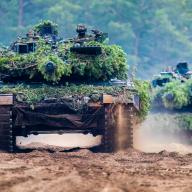
Surge in arms imports to Europe, while US dominance of the global arms trade increases
(Stockholm, 13 March 2023) Imports of major arms by European states increased by 47 per cent between 2013–17 and 2018–22, while the global level of international arms transfers decreased by 5.1 per cent. Arms imports fell overall in Africa (–40 per cent), the Americas (–21 per cent), Asia and Oceania (–7.5 per cent) and the Middle East (–8.8 per cent)—but imports to East Asia and certain states in other areas of high geopolitical tension rose sharply.
Statement by Dan Smith, SIPRI Director: Suspending the New START treaty benefits nobody
(Stockholm, 22 February 2023) Yesterday, in his State of the Nation address, Russian President Vladimir Putin announced that Russia would suspend its participation in New START, the last remaining nuclear arms control treaty between the world’s two nuclear superpowers: Russia and the United States.
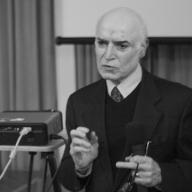
Former SIPRI Researcher Bhupendra Jasani—In memoriam
SIPRI mourns the passing of Dr Bhupendra Jasani, who died in London on 25 November at the age of 87.
Arms sales of SIPRI Top 100 arms companies grow despite supply chain challenges
(Stockholm, 5 December 2022) Sales of arms and military services by the 100 largest companies in the industry reached $592 billion in 2021, a 1.9 per cent increase compared with 2020 in real terms. This is according to new data released today by the Stockholm International Peace Research Institute (SIPRI).
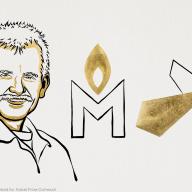
SIPRI statement on the 2022 Nobel Peace Prize
(Stockholm, 7 October 2022) SIPRI congratulates Ales Bialiatski, Memorial and the Centre for Civil Liberties on the award of the 2022 Nobel Peace Prize.
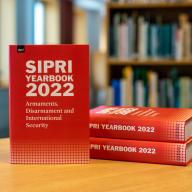
Global nuclear arsenals are expected to grow as states continue to modernize–New SIPRI Yearbook out now
(Stockholm, 13 June 2022) SIPRI today launches the findings of SIPRI Yearbook 2022, which assesses the current state of armaments, disarmament and international security. A key finding is that despite a marginal decrease in the number of nuclear warheads in 2021, nuclear arsenals are expected to grow over the coming decade.
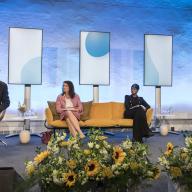
2022 Stockholm Forum opens, bridging climate and security communities is vital in a new era of existential risk
(Stockholm, 23 May 2022) Over the next three days, more than 2600 participants from 150 countries and over 70 partner organizations will convene in person and in a virtual space for the ninth annual Stockholm Forum on Peace and Development.
World stumbling into a new era of risk, concludes SIPRI report
(Stockholm, 23 May 2022) World leaders are failing to prepare for a new era of complex and often unpredictable risks to peace as profound environmental and security crises converge and intensify, according to a major report by the Stockholm International Peace Research Institute (SIPRI)
World military expenditure passes $2 trillion for first time
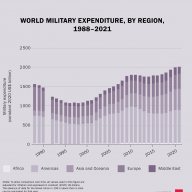
(Stockholm, 25 April 2022) Total global military expenditure increased by 0.7 per cent in real terms in 2021, to reach $2113 billion. The five largest spenders in 2021 were the United States, China, India, the United Kingdom and Russia, together accounting for 62 per cent of expenditure, according to new data on global military spending published today by the SIPRI.

Madeleine Albright—in memoriam
SIPRI mourns the passing of Dr Madeleine Albright, former professor and diplomat, who served as the 64th Secretary of State of the United States. Madeleine Albright passed away on 23 March 2022 at the age of 84.
Global arms trade falls slightly, but imports to Europe, East Asia and Oceania rise
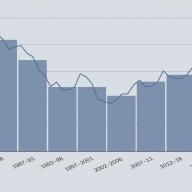
(Stockholm, 14 March 2022) International transfers of major arms saw a slight drop between 2012–16 and 2017–21 (–4.6 per cent). Nevertheless, exports by the United States and France increased substantially, as did imports to states in Europe (+19 per cent), East Asia (+20 per cent) and Oceania (+59 per cent), according to new data on global arms transfers published today by SIPRI.
Business as usual? Arms sales of SIPRI Top 100 arms companies continue to grow amid pandemic
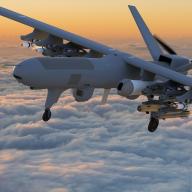
(Stockholm, 6 December 2021) Sales of arms and military services by the industry’s 100 largest companies totalled $531 billion in 2020—an increase of 1.3 per cent in real terms compared with the previous year. This is according to new data released today by the SIPRI.
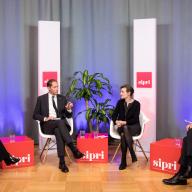
2021 Stockholm Security Conference opens, a human-centric approach to addressing complex battlefields
(Stockholm, 8 November 2021) Over the next four days, more than 1000 global participants will convene in a virtual space for the sixth annual Stockholm Security Conference. Watch today’s opening panel here and download the conference agenda here (PDF).

SIPRI statement on the 2021 Nobel Peace Prize
(Stockholm, 8 October 2021) SIPRI congratulates Maria Ressa and Dmitry Muratov on the award of the 2021 Nobel Peace Prize, ‘for their efforts to safeguard freedom of expression, which is a precondition for democracy and lasting peace.’
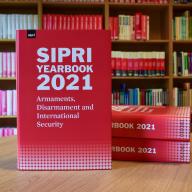
Global nuclear arsenals grow as states continue to modernize–New SIPRI Yearbook out now
(Stockholm, 14 June 2021) SIPRI today launches the findings of SIPRI Yearbook 2021, which assesses the current state of armaments, disarmament and international security. A key finding is that despite an overall decrease in the number of nuclear warheads in 2020, more have been deployed with operational forces.
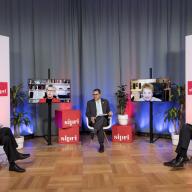
2021 SIPRI Lecture concludes, stresses the need for revitalizing democracy for the younger generation
(Stockholm, 25 May 2021) Yesterday evening, more than 900 global participants convened in a virtual space for the third annual SIPRI Lecture. This year, the lecture was delivered by HE Dr Madeleine Albright, former Secretary of State of the United States, followed by a distinguished panel.

Save the date: Battlefields of the future in focus at the 2021 Stockholm Security Conference
(Stockholm, 25 May 2021) The sixth annual Stockholm Security Conference will convene in a virtual format on 8–11 November. The theme for this year’s conference is ‘Battlefields of the Future: Trends of Conflict and Warfare in the 21st Century’.
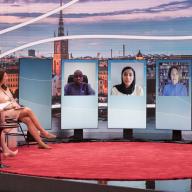
2021 Stockholm Forum opens, multilateral solutions the key to promoting peace
(Stockholm, 4 May 2021) Over the next four days —4–7 May— more than 4300 global participants and over 60 partner organizations will convene in a virtual space for the eighth annual Stockholm Forum on Peace and Development.
2021 Stockholm Forum opens tomorrow—Promoting Peace in the Age of Compound Risk
(Stockholm, 3 May 2021) Over the next four days, more than 3500 global participants and over 60 partner organizations will convene in a virtual space for the eighth annual Stockholm Forum on Peace and Development.
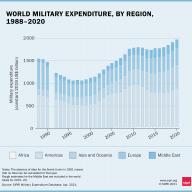
World military spending rises to almost $2 trillion in 2020
Total global military expenditure rose to $1981 billion last year, an increase of 2.6 per cent in real terms from 2019, according to new data published today by SIPRI.
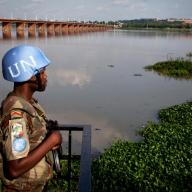
New SIPRI Policy Paper: Climate-related Security Risks and Peacebuilding in Mali
This report sheds new light on this urgent question, through a case study of one of the biggest peace missions active today, the United Nations Multidimensional Integrated Stabilization Mission in Mali (MINUSMA).
SIPRI welcomes new Governing Board members
(Stockholm, 15 April 2021) The Swedish Government has formally appointed Ambassador Chan Heng Chee and Feodor Voitolovsky as new members of the SIPRI Governing Board.
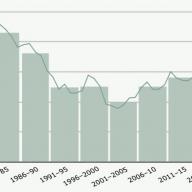
International arms transfers level off after years of sharp growth; Middle Eastern arms imports grow most, says SIPRI
International transfers of major arms stayed at the same level between 2011–15 and 2016–20, according to new data on global arms transfers published today by the Stockholm International Peace Research Institute (SIPRI).
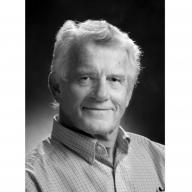
Andrew Mack—in memoriam
SIPRI mourns the passing of Andrew Mack, a prominent figure of the peace research field.
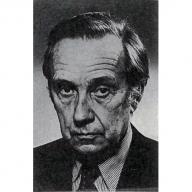
Former SIPRI Governing Board member Sir Brian Urquhart–in memoriam
SIPRI mourns the passing of former member of the SIPRI Governing Board, Sir Brian Urquhart (United Kingdom), who passed away on 2 January 2021 at the age of 101.
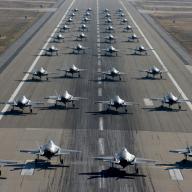
Global arms industry: Sales by the top 25 companies up 8.5 per cent; Big players active in Global South
Sales of arms and military services by the sector’s largest 25 companies totalled US$361 billion in 2019, 8.5 per cent more than in 2018. The largest companies have a geographically diverse international presence. This is according to new data released today by SIPRI.

SIPRI statement on the 2020 Nobel Peace Prize
SIPRI would like to congratulate the World Food Programme (WFP) on being awarded the 2020 Nobel Peace Prize.
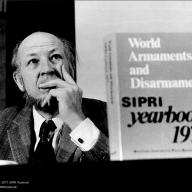
Former SIPRI Director Frank Barnaby—in memoriam
SIPRI mourns the passing of former SIPRI Director Frank Barnaby (United Kingdom), who died on 1 August 2020 at the age of 92.

SIPRI welcomes new Deputy Director
The Stockholm International Peace Research Institute is pleased to announce the appointment of Joakim Vaverka as its new Deputy Director. He will assume his post on 1 September 2020.

Recent advances in artificial intelligence contribute to nuclear risk—new SIPRI report
Recent advances in artificial intelligence (AI) contribute to nuclear risk according to a new report from the Stockholm International Peace Research Institute (SIPRI).
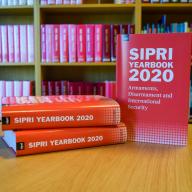
Nuclear weapon modernization continues but the outlook for arms control is bleak: New SIPRI Yearbook out now
SIPRI today launches the findings of SIPRI Yearbook 2020, which assesses the current state of armaments, disarmament and international security.

New SIPRI and ICRC report identifies necessary controls on autonomous weapons
A new report from the Stockholm International Peace Research Institute (SIPRI) and the International Committee of the Red Cross (ICRC) identifies where controls on autonomous weapon systems must be placed.
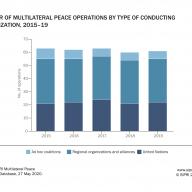
Declining trends in multilateral peace operations continued in 2019; attention shifting towards the Middle East and North Africa–new SIPRI data
While the number of United Nations and non-UN multilateral peace operations increased slightly in 2019, the number of personnel deployed in them decreased, according to new data from the Stockholm International Peace Research Institute (SIPRI).

Former SIPRI Researcher Arthur H. Westing—in memoriam
SIPRI mourns the passing of former SIPRI expert Arthur H. Westing (United States), who died on 30 April 2020 at the age of 91.
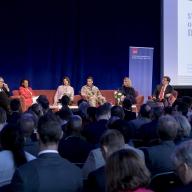
Save the date: Sustaining peace in the time of COVID-19 in focus at the 2020 Virtual Stockholm Forum on Peace and Development
(Stockholm, 5 May 2020) This year, the global community of the Stockholm Forum on Peace and Development will convene, for the first time, in a professional virtual space between 11-22 May.

Global military expenditure sees largest annual increase in a decade—says SIPRI—reaching $1917 billion in 2019
Total global military expenditure rose to $1917 billion in 2019. The total for 2019 represents an increase of 3.6 per cent from 2018 and the largest annual growth in spending since 2010. The five largest spenders in 2019, which accounted for 62 per cent of expenditure, were the United States, China, India, Russia and Saudi Arabia.

Former SIPRI Researcher Julian Perry Robinson—in memoriam
SIPRI mourns the passing of former SIPRI expert Julian Perry Robinson (United Kingdom), who died on 22 April 2020 at the age of 78.
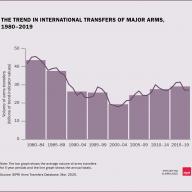
USA and France dramatically increase major arms exports; Saudi Arabia is largest arms importer, says SIPRI
International transfers of major arms during the five-year period 2015–19 increased by 5.5 per cent compared with 2010–14. According to new data from the Stockholm International Peace Research Institute (SIPRI), the largest exporters of arms during the past five years were the United States, Russia, France, Germany and China.
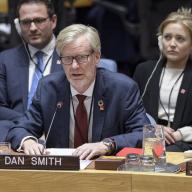
SIPRI briefs UN Security Council on climate-related security risks in Somalia
Today, Dan Smith, SIPRI Director, briefed the United Nations Security Council on the particular obstacles climate change is creating for the United Nations Assistance Mission in Somalia.
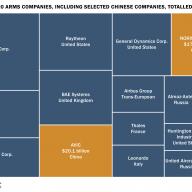
New SIPRI data reveals scale of Chinese arms industry
New research from the Stockholm International Peace Research Institute (SIPRI) suggests that China is the second-largest arms producer in the world, behind the United States but ahead of Russia.
New video on conflict and technology: Now and in the future
On 3 October 2019, SIPRI hosted the fourth Stockholm Security Conference on the theme ‘Conflict and technology: Now and in the future’.
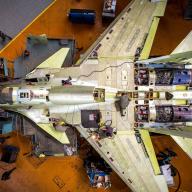
Global arms industry rankings: Sales up 4.6 per cent worldwide and US companies dominate the Top 5
Sales of arms and military services by the sector’s largest 100 companies (excluding those in China) totalled $420 billion in 2018, marking an increase of 4.6 per cent compared with the previous year. This is according to new data released today by SIPRI in the SIPRI Top 100 ranking.
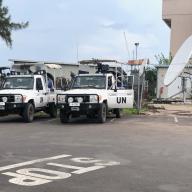
The state preferred as justice and security provider over non-state and informal actors—new SIPRI/Cordaid study on CAR and DRC
In two days, on 14 November, the mandate of the United Nations Multidimensional Integrated Stabilization Mission in the Central African Republic (MINUSCA) will be renewed, as will the mandate of the United Nations Organization Stabilization Mission in the Democratic Republic of the Congo (MONUSCO), next month.
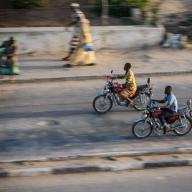
Climate change challenges the future success of peacebuilding—shows new SIPRI study on Somalia
(Stockholm, 23 October 2019) Climate change poses serious challenges to current and future peacebuilding missions, according to a new report by the Stockholm International Peace Research Institute (SIPRI) which studies the United Nations Assistance Mission in Somalia (UNSOM).
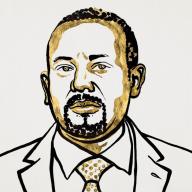
SIPRI statement on the 2019 Nobel Peace Prize
SIPRI congratulates Ethiopian Prime Minister Abiy Ahmed on being awarded the 2019 Nobel Peace Prize.
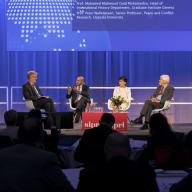
Stockholm Security Conference opens: Unpredictable the ‘new normal’
(Stockholm, 3 October 2019)—Today, over 200 experts, policymakers and practitioners are attending the fourth Stockholm Security Conference, on the theme ‘Conflict and Technology: Now and in the future’.
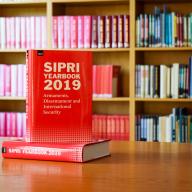
Modernization of world nuclear forces continues despite overall decrease in number of warheads: New SIPRI Yearbook out now
SIPRI today launches the findings of SIPRI Yearbook 2019, which assesses the current state of armaments, disarmament and international security.
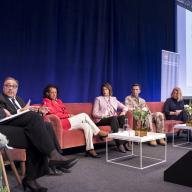
2019 Stockholm Forum opens, connects crisis response to peacebuilding
(Stockholm 14 May 2019) Over the next three days, over 400 high-level policymakers, researchers and practitioners gather in Stockholm for the sixth annual Stockholm Forum on Peace and Development.
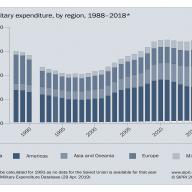
World military expenditure grows to $1.8 trillion in 2018
(Stockholm, 29 April 2019) Total world military expenditure rose to $1822 billion in 2018, representing an increase of 2.6 per cent from 2017, according to new data from SIPRI.
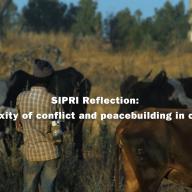
Addressing a key challenge in central Mali: The need for local knowledge—new SIPRI film
Today, SIPRI launches a new Reflection film on the conflict in central Mali, calling for a better understanding of local dynamics in or

Emerging technologies pose challenges to the control of biological weapons, new SIPRI report
(Berlin/Stockholm, 14 March 2019) Advances in additive manufacturing, artificial intelligence and robotics could increase the possibilities for the development, production and use of biological weapons. The existing biological arms control and non-proliferation governance framework needs to be adapted to address these security risks, according to a new report from SIPRI.
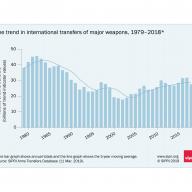
Global arms trade: USA increases dominance; arms flows to the Middle East surge, says SIPRI
(Stockholm, 11 March 2019) The volume of international transfers of major arms in 2014–18 was 7.8 per cent higher than in 2009–13 and 23 per cent higher than in 2004–2008, according to new data on arms transfers published today by SIPRI.
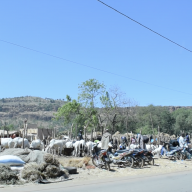
Creating a long-lasting peace in Mali: SIPRI and partners launch first White Book for Peace
(Bamako, 31 January 2019) — Today, Malian civil society members and their partners SIPRI and CONASCIPAL present the first Civil Society White Book for Peace and Security to help address security challenges for the Malian population.
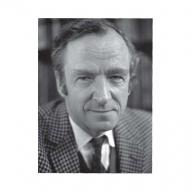
Founding SIPRI Director Robert Neild—in memoriam
SIPRI mourns the passing of the Institute’s founding Director Robert Neild (United Kingdom), who died on 18 December 2018 at the age of 94.
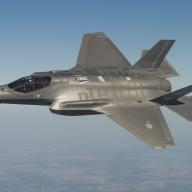
Global arms industry: US companies dominate the Top 100; Russian arms industry moves to second place
Sales of arms and military services by the world’s largest arms-producing and military services companies—the SIPRI Top 100—totalled $398.2 billion in 2017, according to new international arms industry data released today by SIPRI.
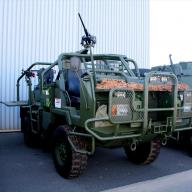
Transparency in military spending in sub-Saharan Africa higher than expected, new SIPRI report
The level of transparency in military spending in sub-Saharan Africa is greater than previously thought, according to a new report from SIPRI.

SIPRI statement on the 2018 Nobel Peace Prize
SIPRI congratulates Denis Mukwege and Nadia Murad on being awarded the 2018 Nobel Peace Prize.
SIPRI welcomes new Governing Board members
The Swedish Government has formally appointed Dr Patricia Lewis and Jean-Marie Guéhenno as new members of the SIPRI Governing Board.

SIPRI welcomes new Deputy Director
The Stockholm International Peace Research Institute is pleased to announce the appointment of Sigrún Rawet as its new Deputy Director. Sigrún Rawet will assume her post on 10 September 2018.
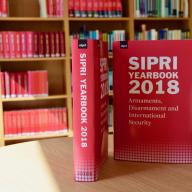
Modernization of nuclear weapons continues; number of peacekeepers declines: New SIPRI Yearbook out now
SIPRI today launches the findings of SIPRI Yearbook 2018, which assesses the current state of armaments, disarmament and international security.
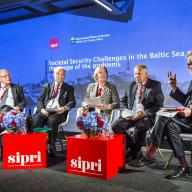
Conference on security in the Baltic Sea region opens and stresses opportunities for cooperation
(Stockholm 12 June 2018) More than 150 policymakers, researchers and practitioners are gathering in Stockholm at Fotografiska on June 11–12 for the international conference addressing the complexity of societal security challenges in the Baltic Sea region. Watch the livestream of the opening session here.

Experts from the Baltic Sea region convene in Stockholm to discuss societal security challenges
Co-hosted by SIPRI and the Swedish Ministry for Foreign Affairs, the conference will discuss strategies to provide safety for people and build effective resilience in the face of various incidents, ranging from climate change to terrorism and major infrastructural disruptions.
The methodology behind SIPRI’s military expenditure data for Russia for 2016–17
On 2 May 2018 SIPRI launched its new data on global military expenditure in 2017. Among the most notable developments revealed by the new data was the sharp decline in Russia’s military spending in 2017 compared with 2016.
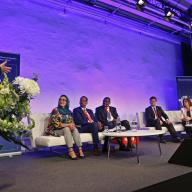
2018 Stockholm Forum: Inclusivity the key for lasting peace
Over the next three days, over 350 high-level policymakers, researchers and practitioners will gather in Stockholm on May 7–9 for the fifth annual Stockholm Forum on Peace and Development.
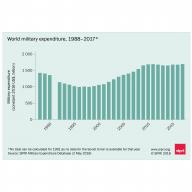
Global military spending remains high at $1.7 trillion
Total world military expenditure rose to $1739 billion in 2017, a marginal increase of 1.1 per cent in real terms from 2016, according to new figures from the Stockholm International Peace Research Institute (SIPRI).
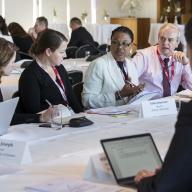
Save the date: Politics of peace in focus at fifth Stockholm Forum on Peace and Development
Over 200 high-level policymakers, researchers and practitioners will gather in Stockholm on May 7-9 for the fifth annual Stockholm Forum on Peace and Development. Co-hosted by SIPRI and the Swedish Ministry for Foreign Affairs, the 2018 Forum focuses on the politics of peace and seeks to identify concrete steps towards sustainable peace.
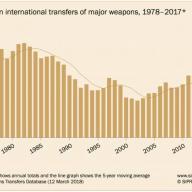
Asia and the Middle East lead rising trend in arms imports, US exports grow significantly, says SIPRI
Continuing the upward trend that began in the early 2000s, the volume of international transfers of major weapons in 2013-17 was 10 per cent higher than in 2008-12, according to new data on arms transfers published by SIPRI today.
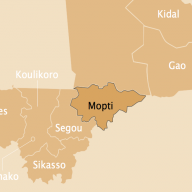
New SIPRI brief on central Mali shows how interpretations of the conflict shape the responses
SIPRI is pleased to announce the publication of a new Insights Paper, entitled ‘Central Mali: violence, local perspectives and diverging narratives’.
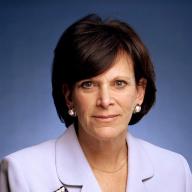
SIPRI welcomes Jessica Tuchman Mathews as a new member to its Governing Board
The Swedish Government has formally appointed Dr Jessica Tuchman Mathews as a new member of the SIPRI Governing Board.
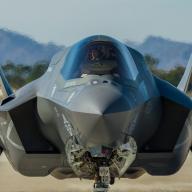
Global arms industry: First rise in arms sales since 2010, says SIPRI
Sales of arms and military services by the world’s largest arms-producing and military services companies—the SIPRI Top 100—totalled $374.8 billion in 2016, according to new international arms industry data released today by the Stockholm International Peace Research Institute (SIPRI).
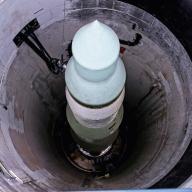
Ahead of the Nobel Peace Prize Ceremony: SIPRI, nuclear weapons and the state of disarmament
Disarmament issues have been at the core of SIPRI’s work since its foundation in 1966. On 10 December 2017, the International Campaign to Abolish Nuclear Weapons (ICAN) will formally receive the Nobel Peace Prize at a ceremony in Oslo. Ahead of the ceremony, SIPRI is pleased to present a primer on the state of nuclear weapons and disarmament.
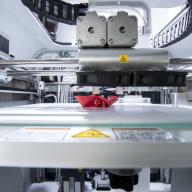
3D printing and export controls on missile technology: Challenges and ways forward – New SIPRI report
SIPRI launches a new Background Paper ‘3D printing and missile technology controls’, originally part of a compendium of research papers compiled by the Missile Technology Control Regime on the occasion of their 30th anniversary.
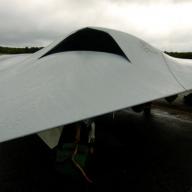
New SIPRI study on autonomy in weapon systems: State of play and options for moving forward
SIPRI launches a new report, Mapping the Development of Autonomy in Weapon Systems, which aims to shed light on the current developments in autonomy in weapon systems and thereby provide important insights for informed international discussions.
SIPRI statement on the 2017 Nobel Peace Prize
SIPRI warmly congratulates the International Campaign to Abolish Nuclear Weapons on being awarded the 2017 Nobel Peace Prize.
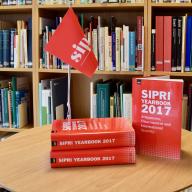
SIPRI Yearbook 2017 out now: Trends in nuclear disarmament, forced displacement and sustaining peace
SIPRI is pleased to celebrate International Day of Peace with the launch of SIPRI Yearbook 2017, now available in print and online.
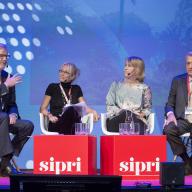
Stockholm Security Conference opens: speakers address global security issues and how to respond
On 14 September 2017, over 200 experts and practitioners attend the second Stockholm Security Conference, on the theme ‘Secure Cities in an Insecure World’. Participants discuss global security trends, threats and challenges; explore how these play out in cities; and then look towards solutions to address insecurity.

Inclusivity, resilience and safety key for successful city development, says SIPRI
The Stockholm International Peace Research Institute (SIPRI) today released a report calling for context-based and inclusive urban security strategies to ensure positive city development.
Save the date: Worldwide security challenges in focus as global experts convene in Stockholm
SIPRI will host the 2017 Stockholm Security Conference, under the theme of Secure Cities in an Insecure World, 13–15 September.
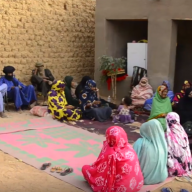
The security situation in Mali: New SIPRI study on the added value of involving civil society in the peace implementation process
SIPRI is pleased to announce the publication of a new Insights paper informed by an in depth study on security perceptions in Mali.
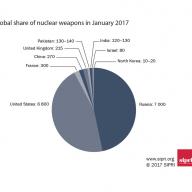
Global nuclear weapons: Modernization remains the priority
(Stockholm, 3 July 2017) The Stockholm International Peace Research Institute (SIPRI) today launches its annual nuclear forces data, which highlights the current trends and developments in world nuclear arsenals.
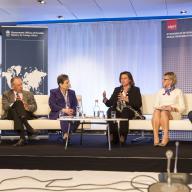
2017 Stockholm Forum opens: Experts discuss what works for peace
Today and tomorrow, over 200 high-level experts and policymakers gathered in Stockholm to discuss ‘Sustaining Peace: What Works’ with the aim of applying successful peacebuilding tools to fragile and conflict-affected contexts.
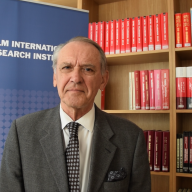
SIPRI welcomes Ambassador Jan Eliasson as new Governing Board Chair
The Swedish Government today appointed Ambassador Jan Eliasson as the new Chair of the SIPRI Governing Board.
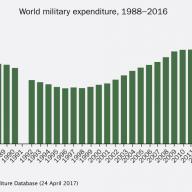
World military spending: Increases in the USA and Europe, decreases in oil-exporting countries
Total world military expenditure rose to $1686 billion in 2016, an increase of 0.4 per cent in real terms from 2015, according to new figures from the Stockholm International Peace Research Institute (SIPRI).
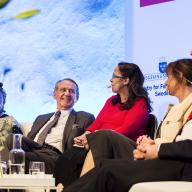
Save the date: Sustaining peace in focus as global experts convene in Stockholm
Over 200 high-level policymakers, researchers and practitioners will gather in Stockholm on 3–4 May for the fourth annual Stockholm Forum on Peace and Development. Co-hosted by SIPRI and the Swedish Ministry for Foreign Affairs, the 2017 Forum focuses on ‘what works’, and will identify good practice in peacebuilding and development.
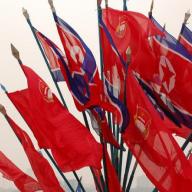
SIPRI publishes a new report on China’s engagement of North Korea
SIPRI announces a new publication, entitled ‘China’s engagement of North Korea: Challenges and opportunities for Europe’.
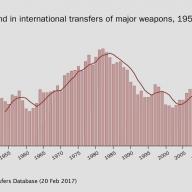
Increase in arms transfers driven by demand in the Middle East and Asia, says SIPRI
The volume of international transfers of major weapons has grown continuously since 2004 and increased by 8.4 per cent between 2007–11 and 2012–16, according to new data on arms transfers published today by SIPRI.
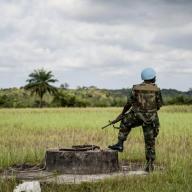
‘The UN Security Council decides, while Africa provides most of the troops’. Time to rethink the peace operations partnership in Africa
SIPRI release a new report as part of the New Geopolitics of Peace Operations II initiative.

SIPRI welcomes Espen Barth Eide as a new member to its Governing Board
The Swedish Government has formally appointed Espen Barth Eide as a new member of the SIPRI Governing Board.
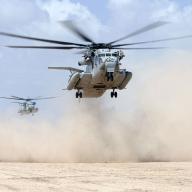
Global arms industry: USA remains dominant despite decline; sales rise in Western Europe and Russia, says SIPRI
Sales of arms and military services by the largest arms-producing and military services companies—the SIPRI Top 100—totalled $370.7 billion in 2015 according to new data on the international arms industry released today by SIPRI.
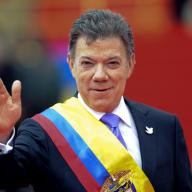
SIPRI statement on the 2016 Nobel Peace Prize
SIPRI warmly congratulates Colombian president Juan Manuel Santos on being awarded the 2016 Nobel Peace Prize.
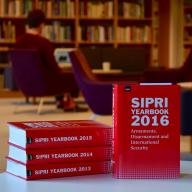
SIPRI Yearbook 2016 out now: Trends in peace operations, sanctions on Iran, and the ongoing peace process in Mali
SIPRI is pleased to celebrate International Day of Peace with the launch of SIPRI Yearbook 2016, now available in print and online.
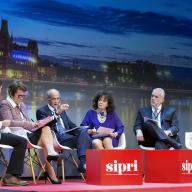
Stockholm Security Conference opens: speakers address how cities best respond to global security challenges
(Stockholm 15 September 2016): Today, over 200 experts and practitioners are attending the first Stockholm Security Conference on Secure Cities, which aims to identify and manage the most pressing urban security issues, including gang violence, radicalization and food security.

Global experts in Stockholm to discuss security challenges facing cities
SIPRI’s inaugural Stockholm Security Conference on Secure Cities marks the beginning of a new initiative aimed at identifying and managing some of the world’s most pressing urban security risks.
Former SIPRI Director Walther Stützle—in memoriam
SIPRI mourns the passing of the Institute’s former Director Dr Walther Stützle, who died on 8 August 2016, age 74. Stützle was Director of SIPRI during 1986–1991.
Janet Meurling—obituary
Janet Meurling, a former SIPRI librarian for over 20 years, passed away on 12 July 2016 aged 90.
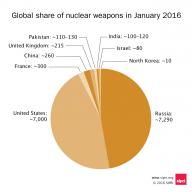
Global nuclear weapons: downsizing but modernizing
(Stockholm, 13 June 2016) The Stockholm International Peace Research Institute (SIPRI) today launches its annual nuclear forces data, which highlights the current trends and developments in world nuclear arsenals.
Former SIPRI Director Alyson Bailes—tribute
SIPRI mourns the passing of the Institute’s former Director Ambassador Alyson J. K. Bailes who died on 29 April 2016, aged 67. Bailes was Director of SIPRI from July 2002–August 2007.
World military spending resumes upward course, says SIPRI
World military expenditure totalled almost $1.7 trillion in 2015, an increase of 1 per cent in real terms from 2014, according to new figures from the Stockholm International Peace Research Institute (SIPRI).
Asia and the Middle East lead rise in arms imports; the United States and Russia remain largest arms exporters, says SIPRI
The volume of international transfers of major weapons has grown continuously since 2004 and rose by 14 per cent between 2006–10 and 2011–15, according to new data on international arms transfers published today by the Stockholm International Peace Research Institute (SIPRI).
Global arms industry: West still dominant despite decline; sales surge in rest of the world, says SIPRI
Sales of arms and military services by the largest arms-producing companies—the SIPRI Top 100—totalled $401 billion in 2014 according to new international arms industry data launched today by the Stockholm International Peace Research Institute (SIPRI).
SIPRI and PAX: Hope for peace in South Sudan, but fragmentation still a risk
According to the report Scenarios for South Sudan in 2020, released today by the Stockholm International Peace Research Institute (SIPRI) and Dutch peace organisation PAX, there is hope for a peaceful future in South Sudan if the 2015 peace agreement is implemented and the peace process opened up beyond the current parties. Otherwise, the human cost will likely be tremendous and the country might even risk complete fragmentation.
SIPRI statement on the 2015 Nobel Peace Prize
SIPRI warmly congratulates the Tunisian National Dialogue Quartet on being awarded the 2015 Nobel Peace Prize.
Nuclear force reductions and modernizations continue; peace operations increase—new SIPRI Yearbook out now
Stockholm International Peace Research Institute (SIPRI) today launches the findings of SIPRI Yearbook 2015, which assesses the current state of armaments, disarmament and international security.
SIPRI welcomes new Director
The Stockholm International Peace Research Institute is pleased to announce the appointment of Dan Smith as its new Director. Smith will assume his post on 1 September 2015.
Sales by largest arms companies fell again in 2013 but Russian firms’ sales continued rising
Sales of arms and military services by the largest arms-producing companies—the SIPRI Top 100—totalled $402 billion in 2013 according to new data on international arms production launched today by SIPRI.
Announcing the launch of SIPRI Yearbook Online
Oxford University Press (OUP) and Stockholm International Peace Research Institute (SIPRI) are pleased to announce that SIPRI Yearbook Online is now available for institutional and individual subscription.
SIPRI statement on the 2014 Nobel Peace Prize
SIPRI warmly congratulates Kailash Satyarthi and Malala Yousafzai on being awarded the 2014 Nobel Peace Prize.
SIPRI welcomes new Governing Board Chairman
The Swedish Government today appointed Ambassador Sven-Olof Petersson as the new Chairman of the SIPRI Governing Board. Ambassador Petersson will formally take up his position on 1 September 2014, and succeeds Göran Lennmarker, who stepped down earlier this year.
Press statement by the SIPRI Governing Board: Changes in leadership at SIPRI
The Governing Board of SIPRI and Professor Tilman Brück have agreed that Professor Brück will leave his position as Director of SIPRI as of 30 June 2014.
SIPRI appoints Tariq Rauf as new Arms Control and Non-proliferation Programme Director
SIPRI is pleased to announce the appointment of Tariq Rauf as the new Director of its long-standing Arms Control and Non-Proliferation Programme. Rauf will assume his position at SIPRI on 14 February.
SIPRI statement on the passing of Nelson Mandela
SIPRI mourns the passing of Nelson Mandela and pays tribute to his long struggle against the apartheid regime, his status as the father of democracy in South Africa and his legacy as a peacemaker.
World military spending falls, but China, Russia’s spending rises, says SIPRI
World military expenditure totalled $1.75 trillion in 2012, a fall of 0.5 per cent in real terms since 2011, according to figures released today by Stockholm International Peace Research Institute (SIPRI).*
SIPRI Top 100 arms sales decreased in 2011: companies pursue diverse strategies in response to austerity measures
Sales of arms and military services by the largest arms-producing companies - the SIPRI Top 100 - totalled $410 billion in 2011 according to new data on international arms production released today by Stockholm International Peace Research Institute (SIPRI).
SIPRI statement on the 2012 Nobel Peace Prize
SIPRI warmly congratulates the European Union, and all its citizens, on being awarded the 2012 Nobel Peace Prize.
Arab Spring redefines conflict; 'fewer but newer' nuclear weapons; peacekeeping numbers plateau—new SIPRI Yearbook out now
Stockholm International Peace Research Institute (SIPRI) today launches the findings of SIPRI Yearbook 2012, which assesses the current state of international security, armaments and disarmament.
SIPRI opens new North American Research Center
The Stockholm International Peace Research Institute (SIPRI) announces the establishment of SIPRI North America, a new SIPRI research center based in Washington, DC.
Question marks remain over military spending and arms acquisitions in Latin America, says SIPRI
Off-budget spending and secrecy are limiting the democratic accountability of the military sector in Latin America and the Caribbean. This comes at a time when military spending is rising rapidly in the region.