The independent resource on global security
Expert Comments
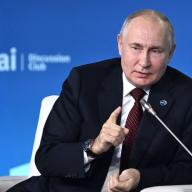
Russia’s potential withdrawal from the Comprehensive Nuclear-Test-Ban Treaty underlines the urgent arms control problem
The State Duma, the Russian Parliament, will vote this week whether to revoke Russia’s ratification of the 1996 Comprehensive Nuclear-Test-Ban Treaty (CTBT).
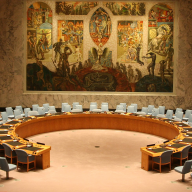
Russia’s ‘nyet’ does not mean climate security is off the Security Council agenda
On Monday, 13 December, Russia used its veto in the United Nations Security Council to block a thematic resolution on climate change and security. While the draft resolution contained specific actions, its main purpose was symbolic: to put the security implications of climate change firmly on the Security Council’s agenda.
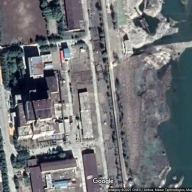
Implications of the reported new activity at North Korea’s Yongbyon nuclear complex
The International Atomic Energy Agency (IAEA) reported on Friday its conclusion that the Democratic People’s Republic of Korea (North Korea) had resumed plutonium production at its nuclear reactor in Yongbyon in early July this year.

Ethiopia’s crisis runs deeper than Tigray
International condemnation of the humanitarian disaster unfolding in Ethiopia’s northern region is intensifying as the scale of the emergency becomes clearer. However, the conflict in Tigray is one part of a broader political crisis in Ethiopia, where elections take place on Monday (21 June).

The new EU peace mediation strategy: A step in the right direction on climate issues
With two new documents, the European Union (EU) has officially recognized the relevance of climate change to peace mediation.
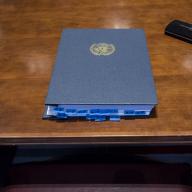
The 50th ratification of the Treaty on the Prohibition of Nuclear Weapons
Yesterday Honduras became the 50th state to ratify or accede to the 2017 Treaty on the Prohibition of Nuclear Weapons (TPNW), meaning that the treaty will enter into force on 22 January 2021.
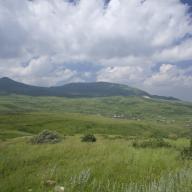
Escalating violence in Nagorno-Karabakh: Local solutions offer the main hope
While details remain scarce, the fighting that has erupted between Armenia and Azerbaijan appears to be more intense than the skirmishes that killed at least a dozen people in the summer of 2020. At the time of writing, roughly 100 people, both civilians and military personnel, have been killed since Sunday, and fighting continues.
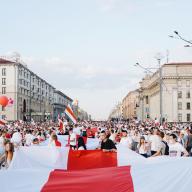
The Belarus election: A challenge to stability and security in Northern Europe
This SIPRI Expert Comment argues for a restart to dialogue on improving regional security and cooperation to the benefit of the Belarusian people and European security more broadly.
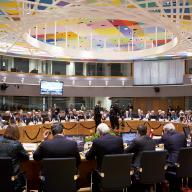
European Union–Eastern Partnership relations: Future opportunities
In 2019, when the European Union (EU) and six countries to the east of the EU (Armenia, Azerbaijan, Belarus, Georgia, Moldova and Ukraine) marked the 10th anniversary of their Eastern Partnership (EaP), foreign ministers underlined common work on trade, visa liberalization, economic development and human rights that had been encouraged by (or through) the partnership.
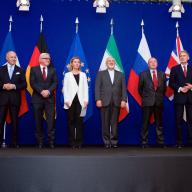
The US withdrawal from the Iran deal: One year on
On 8 May last year, US President Donald J. Trump announced that the United States would pull out of the Joint Comprehensive Plan of Action (JCPOA), which sets limits on Iran’s nuclear programme to ensure that it cannot produce nuclear weapons. Despite the US withdrawal, the JCPOA remains in force; it is a multilateral agreement to which seven of the original eight parties still adhere.
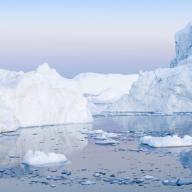
Shipping along the Arctic’s Northern Sea Route will be determined by Russia–China cooperation in the region
On 26 January 2018 China’s State Council Information Office published a white paper clarifying China’s vision of the Arctic, its intentions, goals and objectives in the region.
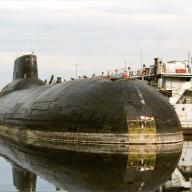
The forgotten science of cooperative threat reduction
The announcement that Russia had completed the destruction of its chemical weapons stockpile was rightly applauded as a milestone in multilateral arms control. However, it was also a reminder of the significant part that international non-proliferation and disarmament assistance played in facilitating the implementation of the 1993 Chemical Weapons Convention (CWC).
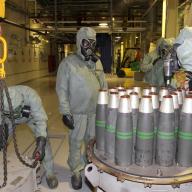
Celebrating a milestone: Russia completes the destruction of chemical weapons stockpile
On Wednesday the Director-General of the Organisation for the Prohibition of Chemical Weapons (OPCW), Ambassador Ahmet Üzümcü of Turkey, congratulated Russia on completing the destruction of its chemical weapons stockpile which originally totalled 39 967 agent tonnes (i.e. excluding munition weight).
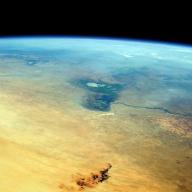
The unfolding humanitarian crisis around Lake Chad: UN report falls short of naming environmental dimensions
Dr Florian Krampe provides commentary on the newly launched Report of the Secretary-General on the situation in the Lake Chad Basin region, arguing that the report would have been stronger if it had highlighted the underlying environmental contributions of the region’s fragility.
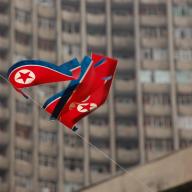
North Korea's sixth nuclear test: What do we know so far?
Robert Kelley provides analysis of North Korea's sixth nuclear test, taking a look at what we know so far.
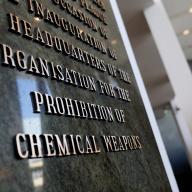
The G20 Summit and chemical weapons in Syria
The G20 Summit will be held in Hamburg on 7–8 July 2017. The UN Security Council and OPCW member states remain unable to agree Syrian Government responsibility for any of the continued instances of chemical warfare.
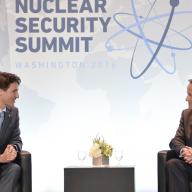
Hiroshima Declaration by G-7 Foreign Ministers falls short
The so-called ‘Hiroshima Declaration’ adopted today by the G-7 Foreign Ministers is a major disappointment and a wasted opportunity for nuclear disarmament.
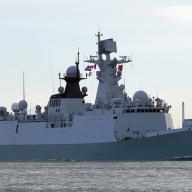
Economics trumps geopolitics as China announces lowest defence budget increase in years
On 5 March, the opening day of the annual National People’s Congress, China announced a 7.6 per cent increase in its National Defense budget for 2016—or a total of 954 billion yuan ($146 billion).
North Korea's Space Launch
North Korea launched a space launch vehicle on 7 February 2016 at around 09:00 local time, with the aim of placing a satellite into the Earth’s orbit.
Another nuclear test announced by North Korea: Searching for a plan of action?
On 6 January 2016, North Korea announced that it had successfully detonated a ‘hydrogen’ or thermonuclear device. Despite international doubt, we shouldn't underestimate North Korea's capabilities.
Damage limitation for Vienna document
Last week, Nato's secretary-general Jens Stoltenberg launched the idea of reworking the Vienna Document on Confidence and Security Building Measures.
On ‘International Right to Know Day’ – how transparent is NATO?
NATO does not publish an annual financial report on its revenue and expenditure, even though other intergovernmental bodies, such as the EU and World Bank, do.
The 2015 UN Register on Conventional Arms: still time to improve
Following the trend in 2012–14, 2015 is likely to be another disappointing year for transparency in arms transfers.
‘Rules of the Road’ for the Arms Trade Treaty agreed in Cancun but stiffer tests lie ahead
The first Conference of States Parties (CSP1) to the international Arms Trade Treaty (ATT), held in Cancun Mexico, ended yesterday.
Water supply to the Syrian bombed site
There have been a number of revelations lately about many aspects of the bombing of a Syrian military facility in 2007, which the US Intelligence Community concluded, with low confidence, was a plutonium producing nuclear reactor under construction.
Nuclear verification in Iran: managed access
The 7 July deadline for a Joint Comprehensive Plan of Action regarding Iran's nuclear programme expired without a breakthrough but the parties agreed to an extension until the end of 10 July.
8 July 2015: No alternative to a diplomatic solution to the Iran nuclear file
Iran’s diplomatic tango with the United States—with accompaniment from China, France, Germany, Russia, the United Kingdom and representatives from the European Union (EU)—continues at the historic Palais Coburg in Vienna. The aim of the negotiations is to finalize an agreement on limiting the proliferation potential of Iran’s nuclear programme and the rescinding of Western sanctions under the terms of a Joint Comprehensive Plan of Action (JCPOA).
17 June 2015: Migrant smuggling: moving beyond an EU military response
In April as many as 1,200 boat refugees drowned in the Mediterranean. They were thought to be fleeing war or persecution in Eritrea, Somalia and Syria. Their deaths are partly attributed to the EU’s failing asylum policy. Their suffering has mobilized significant political will in Europe. This has happened for mainly laudable and compassionate reasons. However, some political leaders seem to look to managing the problem by focusing on symptoms rather than causes, and primarily through a military lens.
22 Apr. 2015: US leadership in the Arctic Council: What choices does the USA have?
On 24–25 April 2015, the United States will assume the next two-year chairmanship of the Arctic Council at the Council’s next ministerial meeting in Iqaluit, Nunavut, Canada. These are difficult times for the Arctic region—and the Arctic Council in particular. After five years of dynamic development, cooperation in the Arctic region is at risk of stumbling on the geopolitical tensions between Russia and the West.
Death of the CFE Treaty: The need to move arms control back to the centre of security policy
Russia's termination of its participation in the 1990 Treaty on Conventional Armed Forces in Europe (CFE Treaty) is a blow to the integrated system of arms control and confidence- and security-building measures that was put in place to reduce the risk of major armed conflict, even if its practica
The European Union’s response to the terrorist attacks in Paris: combining targeted and comprehensive approaches
In the wake of the attack on the French satirical magazine Charlie Hebdo in Paris in January 2015, the European Union and its member states face growing public calls to address internal and external threats, and particularly terrorism. The EU, through its High Representative, should promote political dialogue on comprehensive approaches to conflict and crisis prevention, which can deal with both the symptoms and the causes of these threats.
Afghanistan: The Istanbul Process in urgent need of more attention
On 30–31 October China hosted the postponed fourth ‘Heart of Asia’ ministerial conference in the framework of the Istanbul Process. Inaugurated in 2011, the Process is the only multilateral vehicle led by Afghanistan, thus permitting the country a greater say in its own affairs. Its objective is to facilitate Afghanistan’s reconstruction through interregional collaboration. To this end, and in a short period of time, the Process has successfully managed to commit 14 participating members, some of which previously had difficulty coming together, to cooperate. However, the Process is beset by a number of internal and external challenges that necessitate attention. Newly elected Afghan president Ashraf Ghani and his administration will have to designate ample human resources and diplomacy efforts to guarantee the process’ effectiveness and sustainability.
The implications of the Ebola outbreak for public health and security
The first case of Ebola outside of West Africa was confirmed in Dallas, Texas, which may be the tipping point for properly mobilizing the international community to act.
China’s protection of its overseas interests is becoming increasingly complex
For China, protecting its overseas interests is becoming an increasingly complex challenge.
From ending nuclear testing to detecting tsunamis and missing aircraft: the wider applications of the Nuclear-Test-Ban Treaty
The Comprehensive Nuclear-Test-Ban Treaty (CTBT) prohibits all nuclear explosions anywhere as an effective measure of nuclear disarmament and non-proliferation but is yet to come into force.
4 Apr. 2014: Guns or butter? The economics of nuclear construction workforces in Iran and South Carolina
Iran is facing increasing difficulties completing its IR-40 pressurized heavy water reactor (PHWR) near the town of Arak. Fortunately, Iran has agreed to suspend most construction work as part of a plan arranged with the EU3+3 negotiators. On the one hand, this means welcome cost savings for the Iranian Government. On the other hand, it could be an emergency for the local population.
Looking beyond the 2014 Nuclear Security Summit
Some 50 heads of state and government are meeting today at the 2014 Nuclear Security Summit (NSS) in The Hague, the Netherlands, to highlight their commitment to strengthening nuclear security, and to agree on measures to prevent and combat nuclear terrorism.
3 Mar. 2014: Preventing a new division of Europe
The crisis in Ukraine poses the most serious challenge to European security since the end of the cold war, and highlights the urgent need to refashion European security so that it is capable of managing the new environment that has developed in the region. The Organisation for Security and Cooperation in Europe (OSCE) is the only actor capable of bringing the current crisis to an end and of building long-term peace and stability in Ukraine and the wider region.
Reducing risks arising from developments in Ukraine: the role of confidence- and security-building measures
The main role of the arms control agreements reached in Europe in the 1990s—along with associated politically binding confidence- and security-building measures (CSBMs)—is to ensure predictability in military behaviour and promote confidence that armed forces exist only for legitimate defensive p
18 Feb. 2014: Only a pragmatic approach to Iran’s nuclear programme will yield results
Following the November 2013 agreement in Geneva on initial measures to address Iran’s nuclear programme, negotiations begin in Vienna today on additional steps towards a comprehensive solution. In order for these negotiations to succeed, both sides will need to agree on pragmatic measures which assure the international community of the exclusively peaceful nature of the Iranian nuclear programme, and which lead to the removal of all United Nations Security Council sanctions against Iran.
6 Feb. 2014: Sochi Olympics will leave a questionable legacy for Caucasus conflicts
The 22nd Olympic Winter Games in Sochi have already attracted a deluge of international press coverage. The January attacks in Volgograd and reports of possible 'black widow' suicide bombers have brought the issue of terrorism and the security of the Games into focus. The Russian security authorities have established an unprecedented security and surveillance operation, with over 40 000 police and armed forces personnel involved in securing the Games. While every step is being taken to isolate participants from violence, the Games themselves have already become part of the region’s conflicts, writes SIPRI’s Neil Melvin.
11 Nov. 2013: Time for a more comprehensive approach to the Iran nuclear negotiations
The latest round of negotiations in Geneva between Iran and the five permanent members of the United Nations Security Council plus Germany (the 'P5+1' states) once again failed to reach an agreement on interim steps toward resolving the long-running controversy over the future of Iran's nuclear p
11 Oct. 2013: Award of the 2013 Nobel Peace Prize to the Organisation for the Prohibition of Chemical Weapons (OPCW)
SIPRI Director Professor Tilman Brück comments:
SIPRI warmly welcomes the award of the 2013 Nobel Peace Prize to the OPCW, an organization closely aligned with the aims and work of SIPRI. The world is a safer and more peaceful place as a result of the work of the OPCW.
1 Oct. 2013: Iranian–US engagement should focus on more than the nuclear issue
Iranian President Hassan Rouhani’s appearance at the UN General Assembly last week, his historic telephone conversation with US President Barack Obama and the earlier meeting between the Iranian and US foreign ministers confirm the two countries’ efforts to seriously re-engage in dialogue on Iran's nuclear programme. However, the two countries should not ignore the other issues on which they can fruitfully cooperate, writes SIPRI’s Bruce Koepke.
11 Sep. 2013: Disarming Syria: An opportunity for Russian leadership
In comparison to the discussion about how the United States might, or might not, respond to allegations that the regime of Syrian President Bashir al-Assad used chemical weapons against civilians on 21 August, there has been relatively little focus on the responsibilities and credibility of other actors. SIPRI's Ian Anthony argues that the current Russian proposal, whereby Syria places its chemical weapons under international control, presents an opportunity for Russia to demonstrate global leadership.
3 Sep. 2013: Sweden's future involvement in Afghanistan
The visit of United States President Barack Obama to Stockholm this week presents the Swedish Government with an opportunity to discuss urgent foreign policy issues, including Sweden’s future engagement in Afghanistan. Unlike the other Nordic countries, Sweden has yet to sign a bilateral agreement with Afghanistan and it remains unclear whether it will continue to provide a support mission which includes combat elements after 2014. SIPRI’s Theresa Höghammar outlines the factors that are likely to influence Sweden’s decision on its future involvement in Afghanistan.
30 Aug. 2013: The Syria vote in the British parliament
On 29 August parliamentarians in the United Kingdom defeated a government motion that would have opened the way for a military strike against the Syrian regime of President Bashir al‑Assad in response to its use of chemical weapons on civilians. This was the first such defeat on an issue of war and peace in over 150 years. What preliminary conclusions can be made on the international significance of the vote?
The challenges ahead for Iran's new President
The election of cleric Hassan Rouhani as the seventh president of the Islamic Republic of Iran confirmed both the unpredictability and the enduring adaptability of Iran's political landscape.
17 July 2013: Shadow trade: how North Korea's barter trade violates United Nations sanctions
Barter trade in essential goods and long-standing diplomatic relations are key to understanding the most recent attempted violation of the United Nations arms embargo on the Democratic People's Republic of Korea (DPRK, North Korea).
17 June 2013: Access to shipping companies’ data could help turn the tide against maritime smugglers
Every year nearly half a billion shipping containers are transported across the globe. These movements are the lifeblood of global trade, and yet secreted within a relatively small number of containers are illegal consignments of drugs, hazardous waste, counterfeit goods, dual-use items destined for weapons of mass destruction (WMD) programmes, and small arms and light weapons that end up in the hands of terrorists or fuel civil wars.
Realizing the full potential of the Proliferation Security Initiative
The Proliferation Security Initiative (PSI) High-level Policy Group Meeting in Poland this week marks the 10th anniversary of the PSI’s founding. It is also the first time in five years that all PSI participants have gathered to collectively influence its future.
A more inclusive Arctic Council faces new challenges
The Arctic Council's ministerial meeting in Kiruna, Sweden, this week highlighted the global interest in the Arctic region. The fact that six non-Arctic states (China, India, Italy, Japan, Republic of Korea and Singapore) were granted permanent observer status indicates an opening up of the Council to the world and signifies a breakthrough that rejects ideas of Arctic isolationism.
11 Mar. 2013: The challenge of implementing the new sanctions against North Korea
Following North Korea’s third nuclear test explosion on 12 February, and after three weeks of negotiations, the United Nations Security Council has agreed on a new round of sanctions against North Korea. In response North Korea has threatened to carry out pre-emptive nuclear strikes and cancel the armistice agreement that halted the Korean War.
12 Feb. 2013: Testing times in North Korea
After weeks of speculation, North Korea appears to have fulfilled its pledge to conduct a third nuclear weapon test. According to the North’s official news agency, an underground nuclear explosion was carried out in a tunnel at the Punggye-ri test site in the north-east of the country. North Korea previously conducted two nuclear tests at the site (in 2006 and in 2009), although the first test was widely viewed as a failure.
The International Atomic Energy Agency and Parchin: questions and concerns
The International Atomic Energy Agency (IAEA) and Iran failed again in two days of intensive talks held in Tehran this week to secure a deal to unblock the IAEA's long-stalled investigation into alleged atom bomb research in Iran. Agency inspectors were also refused access to visit a large military complex at Parchin that they have sought to visit for nearly a year. As tensions mount, it is worth considering why the Parchin visit has become such a hot-button issue in the dispute and whether it is really so important for addressing concerns about Iranian nuclear activities with possible military dimensions.
The IAEA and Parchin: do the claims add up?
While the International Atomic Energy Agency has done an excellent job in verifying the nuclear material production activities in Iran’s uranium enrichment plants, it also appears to be willing to risk its technical credibility by insisting on visiting a military site called Parchin, near Tehran.
Explosive potential of North Korean missiles still more diplomatic than nuclear
Today's launch by North Korea of an Unha-3 (or Taepodong-2) long-range rocket is already drawing strong negative reactions from many governments. However successful today's launch was, it does not mean that North Korea has, or is anywhere near having, the capability to launch a long-range ballistic missile strike, especially a nuclear-armed one.
15 Nov. 2012: China’s new leaders - looming domestic crises, not ideologies, will steer the agenda
This morning (15 November) the 18th National Congress of the Chinese Communist Party officially endorsed the members of the new Politburo Standing Committee, China’s top leadership body. Despite the secrecy, speculation and rumors in the run-up to the announcement, the make up of China’s fifth generation of leaders was predictable. Although it reflects the outcome of protracted behind the scenes power struggles, generally speaking the result might have little impact on the government’s political directions.
11 Oct. 2012: Turkey’s interception of a Syrian passenger aircraft
The interception on 10 October 2012 of a Syrian passenger aircraft travelling from Moscow to Damascus was the latest in a long line of actions taken by Turkey to stem the flow of arms across its territory. Given the current international impasse over the conflict in Syria, practical measures such as the interception of aircraft will become increasingly important for states seeking to restrict Syrian Government forces' access to military-related goods from external sources.
21 Sep. 2012: Where to next for China and the European Union?
On 20 September 2012 Chinese and European leaders met for the 15th European Union–China High Level Summit in Brussels. It was Chinese Premier Wen Jiabao’s tenth and final appearance at the yearly gathering. Despite the current economic and political turbulence in both Asia and Europe both sides focused instead on consolidating the progress that has been made in the past 10 years. Nevertheless, the question remains: where is the EU–China relationship heading?
22 Sep. 2012: Rise in insider attacks against foreign soldiers in Afghanistan
An escalation in insider attacks, also known as ‘green-on-blue’ incidents, signifies a new trend of violence that is having a serious impact on the military strategy of the International Security Assistance Force (ISAF). These attacks have been perpetrated against foreign soldiers (US, ISAF and NATO) and civilian contractors by Afghans either affiliated with the Afghan National Security Forces (ANSF) or wearing ANSF uniforms.
13 Sep. 2012: Proposed merger would create the world’s largest arms and military services company
The statement to the London Stock Exchange made on 12 September 2012 by BAE Systems and the European Aeronautic Defence and Space Company (EADS) on the subject of a proposed merger of the two companies raises a number of interesting questions within the context of the world arms and military services industry.
Syria’s chemical weapons and protection against their use: a brief overview
The escalation of the current conflict in Syria gives greater impetus to efforts to determine the fate of Syria's weapon programmes and, in particular, its reported stocks of chemical weapons.
5 Mar. 2012: China increases defence budget for 2012 by 11.2% to 670.3 billion Yuan
This increase continues the long-term rise in China's military spending, in line with its rapid economic growth. However, given China's relatively high inflation, which was 4.5% in February, it is likely that the real increase will be below China's GDP growth rate for the third year running. It would seem that the USA's increased military focus on the Asia–Pacific and recent tensions over the South China Sea have not led to any new or unexpected acceleration of China's military spending trend.