|
| NEWS |
 |
| Rise in SIPRI Top 100 arms sales revenue delayed by production challenges and backlog |
|
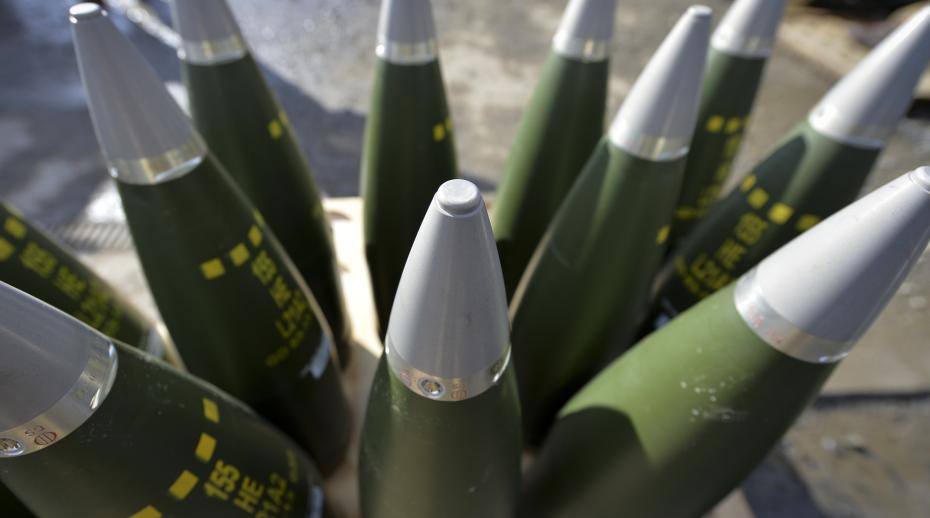
On 4 December, SIPRI released its latest data on the revenues from sales of arms and military services by the 100 largest companies in the industry, which totalled $597 billion in 2022, 3.5 per cent less than 2021 in real terms, even as demand rose sharply. The decrease was chiefly the result of falling arms revenues among major companies in the United States. Revenues increased substantially in Asia and Oceania and the Middle East. Outstanding orders and a surge in new contracts suggest that global arms revenues could rise significantly in the next few years.
|
|
|
Read more | Read the SIPRI Fact Sheet | Explore the interactive table | Explore the interactive map | Access the SIPRI Arms Industry Database
|
|
|
 |
| Russia’s new budget law signals determination to see the war in Ukraine through, according to new SIPRI analysis |
|
Russia’s military and war-related spending is set to rise sharply in 2024 under new federal budget plans for 2024–26 signed into law by President Vladimir Putin on 27 November. The plans suggest that the Russian government is committed to pursuing the war to a successful conclusion but are based on questionable economic assumptions, according to a new analysis. The report estimates that at 12 765 billion roubles (around US$140 billion), Russia’s planned military spending in 2024 would be 29 per cent higher in real terms than in 2023, representing 7.1 per cent of gross domestic product and 35 per cent of all government expenditure.
|
|
|
Read more | Download the SIPRI Insights on Peace and Security
|
|
|
 |
| SIPRI provides analysis on the war in Ukraine |
|
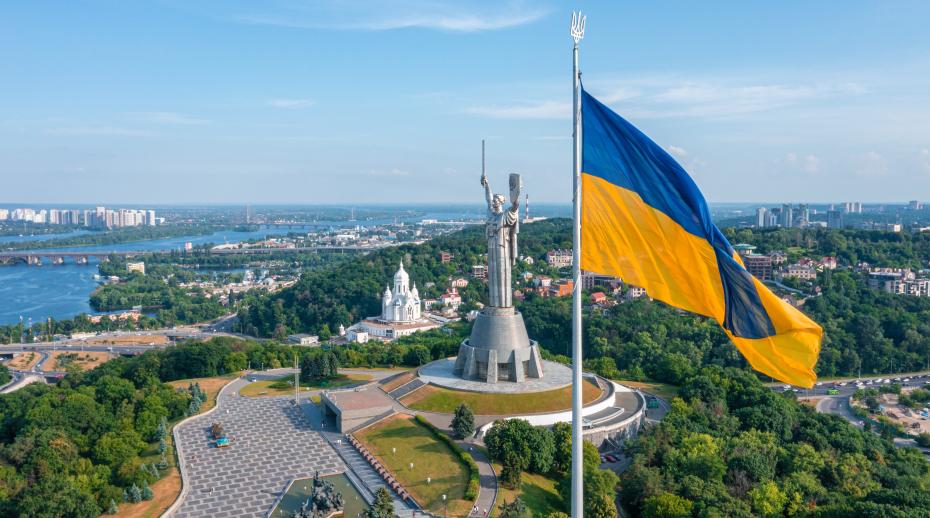
It is almost two years since Russia began its full-scale war on Ukraine. This has had repercussions across the ecological, energy, financial, food, geopolitical and humanitarian domains. This month, SIPRI gathered together its assessments of the wider implications of the war in Ukraine all in one place. This includes a vast range of outputs from data visualizations to in-depth analytical reports.
|
|
|
Read more
|
|
|
 |
| SIPRI’s Environment of Peace initiative is recognized with award for innovation in global security |
|
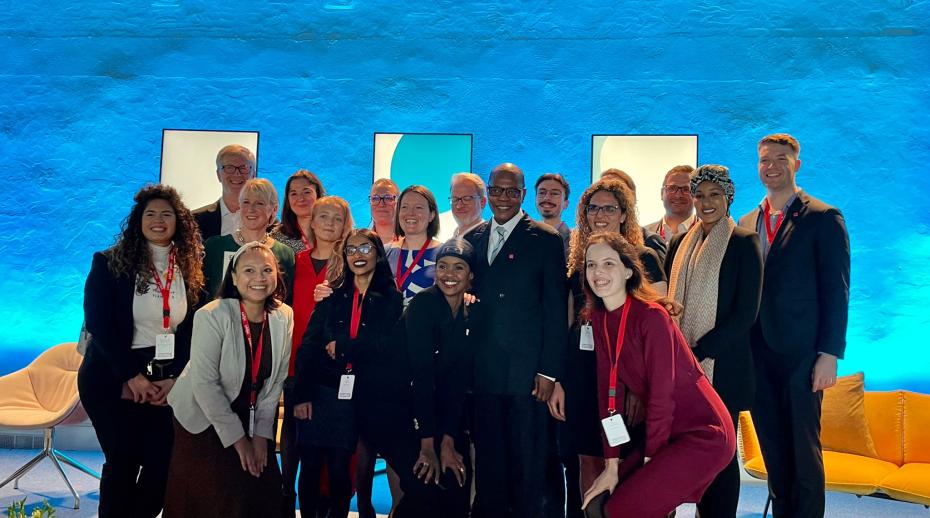
On 5 December, SIPRI’s Environment of Peace initiative was awarded third place in the 2023 Geneva Centre for Security Policy (GCSP) Prize for Innovation in Global Security. The prize recognizes individuals and organizations that have an innovative approach to addressing international security challenges. Claire McAllister, Project Lead for Environment of Peace, accepted the certificate of recognition at a virtual award ceremony.
|
|
|
Read more | Read about the Environment of Peace initiative
|
|
|
 |
| SIPRI’s Environment of Peace initiative supports artists at COP28 |
|
SIPRI, through its Environment of Peace initiative, is proud to support an online storybook that was launched at the 2023 United Nations Climate Change Conference (COP28). The international grassroots project Nature Footprints launched a multimedia storybook of artwork that explores the intersection of environmental shocks, conflict and peacebuilding. The exhibition ran for the duration of COP28, and the organizers intend to tour the artworks.
|
|
|
Read more | Visit the virtual gallery
|
|
|
 |
| SIPRI Yearbook summaries available in Russian and Ukrainian for the first time |
|
The summary of SIPRI Yearbook 2023 is now published in Russian and Ukrainian for the first time. The Ukrainian translation was provided by the Razumkov Centre (Ukrainian Centre for Economic and Political Studies). Released in June 2023, the 54th edition of the SIPRI Yearbook is an authoritative and independent source of data and analysis on armaments, disarmament and international security.
|
|
|
Read more | Download the Russian translation | Download the Ukrainian translation
|
|
|
|
| COMMENTARY |
 |
| More investment in nuclear deterrence will not make Europe safer |
|
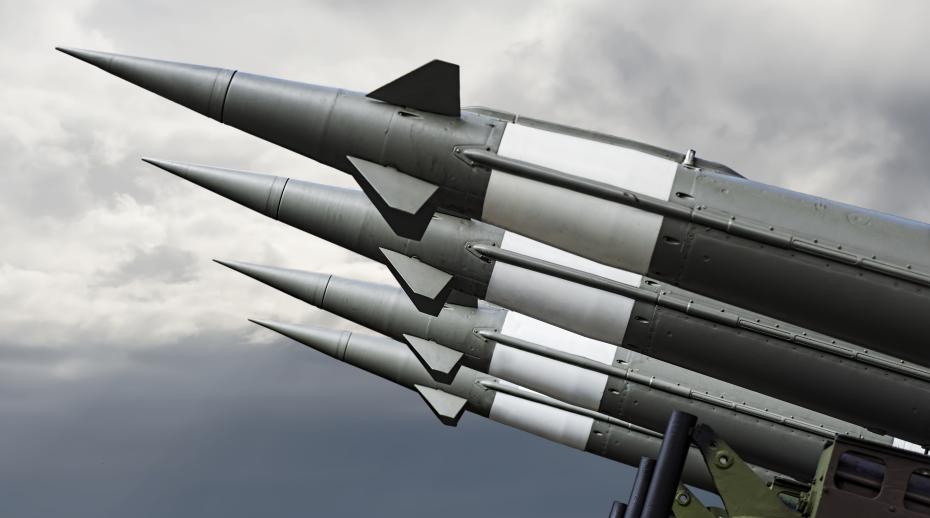
Russia’s invasion of Ukraine in February 2022 and the nuclear threats it has made since have driven a new wave of militarization in Europe. In addition to pushing Finland and Sweden to seek membership in the North Atlantic Treaty Organization (NATO), the perception of an increasingly unpredictable and revanchist Russia has led the alliance to boost its deterrence capabilities. These efforts have focused mainly on conventional forces, but arguments are currently also being made for strengthening nuclear deterrence. This essay takes issue with such proposals, arguing that NATO has no need to augment its already superior conventional forces by increasing reliance on weapons of mass destruction.
|
|
Read the SIPRI Essay
|
|
|
 |
| Small and micro launchers in the NewSpace era: New missile proliferation risks or more of the same? |
|
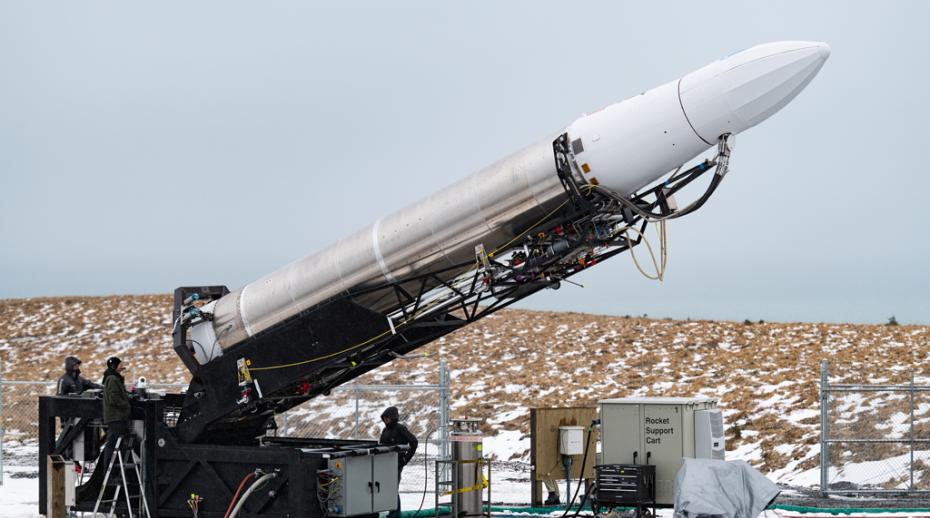
The global growth of the NewSpace industry, the demand for launch capacity for small satellites and the desire to reduce launch costs are driving the development of small and micro launch vehicles by commercial providers. The dual-use nature of traditional space launch vehicle technology has always been a missile proliferation challenge. With the larger number and diversity of launch vehicle projects pursued by commercial providers in the NewSpace era, the extent of this challenge appears to be changing. This topical backgrounder seeks to create a better understanding of current trends in small and micro launchers and how they contribute to missile proliferation risks.
|
|
Read the SIPRI Topical Backgrounder
|
|
|
|
|
|
 |
| External outlets |
|
SIPRI experts were recently featured in the following external outlets:
|
|
|
|
| UPCOMING EVENTS |
| |
| 6–8 May 2024 |
| 2024 Stockholm Forum on Peace and Development |
|
The 2024 Stockholm Forum on Peace and Development will be held on 6–8 May on the theme ‘On the Edge: Navigating a Changing World’.
|
|
Read more
|
|
| RECENT EVENTS |
| |
| 7 December 2023 |
| SIPRI’s firearms expertise featured at international conference |
|
On 7 December, Giovanna Maletta, Senior Researcher and Acting Programme Director for the SIPRI Dual-Use and Arms Trade Control Programme, and Dr Andrea Edorado Varisco, SIPRI Associate Senior Researcher, presented research at the ‘Gun Violence in the EU’ conference in Brussels. The conference also served as a platform to present the results of Project Insight, which aims to prevent violence in society by improving the visibility of firearms violence in the European Union.
|
|
Read more
|
|
| |
| 5–6 December 2023 |
| SIPRI experts attend research conference in Ghana on violent extremism |
|
The Research and Action for Peace (REcAP) Network, comprising of SIPRI, the Danish Refugee Council and the West Africa Network for Peacebuilding, convened a two-day regional conference in Accra, Ghana on 5–6 December on ‘Unifying for Stability: Addressing Violent Extremism Amidst Political Uncertainties in West Africa and the Lake Chad Basin’.
|
|
Read more
|
|
| |
| 27 November 2023 |
| SIPRI co-hosts TPNW side event on teaching nuclear disarmament |
|
On 27 November, SIPRI and the Alva Myrdal Centre for Nuclear Disarmament at Uppsala University hosted a side event at the second meeting of states parties to the 2017 Treaty on the Prohibition of Nuclear Weapons (TPNW) in New York. The event explored how nuclear disarmament and related issues are being taught in different settings, including in post-secondary institutes, training courses for diplomats and for the general public.
|
|
Read more
|
|
|
|
| PUBLICATIONS |
 |
| Climate, Peace and Security Research Paper: Insights on Climate, Peace and Security |
|
The Norwegian Institute of International Affairs and SIPRI have analysed the links between climate, peace and security in countries and regions on the agenda of the UN Security Council in a series of Climate, Peace and Security Fact Sheets. This paper synthesizes four key findings from the fact sheet series and concludes with recommendations for how the UN Security Council shapes policies for addressing the complex challenges arising from climate change.
|
|
Read the report
|
|
|
 |
| Another Budget for a Country at War: Military Expenditure in Russia’s Federal Budget for 2024 and Beyond |
|
Russia’s war against Ukraine has been waged for over 650 days and has had a significant impact on the country’s economy and society. This SIPRI Insights Paper examines the new three-year Russian federal budget, which was signed into law at the end of November. It is based on a relatively optimistic economic forecast and is striking for the sharp increase in military spending planned for 2024. The budget indicates that the Russian government is firmly committed to pursuing the war to a successful conclusion, accepting that this will put pressure on social and economic spending.
|
|
Read the SIPRI Insights on Peace and Security
|
|
|
 |
| Artificial Intelligence for Climate Security: Possibilities and Challenges |
|
This SIPRI Policy Report outlines the opportunities that Artificial Intelligence (AI) presents for managing climate-related security risks. It gives examples of the use of AI in the field and delves into the challenges—notably methodological and ethical—associated with the use of AI for climate security. The report concludes with recommendations for policymakers and researchers who are active in the area of climate security or who use AI for sustainability.
|
|
Read the SIPRI Policy Report
|
|
|
 |
| Advancing the Role of the European Union in Promoting Global Cyber Stability |
|
Cyber incidents affecting satellite and missile systems, whether caused by error or intent, extend beyond the Ukraine conflict. These disruptions pose risks to civilian and military operations, potentially triggering conventional or nuclear responses. Recognizing the centrality of this infrastructure, previous confidence-building measures (CBMs) inspired by cyber incidents offer insights. Building on SIPRI’s research, this paper maps such incidents and CBMs, offering takeaways to enhance predictability and stability in cyberspace.
|
|
Read the SIPRI Insights on Peace and Security
|
|
|
 |
| The SIPRI Top 100 Arms-producing and Military Services Companies, 2022 |
|
The combined arms revenue of the world’s largest arms-producing and military services companies (the SIPRI Top 100) was $597 billion in 2022. This represents a 3.5 per cent decrease in their arms revenue from 2021 in real terms. This fact sheet lists the SIPRI Top 100 for 2022 from the updated SIPRI Arms Industry Database and describes the trends in international arms revenue that are revealed by the new data.
|
|
Read the SIPRI Fact Sheet
|
|
|
 |
| Biosphere Security: Understanding the Connections between Conflict and Biodiversity |
|
This paper published by SIPRI for the Stockholm Hub on Environment, Climate and Security, identifies two cases of information manipulation in the context of climate and water. Following the case studies, the brief focuses on the information landscape of climate- and water-related disinformation during armed conflicts. It closes with recommendations for governments and multilateral organizations to make societies more resilient to disinformation by focusing on education and communication.
|
|
Read the report
|
|
|
 |
| The Battle for Truth on Water, Climate and the Environment: The Impact of Information Influencing Campaigns |
|
This paper, published by SIPRI for the Stockholm Hub on Environment, Climate and Security, outlines broad, but critical, starting points for working towards a more comprehensive biosphere security research agenda. The interconnected nature of the security and biodiversity crises represents potential opportunities for tackling both issues in tandem. This requires the engagement of multiple academic disciplines and non-academic actors and must be oriented towards, and supported by, the policy world.
|
|
Read the report
|
|
|
 |
| SIPRI Yearbook 2023 |
SIPRI Yearbook 2023 presents a combination of original data in areas such as world military expenditure, international arms transfers, arms production, nuclear forces, armed conflicts and multilateral peace operations with state-of-the-art analysis of important aspects of arms control, peace and international security. In addition to its detailed coverage of nuclear arms control and non-proliferation issues, the latest edition of the SIPRI Yearbook includes
- insight on developments in conventional arms control in 2022;
- regional overviews of armed conflicts and conflict management;
- in-depth data and discussion on military expenditure, international arms transfers and arms production; and
- comprehensive coverage of efforts to counter chemical and biological security threats.
|
|
Browse the contents page | Download the summary (PDF) | Download the sample chapter on world nuclear forces (PDF) | Order SIPRI Yearbook 2023
|
|
|
| |
|
|
|