A Top Global Think Tank

Air transport

air transport and destabilizing commodity flows
Air transport plays a central role in the transfer of destabilizing commodities in a variety of conflicts or fragile states in Africa and South America. Research undertaken at SIPRI in the field of air transportation shows that enhanced regulation and monitoring of airspace and cargo companies is a key element for improving security in a number of regions and conflict zones.

CIT-MAP research and pilot projects in the field of air transportation have focused on three areas:
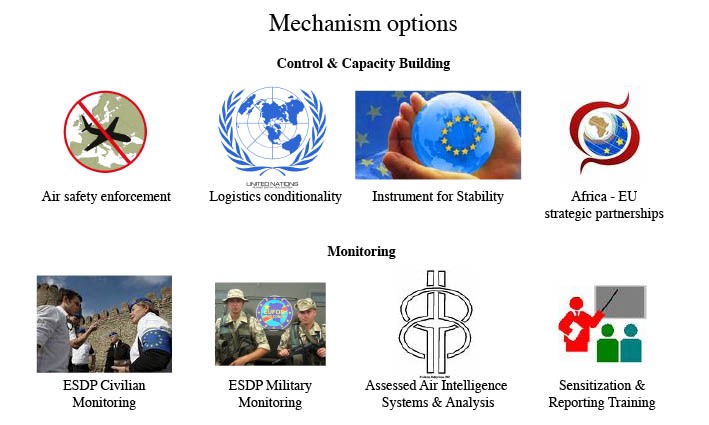
  • Collaborative information-sharing models, software and awareness-raising based on open source intelligence (OSI) techniques
  • The impact of EU air safety enforcement and international civil aviation regulations on air cargo carriers named in United Nations Sanction Committee reports
  • Air transport capacity-building programs in Africa as a means to improve security and governance

 Mechanisms


EthicalCargo
EthicalCargo.org is an information clearinghouse, training and outreach project serving the global humanitarian aid, crisis response and peace support communities. It provides tools, training and advice to encourage the adoption of conflict-sensitive logistics guidelines and ethical transportation policies.

Read More…
EU Council Decision Projects
In November 2010, European Union (EU) member state ministers adopted an EU Council Decision within the framework of the EU's Common Foreign & Security Policy (CFSP) relating to arms trafficking via air. The High Representative of the European Union for  Foreign Affairs and Security Policy is responsible for the implementation of this Decision. The technical implementation of the projects contained within the Council Decision are being implemented by the Stockholm International Peace and Research Institute (SIPRI) through its Countering Illicit Trafficking - Mechanism Assessment Projects (CIT-MAP).

Read More…
The eu's engagement in air safety regulation
The EU’s air safety regulations and the criteria for community-wide bans are based on the Convention on International Civil Aviation, known as the Chicago Convention. Under the Chicago Convention, the civil aviation authorities (CAAs) are responsible for ensuring that aircraft registered within their jurisdiction adhere to certain safety standards.

Read More…