The independent resource on global security
The Geopolitics of a Changing Arctic
(SIPRI:
December 2019)

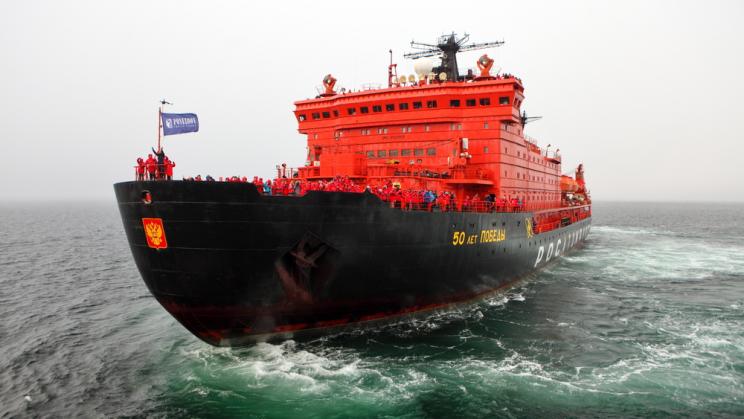
As changes in the region bring new opportunities and challenges, SIPRI aims to produce knowledge beneficial to the continued peaceful and cooperative development of the Arctic. The Arctic is emerging as a distinct sub-region in an increasingly globalised world. Improving access to the Arctic is presenting new challenges and opportunities for the people and nation states of the Arctic region, and to the broader international community. As never before, the Arctic has become part of a complex set of political and economic dynamics linking actors within and outside the region.
At the heart of these processes are local, national, regional and international claims regarding identity, stewardship and sovereignty in respect to the territories and resources of the region. If the opening of the Arctic is to be stable and peaceful over the long term, it will be critical to fashion political and security arrangements capable of managing the Arctic’s transformation and integrating the various claims on the region in a cooperative fashion.
The SIPRI project Arctic Futures: Managing Competition and Promoting Cooperation is designed to examine the challenges emerging around these issues. A key set of questions is at the core of the project:
In addressing these questions, researchers involved in the SIPRI project will produce a variety of publications designed to provide information and analysis on contemporary developments in the Arctic. We also seek to engage policymakers, the media and experts in discussions regarding Arctic political and security issues, with a view to building confidence and sharing knowledge. The aim of this work is to identify practical steps to reduce risks, misunderstandings and suspicions during a time of change in the region, and to promote cooperation relating to the Arctic.
To achieve the main project goals, the research team is utilizing SIPRI’s unique international networks, extending through Europe and North America to Northeast Asia, as well as building new contacts and networks. For work in Northeast Asia, the SIPRI permanent presence in Beijing, China, is playing a key role.

no researchers